Here's an article I've written for Stride Magazine about my 'Five Trios' series of poems. 'Five Trios' is a series of five long poems on thin places and sacred spaces in Essex and East London, each of which are also located within the Diocese of Chelmsford. The five poems in the series are:
The article explores the inspiration for the series and includes information about each of the locations included.
Several years ago, Stride Magazine published a series of texts by authors about themselves and their poetry called 'Deflated Ego'. This month a new series has begun.
Authors have been invited to choose their own approach to the piece, be that self-interview, review, manifesto, contextual/social material, statement of poetics, personal comment, or whatever. The first pieces in this new series can be read here and here.
I am also contributing to another Stride series. This second series is called 'Five' and simply involves writing about five linked items. My piece on entries in Prog 50 will be published on 24 November.
IT have also published several of my poems, beginning with 'The ABC of creativity', which covers attention, beginning and creation, and lastly 'The Edge of Chaos', a state of existence poem.
Stride magazine was founded in 1982. Since then it has had various incarnations, most recently in an online edition since the late 20th century. You can visit its earlier incarnation at http://stridemagazine.co.uk.
I have read the poetry featured in Stride and, in particular, the work of its editor Rupert Loydell over many years and was very pleased that Rupert gave a poetry reading when I was at St Stephen Walbrook.
Rupert Loydell is a poet, painter, editor and publisher, and senior lecturer in English with creative writing at Falmouth University. He is interested in the relationship of visual art and language, collaborative writing, sequences and series, as well as post-confessional narrative, experimental music and creative non-fiction.
He has edited Stride magazine for over 30 years, and was managing editor of Stride Books for 28 years. His poetry books include Wildlife and Ballads of the Alone (both published by Shearsman), and The Fantasy Kid (for children).
View the recording of the October online launch for Thin Places and Sacred Spaceshere. Join editor Sarah Law of Amethyst Press on Friday for an evening hour of poetry readings and discussions on what makes the concept of a thin place so compatible with poetry. To see the September Launch, which includes my reading of 'Runwell', click here.
In this important and wide-ranging new anthology from Amethyst Press, with contributions by over 150 contemporary poets, readers are invited to reflect on and experience the poetry of ‘thin places’. The ‘thin place’ is a Celtic term, originally indicating a specific geographical location where the veil between heaven and earth seems exceptionally thin or lifted altogether. The anthology embraces and expands the concept of thin places and sacred spaces, including:
Sacred Locations
Sacred Nature
Sacred Architecture
Sacred Times & Holy Hours
The Thin Veil Between Life & Death
The Holy Unexpected
Thin Places in Art, Poetry & Language
If you have ever felt the touch of eternity in nature or sacred architecture; at specific times of the day or year; in stillness, movement, art, silence or surprise – this collection is for you.
'Runwell' is part of a series of poems on thin places and sacred spaces in Essex called 'Four Essex Trios' and was the first poem in the sequence to be written and published. The poem takes the reader on a visit to St Mary's Runwell, while also reflecting on the spirituality of the space plus its history and legends.
The second poem in the sequence to be published is at International Times and is entitled 'Broomfield'Broomfield in Essex became a village of artists following the arrival of Revd John Rutherford in 1930. His daughter, the artist Rosemary Rutherford, also moved with them and made the vicarage a base for her artwork including paintings and stained glass. Then, Gwynneth Holt and Thomas Bayliss Huxley-Jones moved to Broomfield in 1949 where they shared a large studio in their garden and both achieved high personal success. My poem reviews their stories, work, legacy and motivations. For more on the artists of Broomfield, all of whom are commemorated there with blue plaques, see here, here, here, here and here. I will be giving a talk on 'Broomfield Artists in the Basildon Deanery' at St Andrew's Wickford in December (see below).
The third poem in the series to be published is entitled 'Pleshey' and celebrates the Diocesan Retreat House at Pleshey in Essex and the legacy of Evelyn Underhill as a retreat director. My poem can also be found on the Diocesan Retreat House website here.
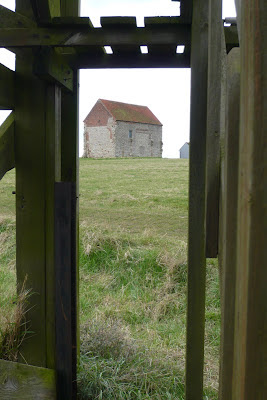
'Bradwell', the final poem in the series to have been published, is a celebration of the history of the Chapel of St Peter-on-the-Wall, the Othona Community, and of pilgrimage to those places. My previous posts about Bradwell and the Othona Community can be found here and here.
I also had a poem included in All Shall Be Well: Poems for Julian of Norwich, the first Amethyst Press anthology of new poems. 'All Shall Be Well' is an anthology of new poems for Mother Julian, medieval mystic, anchoress, and the first woman to write a book in English. Lyrical, prayerful, vivid and insightful, these poems offer a poetic testament to Julian's enduring legacy of prayer and confidence in a merciful God who assured her that 'All Shall Be Well, and All Shall Be Well, and All Manner of Thing Shall Be Well.' The anthology has been edited by and comes with an introduction by Sarah Law, editor of Amethyst Review.
My poem for that anthology is based on a large painting 'The Revelations of Julian of Norwich' by Australian artist Alan Oldfield which is to be found at the Belsey Bridge Conference Centre in Ditchingham, Norfolk.
Amethyst Review is a publication for readers and writers who are interested in creative exploration of spirituality and the sacred. Readers and writers of all religions and none are most welcome. All work published engages in some way with spirituality or the sacred in a spirit of thoughtful and respectful inquiry, rather than proselytizing.
The Editor-in-chief is Sarah Law – poet (mainly), tutor, occasional critic, sometime fiction writer. She has published five poetry collections, the latest of which is 'Thérèse: Poems'. Her novel, Sketches from a Sunlit Heaven is a 2023 Illumination Book Award silver medal winner. She set up Amethyst Review feeling the lack of a UK-based platform for the sharing and readership of new literary writing that engages in some way with spirituality and the sacred.
Broomfield in Essex became a village of artists following the arrival of Revd John Rutherford in 1930. His daughter, the artist Rosemary Rutherford, also moved with them and made the vicarage a base for her artwork including paintings and stained glass. Then, Gwynneth Holt and Thomas Bayliss Huxley-Jones moved to Broomfield in 1949 where they shared a large studio in their garden and both achieved high personal success. 'Broomfield' reviews their stories, work, legacy and motivations. For more on the artists of Broomfield, all of whom are commemorated there with blue plaques, see here, here, here, here and here.
'Pleshey' celebrates the Diocesan Retreat House at Pleshey in Essex and the legacy of Evelyn Underhill as a retreat director. My posts about Pleshey can be found here and my posts about Evelyn Underhill here. My poem can also be found on the Diocesan Retreat House website here.
The series draws inspiration from T.S. Eliot's 'Four Quartets' and, in common, with the 'Thin Places and Sacred Spaces' anthology reflects on the experience of feeling the touch of eternity in art, nature, silence, or sacred architecture. The ‘thin place’ is a Celtic term, originally indicating a specific geographical location where the veil between heaven and earth seems exceptionally thin or lifted altogether. Bradwell, Broomfield, Pleshey and Runwell are all places in Essex where I have had that experience and where heaven and earth, past, present and future seem to be intermingled.
The second poem in the sequence to be published is at International Times and is entitled 'Broomfield'Broomfield in Essex became a village of artists following the arrival of Revd John Rutherford in 1930. His daughter, the artist Rosemary Rutherford, also moved with them and made the vicarage a base for her artwork including paintings and stained glass. Then, Gwynneth Holt and Thomas Bayliss Huxley-Jones moved to Broomfield in 1949 where they shared a large studio in their garden and both achieved high personal success. My poem reviews their stories, work, legacy and motivations. For more on the artists of Broomfield, all of whom are commemorated there with blue plaques, see here, here, here, here and here. I will be giving a talk on 'Rosemary Rutherford's Religious Art' at St Mary with St Leonard Broomfield today, together with Kathy Rouse (see below). This talk will be followed, in December, by a talk on the Broomfield artists at St Andrew's Wickford (see below).
The third poem in the sequence to be published was 'Pleshey', which was published by Amethyst Review. This poem celebrates the Diocesan Retreat House at Pleshey in Essex and the legacy of Evelyn Underhill as a retreat director. My posts about Pleshey can be found here and my posts about Evelyn Underhill here.
The October online launch forThin Places and Sacred Spacesis this Friday, October 25th, 7-8PM BST. All are welcome to attend. Join editor Sarah Law of Amethyst Press on Friday for an evening hour of poetry readings and discussions on what makes the concept of a thin place so compatible with poetry/
To see the September Launch, which includes my reading of 'Runwell', click here.
In this important and wide-ranging new anthology from Amethyst Press, with contributions by over 150 contemporary poets, readers are invited to reflect on and experience the poetry of ‘thin places’. The ‘thin place’ is a Celtic term, originally indicating a specific geographical location where the veil between heaven and earth seems exceptionally thin or lifted altogether. The anthology embraces and expands the concept of thin places and sacred spaces, including:
Sacred Locations
Sacred Nature
Sacred Architecture
Sacred Times & Holy Hours
The Thin Veil Between Life & Death
The Holy Unexpected
Thin Places in Art, Poetry & Language
If you have ever felt the touch of eternity in nature or sacred architecture; at specific times of the day or year; in stillness, movement, art, silence or surprise – this collection is for you.
'Runwell' is part of a series of poems on thin places and sacred spaces in Essex called 'Four Essex Trios' and was the first poem in the sequence to be written and published. The poem takes the reader on a visit to St Mary's Runwell, while also reflecting on the spirituality of the space plus its history and legends.
The latest poem in the series to be published is entitled 'Pleshey' and celebrates the Diocesan Retreat House at Pleshey in Essex and the legacy of Evelyn Underhill as a retreat director. The final poem in this sequence - 'Bradwell' - will be published shortly.
I also had a poem included in All Shall Be Well: Poems for Julian of Norwich, the first Amethyst Press anthology of new poems. 'All Shall Be Well' is an anthology of new poems for Mother Julian, medieval mystic, anchoress, and the first woman to write a book in English. Lyrical, prayerful, vivid and insightful, these poems offer a poetic testament to Julian's enduring legacy of prayer and confidence in a merciful God who assured her that 'All Shall Be Well, and All Shall Be Well, and All Manner of Thing Shall Be Well.' The anthology has been edited by and comes with an introduction by Sarah Law, editor of Amethyst Review.
My poem for that anthology is based on a large painting 'The Revelations of Julian of Norwich' by Australian artist Alan Oldfield which is to be found at the Belsey Bridge Conference Centre in Ditchingham, Norfolk.
Amethyst Review is a publication for readers and writers who are interested in creative exploration of spirituality and the sacred. Readers and writers of all religions and none are most welcome. All work published engages in some way with spirituality or the sacred in a spirit of thoughtful and respectful inquiry, rather than proselytizing.
The Editor-in-chief is Sarah Law – poet (mainly), tutor, occasional critic, sometime fiction writer. She has published five poetry collections, the latest of which is 'Thérèse: Poems'. Her novel, Sketches from a Sunlit Heaven is a 2023 Illumination Book Award silver medal winner. She set up Amethyst Review feeling the lack of a UK-based platform for the sharing and readership of new literary writing that engages in some way with spirituality and the sacred.
The poem, which celebrates the Diocesan Retreat House at Pleshey in Essex and the legacy of Evelyn Underhill as a retreat director, is part of a series of poems on thin places and sacred spaces in Essex called 'Four Essex Trios'. My posts about Pleshey can be found here and my posts about Evelyn Underhill here.
The second poem in the sequence to be published is at International Times and is entitled 'Broomfield'Broomfield in Essex became a village of artists following the arrival of Revd John Rutherford in 1930. His daughter, the artist Rosemary Rutherford, also moved with them and made the vicarage a base for her artwork including paintings and stained glass. Then, Gwynneth Holt and Thomas Bayliss Huxley-Jones moved to Broomfield in 1949 where they shared a large studio in their garden and both achieved high personal success. My poem reviews their stories, work, legacy and motivations. For more on the artists of Broomfield, all of whom are commemorated there with blue plaques, see here, here, here, here and here. I will be giving a talk on 'Rosemary Rutherford's Religious Art' at St Mary with St Leonard Broomfield in November, together with Kathy Rouse (see below). This talk will be followed, in December, by a talk on the Broomfield artists at St Andrew's Wickford (see below).
The final poem in this sequence - 'Bradwell' - will be published shortly.
Amethyst Review is a publication for readers and writers who are interested in creative exploration of spirituality and the sacred. Readers and writers of all religions and none are most welcome. All work published engages in some way with spirituality or the sacred in a spirit of thoughtful and respectful inquiry, rather than proselytizing.
The Editor-in-chief is Sarah Law – poet (mainly), tutor, occasional critic, sometime fiction writer. She has published five poetry collections, the latest of which is 'Thérèse: Poems'. Her novel, Sketches from a Sunlit Heaven is a 2023 Illumination Book Award silver medal winner. She set up Amethyst Review feeling the lack of a UK-based platform for the sharing and readership of new literary writing that engages in some way with spirituality and the sacred.