Wikio - Top Blogs - Religion and belief
Showing posts with label projects. Show all posts

Saturday, 2 May 2026

International Times: Mind The Gap

My latest article for International Times, which is on the Stations project from Dunlin Press:

"these Stations carry marks that are ‘gestures, fragments, traces’ that can’t be defined or pinned down’.

This is appropriate to the themes of life, death, suffering, solace and renewal that form the basis of the Stations of the Cross and which are also the basis for this project. The Stations are ‘a sequence of trials, of vulnerability and suffering, of moments where the burden becomes too much to carry alone’. Experiences of ‘grief, tenderness, labour and intimacy’ that ‘reference an inherited history and the weight of memory’ cannot be ‘fixed to a single meaning’. Therefore, the asemic, abstract and ambient approaches of both Johnston’s ‘abstract and gestural lines and cuts’ and MW Bewick’s music ‘which is mostly an assemblage of single, unrehearsed takes’ are particularly appropriate to use."

My earlier pieces for IT are: an interview with the artist Alexander de Cadenet; an interview with artist, poet, priest Spencer Reece, an interview with the poet Chris Emery, an interview with Jago Cooper, Director of the the Sainsbury Centre for Visual Arts, a profile of singer-songwriter Bill Fay, plus reviews of: 'William Blake: The Age of Romantic Fantasy'Joseph Arthur in concert; installations by Chiharu Shiota and Yin Xiuzhen at Hayward Gsllery, U2's 'Days of Ash', Mumford and Sons' 'Prizefighter' and Moby's 'Future Quiet'; 'Collected Poems' by Kevin Crossley-Holland; 'Lux' by Rosalía; 'Springsteen: Deliver Me from Nowhere'; 'Great Art Explained' by James Payne; 'Down River: In Search of David Ackles' by Mark Brend; 'Headwater' by Rev Simpkins; 'The Invisibility of Religion in Contemporary Art' by Jonathan A. Anderson; 'Breaking Lines' at the Estorick Collection of Modern Italian Art, albums by Deacon Blue, Mumford and Sons, and Andrew Rumsey, also by Joy Oladokun and Michael Kiwanaku; 'Nolan's Africa' by Andrew Turley; Mavis Staples in concert at Union Chapel; T Bone Burnett's 'The Other Side' and Peter Case live in Leytonstone; Helaine Blumenfeld's 'Together' exhibition, 'What Is and Might Be and then Otherwise' by David Miller; 'Giacometti in Paris' by Michael Peppiatt, the first Pissabed Prophet album; and 'Religion and Contemporary Art: A Curious Accord', a book which derives from a 2017 symposium organised by the Association of Scholars of Christianity in the History of Art.

Several of my short stories have been published by IT including three about Nicola Ravenscroft's EarthAngel sculptures (then called mudcubs), which we exhibited at St Andrew's Wickford in 2022. The first story in the series is 'The Mudcubs and the O Zone holes'. The second is 'The Mudcubs and the Clean-Up King', and the third is 'The mudcubs and the Wall'. My other short stories to have been published by International Times are 'The Black Rain', a story about the impact of violence in our media, 'The New Dark Ages', a story about principles and understandings that are gradually fading away from our modern societies, and 'The curious glasses', a story based on the butterfly effect.

IT have also published several of my poems, including 'The ABC of creativity', which covers attention, beginning and creation, and 'The Edge of Chaos', a state of existence poem. Also published have been three poems from my 'Five Trios' series. 'Barking' is about St Margaret’s Barking and Barking Abbey and draws on my time as a curate at St Margaret's. 'Bradwell' is a celebration of the history of the Chapel of St Peter-on-the-Wall, the Othona Community, and of pilgrimage to those places. Broomfield in Essex became a village of artists following the arrival of Revd John Rutherford in 1930. His daughter, the artist Rosemary Rutherford, also moved with them and made the vicarage a base for her artwork including paintings and stained glass. Then, Gwynneth Holt and Thomas Bayliss Huxley-Jones moved to Broomfield in 1949 where they shared a large studio in their garden and both achieved high personal success. 'Broomfield' reviews their stories, work, legacy and motivations.

To read my poems published by Stride, click here, here, here, here, here, and here. My poems published in Amethyst Review are: 'Runwell', 'Are/Are Not', 'Attend, attend' and 'Maritain, Green, Beckett and Anderson in conversation down through the ages'.

I am among those whose poetry has been included in Thin Places & Sacred Spaces, a recent anthology from Amethyst Press. I also had a poem included in All Shall Be Well: Poems for Julian of Norwich, the first Amethyst Press anthology of new poems.

'Five Trios' is a series of poems on thin places and sacred spaces in the Diocese of Chelmsford. The five poems in the series are:
These poems have been published by Amethyst Review and International Times.

-------------------------------------------------------------------------------------------------------------

MW Bewick - For Us.

Wednesday, 25 March 2026

Case Study: Churches and cultural programming


The connections nurtured between contemporary art, spirituality and faith by churches are often of a one-off or temporary nature – an exhibition, an installation, a residency – rather than a sustained programme integrated into other aspects of that church’s mission and ministry. Where such programmes do exist, they tend to be in larger churches or cathedrals, where greater resources can be found, than in local parish churches.

In over 20 years of ordained ministry in the Church of England, I have sought to build longer-term programmes in each of the four parishes where I have ministered. In each parish, I have used a different combination of cultural programming in each Parish because of the different contexts and the range of resource available to me. Along the way, I also encountered and used the 4 Cs model of mission (culture, compassion, commerce, congregation) that provides an effective means to review and create integrated approaches to mission and ministry which include cultural programmes.

In this case study, I briefly review the programmes set up in each Parish, including several with smaller congregations and available resources, and draw out key learning from each initiative.

Regeneration initiatives

My curacy was served at St Margaret’s church in Barking, East London, which was set alongside the ruins of Barking Abbey at the cultural end of the town in a deprived multicultural borough undergoing regeneration. The key initiative here was to engage with the public arts programme of the local authority which was accompanying the wider regeneration initiatives within the borough.

Three different projects included: an art workshop for young people creating designs for vitreous enamels by Dale Devereux Barker located in Barking Town Centre (Making Barking Brilliant); interviews of older church members for a film (RE:Generation) by Michael Cousin that was premiered at the church alongside an exhibition of archive and contemporary photographs showing change and continuity in the area; and film of the church environment and congregation members that was projected onto its clear glass windows by visual jockeys SDNA (Abbey Happy), as part of a wider projection installation (Love and Light) which highlighted the key heritage buildings in the town.

These engagements were made possible because the local authority needed community groups able to provide access to hard-to-reach communities in the area. Churches in the UK are often a key gathering place for a diverse range of the local community, both for worship and because facilities are hired out to other community groups. As a result, we were able to offer the local authority access to a diverse range of people in the local community, including those they found harder to engage in the Arts. The benefits for our congregation included involvement in an interesting range of Arts activities which drew specifically on the diversity of our congregation and the sustainability over time of our ministry.

Other cultural initiatives which also connected to the diversity and heritage of our church included: commission - a painting by Alan Stewart of a black Christ offering breakfast to a multicultural group of disciples (Early in the Morning) to counter-balance the images of white Biblical figures and saints found elsewhere within the building; concerts – utilising the talents of those in the congregation and community including South African concert pianist Manuel Villet, Nigerian juju singer Jide Chord, and Nigerian oboist Althea Ifeka; exhibition – loans to ‘George Jack (1855 - 1931) Architect & Designer-Craftsman’, an exhibition at the William Morris Gallery; gifts - an art book made by George Emmerson, a local artist, depicting the church and its environs and an icon of ‘Christ blessing the children’ by Kjellaug Nordsjö, a Scandinavian iconographer, from our Swedish partner church for our Youth Chapel; and Workshops – workshops for young people in Fashion and Graffiti art, as part of the SOULINTHECITY mission, included creation of a mural by graffiti artist AKS that included the words ‘one’, ‘heart’, ‘soul’, ‘unity’, ‘community’ and ‘together’.

These initiatives drew people from outside our congregations to the church while encouraging people of all ages within our congregation to see themselves as affirmed and valued through the imagery and activities of the church.

Art trails and festivals

My first incumbency was at St John’s Church in Seven Kings, East London, in a multicultural suburban residential area. The key initiative here was to connect artists and churches to maximise the impact of existing and new art.

Churches locally, and more widely in the Episcopal Area, had interesting examples of art which had been previously commissioned but which were not publicised or viewed to any great extent. St John’s had a recently installed East Window by Derek Hunt, as well as other stained glass by the Kempe and Whitefriars Studios. To create wider awareness, encourage visits, and organise additional activities (such as art workshops, exhibitions, guided tours, open days, and sponsored walks), art trails were created firstly for the local churches and then for the Episcopal Area. Leaflets and website pages for the trails described the artworks able to be viewed at each church on the trail, together with contact/opening information and maps showing locations. We drew on a combination of paid and volunteer researchers to find the artworks that were included and to write about them and the artists who made them.

The basis for the Art trails was that people would be unlikely to travel to view one or two artworks in one church but would be more likely to travel if they could see a range of interesting artworks in different churches in the course of a day’s or half day’s visit. This proved to be the case with people attended the organised activities linked to the trails or visiting on an individual basis and, over time, visiting all the churches on the trails.

I was also involved in linking churches together to create Art Festivals that opened church buildings for a range of Arts events and drew people from outside church congregations to those events. The fundamental insight for this initiative was that, if each church in a defined locality organised one or two Arts initiatives in a defined time period, an Arts Festival would be created without any one church having to do a large amount of organisation. If those events could also be organised within the time period of an annual locally run Arts Festival, so much the better in terms of marketing, publicity, and community awareness.

At this time, I was also involved in setting up and running an artist’s collective called commission4mission, the members of which were artists interested in undertaking commissions for churches. Their work was publicised through newsletters, exhibitions, and art talks. 13 commissions were undertaken over an 11-year period and exhibitions held at locations including Chelmsford Cathedral, Coventry Cathedral, Norwich Cathedral, St Martin-in-the-Fields, and Methodist Central Hall Westminster.

Asset-based community development commends looking for resources in the local area and this is particularly important and effective for smaller churches with more limited resources. Identifying how churches can work together and who and what is available outside the church congregation in the wider community can be key to setting up effective and wide-ranging cultural programmes. My experience in Seven Kings clearly demonstrated the value of these approaches.

Participatory initiatives and the 4 C’s

St Martin-in-the-Fields is a large, significant church located at the heart of the UK’s capital city, with a history of innovation in regard to the 4 Cs of culture, compassion, commerce, and congregation. I joined the clergy team at St Martin’s in order to develop their wider partnerships with other churches by setting up and running a network of churches called HeartEdge, which sought to share the 4 Cs as an encouragement to churches to be at the heart of their local communities while being with those on the edge and facing marginalisation. Within the St Martin’s congregation, I also had a role in working with artists and craftspeople.

St Martin’s has a reputation as a church that has effectively and creatively commissioned contemporary artists, such as Shirazeh Houshiary (East Window), to create new work for the church building and its environs. However, through meeting many artists in the congregation after my arrival, it became apparent that the major programme of aspirational commissioning of artists from outside the congregation had left artists in the congregation feeling under-valued. What was needed, as a balance, was a participatory programme led by the congregation’s artists. Following consultation with artists and craftspeople themselves, a programme including a monthly drawing group, seasonal contemplative art workshops, a monthly display of work by the artists on a rota basis, and an annual exhibition was introduced and generated significant energy and involvement from artists and craftspeople whilst adding significantly to the contemplative and educative offerings available to the congregation as a whole.

A community art initiative led by the artist Anna Sikorska provides an excellent example of participatory art that helped the congregation and community at St Martin-in-the-Fields reflect on themes of light seen through fallibility and flaws as inspired by 2 Corinthians 4.6-12. Sikorska’s installation was set in the Light Well of St Martin’s during November and December 2017 and was the culmination of a community art project in which individuals from across St Martin’s – church congregation, Chinese community, clergy, staff and members of the International Group – gathered together over time and tables of clay to carefully form the porcelain lanterns which filled the Light Well for the installation. Each of these porcelain lanterns was filled with light from a simple string of light bulbs.

These cracked translucent lanterns lit from within were a visible realisation of St Paul’s image of light in clay jars. By linking the lanterns together, this installation also showed that it is as we come together, linked, like the lanterns, by the light of Christ that we become the Body of Christ. This installation and community art project enabled reflection on the understanding that there are fractures and flaws running through each of our lives and these imperfections actually enable the light of Christ within to be seen more clearly. Our vulnerabilities are, therefore, the most precious aspect of our lives; of more significance than a confident pride in ourselves that will not acknowledge weakness.

Having observed such initiatives in practice and the ways in which they brought energy to the congregation, Revd Dr Sam Wells, Vicar of St Martin-in-the-Fields suggested the following threefold approach to use of the Arts by churches:

‘A congregation may encourage art on three levels. One is the participatory: a local church may host an artists’ and craftspeoples’ group; it may take participants of all abilities; there’s no reason why it can’t host members of all faiths and none; perhaps each month a member of the group may be invited to exhibit their work in a valued and visible place, and be given the opportunity to write or speak about it. Another is the aspirational: a competition might be held for an artefact to be placed permanently in the church building, tenders invited, donors sought, publicity encouraged, visitors attracted. Similar approaches might apply for temporary art installations. A third level is the commercial. A church building might be a suitable venue for a display and sale of artworks; yet another host of new faces drawn in, conversations triggered, relationships made; and the church perhaps taking a 20% cut of all piece sold. In a short time a secluded, secretive space may be opened out to become a centre of community activity, energy, and creativity.’[i]

In these ways, the participatory initiatives at St Martin’s brought new energy to congregational life while also providing an example of the 4 Cs in practice and enabled the identification of new models within the culture strand.

A cultural and heritage centre

My current Parish is that of Wickford and Runwell within the Diocese of Chelmsford and in the southern part of the county of Essex. Wickford is an expanding market town in rural Essex and Runwell is a village on the northern edge of the town which development is now incorporating into the town itself. The rapid growth of Wickford means that it has not fully embraced its new identity and does not have all of the facilities in its town centre that would be expected in a town of its current size.

Through use of the 4 Cs model of mission to review missional activity within the Parish and opportunities latent within the community, we identified that Wickford did not have a cultural and heritage in the town centre, that the only public buildings which could house such a centre were the churches, and that St Andrew’s Church was of a sufficient size and suitability to be developed as a cultural and heritage centre, while also remaining as a church.

We began exploring this possibility by sharing the idea with creatives locally and then by setting up an initial programme of culture and heritage. This involves regular art exhibitions and heritage displays combined with a fortnightly arts and performance evening that has included art talks, concerts, dance performances, exhibition viewings, heritage talks, open mic nights, and readings of poetry and prose. We have also organised concerts and workshops outside of this basic programme, including working with schools to hold art workshops for pupils based on our exhibitions.

We have worked with local artists and groups, while also bringing in creatives from further afield. In this way, we are seeking to be both aspirational and participatory in our practice. Our programming has supported local creatives in developing their careers and practice whilst also bringing people into our building who would not have attended our services.

More recently we obtained government funding for a feasibility study to explore how best to scale up the development of St Andrew’s as a cultural and heritage centre. The feasibility study involved considerable community consultation combined with assessment of government arts funding and options for the structuring of the project’s governance. Following the recommendations of this study we are setting up an Advisory Group formed of local creatives, expanding our partnerships including working with the local Business Improvement District on a community cinema initiative, and formulating plans for a grassroots music venue initiative.

This supports our wider vision of connecting effectively with the wider community by increasing the range of entry points to the building and congregation while improving the sustainability of both through commercial hire of our spaces.

Learning lessons

My engagement with congregations and the wider community through the Arts in the context of faith has involved community engagement, partnership working, creation of inclusive images, explorations of current social issues, attractional events, and pilgrimage style trails. These have drawn new groups to churches and have enabled other agencies to engage with diverse congregations. Art trails, in particular, have provided a marvellous way to encourage visitors to engage with the diversity of art found in many churches, and open to all the spirituality inherent in such art.

Cultural programming needs to be organised with the input and ideas of creatives. It needs to engage with the wider ministry initiatives and topics of the church whilst also being open to what God is doing amongst the community of creatives more widely. Identifying how churches can work together and who and what is available outside the church congregation in the wider community is key to setting up effective and wide-ranging cultural programmes. In this respect, partnership working with others such as other churches, the local authority, national and local Trusts or grant funders, Arts groups, and others, is vital.

As each context is different, time must be spent initially in community/congregational consultation and through use of frameworks such as the 4 Cs to identify the opportunities that exist within the Parish. Such consultation will also often identify several creatives willing to become involved in the development of new initiatives. In his writing on culture, Sam Wells has used the metaphor of churches as estuary space; a metaphor that derives from the artist Makoto Fujimura and which describes ‘a transitional place where cross-fertilisation can take place and creativity can thrive amid diverse conversation partners’.[ii] This, even more than the bringing to church of new people who might not otherwise attend, is where the true missional activity stimulated by culture takes place. The Arts open up conversations about fundamental aspects of life and belief.

A visitor to an exhibition I organised noted that the exhibition was extraordinarily broad-minded, human and thought-provoking and that churches are extraordinary places for such exhibitions to be held. It is the thought-provoking nature of these interactions which open the already religious to the wonder of art and the non-religious to the possibility of faith.

As such, while each of the examples included in this case study is different due to the differing contexts of each Parish, taken together they demonstrate the value of including culture within a balanced approach to mission as advocated by the 4 Cs model of mission.


Further information:
Books:

S. Wells, ‘A Future That's Bigger Than The Past: Towards the renewal of the Church’, Canterbury Press, 2019

S. Wells ed., ‘Finding Abundance in Scarcity: Steps Towards Church Transformation A HeartEdge Handbook’, Canterbury Press, 2021

References:

[i] S. Wells, ‘A Future That's Bigger Than The Past: Towards the renewal of the Church’, Canterbury Press, 2019, pp.66-67.

[ii] Ibid, p.66.

Images:
  • Graffiti artist AKS with the SOULINTHECITY mural in Barking
  • 'Early in the Morning' by Alan Stewart in the Youth Chapel at St Margaret's Barking
  • Cover of Art Trail leaflet for the Barking Episcopal Area
  • Installation view of Anna Sikorska's 'Light the Well' project at St Martin-in-the-Fields
  • Installation view of Anna Sikorska's 'Light the Well' project at St Martin-in-the-Fields
  • Concert by Rev Simpkins & the Phantom Notes at St Andrew's Wickford
  • Performance by Infusion Physical Theatre at St Andrew's Wickford. Exhibition by Runwell Art Club
  • Exhibition viewing evening at St Andrew's Wickford for 'Adventures in Joy' by Max Blake
--------------------------------------------------------------------------------------------------------

Rev Simpkins - John Henry's Prayer.

Saturday, 26 August 2023

FROM HONG KONG TO WICKFORD A Multifaceted Pictorial Display with Stories


FROM HONG KONG TO WICKFORD A Multifaceted Pictorial Display with Stories
Ho Wai-On (Ann-Kay) & Friends
25 September – 16 December 2023
Mid-Autumn Harvest Moon Celebration Viewing with Refreshments Friday 29 Sep 7-9pm
St Andrew’s Church, 11 London Road, Wickford SS12 0AN
Exhibition Viewing Evening Friday 6 Oct 7–9pm
Admission Free.
St Andrew’s opening hours: Sat 9 am - 12.30 pm; Sun 9.30 am - 12 noon Mon 2 – 3.45 pm; Tue 1 – 4.30 pm; Wed 10 am - 12 noon; Fri 10 am – 1 pm

Dr Ho Wai-On: Surname Ho, known to colleagues as Wai-On. She comes from Hong Kong where the surname is followed by the given name that represents the individual. She has lived in Wickford for about 15 years and is known to locals as Ann-Kay (her childhood name). Before moving to Wickford she lived in London for more than 30 years. 

Best known as a composer and creator/director of combined-art works and projects, this multifaceted pictorial display features her lifetime of interaction with UK and Hong Kong based artists/people that have resulted in many creative works. It also tells the stories of these people and their work. 

FEATURING: 

  • Acis & Galatea: Dance-opera directed by Ho Wai-On for the Hong Kong Academy of Performing Arts Blessed – Stations of the Cross with Beatitude: An offering to St. Andrew's from Ho Wai-On (Ann-Kay) Clark Ainsworth (UK-HK): HK photos 
  • Dr Juliet Chenery-Robson (Sunderland): Visual artist 
  • Ruth Cutler (Ramsgate): Mixed media 
  • Graham Ekins (Boreham): Hong Kong birds photos 
  • Ho Wai-On (Ann-Kay HK-UK): Music videos; combined arts; design & photos... Inter-Artes: Performing group formed by Ho Wai-On (Ann-Kay) 
  • Polly Hope (London): Artist 
  • Herry Lawford (Stockbridge): Chelsea Flower Show photos 
  • Professor Stephen Matthews (UK-HK): Hong Kong birds photos 
  • Ben Rector (Wickford): Photographer 
  • Roy Reed (UK): Photographer 
  • Martin Singleton (Wickford): UK birds photos 
  • Albert Tang (HK-London): Stage/costume/poster/cover design and more 
  • “THEME HONG KONG“: Project 
  • Dr David Tong (Sidcup): Poetry 
  • True Light Old Girls (Ho Wai-On's old school): Choy May-Chu (HK-Taiwan) drawings/paintings; Kitty Kwan (HK-UK-AU-US) photos; Toby Man (HK-US) drawing 
  • Marcus West (Cardiff): Computer graphics 
  • Benson Wong (HK-UK-HK): Fashion/textile/jewellery design & digital portraits 

N.B., ( ) indicates residency. E.g., (HK-UK-AU-US) = From HK, then lived in the UK, AU, now lives in the US. 

MID-AUTUMN HARVEST MOON VIEWING WITH REFRESHMENTS
Friday 29 Sep 7- 9 pm
Come view and eat – admission free!

Friday 29 Sep is the Mid-Autumn Festival (Harvest Moon to the English) - one of the most important festivals celebrated by ethnic Chinese, and also celebrated in Japan, Korea, Vietnam, and other countries in East and Southeast Asia. People, and especially family members, gather together to eat and to look at the moon at its brightest and roundest in a year. Rod Reed's photos of "Mid-Autumn in London Chinatown", commissioned by Inter-Artes, are featured in this Display. Mid-Autumn is celebrated for three days: Thu 28 Sep "Welcome the Moon"; Fri 29 Sep the Festival proper, "Appreciate the Moon"; and Sat 30 Sep "Chasing the Moon". It is said that "Chasing the Moon" was recognised by the then HK British government as a holiday so that people can view the full moon till very late and need not worry about going to work early next morning - quite humane.

------------------------------------------------------------------------------------------------------------

Ho Wai-On - Wisdom and Love.

Friday, 26 August 2022

BasildON Creative People and Places


BasildON Creative People and Places is a radical, new cultural programme for people living, working and socialising in Basildon borough.

The mission is simple; to unleash the creative spirit that runs through the veins of our community and provide more opportunities for local people to commission, create and participate in cultural activity in Basildon.

They say: 

"Most importantly, BasildON Creative People & Places is all about YOU driving and deciding what cultural activity YOU want to see on your doorstep.

Together, we can uplift the town centre with bright and beautiful murals. We can turn our public squares into dance floors. We can even transform vacant shops into music hubs…

Nothing is impossible, if we all work together!

We have three years and £1.7million to make this happen, so let’s get cracking!"

There are five core projects that sit within the BasildON Creative People & Places Programme, which you can read about here. However, what is even more important is that YOU can have a genuine say in what these projects look like. Join their mailing list or check out the latest opportunities for you to get involved as an artist, volunteer or resident.

------------------------------------------------------------------------------------------------------

Depeche Mode - Just Can't Get Enough.

Thursday, 14 July 2022

Called to the feast


Called to the feast is an online exhibition created for (Still) Calling from the Edge, the 10th annual conference on disability and church in partnership between St Martin-in-the-Fields and Inclusive Church, through an pre-conference art workshop. This preparatory workshop drew on the image of feasting in Jesus’ parables and teaching combined with the way he included those experiencing exclusion among his disciples and restored others to worship at the Temple. 

The pre-conference workshop resulted in an video exhibition including images and words for an inclusive Last Supper. These are in a variety of media (drawing, painting, photography, poetry, prose etc) and focus on a range of aspects of the Last Supper e.g. the feast, the table, the guests, Jesus etc. Participants were encouraged to interpret this brief in their own way and as made sense to them. The video exhibition was then shown in a workshop during the conference.

Called to the feast was inspired by The Blind Jesus (No-one belongs here more than you) projectThe Blind Jesus (No-one belongs here more than you) is an image in charcoal of the Last Supper which includes the central character of a visually impaired Jesus, surrounded by twelve people of differing ages, backgrounds and abilities. The project aims to seed other images of the Last Supper that are truly for everyone and are displayed by churches alongside the original image. Schools, churches and community groups are being invited as part of this project to create their own Last Supper images. Called to the feast was the first collection of images to be seeded as a result of this project.

------------------------------------------------------------------------------------------------------------

Arvo Pärt - Tabula rasa.

Thursday, 7 July 2022

Gift to the City: A Passion Art Project

Passion Art is launching a massive hidden art trail in Manchester to remind us we are not alone.

During the last two weeks in July, two artists, ceramicist Rachel Ho, and artist and designer Micah Purnell will leave 240 beautiful ‘gifts to the city’ to find, to remind us to embrace our stories of loss and self-worth.

18 July - 29 July

www.gifttothecity.org

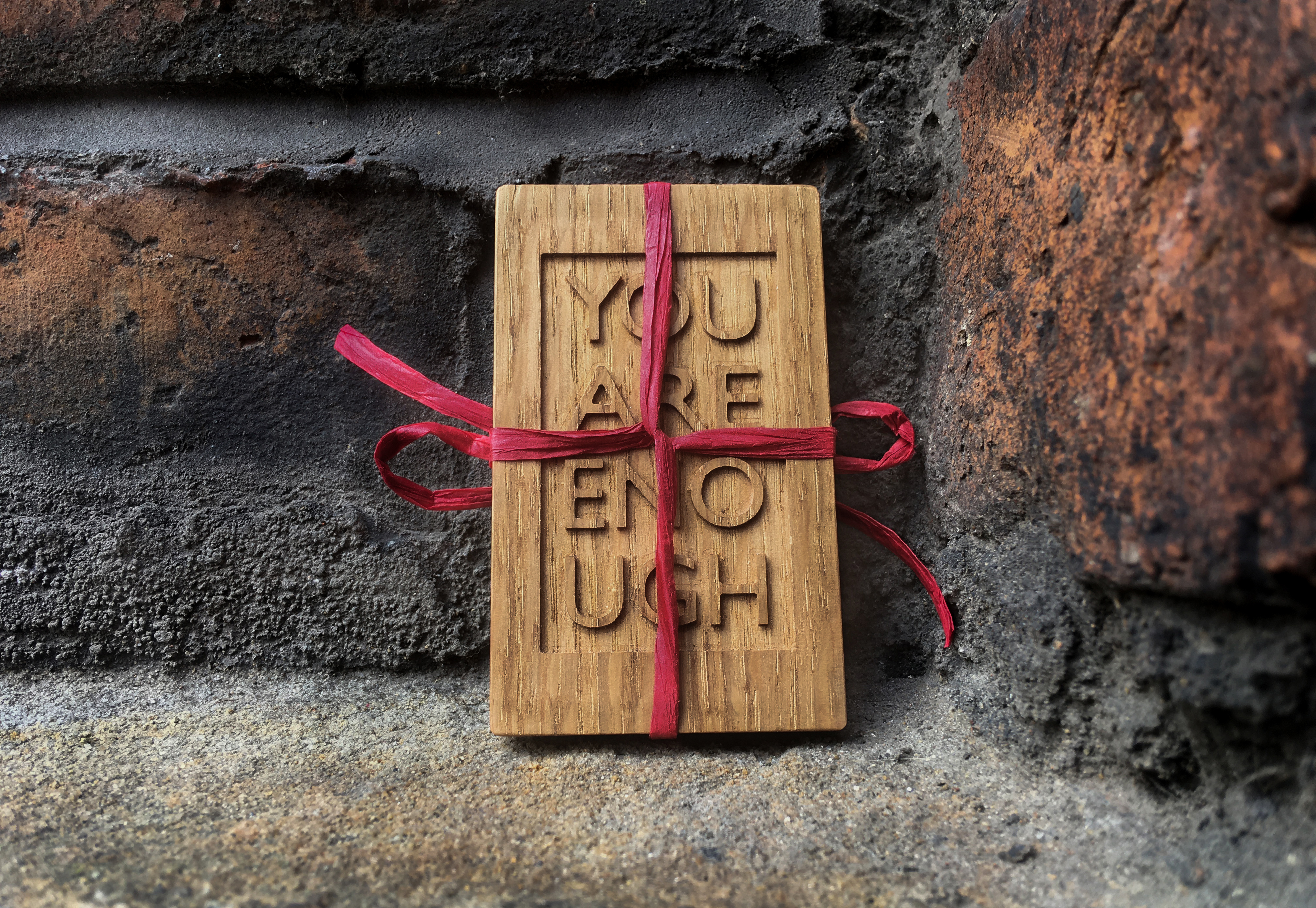
Hidden in the nooks and crannies of the city centre, the two artists will leave 120 Kintsugi pots and 120 You Are Enough oak engravings which the public are invited to find, and keep them as gifts. The art will be placed on the streets of Manchester between the 18th-29th July.

Rachel Ho (https://rachelho2020.wixsite.com/rachelhoceramics) is a ceramicist, who has exhibited nationally including London. Her work is inspired by Kintsugi, an ancient Japanese method of mending broken pottery with gold, resulting in more beautiful and precious pots. Rachel explains “The pots symbolise the fragility of our lives, the scars are then filled with gold lustre; expressing the mystery of new beginnings and new life even in our deepest pain. They pots represent all our stories of loss and reflect the beauty of hope, healing and renewal. I am drawn to clays delicate nature. My aim is to make work that evokes a sense of beauty and mystery. Just as ancient pots have told stories for thousands of years, I aim to use my pots to tell stories of healing.”

Micah Purnell (www.micahpurnell.com), whose clients include The Guardian, Elbow and the NHS, is a text based artist who has exhibited in group shows alongside Turner prize winner Douglas Gordan and global street artist JR. The award-winning artist and designer, renowned for his typographic work that took over Wembley Park during the Euros works to bring the humanities to public spaces. His well known phrase ‘You are Enough’ has appeared across the city over the last few years as giant banners and billboards. He says ‘My work is a lot about togetherness and self-worth. The oak reminders are made by Chapel-in-the-fields who use wood as a vehicle to work with people who have mental health vulnerabilities. I hope the phrase You Are Enough will help people to cut themselves some slack from the ever demanding voices in society and recognise the spark of beauty in themselves.”

Each gift will be accompanied by an invite to share anonymously how the artworks resonated with those who find them at www.gifttothecity.org where you’ll be able to read stories of difficulty and hope as the artworks are found.

The Passion Art project, entitled ‘Gift to the City’, is dedicated to founder Lesley Sutton, who, after five years of living with terminal illness, is drawing very close to the end of this life. Lesley founded Passion Art to build bridges between sacred and secular spaces through art. She is as beautiful in dying as she has been in living.

The project aims to help people feel seen and less alone, to recognise we all have our daily battles and to create a sense of hope and healing.

Rachel Ho: https://rachelho2020.wixsite.com/rachelhoceramics

Micah Purnell: 07990 533 749 www.micahpurnell.com


--------------------------------------------------------------------------------------------------------------

Manchester Orchestra - I Know How To Speak.

Monday, 13 June 2022

Never Again: Artistic Peace Projects

My latest article is for Epiphany, the magazine of Epiphanyart, an ecumenical society of Christian artists in Britain formed over 70 years ago and affiliated to the international movement Société Internationale des Artistes Chrétiens (SIAC) which supports national Christian arts events in many countries.

Epiphanyart aims: 1.To bring the work of Christian artists to the notice of churches and the public; 2. To provide opportunities for mutual support and encouragement to its members; 3. To provide a resource for exhibition organisers and others to contact and commission artists via its website; and 4. To serve as a focus for all forms of creativity.

This edition of Epiphany features: Kreg Yingst, an American print maker; Helen Armstrong on commissions at St George's Hove; poetry by Janet Wilkes; and Peter Osbourne on Lincoln Cathedral. 

Among the many artists forced to flee Nazi Germany were the sculptor Ernst Müller-Blensdorf and Ervin Bossányi. In my article, I give an account of two war-time artists who made their way to Britain and ended up making an important contribution to the cultural life of the country through their art:

"The focus on peace promotion that we find in the work of Blensdorf and Bossányi was characteristic of other émigré artists in this period, a concern shared more widely still within society at the time. ‘Never again’ was a common expression after 1945, symbolizing a universal desire to avoid another world war, a desire that was clearly expressed in 1945 through the establishment of the United Nations. The stories and works of these two demonstrate that artists can make a significant contribution to the cause of peace. In these days of increased conflict within Europe, we would do well to revive our awareness of such artists and find inspiration in their search for peace."

For more on Blensdorf click here and on Bossányi here.

Join Epiphanyart to receive the Epiphany magazine.

------------------------------------------------------------------------------------------------------------

Henryk Gorecki - Symphony No.3.

Sunday, 21 February 2021

Close to nature: Life in Lenten environments

Sermon preached at All Saints Church, Tooting on the first Sunday of Lent and the beginning of their Lent in Pictures project.

Readings: Job 38.1-7, 25-29, 36-41, 42.1-6; Revelation 22.1-5; and Matthew 4.11-17, 24. 1-3


Around the mid-point of his life, my father switched careers from community work to retrain as a landscape gardener. We moved from the city of Oxford to a village in Somerset and, although the change was to some extent forced on him and caused financial difficulties for us as a family, he came to greatly appreciate the enhanced sense of being in nature and of living closer to the natural rhythms of the seasons and the circle of life.

However, while our awareness of nature is undoubtedly enhanced by times in the countryside, we don’t need to live in a rural area in order to aware of and affected by the natural world. Those who live here in Britain are, for example, well known for being obsessed with talking about the weather. According to research, 94% of British respondents admit to having conversed about the weather in the past six hours, while 38% say they have in the past 60 minutes. Kate Fox, who performed the studies in 2010 for an update of her book Watching the English, says “This means at almost any moment in this country, at least a third of the population is either talking about the weather, has already done so or is about to do so.” This is because there are several features of this country’s geography that make our weather the way it is: mild, changeable, and famously unpredictable. For many the changing seasons and weather affect our mood and can, for some, cause depression with Seasonal affective disorder (SAD), for example, being a type of depression that comes and goes in a seasonal pattern possibly linked to reduced exposure to sunlight during the shorter autumn and winter days.

Our theme for today, based on your Lent project, is relationship with the natural world, thinking especially of the environments in the Lenten stories. Our readings illustrate key aspects of that relationship – challenge, awe, mission, healing. In fact, these readings can be ordered to suggest a journey through the environments of Lent and life, involving environments of remove, ruin, renewal, and recuperation.

The readings from the Book of Job are about the expansive nature of the universe in which we find ourselves; both the breadth and depth of creation in macro and micro dimensions. We move through a series of questions that range from the earth’s foundations in creation through the patterns of the weather to the hunting practices of predators. Job is asked whether he was present at creation, how creation occurred, whether he understands the workings of the natural world, and whether he can provide for the creatures of the world. The answer to all these questions is clearly ‘No, he does not’ and that realisation brings him to his knees with a sense of awe towards the God who can answer such questions and a sense of humility through a realisation of his place within a world that is immense and teeming with myriad forms of life.

Job has an experience of the vastness of the universe and the awesome nature of the God who created; a God who is removed from us because we have no means of comprehending the length and breadth, height, depth or diversity of his nature, activity and potential. All Job can do in the environment of remoteness is to stand in awe and wonder, aware of his insignificance in the face of such expanse.

I wonder whether you have had such an experience; maybe lying on a hill contemplating the night sky or at the peak of a high mountain on a cloudless day seeing what seems to be the whole earth laid out beneath you or in the depths of a wood or forest surrounded by an amazing array of flora, fauna and creatures. That same sense of immensity can also be found in the micro as well as the macro if we learn to look with attention; the beauty of a snowflake or the intricacies of a cobweb, the patterns of a leaf or the hues of a petal. I wonder whether you can find an environment – literal or virtual – in which you can experience a sense of remove bringing awe and humility. I wonder too whether you can capture something of that sense of remove in a photo, poem, painting or other creative work for your Lenten project, exhibition and film.

In Matthew 24 we hear Jesus conjure up an environment of ruin for his disciples. His disciples came to point out to him the magnificence of the buildings of the temple and he assured them that, in the near future, not one stone will be left upon another; all will be thrown down. All human environments are subject to decay yet the natural impermanence and temporality of our constructions and creations was not the point that Jesus was making here. His statement was a prophecy regarding events that would occur within the lifetime of his disciples – the fall of Jerusalem in AD70 – which would be a confirmation to those disciples of the truth of Jesus’ words and a vindication of him as a true prophet. His words were also a warning preparing his disciples for a time of trauma and trial when their lives would be at risk and their faith tested.

The environment of ruin – whether physical, emotional, spiritual or all three – is a place of real trauma which can nevertheless become the place where God becomes more real to us than ever was the case in times of prosperity. That was the experience of the Israelites in exile as Babylon was the place where their scriptures were written down and compiled. For Christ, the letting go of life through the agony of the cross was inextricably united to the astonishing renewal of resurrection. For the first disciples, the destruction of the Temple and the perils of persecution were the crucible in which the Early Church was fashioned.

This lockdown Lent it may be that the pandemic has formed an environment of ruin for us and for our world as economies have contracted, jobs have been lost, restrictions enforced, and millions have died. As we survey the devastation that has been caused, can we encounter God with us in new ways and in new depths of experience as we see the myriad ways we can find at this time to be with others through in-person care and virtual connections. I wonder how you can reflect on the environment of ruin through your Lenten project and Lenten experiences.

By contrast our reading from Matthew 4 sees Jesus leave the place of trial and restriction to make his home in Capernaum by the sea and to go on the road by the sea, across the Jordan, to Galilee of the Gentiles proclaiming that the kingdom of heaven has come near and that light has come to those who sit in darkness and the shadow of death.

This is the environment of renewal; a place of activity and vocation, of gatherings and shelters, of journeys and arrivals, of farming and fishing. In three short years, Jesus travelled throughout Galilee and beyond, calling and training disciples sending out 12 and then 72 while others supported them financially from their homes. This is the environment in which his teaching was shared; whether sermons on mountains, stories from boats or acted parables in upper rooms. The stories he told were also set in this environment and peopled by farmers and fishermen.

This environment is one of daily life and work. It is ordinary, everyday and mundane yet the kingdom of heaven is near and the light of illumination is at hand. I wonder what you will find of heaven in your everyday life and work this Lent. How will your stories and sharing, your activity and travel – whether literal or virtual – be blessed and broken for revelation and renewal? How will you picture or describe the in-breaking of the kingdom in the environment of renewal for your Lenten project?

The final environment in our readings is that of recuperation. Our destiny, our destination, is a city where the river of the water of life flows through the middle of the street with the tree of life alongside and the leaves of the tree are for the healing of the nations. This is a place of restoration where nothing accursed will be found any more, where God will wipe every tear from our eyes and death, mourning and crying and pain will be no more. The wolf shall live with the lamb, the leopard shall lie down with the kid, the calf and the lion and the fatling together, and a little child shall lead them. They will not hurt or destroy for the earth will be full of the knowledge of the Lord as the waters cover the sea.

Our experience in this world is of being led to green pastures and of being led through the valley of the shadow of death, but our ultimate end is to dwell in the house of the Lord forever where goodness and mercy shall follow us all the days of our lives. I wonder where are the green pastures and still waters to which we can be led this Lent in order that we experience a taste of the restoration we shall experience in that final environment of recuperation. What images and words can we find to illustrate and illuminate that experience for those that will see your Lenten project, exhibition and film?

If you seek out these environments and experiences this Lent and if you share them through pictures, photographs, films for your Lenten project, then you will have the experience that my father knew, in moving from community work to landscape gardening, of coming closer to the natural rhythms of the seasons and the circle of life. By coming into these Lenten environments of remove, ruin, renewal, and recuperation, you will experience challenge, awe, vocation, and healing while coming closer to the pattern of death and resurrection, letting go and receiving back that is the natural rhythm of the spiritual life. It is my prayer that that may be your experience this Lent. Amen.

----------------------------------------------------------------------------------------------------------

John Tavener - Eternity's Sunrise.

Sunday, 14 June 2020

Artlyst: 'Your Space or Mine' and 'The Spiritual Exercises'

My latest article for Artlyst explores two initiatives - an online exhibition 'The Spiritual Exercises' and a series of billboards by Micah Purnell - that were inspired by our early experiences in lockdown.

'There was a moment, writes Mark Dean, Chaplain & Interfaith Adviser to University of Arts London, corresponding to, but not defined by the lockdown, ‘we were collectively living in a way that at least intended to put the needs of the most vulnerable first’ ...

It was during this moment that Dean’s ‘The Spiritual Exercises’ project took place with around a hundred artists responding to an open call resulting in an online exhibition that mediates memory and longing via the parameters of the present.

The moment about which Dean wrote has also been noticed by creative consultant and practitioner Micah Purnell, who has taken a lead ‘from Jack Arts wonderful ‘Community is Kindness’ billboard campaign.’ Covid-19, he suggests, ‘has exposed beauty in dark times for every day.’ ‘Community has become localised due to the lockdown,’ he notes, and ‘we’ve reached out to our immediate neighbours and they have willingly obliged with outstretched arms.’
My other Artlyst pieces are:

Interviews:
Articles:


-----------------------------------------------------------------------------------------------------

Michael Kiwanuka - Solid Ground.

Saturday, 4 April 2020

11 years of commission4mission


commission4mission was set up in 2009 and became a registered charity (Charity no. 1161109) in 2011. commission4mission ended its work at the end of March 2020.

Between March 2009 and March 2020 we undertook the following:

Art Trails: researched, published and launched a Church Art Trail for the Barking Episcopal Area; and Faith in the City Art Trail leaflet for the Corporation of London focusing on modern and contemporary artworks in the City Churches.

Commissions: 13 commissions at Queens Hospital Romford; All Saints Hutton; St Peter’s Harold Wood; St Edmund’s Tyseley; St Paul’s Goodmayes; St John’s Seven Kings; St Margaret’s Great Ilford; Christ Church ThamesView; and Dagenham Park Church of England School.

Exhibitions: Chelmsford Cathedral; St Laurence Upminster; the Pentecost, West Ham and Leytonstone Festivals; E17 and Leytonstone Art Trails; Holy Trinity with St Augustine of Hippo Leytonstone; St Martin-in-the-Fields; St Mary Magdalene Billericay; Tokarska Gallery; All Saints West Ham, Strand Gallery (Pentecost Festival), Harlow Town Centre (pop-up exhibition for Barking Episcopal Area Arts Festival); All Saints Woodford Wells, Wimbledon Library Gallery; Hornchurch and Romford libraries (H’Art Festival – the Barking Episcopal Area Arts Festival); St Stephen Walbrook; Norwich Cathedral; St Saviour’s St Albans; All Hallows by the Tower; Coventry Cathedral; and Holy Trinity Sloane Square.

Events: Launch event hosted by St Alban’s Romford; Art Talks by David Hawkins, Fr Rodrick Hingley, Graham Gould, Mark Lewis, Jonathan Evens, Glenn Lowcock, Steve Scott, Stephen Cottrell, Rob Floyd, Richard D. North, Wendy McTernan, Irina Bradley, Anthony Hodgson; Networking evenings on the themes of ‘Spirituality – the heartbeat of Art?’ and ‘Stations of the Cross’; Study Day on the theme of ‘Perspectives on commissioning Christian Art’ at Chelmsford Cathedral and on the value of public art at St Paul’s Harlow; Art workshop at St Paul’s Harlow which produced a design for a frieze; Art demonstration by Harvey Bradley; Big Draw workshop led by Mark Lewis, Francesca Ross and Peter Webb; Performance evenings featuring Colin Burns, Tim Cunningham, Jonathan Evens, Jane Grell, Malcolm Guite, Alan Hitching, Jenny Houghton, Tamsin Kendrick and Steve Scott; Arts in Worship event at St Stephen Walbrook where Hayley Bowen, John Gentry, Mark Lewis, Henry Shelton and Peter Webb led art workshops and a series of visual multi-media meditations were shown; and Art Walks led by Mark Lewis to churches on the Art Trail for the Barking Episcopal Area and Faith in the City Art Trail.

Our partners have included: HeartEdge; New Roots; Oasis Trust; and The Worship Cloud.

Projects: worked with CANA and Veritasse on Run with the Fire, an international art project for churches in the 2012 Olympic year – Run with the Fire DVD containing a digital exhibition and event guidance materials – resulting in events run using the digital exhibition in Aldersbrook, California, Devonport, Harlow, Leicester, London, Sacramento, Streatham and Woodford; supported Stations 2017, a collaboration between Mark Dean (artist), Lizzi Kew Ross (choreographer) and Lucy Newman Cleeve (curator).

Publications: commission4mission catalogue (2010); Condemned, a creative reflection for Lent illustrated with contemporary art works by seven member artists, accompanied by the words of Isaiah 53; articles by Jonathan Evens, Helen Gheorghui Gould and Steven Saxby to a special arts edition of franciscan magazine; three collections of images by commission4mission artists available for download via theworshipcloud.com: Mark of the Cross (images by Henry Shelton and words by Jonathan Evens), The Passion: Reflections and Prayers features pictures, poems and prayers by Henry Shelton and Jonathan Evens, and Stations of the Cross by Valerie Dean.

Retreats: Mark Lewis organised three retreats held at the Othona Community in Bradwell.

Services celebrating the Arts at St Peter’s Chapel, Bradwell, All Saints Goodmayes and St Stephen Walbrook; two Stations of the Cross services held at St Martin-in-the-Fields; Irina Bradley, Valerie Dean, Tim Harrold and Henry Shelton spoke on inspiration in a Bread for the World service at St Martin-in-the-Fields.

Websites: Webpage (http://commissionformission.blogspot.com/) and website (https://www.commission4mission.org/).

Since we began our work we have donated over £12,000 to the following charities: The Connection at St Martin-in-the-Fields; The Salvation Army; The National Autistic Society; and PDSA (Peoples Dispensary for Sick Animals), Oasis Trust, Rejuvenate Worldwide, St Francis Hospice, Safer Places, Sightsavers International, Smile Train UK and Haven House Children’s Hospice.

Our artists have included: Alan Hitching; Ally Ashworth; Andrew Vessey; Anne Creasey; Caroline Nina Phillips; Caroline Richardson; Christopher Clack; Clorinda Goodman; Colin Joseph Burns; Danielle Lovesey; David Hawkins; Elizabeth Duncan Meyer; Francesca Ross; Gillian Barritt; Harvey Bradley; Hayley Bowen; Henry Shelton; Janet Roberts; Jim Insole; Jonathan Evens; Joy Rousell Stone; Ken Ashby; Mark Lewis; Mbeng Pouka; Michael Creasey; Nadiya Pavliv Tokarska; Peter Webb; Richard Paton; Rosalind Hore; Ross Ashmore; Sergiy Shkanov; Valerie Dean; Celia Ward; Robert Enoch; Adeliza Mole; Anthony Hodgson; Barbara Harris; Cathie Chappell; David Millidge; Deborah Harrison; Dorothy Morris; Eugenia Jacobs; Fiona Hunter-Boyd; Irene Novelli; Irina Bradley; Jacek Kulikowski; Jacqui Parkinson; Jean Lamb; John Gentry; Laura Grenci; Lewis Braswell; Lucy Crabtree; Lucy Thomasin Morrish; Markos Kampanis; Martin Cosgrove; Mary Flitcroft; MaryJean Donaghey; Maurizio Galia; Michael Garaway; Rob Floyd; Rodney Munday; Susan Latchford; Sy Baker; Tim Harrold, Peter Shorer, Terry Ffyffe, Elizabeth Deane, Lisa Cunningham, Colin Riches, Judy Goring, Monica Thornton, Dorothy Gager, Sonia Veness, Beverley Barr, Jonathan Peter Smith, Victoria Norton, Nicolas Young, Emma Horsfield, Christine Garwood, Alexander Walker, Mari Hayman, and Sarah Ollerenshaw.

Mark Lewis, Chairman of commission4mission writes:

‘Further to our AGM in October and the decision made there to withdraw from registration as a Charity with the Charity Commission, we have regrettably had to take the further decision to dissolve commission4mission in its present form. I would like to thank all our members who have contributed to exhibitions over the last ten years and helped to make events a success.

This decision has not been taken lightly. Jonathan Evens has fulfilled the role of Secretary and Treasurer from the inception of commission4mission but, because of pressure of other commitments, will shortly step down from the Committee. Jonathan has undertaken these roles with exceptional dedication and commitment and we thank him sincerely for all he has done to develop and administer commission4mission. Given the demands of his current ministry we fully understand his wish to give up these committee positions.

Additionally, I had considered standing down as chairman at the next AGM because other life commitments are just making too many demands on me at present and in the foreseeable future. Harvey Bradley, has also decided to leave the committee for similar reasons. Harvey has been an enthusiastic and dedicated member of the committee since commission4mission began and we extend our heartfelt thanks for his valuable contributions.

Unfortunately without a fully constituted committee, a group becomes untenable and we know from experience that it will be difficult to fill these positions and maintain the organization and administration of commission4mission in anything like its present form. Many of our members live outside London, with other work and personal commitments and we feel it is unlikely that any would wish to take on the demands of these committee roles and be in a position to attend regular meetings.

The committee are meeting to decide on the disposal of commission4mission funds in order that we close commission4mission following the Charity Commission’s guidelines and to consider how we might continue as a community of artists in some other capacity. This will, of course, not be under the banner of commission4mission. Your ideas in this regard would be welcome.’

For further information or to share ideas, please contact Mark Lewis on mlewis342@googlemail.com.

-----------------------------------------------------------------------------------------------------

Switchfoot - Where The Light Shines Through.

Saturday, 6 January 2018

ArtWay Visual Meditation: Light in Clay Jars

In my latest Visual Meditation for ArtWay I reflect on Anna Sikorska's SALT installation, the culmination of the Light the Well community art project, which was recently at St Martin-in-the-Fields:

"The cracked translucent lanterns of this installation lit from within are a visible realisation of St Paul’s image of light in clay jars. By linking the lanterns together, this installation also highlights another aspect in 2 Corinthians 4. Paul writes that ‘We are afflicted in every way, but not crushed; perplexed, but not driven to despair; persecuted, but not forsaken; struck down, but not destroyed; always carrying in the body the death of Jesus, so that the life of Jesus may also be made visible in our bodies.’ Paul writes of us in the plural. We are afflicted, but not crushed. We are perplexed, but not driven to despair. It is as we come together to engage with affliction, perplexity, forsakenness and being struck down that we carry in our body the death of Jesus and show the life of Jesus. It is as we come together, linked, like the lanterns, by the light of Christ that we become the Body of Christ."

My other ArtWay meditations include work by María Inés Aguirre, Giampaolo Babetto, Marian Bohusz-Szyszko, Christopher Clack, Marlene Dumas, Terry Ffyffe, Antoni Gaudi, Maciej Hoffman, Giacomo ManzùMichael PendryMaurice Novarina, Regan O'Callaghan, Ana Maria Pacheco, John Piper, Albert Servaes and Henry Shelton.

------------------------------------------------------------------------------------------------

Mark Heard - Strong Hand Of Love.