Wikio - Top Blogs - Religion and belief
Showing posts with label all-age service. Show all posts

Sunday, 20 September 2026

Stewardship 3 - Small change

Here's the All-age sermon based on https://www.assemblies.org.uk/pri/2021/small-change that I shared this morning at St Mary's Runwell: 

Draw some coins from your purse or pocket, explaining that they are often described as ‘small change’. Comment that, when counting our change, we don’t very often look closely at the coins themselves, but each is carefully designed and made at the Royal Mint.

If younger children are present, demonstrate, along the following lines, how the coins are of different sizes and shapes and formed of different materials.

Which is the smallest? (Five pence piece.)

How many faces (sides) are there to the edge of a 20 pence or 50 pence piece? (Seven.)

Some coins are a copper colour, made from copper-plated steel, while others are silver in appearance, made from nickel-plated steel.

Mention that it may even be possible to find some hidden treasure in small change! In 2008, some new design 20 pence coins (only 250,000) were accidentally produced without a date on either side. (Details can be found on the Royal Mint’s website.) These are worth far more than 20 pence to collectors! Is it possible to find one? Look carefully!
 
Explain that the designs on the reverse side of some coins show parts of the Royal Shield of Arms. Different UK coins each show a part of the Royal Shield of Arms — and when you put them together, they create the full royal coat of arms. This clever design symbolises: England; Scotland; Wales; and Northern Ireland. So next time you’re checking your change… you might be holding a piece of royal history without even realising it! 

Observe that small change is often collected for charities such as our collections for Positive Life Kenya. Each small contribution helps to make a larger gift – just as the individual pieces of small change form a larger picture.

Introduce our Gospel reading (Mark 12:41-44) that tells how even the smallest coin can really matter. Ask a group of children to make a big thing of pouring lots of coins into a collecting bowl and one secretively placing in two pennies.

The widow’s offering

One day Jesus and his friends sat in one of the temple courts. It was a very busy place. Lots of people were there, leaving gifts of money in the collecting boxes.

Some rich people gave large amounts of money. They liked to show off. They wanted everyone watching to see how rich and generous they were.

Jesus then spotted a poor widow quietly making her way across the temple court. Looking around to check no one saw her, she dropped two of the smallest coins into the collection box.

‘Did you see that?’ Jesus asked his friends. That widow has been more generous than anyone else. The rich people gave what they could easily afford, but the small coins she gave were all she had to buy food today’.

Conclude with the following thought that small coins can mean a lot and small change can add up to make a big difference. Perhaps we should look more closely at the coins in our purses, pockets and money boxes.

Time for reflection

Coins come in different shapes and sizes and can be spent in many different ways, but every coin has two sides. Along with the happiness of getting, we can experience the joy of giving. Stewardship month is an annual reminder to us that that is so when it comes to the contribution we make as Christian disciples; when it comes to the money we give back to God, the talents we use in his service, the community contribution we make and the environmentally-friendly actions we take.

Our Parish needs a whole series of small contributions at present as we need new volunteers across the whole range of our ministry. The packs that you have been given include more information about Stewardship and response forms to help you think more about the ways you give currently and what might be possible in the future. The packs include a form you can fill in to offer your help.

When it comes to our financial giving, we have faced significant challenges as for a long time we haven’t been able to give the Diocese the Parish Share that is needed to cover the cost of clergy and the other support that the Diocese provides. We are gradually increasing the amount we give to the Diocese for our support year-on—year and have raised funds for the first two Phases of our repair project. However, we need to maintain and improve that situation this year, so ask that you reconsider your giving at this time and use Stewardship Month to decide what you can contribute to St Catherine’s and our Parish in future. There are forms in the Pack which can be used if you want to start giving or if you are able to change what you are giving.

For those who are tax payers there has for some time been a way of increasing the value of the gifts you give. Gift Aid enables us to reclaim the basic rate tax from HMRC for those who are taxpayers, so for every £1 that you give we can claim an extra 25p. That means that, if you are a tax payer, we need you to fill out a Gift Aid declaration form in order to reclaim that money. There’s a copy in the Pack for you to fill out. There are three ways you can give using Gift Aid. The Parish Giving Scheme provides simple and secure ways to give regularly to this church; online, by phone, or by posting a giving form. Joining PGS means they claim the Gift Aid and send it direct to our Bank Account. You can also use our yellow envelopes for cash donations or fill in the Gift Aid declaration on the Card Reader where giving using your bank card.

Jesus commended the widow for giving the small amount that she had. We need the contribution that you can make to our Parish, however small it may seem to you, and in whatever way you can make that contribution. Thank you so much for all the ways you give currently and the different contributions you make. They are vital to the mission and ministry of our Parish and we are very grateful for them. The mission and ministry of this church is the combined effect of the contributions that each of us make. We need you now, more than ever. God has given you resources, time and talents, so this Stewardship Month I encourage you to reflect prayerfully on all that you can and do give back to him in order that together we can combine our individual offerings to make a bigger impact for him. Amen.

----------------------------------------------------------------------------------------------------------------

Willie Nelson & Sinéad O'Connor - Don't Give Up.

Sunday, 19 July 2026

Judge Not

For today's service in the Parish I have been using an All-age talk on the Parable of the Wheat and Weeds to speak about the dangers of judgementalism. For my All-age talk I added an introductory quiz about our default habits when it comes to how we form opinions about others.

Psychology Today has the following to say about judgementalism: "The more we live in a culture of divisiveness, the more judgmental people become. Being quick to pass judgment on others can harm not only the target but the teller, the very person doing the judging. In addition to creating a cloud of negativity, judgmentalism can lead to conflict and stunt personal growth. With a little conscious effort, it is possible to shift out of a critical mindset."

For our Healing Eucharist this evening, I included, as reflective moments, Al Green's cover of R.E.M.'s 'Everybody Hurts' and Jahlani Pierce's 'Stop Judging Others (You Never Know Their Battles)'.

------------------------------------------------------------------------------------------------------------

Jahlani Pierce's - Stop Judging Others (You Never Know Their Battles).


Wednesday, 24 December 2014

All-Age Talk - Names of Jesus

Here is my talk for the Nativity & Tree Lighting Service at St John's Seven Kings this year, which I also adapted to use as a Christmas assembly for Downshall Primary School:

Earlier in Advent I had a session with children in an RE class at Little Heath School to talk about Christian values as we see them in Jesus. Following that session the children sent me poems they had written which combined different words to make titles for Jesus which summed up something about him and his values. Among my favourites were 'The King of Kindness', 'The Truth of Giving' and 'The Gift of Happiness'.

I wonder what names or titles you could devise for Jesus which say something about who he is and what he came into our world to do. Each of you should have a sheet of paper with three lists of words on it. I’d like you to look at those lists and combine some of the words to make a new name of title for Jesus. Please talk to the people around about this. You could circle, tick, rewrite or just remember the words that you want to combine and use. Then I’ll ask you to tell us some of the names you have come up with.

[Time for discussion and feedback]

Thank you for sharing those new names and titles for Jesus. They were great and give us lots of ways for thinking about who he is, what he did and what he can mean to us today.

In the Bible we find two special names that were given to Jesus at his birth which are particularly important for understanding and knowing him.

The first is ‘Emmanuel’, which means God with us. Jesus was not just any other human baby, he was God born as a human being. He was God come into our world as an act of solidarity sharing what we experience in life, so we know that he understands and will support us through whatever happens.

The second is Jesus which means ‘The Rescuer’. Jesus was God come into our world to die and rise to new life for us making it possible for us to come through sin and suffering into new beginnings and new life.

The greatest gift you can have this Christmas is to come to know Jesus in these ways. Jesus is God’s gift to the world. Jesus is God’s way of showing and telling that he loves us enough to be with us in every situation and circumstance and to bring us through our experience of sin and suffering into a new start and a new way of living. My prayer is that we don’t simply know the story of Jesus’ birth or even know the meaning, the reason, for his birth, but that we actually receive the gift that God has given to us and know Jesus for ourselves as our Rescuer who is God with us.

--------------------------------------------------------------------------------------------

Kate Rusby - Diadem.

Saturday, 14 December 2013

Youth-led All-Age Christingle Service


Looking forward to our All-Age Christingle Service (the first of our Christmas Services at St John's Seven Kings - see above) which has been planned and will be led by our Pathfinder Group. The Service includes a human Christingle video created by our Pathfinders.

----------------------------------------------------------------------------------------

Kate Rusby - Diadem.  

Sunday, 10 February 2013

National Marriage Week display


Here is this year's National Marriage Week display in the lounge at St John's Seven Kings. Designed and made by members of our Mothers' Union branch, this year's display focusses on the 40th Wedding Anniversary of a MU member.

Our All-Age Service next Sunday will take love as its theme, in recognition of National Marriage Week and Valentines Day, and will feature in the liturgy lines from a number of popular love songs. Why not come and see if you can spot them all! 

Anne Atkins recently noted in a Guardian interview that: "Most people get married, most marriages last for live, and most children are raised within a marriage. That's a thing to remember." 

---------------------------------------------------------------------------------

Bette Midler and Wynonna Judd - The Rose.

Sunday, 18 March 2012

Give Thanks

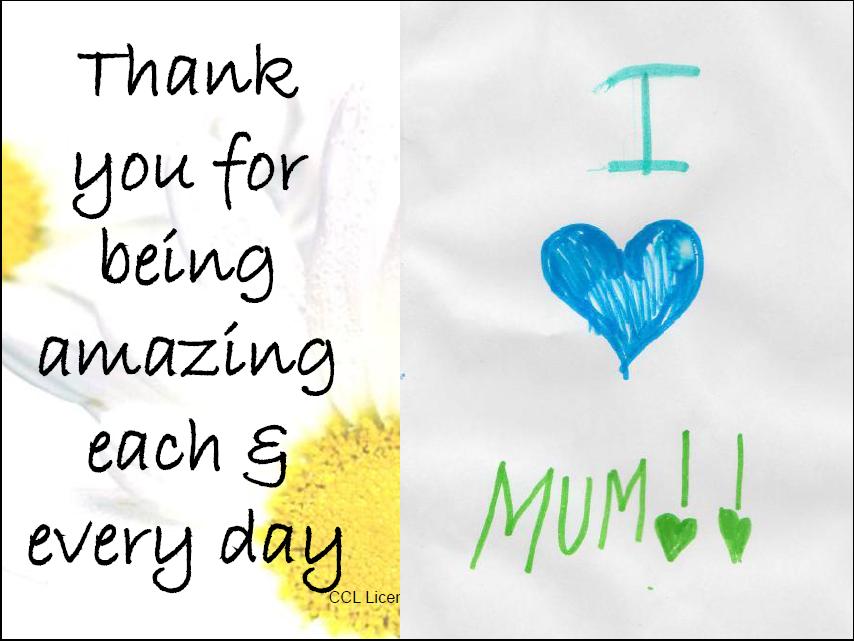
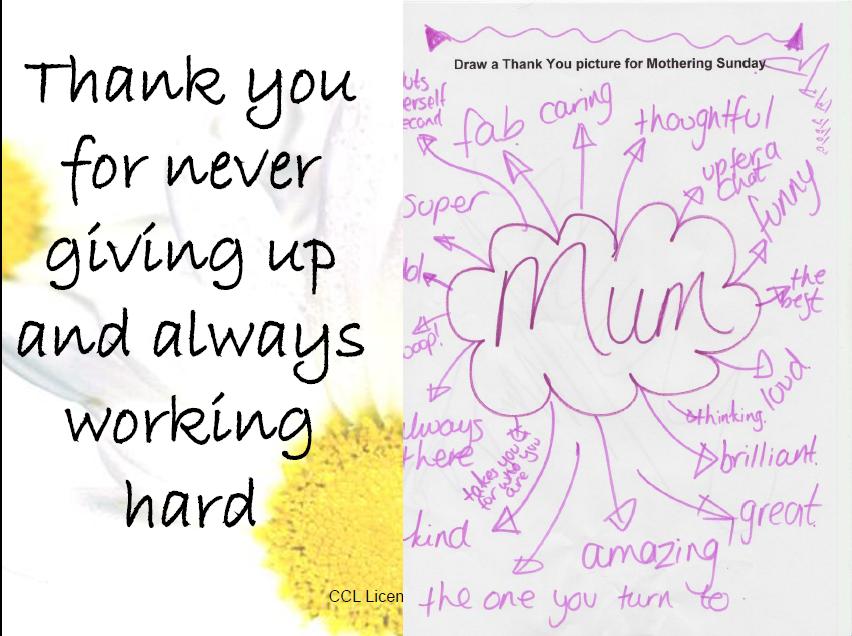
We had an excellent All-Age Mothering Sunday service led by our Youth Group at St John's Seven Kings this morning. Our young people wrote poems and drew pictures to say thanks to their Mums as part of the service theme of 'Giving Thanks':


------------------------------------------------------------------------------------

Brenton Brown - Joyful.

Tuesday, 23 November 2010

Christ the King

On Sunday we had an All-Age service with a very positive feel and slightly chaotic organisation on the theme of Christ the King. We had lots of people contributing from video interviews of views on the royal family and the idea of Christ as King to our young people leading a dramatised bible reading and the intercessions. There was a quiz on British Kings and Queens illustrating the way in which power can be used for good or ill and I said the following in trying to draw the different strands together:

The role of a King or Queen is to rule over the people that live in the kingdom. This gives them great power which they can use for good or ill. As we saw in the quiz, some Kings and Queens use their power to serve themselves, while others use their power to serve their subjects? Which of these is the more Christ-like?

Interestingly, those monarchs in this country who have used their power to serve others have been inspired to do that by the example of Jesus. Jesus said, “I, your Lord and Teacher, have just washed your feet. You, then, should wash one another’s feet.”

What he was saying was that he had come into the world to give us an example of people with power using their power for the benefit of others. As God, he has ultimate power - power of creation, power over life and death – but he chooses to give up his power and position as God’s Son in heaven to become like us, his subjects, and then gives up his own life to make us, his subjects, equal with him, as brothers and sisters in God’s family. None of the Kings or Queens we have thought about today ever went as far as that!

That is why Jesus should be our ultimate authority. It is why we constantly talk about putting him first in our life and imitating his way of life. When we do, we are living under the rule of Christ – something that we choose to do, rather than something which we are compelled to do. When we live under the rule of Christ, then we are part of the kingdom of God, which is the collection of people who are seeking to follow Jesus in the world and throughout history. When we live in the way that Jesus lived, by putting others first and serving those around us, then we bring a taste or sign of the kingdom of God into the world.
 
-------------------------------------------------------------------------------------
 
Vickie Winans - Long As I Got King Jesus.

Sunday, 19 September 2010

Fairtrade & Harvest @ St Johns


The FAIRTRADE Mark is a registered certification label for products sourced from producers in developing countries. For a product to display the FAIRTRADE Mark it must meet international Fairtrade standards which are set by the international certification body Fairtrade Labelling Organisations International(FLO). These standards are agreed through a process of research and consultation with key participants in the Fairtrade scheme, including producers themselves, traders, NGOs, academic institutions and labelling organisations such as the Fairtrade Foundation.

“Fairtrade is a strategy for poverty alleviation and sustainable development. Its purpose is to create opportunities for producers and workers who have been economically disadvantaged or marginalized by the conventional trading system. If fair access to markets under better trade conditions would help them to overcome barriers to development, they can join Fairtrade.”

Fairtrade is a tool for development that ensures disadvantaged farmers and workers in developing countries get a better deal through the use of the international FAIRTRADE Mark.

Leviticus 19. 1-10 shows us that God cares about our relationships; with our parents, with our holy God, and with the poor. This whole chapter from the book of Leviticus is concerned with the social responsibilities of God’s people, with verses 9 and 10 dealing with the relationship between he abundance of the harvest and the needs of the poor. In celebrating the harvest God’s people should never forget those who are unable to celebrate.

In our time, this includes not forgetting those people who produce and harvest food for us but who may be badly treated or exploited in the process. The Fairtrade initiative attempts to bring us back into a relationship with the producers of our food, like that we would have had in the past when we grew our own food for ourselves, or knew personally those who grew our food.

Fairtrade gives us the ability to be able to shop for the things we like from around the world, knowing that those who produce those things have been treated fairly. As a result, we could say that Fairtrade shopping is holy shopping!

We have a tendency to think of holiness and being holy as somehow being different from everyday life. These verses in Leviticus remind us that that isn’t so. God’s people back then could show holiness by thinking of others when they collected the harvest. We can show holiness by thinking of those who produce our food when we go shopping for it; by buying Fairtrade. We can show holiness by remembering those who are homeless as we bring our Harvest produce to give to the Redbridge Night Shelter. We can show holiness by growing our own food and sharing any we don’t need with others as a transition initiative which is a response to the challenge of peak oil. We can show holiness by taking environmentally friendly actions in order to care better for God’s creation.

We have the privilege of an abundant food supply – fruit and vegetables in and out of season. Our harvest is abundant therefore we have a responsibility to those food producers around the world and to the environment, both of which make that privilege possible. Buying Fairtrade produce is just one way in which we can show that we take this responsibility seriously and one way in which we can be holy when we shop.

Because we haven’t always done that and because there is a tension between celebrating the abundance of God’s provision and remembering those in need, we now have a time of saying sorry to God for the ways in which we and our society have failed those in need and exploited our environment. So let us pray the following prayer of confession:

Heavenly Father, Lord of the harvest, we confess that we do not always know or even care where our food comes from. We confess that we do not always care for our neighbours or the planet as you taught us to. We confess that we do not always care for the welfare of those who produce our food as we ought to. Help us to take small steps in changing how we shop for our food. Help us to see that how we shop is still part of our worship of you. Help us to worship you with our life choices. Amen.

(Based on ‘Harvest’, The All-Age Service Annual, Vol. 1 2007/08, Scripture Union)

-------------------------------------------------------------------------------------------------------

Martin Smith - You Have Shown Us.