Wikio - Top Blogs - Religion and belief
Showing posts with label queen. Show all posts

Saturday, 9 July 2022

Superbloom


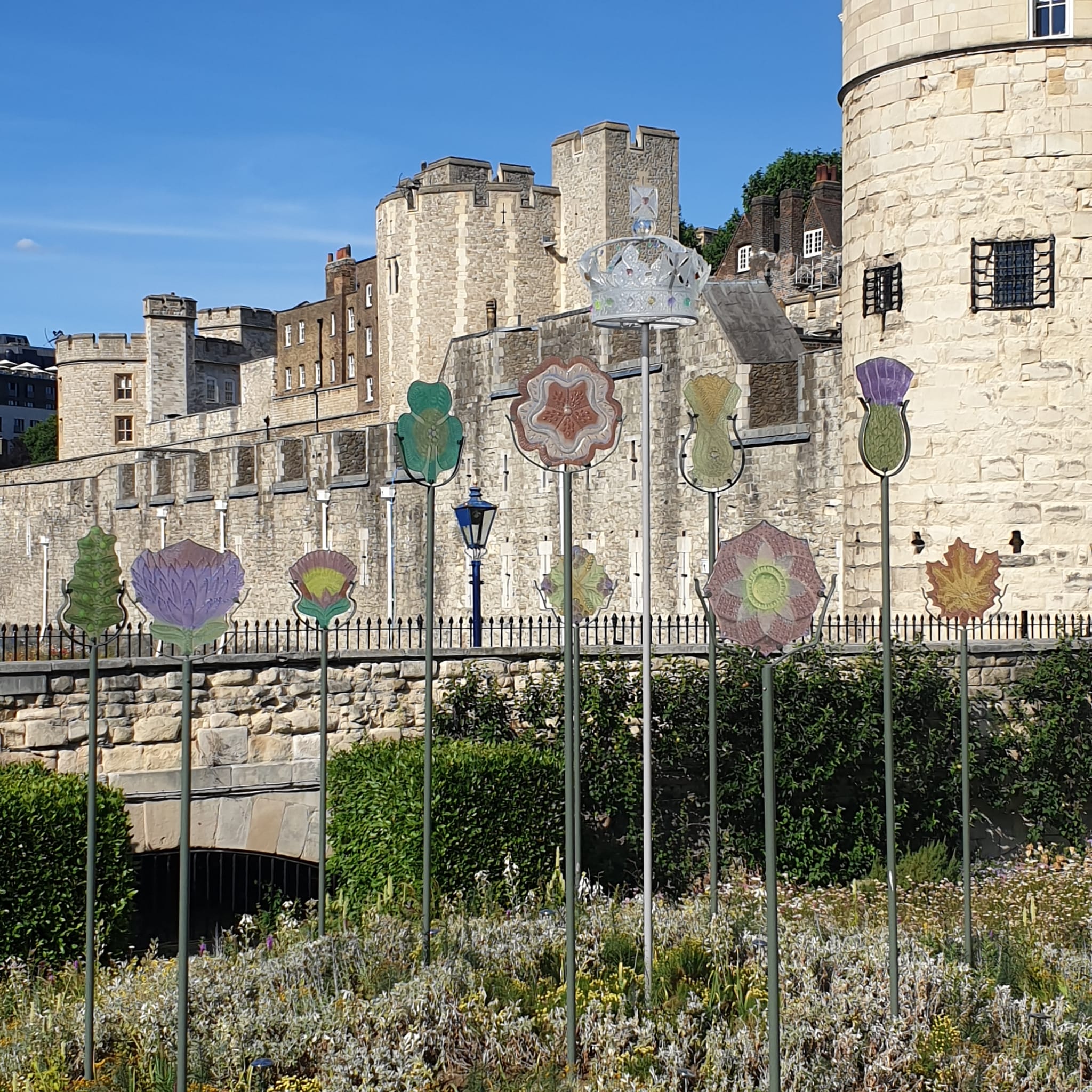
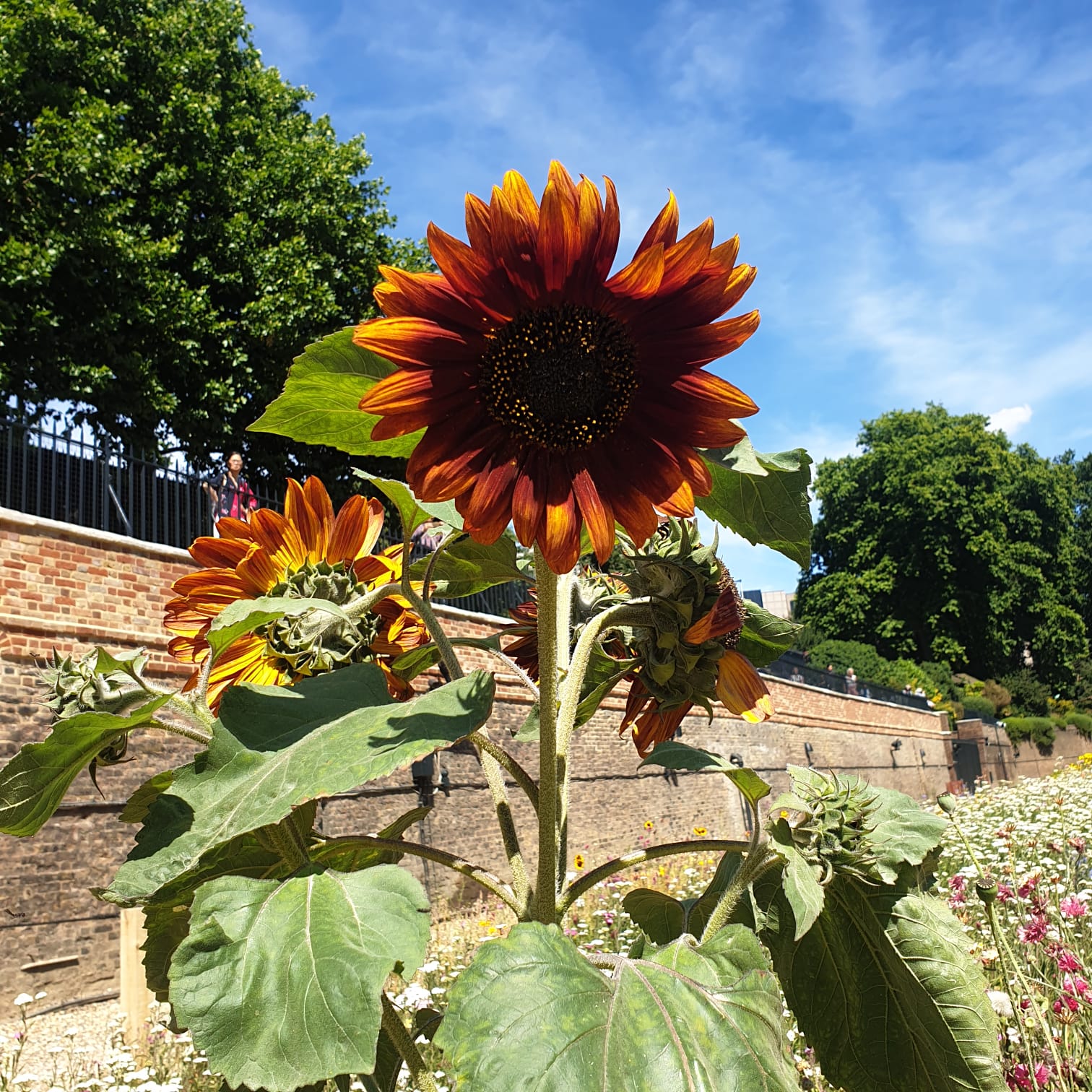
To mark the Platinum Jubilee year of Her Majesty The Queen, over 20 million seeds have been sown in the moat of the Tower of London developing over the course of the summer, to create a beautiful, new naturalistic landscape. Designed to attract pollinators, ‘Superbloom’ brings a wonderful natural beauty to this urban space and introduce a new biodiverse habitat for wildlife. It celebrates the value of nature for our wellbeing.

Open from June to September, it is an evolving display, moving from soft green hues in June to delicate whites, blues, pinks and oranges throughout the height of summer. You enter the moat via a fully accessible visitor entrance. Once in the moat, you can choose to climb the stairs and slide down into the moat on the four lane Superbloom slide! You spend around 30 minutes exploring a one way route along winding willow-lined paths set to a specially commissioned soundscape with sculptural elements along the way. 

See the Queen's Garden, a special tribute to Her Majesty The Queen this Platinum Jubilee year. Designed to be viewed from above, this picture garden is inspired by her 1953 coronation gown. In the centre, sits a glass crown, a reminder of the Tower of London’s ancient as home of the Crown Jewels.

-------------------------------------------------------------------------------------------------------------

Guards of Metropolis - Perfect World.

Tuesday, 14 June 2022

Fit for a Queen: Symbols and Values of Sovereignty

The National Gallery has recently launched a new virtual exhibition to mark the Queen’s Platinum Jubilee. Through a selection of 28 of the National Gallery’s paintings, the exhibition focuses on the values of queenship which were spoken about through signs and symbols in her coronation service and which are still of value today. Many of the paintings explore religion in relation to leadership and symbolism in new and innovative ways.

Her Majesty Queen Elizabeth II is the longest reigning monarch in British history. She has witnessed many changes of government and has advised no fewer than 14 successive Prime Ministers. This year, she became the first British monarch to celebrate a Platinum Jubilee, commemorating 70 years of service.

To mark this unprecedented milestone, the National Gallery has brought together 28 paintings from their collection that shed light on the notion of queenship, including portraits of female rulers from different times and countries as well as images that relate to some of the attributes most frequently associated with female monarchs past and present.

The virtual gallery can be found here: https://www.nationalgallery.org.uk/visiting/virtual-tours/fit-for-a-queen and the exhibition itself is at: https://jubilee.moyosaspaces.com/.

--------------------------------------------------------------------------------------------------------------

Songs for School - Our Queen.

Thursday, 9 June 2016

Seeking the rebirth of an energetic, generous spirit of dedication to the common good


Today's Eucharist at St Stephen Walbrook celebrated the Queen's 90th birthday and was followed by a celebratory afternoon tea. The music used in the service was:

  • Introit: Oh taste and see - Vaughan Williams. Composed for the coronation, first performance there.
  • Hymn: The Old Hundredth. The only congregational hymn at the coronation. This was an innovation, there not having been one before (only for the choir).
  • Anthem: Rejoice in the Lord alway. Sung at the Queen's coronation - and others before.
In my sermon, I said the following:

One regular topic of press debate in relation to the Monarchy is around who has been responsible for modernising the Monarchy during the reign Queen Elizabeth II. In a profile piece I read this week the Duke of Edinburgh was acclaimed in that role, it is a role which has, of course, been claimed for Princess Diana, and, now, is often assigned to her children. I want to suggest that the person who most fundamentally redefined Monarchy was Jesus Christ and that our own monarch, as Head of the Church of England and because of her own personal faith, understands and seeks to apply this in her life and reign.

Jesus entered Jerusalem in the role of a Old Testament King, fulfilling prophecy about the Messiah by doing so, yet humble, riding on a donkey. At the Last Supper he washed the feet of his disciples and taught that now I, your Master, have washed your feet, you should wash the feet of others. He then took this teaching to its logical end and laid down his own life for all people everywhere, through his death on the cross. His followers took this teaching to heart and it characterised all that they did and said. So, we heard the writer of the first letter of John state that we know love by this, that Jesus laid down his life for us—and we ought to lay down our lives for one another (1 John 3.16). Jesus told many stories of Messianic banquets, which depict the coming kingdom of God, in which all are welcome at the banquet, particularly the poor and marginalised. The only ones to miss out are those who actively reject the invitation to come (Luke 14. 16 – 24).

The Queen’s personal commitment to her role as monarch, and her service to the people of the United Kingdom, are grounded in a deep faith in Jesus Christ which is an inspiration to countless citizens of nation and Commonwealth. She has said that, for her, “the teachings of Christ” and her “own personal accountability before God provide a framework” in which she tries to lead her life. (Queen and Country BBC1 08.05.02)

The new Queen, as Princess Elizabeth, in her 21st birthday broadcast from Capetown, on April 21, 1947, gave this message to the Empire:

“There is a motto which has been borne by many of my ancestors – a noble motto, ‘I serve.’

Those words were an inspiration to many bygone heirs to the throne.

I can make my solemn act of dedication with a whole Empire listening. I should like to make that dedication now; it is very simple.

I declare before you all that my whole life, whether it be long or short, shall be devoted to your service and the service of our great Imperial family, to which we all belong, but I shall not have the strength to carry out this resolution alone unless you join in it with me, as I now invite you to do. I know that your support will be unfailingly given.

God help me to make good my vow, and God bless all of you who are willing to share in it.”

Her prayer was that God would help her to make good that vow and it is to God that she turns for inspiration as she has sought to fulfil it. She has said that: “For me, the life of Jesus Christ, the Prince of Peace … is an inspiration and an anchor in my life. A role-model of reconciliation and forgiveness. He stretched out his hands in love, acceptance and healing. Christ’s example has taught me to seek to respect and value all people of whatever faith or none.”

In his sermon at St Paul’s Cathedral for the service celebrating the Diamond Jubilee, the Archbishop of Canterbury said that the Queen “has shown a quality of joy in the happiness of others” and “has responded with … generosity …showing honour to countless local communities and individuals of every background and class and race.”

There can, therefore, be no better way for the Christian Churches to celebrate the Queen’s 90th birthday than to take the opportunity to dedicate ourselves anew to the service of God, and to seek the common good through love for our neighbours near and far. As the Archbishop suggested in his Diamond Jubilee sermon, we should seek “the rebirth of an energetic, generous spirit of dedication to the common good and the public service, the rebirth of the recognition that we live less than human lives if we think just of our own individual good.”

-----------------------------------------------------------------------------------------------

Ralph Vaughan Williams - O Taste And See.

Sunday, 24 November 2013

The Servant King

It is an interesting question to consider why most societies in human history have had some form of monarchy? In some respects, it seems a strange thing to do because it involves the majority of people voluntarily giving wealth and power to one person – the King.

Why would we allow one person to monopolise power and wealth in that way? Well, it seems to have happened because the King then organised and led the army with the aim of ensuring peace and prosperity for their subjects. Simply put, it was a quid pro quo arrangement on the basis that, if you protect us, we’ll allow you to lord it over us and enjoy a better quality of life.

Today we celebrate the Feast of Christ the King but, of course, we are not celebrating Christ as the usual type of human King. We are not even celebrating Christ as a greater type of monarch than our current Queen – god-fearing as she is and with greatly curtailed powers compared with many of her forbears. Instead, we celebrate Christ as a King who turns the notion of Kingship on its head; who, as our reading today (Luke 23. 33 - 43) makes clear, is seen as King at the point when he is least powerful and most vulnerable – at his own death.

The sign saying the King of the Jews hung over Jesus’ head as he was dying on the cross was, for Pilate, a statement of the charge against him. For the crowd on Golgotha, it was a source of mockery – ‘Save yourself, if you are the King of the Jews!’ For the second thief, it was a future hope – ‘Remember me, Jesus, when you come as King!’ For Jesus it was a present reality. The second thief asked ‘Remember me … when you come as King’ and Jesus replied, ‘today you will be in Paradise with me.’ Jesus was saying, ‘Today, not tomorrow or in the future, is when I am King.’ 

What kind of King deliberately becomes a victim and allows himself to killed though? It is the total reverse of what we expect from a King. In Philippians 2 we read of Jesus letting go – stripping himself – of everything which made him equal with God in order to become a human being like us in order to serve us. On Maundy Thursday, in particular, we celebrate Jesus’ decision to become a servant to those he had created when we re-enact his washing of the disciples feet and his words that ‘You call me Teacher and Lord, and it is right that you do so, because that is what I am. I, your Lord and Teacher have just washed your feet.’ Our Lord and King is also a servant. In fact, service of others is the true vocation and measure of Kingship.

More than this, his service of others, as their King, leads all the way to his death on the cross – the laying down of his own life for the sake of others. As Philippians 2 puts it, ‘He was humble and walked the path of obedience all the way to death – his death on the cross.’ The true King lays down his own life for the love of his people (all people). Jesus is that true King who turns the meaning of Kingside upside down. No longer is Kingship to be understood in terms of garnering wealth and power for oneself in other to defend others. Now it is understood to be about service; giving your life that others might live. Jesus, as the servant King, says to us, ‘I, your Lord and Teacher, have just washed your feet. You, then, should wash one another’s feet. I have set an example for you, so that you will do just what I have done for you.’ 

Peter said to Jesus, ‘Never at any time will you wash my feet!’ Jesus answered, ‘If I do not wash your feet, you will no longer be my disciple.’ Some of us, on Maundy Thursday, are like Peter and don’t wish to have our feet washed. For whatever reason, we find it difficult to publicly expose our feet and have someone else wash them. How much more difficult, then, do we find it to genuinely follow Christ’s example of service by laying down our lives for the sake of others? 

Christ challenges all of us, myself included, to let go of the things that prevent us from serving others just as he left all that he had with God in heaven. To allow the force of challenge that Christ as the Servant King poses to us we have to be prepared for the Holy Spirit to question the extent to which we serve others now. Each of us do currently serve and support others in and through this Church as well as in our family, community and work commitments but, equally, each of us, myself included, place constraints on the extent to which we serve others and may use our service of some to mean that we are critical of others. To be true to the revelation of Christ as Servant King, we need to allow God to challenge the extent to which those constraints and attitudes are where he wants us to be.

Christ’s example of service is a constant challenge to us to confront those areas of our lives where we currently hold back from giving ourselves in service of others. We naturally find it difficult to follow that example of service by fully laying down our lives for the sake of others. But that is what we have to move towards if we are to continue to experience his rule and reign – his Kingship - in our lives. Jesus said to Peter, ‘If I do not wash your feet, you will no longer be my disciple.’ because if we're not allowing him to serve us then we certainly won't be able to follow in his footsteps by serving others:

“This is our God, the Servant King, / He calls us now to follow him, / To bring our lives as a daily offering / Of worship to the Servant King … So let us learn how to serve, / And in our lives enthrone him; / Each other’s needs to prefer, / For it is Christ we’re serving.”

In what ways does the example Christ sets as our King challenge each of us today in this area of serving others? That is the true meaning of the feast of Christ the King.

‘After Jesus had washed their feet, he put his outer garment back on and returned to his place at the table. “Do you understand what I have just done to you?” he asked. “You call me Teacher and Lord, and it is right that you do so, because that is what I am. I, your Lord and Teacher have just washed your feet. I, your Lord and Teacher, have just washed your feet. You, then, should wash one another’s feet. I have set an example for you, so that you will do just what I have done for you. I am telling you the truth: no slave is greater than his master, and no messenger is greater than the one who sent him. Now that you know this truth, how happy you will be if you put it into practice.’

---------------------------------------------------------------------------------------------

Graham Kendrick - The Servant King.

Monday, 18 February 2013

Faith in the Public Space and the role of the Church


Making sense of the census was a useful workshop organised by the Greater London Presence and Engagement Network (PEN) on the new Census data and how it can help churches respond to their local context. We heard about the parish statistics that the Research & Statistics Department at Church House will be publishing based on Census 2011 and used a draft resource for stimulating discussion in parishes about the local implications arising from this data.

Following on from this workshop, The Very Revd Dr David Ison, Dean of St Paul’s Cathedral, gave this year’s PEN lecture Guardian or Gatekeeper? Faith in the Public Space and the role of the Church at St George the Martyr Parish Church, SE1. In this lecture, David reflected on his recent sabbatical research on Christian-Muslim relations together with his experiences as Dean of Bradford. 

His thinking essentially mirrored that expressed by the Queen in her address to faith leaders at Lambeth Palace in 2012 where she suggested that the Church of England, while providing an identity and spiritual dimension for its own many adherents, also "has a duty to protect the free practice of all faiths in this country" and "has created an environment for other faith communities and indeed people of no faith to live freely." An example of this in practice is the Common Good Network funded by the Joseph Rowntree Foundation within their Bradford programme. 

For more on David Ison's lecture, click here.

---------------------------------------------------------------------------------

The Staple Singers - If You're Ready (Come Go With Me).

Monday, 25 June 2012

Best of British


The wonderfully creative flower arrangers in our neighbouring parish of St Peter's Aldborough Hatch have once again done a great job with the displays at their annual Flower Festival. Their theme was Best of British and their interesting choices included William Morris, the Cornonation, the weather, the Royal Albert Hall (and the Proms), and John Constable. Other displays had the themes of: the Queen; Forests of Britain; the Armed Forces; the Ascent of Everest; The WI; the legal system; the Spitfire; the building of St Peters (their 150th Anniversary); and the 2012 Olympics. The church remains open today for the final day of the Flower Festival.

--------------------------------------------------------------------------------------------

The Kinks - Days.

Sunday, 10 June 2012

The litmus test for public leadership

Less than a week on from the Diamond Jubilee weekend, where we thanked God for the 60 years of our Queen’s reign, and the lectionary has us reading 1 Samuel 8 where God says, through Samuel, that in wanting to be ruled over by a King, the people of Israel were rejecting him and his rule over them. Did those who compiled the lectionary deliberately select this reading for the Sunday after the Diamond Jubilee weekend as a corrective to our celebrations and is this passage the definitive word on monarchy to be found in the Bible?

I don’t know the answer to the first of those questions, having no idea what goes through the minds of those who compile the lectionary year on year but the second question is well worth exploring more closely before looking at 1 Samuel 8 itself more closely.
The first thing to say is that, as Sam Norton (the Rector of Mersea) put it recently on his blog: “One of the most important things to understand about the Bible is that it is a library of Holy Scripture – that is, there are many different voices within the Bible (even within particular books of the Bible) – and this is of God. That is, it is in recognising both what different books have in common, and where they disagree, that an individual Christian is enabled to come to a mature understanding of the text.”
On some subjects, like the value or otherwise of monarchies, the Bible has a huge amount of comment (but often without there necessarily being any clear agreement on the subject), while on other subjects, like that of same sex relationships, the Bible has hardly anything to say. It is interesting to note that the issues on which the Bible has lots to say are often issues that we don’t view as controversial, while issues on which the Bible has little or nothing to say can sometimes assume huge importance in the life of the Church.
This is one illustration of the fact that we often assume we know what the Bible says when actually we haven’t really got to grips with what it says at all. Our Gospel reading (Mark 3. 20 - 35) is a case in point. Many Christians assume that the Bible supports what we now call ‘family values’ but, as our Gospel reading shows, the Bible often asks deep and searching questions of what it is that we value about family life. Because the Bible often does not actually say what we seem to want it to say and doesn’t always take a simple or consistent line on particular issues, it seems that we can actively shy away from wrestling with the challenges or complexities that it poses in favour of something simpler and more comforting.
So, having set all those hares running, as we come back to 1 Samuel 8 we need to come with an openness to hear what the Bible is actually saying to us, which on this occasion also means being open to the possibility that our celebrations of monarchy last weekend were entirely wrong.
A good guide, who I commend (because he takes the complexities of reading the Bible into account), when reading the Old Testament generally is a Bible scholar called Walter Brueggemann. Brueggemann writes that: “… in 1 Samuel 8, Samuel is in deep dispute with Israel over the function and nature of public leadership. Israel wants a king, in order to be “like the other nations.” Samuel, here the reliable voice of Yahweh, refuses them a king, on the grounds that human kingship is an act of distrust in Yahweh … This interpretive tradition, suspicious of concentrations of power, anticipates that the centralized government is in principle exploitative, usurpatious, and self-serving. We may say that this recognition is fundamental to a biblical critique of power.”
The people of Israel, in the course of the rest of their history, were going to endure many examples of monarchs who were self-serving and who exploited their position and power for their own ends. What God said, through Samuel, would occur did occur on many occasions in the subsequent history of the people of Israel.

But that is not all that this passage or the Bible, as a whole, says on the subject because God and Samuel, despite their misgivings and predictions, all the people of Israel to have what they want. Why do they do this? In part, because there is another, more positive, strand of thinking in the Bible about monarchs. This is the strand which sees David and, initially, his son Solomon as great Kings under whose reign Israel was at the peak of its prosperity and influence.  
Brueggemann notes that the kind of kingship that we see David and initially Solomon exercise: “had the establishment and maintenance of justice as its primary obligation to Yahweh and to Israelite society. This justice, moreover, is distributive justice, congruent with Israel’s covenantal vision, intending the sharing of goods, power, and access with every member of the community, including the poor, powerless, and marginated.”
This is what Brueggemann thinks the Bible sees as key to any form of public leadership: “The claim made is that power – political, economic, military – cannot survive or give prosperity or security, unless public power is administered according to the requirement of justice, justice being understood as attention to the well-being of all members of the community.”
This, then, is the litmus test which, as those seeking to be faithful to what the Bible actually says about monarchy and all forms of public leadership, we should be applying to all those who have power and authority over us in some fashion – monarch, prime minister, cabinet, government, and local authority councillors and officials. The questions we should be putting to them and using to assess their value and legitimacy are questions of justice, particularly for those who are the poorest and least powerful.
It is interesting then to note that this is the very test that the Archbishop of Canterbury used in his sermon at St Paul’s Cathedral last Tuesday. In that sermon, he criticised “the traps of ludicrous financial greed, of environmental recklessness, of collective fear of strangers and collective contempt for the unsuccessful and marginal” and said that what will save us from those traps is a vision of dedicated service to others. One important aspect of discovering that vision is to have “stories and examples available to show it’s possible.” One of those stories over the past six decades, he said, has been that of the Queen who “has shown a quality of joy in the happiness of others” and who “has responded with just the generosity St Paul speaks of in showing honour to countless local communities and individuals of every background and class and race.”
He was saying that the Queen passes the litmus test set within the Bible for those in public leadership but at the same time making it clear, as the Bible also does, that those who lead us into “the traps of ludicrous financial greed, of environmental recklessness, of collective fear of strangers and collective contempt for the unsuccessful and marginal” are not worthy of the office which they hold.
As we follow the story of the monarchy through in Israel’s history, we see this worked out in practice. Brueggemann writes that: “… the royal system was not finally effective in sustaining Israel … at the centre of Israel’s self-awareness is the debacle of 587 B.C.E., when king, temple, and city all failed.”
What happens next is fascinating and central to the development of Christianity: “The dynastic promise … was turned to the future, so that Israel expected the good, faithful, effective king to come, even though all present and known incumbents had failed. Out of concrete political practice arose an expectation of the coming of messiah: a historical agent to be anointed, commissioned, and empowered out of the Davidic house to do the Davidic thing in time to come, to establish Yahweh’s justice and righteousness in the earth.”  
As Christians, we believe that Messiah to have already come in the person of Jesus of Nazareth and that through his life, death and resurrection the establishment of God’s justice and righteousness on earth, as in heaven, has begun to be established and is now awaiting his second coming for its full completion. This brings us back to the place where we began, the centralizing of power in the hands of one human being is always likely to lead to that power being used in ways that are self-serving and exploitative. It is only we acknowledge God as the ultimate and just ruler of all that our lives and society are placed in their proper perspective.
As we await that day, we can both hold our rulers to account on the Biblical basis of the issue of justice for all and, as the Archbishop emphasised in his Diamond Jubilee sermon, seek “the rebirth of an energetic, generous spirit of dedication to the common good and the public service, the rebirth of the recognition that we live less than human lives if we think just of our own individual good.”  

---------------------------------------------------------------------------------

Madness - Our House.

Sunday, 3 June 2012

Jubilee reflections (3)

Queen Elizabeth ll has reigned over the United Kingdom and her Commonwealth countries for 60 years. 2012 and the Diamond Jubilee brings about many opportunities to celebrate, focus and give thanks for her faithful, gracious and devoted service to the nations.

The origin of royal jubilees goes back thousands of years, with the first historical records of a Royal Jubilee taking place 3000 years before Christ in Egypt. The early Pharaohs of Egypt held national celebrations every 30 years of rulership.

Jubilee is also a constant theme throughout the Bible. The word ‘jubilee’ stems from the Hebrew word ‘Yobel’, which refers to the ram or ram’s horn with which jubilee years were proclaimed. In Leviticus it states that such a horn or trumpet is to be blown on the tenth day of the seventh month after the lapse of ‘seven Sabbaths of years’ (49 years) as a proclamation of liberty through- out the land of the tribes of Israel. The year of jubilee was a consecrated year of ‘Sabbath-rest’ and liberty. During this year all debts were cancelled, lands were restored to their original owners and family members were restored to one another.
The year of jubilee was also central to the ministry of Jesus. After Jesus had been baptised by John and the Holy Spirit sent him into the desert to be tempted by the devil; Jesus called his first disciples to follow him. His teaching had begun. He went into the synagogue and amazed the people with his teaching, because he taught with such authority yet didn’t have the royal robes, orbs or jewels which granted authority from Kings and Queens, the rulers of the day. No other power or authority can compete with his power and authority.
The people had never heard anything like this before. What Jesus was saying and how he was saying it was astonishing. They had heard teachers talk of the law before but this was something so amazing that they were in awe. Jesus was in another league because he claimed to be the fulfillment of Isaiah’s prophecy in Isaiah 61:1–2. Jesus stated that he had come to ‘proclaim freedom for the prisoners and recovery of sight to the blind, to set the oppressed free, to proclaim the year of the Lord’s favour’ (Luke 4:18–19 TNIV). This is the year of jubilee and this is THE example for all leader's to follow.

So, as the Churches Together in England President’s have said, “There can be no better way for the Christian Churches to celebrate the Jubilee than to take the opportunity to dedicate themselves anew to the service of God, and to seek the common good through love for their neighbours near and far.”
The Queen’s personal commitment to her role as monarch, and her service to the people of the United Kingdom, are grounded in a deep faith in Jesus Christ which is an inspiration to countless citizens of nation and Commonwealth. She has said that, for her, “the teachings of Christ” and her “own personal accountability before God provide a framework” in which she tries to lead her life. (Queen and Country BBC1 08.05.02)
Her coronation also made it clear that, as Queen, her first responsibility is to God. In the coronation service she was set apart or consecrated by an Act of Anointing with the words ‘as kings, priests and prophets were anointed’. This is based on the scriptural account of Samuel anointing Saul king in 1 Samuel 10v1, 24, 11v14.
Anointing in the Old Testament was always for a specific person and for a particular role e.g. Prophets (1 Kings 19:16), Priests (Exodus 40:13) or Kings (1 Samuel 16:13). As with the Queen, ordinary people were anointed for extra-ordinary service.
This Old Testament principle flowed into the New Testament, where an anointing for service was extended to all of Jesus’ followers. Joel’s prophecy (Joel 2) was fulfilled in Acts. God’s anointing – the Holy Spirit – falls on every generation, young and old, sons and daughters… so ordinary people such as you and I can have the Holy Spirit at work in our lives to give us the power to serve in today’s world.
In Acts 1:8 Jesus explains what it means to be anointed to serve: the power of the Holy Spirit has been given to us to enable us to fulfil Jesus’ ministry to the ends of the earth. As Christians, we have received the Holy Spirit so that we can live in the power of the Holy Spirit: righteousness, joy, peace and hope for our broken world all overflow from this anointing (Romans 14:17 and 15:13).
So, to receive the anointing, by faith we need to acknowledge the sacrifice Jesus has made on the cross for our sins. We then have the privilege of the indwelling Holy Spirit enabling us to live out Jesus’ ministry in Christian service.
In conclusion, and in application, we need to understand that we are ordinary people but have been anointed for an extra-ordinary ministry that we receive by faith, in simple trust. As a result we know the joy, power and presence of the Holy Spirit overflowing from our lives.
The Queen’s Diamond Jubilee is a great moment in the life of this country. We celebrate together the life of someone who is clearly very special. She has a special job, is given special powers and has special tools and clothes. Looking at the old film footage of the coronation, I can’t begin to imagine how she must have felt – it was almost as if she was the most important person in the world. But as a Christian I am reminded that this is exactly how God feels about each one of us. I believe that God has made each one of us and that we each have a unique part to play in our community. We all have gifts and talents that can make a difference to those around us. We are valued equally because we are loved equally – I know that because I believe that Jesus came to show that through his life, death and resurrection.
So when you leave this church this morning remember you leave as Kings and Queens, truly special people with a special job to do.
Our special job is to be the servant of others just as Jesus has been servant to us. That is actually also the job of the Queen, she is to be the servant of the people. The new Queen, as Princess Elizabeth, in her 21st birthday broadcast from Capetown, on April 21, 1947, gave this message to the Empire:
“There is a motto which has been borne by many of my ancestors – a noble motto, ‘I serve.’
Those words were an inspiration to many bygone heirs to the throne.
I can make my solemn act of dedication with a whole Empire listening. I should like to make that dedication now; it is very simple.
I declare before you all that my whole life, whether it be long or short, shall be devoted to your service and the service of our great Imperial family, to which we all belong, but I shall not have the strength to carry out this resolution alone unless you join in it with me, as I now invite you to do. I know that your support will be unfailingly given.
God help me to make good my vow, and God bless all of you who are willing to share in it.”

Again we are brought back to the words of the CTE President’s, “There can be no better way for the Christian Churches to celebrate the Jubilee than to take the opportunity to dedicate themselves anew to the service of God, and to seek the common good through love for their neighbours near and far.”
-------------------------------------------------------------------------------------------

Delirious? - Majesty.

Saturday, 2 June 2012

Jubilee reflections (2)


Photos from today's Jubilee garden party at St John's Seven Kings.

-------------------------------------------------------------------------------------------

George Harrison - All Things Must Pass.