Wikio - Top Blogs - Religion and belief
Showing posts with label tutu. Show all posts

Wednesday, 6 May 2026

Memorial Service for The Revd Sally Muggeridge


Here's the sermon that I preached today in the Memorial Service for Sally Muggeridge held at St Stephen Walbrook:

The opportunity to minister at St Stephen Walbrook together with Sally was one that I greatly enjoyed and appreciated. I greatly valued having her as a colleague. She was a special colleague with great insight and ideas coupled with real humility and a servant heart. We were very fortunate to have enjoyed Sally’s assistance and ministry at St Stephen Walbrook during her curacy and were particularly grateful for the links she established with the City and with businesses locally.

Her time with us also broke down barriers as she was the first woman to preside at the Eucharist in St Stephen Walbrook. It was a privilege to be at the ‘At Home’ for WATCH during which she celebrated her first Eucharist and became the first woman to celebrate the Eucharist in that church. I also remember with real pleasure our conversations about her uncle Malcolm Muggeridge and his impact as well as all she did to work on his legacy. I will always remember her time with us and all she brought to ministry with deep gratitude.

As we have just heard, Sally had her calling as a priest confirmed to her as she cared for and sat through the night with a lady in Calcutta who was dying while in the care of Mother Teresa’s Sisters of Charity. This remarkable experience culminated with a moment of communication between the two just before the woman died and coincided, in a God-incidence, with the death of Sally’s own mother, who received a call from Desmond Tutu just before she died.

Reflecting on these experiences would have confirmed a priestly call for Sally because they are experiences of being with, something that is at the heart of what priestly ministry involves. Being with is based on the belief that to find the meaning of life we need each other. We need to spend time being present and attentive to others who may be different to us and to ourselves and the world around us. As we do this, we can discover a way to be attentive to God and discover that God is present to us.

This discovery occurs because God has always been with, although never more so than in his incarnation as Jesus. The kingdom of God comes near to us when Jesus comes near because Jesus is God with us. That is what the incarnation, the crucifixion and the resurrection are all about. The Gospel of Matthew begins with the angel's promise that the Messiah will be called Emmanuel - God with us. The Gospel ends with Jesus's promise to his disciples, "Remember, I am with you always, to the end of the age." In between we get Jesus's promise to the church, "Where two or three are gathered in my name, I am there with them." … And, perhaps most significantly of all, the Gospel of John says "The Word was made flesh and dwelt with us." Jesus's ministry is about being with us, in pain and glory, in sorrow and in joy, in quiet and in conflict, in death and in life. God is with us when Jesus comes near, which is, in reality, all the time. That is our witness as Christians and it is also our ministry. If the heart of the Gospel is that God is with us in every circumstance and into eternity, then our task is to be with others in order that they experience God with them.

This was Sally’s experience and was at the heart of her priestly ministry being the key aspect of her ministry about which she spoke when she was profiled by the Financial Times: “My role is now one of pastoral care of stressed City workers. So many seek chats, prayers, a quick discussion [about] a worry about family life and work. A prayer needed, a smile, a service — I can help with examples and encouragement.”'

She was able to do this so well because of the time she had spent in the business world and the experience gained. Being with those who work in the City involves making connections between faith and working life and Sally was able to do that supremely well because of the prior experience that she brought to ministry. Again, this featured in the FT profile where it was noted that: "Throughout her career, Revd Muggeridge has been a vocal advocate of increasing the role of women in business and the church.”

As such, Sally organised a 'Women in the City of London - More than just a place of work' event which highlighted the civic, cultural, charitable and social opportunities in the City of London, including networks as a route to fuller participation. She also contributed to a series of events we ran to explore the place of faith in the world of business. We titled this series as ‘plus+ presentations’ flagging that we were seeking to add value to the experience of being in the City. Sally spoke from personal experience about campaigns to increase the numbers of women on Boards. She also chaired a Volunteers from the City event which explored the benefits of volunteering, preparation, training and support for volunteers, and the part that Corporate Social Responsibility plays in volunteering. These are just a few examples of the links she established for St Stephen Walbrook with the City and with businesses locally. They, and other gatherings, were opportunities to meet and be with the City workers to whom she ministered pastorally.

She also contributed regularly to Start:Stop, our popular ten-minute Tuesday morning reflections, one of several initiatives that created ‘a new pattern of missional engagement at Walbrook.’ These included the uplifting ‘Discover and Explore’ series of services on Mondays, which featured different themes accompanied by the music of the Choral Scholars. This service involved speaking on an eclectic but interesting variety of topics depending on the theme. Among the topics on which Sally spoke were the following: Lanning Roper, Love, the Temple of Mithras, Christopher Wren, George Croly, Hope, Sir John Vanburgh, Chad Varah, John the Baptist, Guidance, Faith, St Paul in Rome, and St Columba. Always, however, with a deep perception of where God was to be found with us in relation to the topic.

In speaking once about architecture, she noted that this impulse: “the planning and specification of buildings, is perhaps as old as man’s wish to build. But we also know we cannot look to any building, however majestic, for permanence. Buildings are by nature, like us, transitory, here today and gone tomorrow. In the search for true permanence and stability, in wishing to build Jerusalem in England’s green and pleasant land, we must look to God.”

That thought brings us back to the permanent nature of God’s being with us in the reality of life experiences that are changing and transient. As we heard in the reading from Romans, “nothing can separate us from his love.” That remains true in all that we experience as we go through life.

As Sam Wells has said: “God doesn’t spare us from the fire. God doesn’t rescue us from the fire … God is with us in the fire. ‘Though I walk through the valley of the shadow of death, I fear no evil; for you are with me.’ ‘When you walk through fire you shall not be burned, and the flame shall not consume you.’ That’s the gospel …

Jesus isn’t spared the cross. Jesus isn’t rescued from the cross. Jesus is with God on the cross. The bonds of the Trinity are stretched to the limit; but not ultimately, broken. When we see the cross we see that God is with us, however, whatever, wherever … forever. This is our faith.”

As Henri Nouwen says: “God’s protection is not a promise that nothing will happen to us, but that nothing—absolutely nothing—will separate us from His love.”

As a result, we can say with the Psalmist: “If it had not been the Lord who was on our side … then the flood would have swept us away, the torrent would have gone over us; then over us would have gone the raging waters.” May we know that truth in whatever difficulty we face currently.

Finally, though, God’s being with in the incarnation and in the vicissitudes of life is so that we can be with him forever in the coming kingdom of God where there will be nothing for us to fix and where there will simply be being with God, with each other and with creation. That is now Sally’s experience having come through all that she experienced in this life with the knowledge that Christ was with her in all things.

And, as will be of great importance for someone who was always learning, growing, developing and doing something beautiful for God, that experience of being with will not be static, formulaic and dull but instead will be exploratory as there is always something more to know of love, joy and peace in the never-ending depths of God. Although at rest, Sally remains on her journey of faith, exploring her calling, discovering more of the beauty in God, in others, in herself, and in creation. May the same also be true for us. Amen.


My review of 'Jesus, The Man Who Lives by Malcolm Muggeridge, with an Afterword by Sally Muggeridge, can be read here.

------------------------------------------------------------------------------------------------------

Sunday, 17 September 2023

How often should we forgive?

Here's the sermon I shared at St Andrew's Wickford this evening:  

When I was at St John’s Seven Kings, classes from Newbury Park Primary School visited to use the Easter Activity Stations we prepared. These helped them reflect on the Easter story with one of the stations being on the theme of forgiveness. After thinking about the way in which Jesus said, "Forgive them, Father, for they do not know what they are doing," this Station involved the children asked themselves the following questions:

1. Have you ever been hurt by anybody?

2. Do you need to forgive them?

They then wrote a list of who and what they needed to forgive and stuck this to felt boards by the cross on the altar.

How do we feel about our worst enemy? Is there any member of the family, or anybody at work, against whom we’re nursing anger, bitterness or resentment? It is only as we forgive others can we enter fully into the wonderful experience of God’s forgiveness of us. This is not just a nice idea. It’s a condition for our own forgiveness. Jesus warns us that if we don’t forgive, then we in turn shall not be forgiven (Matthew 18.21-35). This teaching alone, if we take it seriously, will completely change our lives.

In his book, Surprised by Hope, N. T. Wright says, "Forgiveness is a way of life, God’s way of life, God’s way to life; and if you close your heart to forgiveness, why, then you close your heart to forgiveness. That is the point of the terrifying parable in Matthew 18, about the slave who had been forgiven millions but then dragged a colleague into court to settle a debt of a few pence. If you lock up the piano because you don’t want to play to somebody else, how can God play to you? That is why we pray, “Forgive us our trespasses, as we forgive those who trespass against us.” That isn’t a bargain we make with God. It’s a fact of human life. Not to forgive is to shut down a faculty in the innermost person, which happens to be the same faculty that can receive God’s forgiveness.”

Wright notes that Jesus has already taught his followers to pray for forgiveness (6.12), and has specified clearly that if you want forgiveness you've got to be prepared to give it (6.14-15). Now Jesus returns to that same theme. Peter's question and Jesus' answer say it all (verses 21-22). If you're still counting how many times you've forgiven someone, you're not really forgiving them at all, but simply postponing revenge. 'Seventy times seven' is a typical bit of Jesus' teasing. What he means, of course, is 'don't even think about counting, just do it'”

Despite this Desmond Tutu, the founder of the Truth and Reconciliation Commission in South Africa, writes: "I realise how difficult the process of forgiving truly is. Intellectually, I know my father caused pain because he himself was in pain. Spiritually, I know my faith tells me my father deserves to be forgiven as God forgives us all. But it is still difficult. The traumas we have witnessed or experienced live on in our memories. Even years later they can cause us fresh pain each time we recall them ...”

Then, he goes on to say: “When we are willing to let down our defences and look honestly at our actions, we find there is a great freedom in asking for forgiveness and great strength in admitting the wrong. It is how we free ourselves from our past errors. It is how we are able to move forward into our future, unfettered by the mistakes we have made."

"Forgiveness takes practice, honesty, open-mindedness and a willingness (even if it is a weary willingness) to try. It isn't easy. Perhaps you have already tried to forgive someone and just couldn't do it. Perhaps you have forgiven and the person did not show remorse or change his or her behaviour or own up to his or her offences – and you find yourself unforgiving all over again. It is perfectly normal to want to hurt back when you have been hurt. But hurting back rarely satisfies. We think it will, but it doesn't. If I slap you after you slap me, it does not lessen the sting I feel on my own face, nor does it diminish my sadness over the fact that you have struck me. Retaliation gives, at best, only momentary respite from our pain. The only way to experience healing and peace is to forgive. Which is why to forgive is not just to be altruistic. It is the best form of self-interest. Until we can forgive, we remain locked in our pain and locked out of the possibility of experiencing healing and freedom, locked out of the possibility of being at peace."

Forgiving is also a process that does not exclude hatred and anger. Those emotions are all part of being human. You should never hate yourself for hating others who do terrible things: the depth of your love is shown by the extent of your anger. However, when we talk of forgiveness what we mean is the belief that you can come out the other side a better person. A better person than the one being consumed by anger and hatred. Remaining in that state only locks you in a state of victimhood, making you almost dependent on the perpetrator. If you can find it in yourself to forgive then you are no longer chained to the perpetrator. You can move on, and you can even help the perpetrator to become a better person too.

Gordon Wilson is an example of this happening in practice. Gordon Wilson was the father of Marie Wilson, one of 12 victims of the Enniskillen Remembrance Day Bombing in 1987. The bombing could have provoked a response of anger and revenge; instead, what emerged was an atmosphere of forgiveness and reconciliation because of Gordon Wilson and the way in which he responded to this tragedy in the spirit of Jesus.

A few hours after the bombing, when interviewed by the BBC, he described his last conversation with his daughter, a nurse, as they both lay buried in rubble. He said: "She held my hand tightly, and gripped me as hard as she could. She said, 'Daddy, I love you very much.' Those were her exact words to me, and those were the last words I ever heard her say." To the astonishment of listeners, Wilson went on to add, "But I bear no ill will. I bear no grudge. Dirty sort of talk is not going to bring her back to life. She was a great wee lassie. She loved her profession. She was a pet. She's dead. She's in heaven and we shall meet again. I will pray for these men tonight and every night." Historian Jonathan Bardon recounts that: "No words in more than twenty-five years of violence in Northern Ireland had such a powerful, emotional impact."

Gordon Wilson forgave the terrorists who had killed his daughter. He said that he would pray for them. He also begged that no-one took revenge for Marie's death as that could not bring her back. His response to atrocity of the Enniskillen bombings was in the spirit of Jesus and helped to overcome divisions between Catholic and Protestant, as throughout the rest of his life he worked hard to bring reconciliation between people in Northern Ireland including becoming patron of the Spirit of Enniskillen Trust which worked to encourage dialogue and greater understanding between all social, cultural and religious traditions.

As Desmond Tutu writes: "The simple truth is, we all make mistakes, and we all need forgiveness. There is no magic wand we can wave to go back in time and change what has happened or undo the harm that has been done, but we can do everything in our power to set right what has been made wrong. We can endeavour to make sure the harm never happens again.

There are times when all of us have been thoughtless, selfish or cruel. But no act is unforgivable; no person is beyond redemption. Yet, it is not easy to admit one's wrongdoing and ask for forgiveness. "I am sorry" are perhaps the three hardest words to say. We can come up with all manner of justifications to excuse what we have done. When we are willing to let down our defences and look honestly at our actions, we find there is a great freedom in asking for forgiveness and great strength in admitting the wrong. It is how we free ourselves from our past errors. It is how we are able to move forward into our future, unfettered by the mistakes we have made."

-----------------------------------------------------------------------------------------------------

Monday, 21 February 2022

A Memorial Service for Archbishop Emeritus Desmond Tutu and Ambassador Lindiwe Mabusa: Prayers


Here are the prayers I prepared for today's Service of Celebration and Thanksgiving for Archbishop Desmond Tutu and Ambassador Lindiwe Mabuza at St Martin-in-the-Fields:

God of justice, we give you thanks for your prophets, prophets like Desmond Tutu, who advocate for love, justice and human rights in the struggles against apartheid, oppression and exploitation and for climate justice, peace in Palestine and Israel, equal rights for the LGBTI community, equality, fairness and justice across the world. Like the Arch, may we come to see that all humans are of infinite worth intrinsically because all are created in Your image and that systems such as apartheid are blasphemous because they treat the children of God as if they are less than Your own. Challenge us through your prophets to create societies wherein people count and where all have equal access to the good things of life, with equal opportunity to live, work and be educated. Lord, in your mercy, hear our prayer.

God of culture, we thank you for your poets, poets like Lindiwe Mabuza, for whom art was an essential part of the struggle and poetry a part of a whole arsenal of weaponry to be used against apartheid. We thank you for all who shape their words to get to the heart of the matter and move their hearers. We thank you for all who kneel, where road-blocks to life pile precariously, and scoop earth, raising mounds of hope, who oath with their lives to immortalise each footprint left, each grain of soil that flesh shed, each little globe of blood dropped in the struggle upon the zigzag path of revolution. We thank you for those who saw that Soweto's blood red road would not dry up until the fields of revolution were fully mellow tilled, always to bloom again. Lord, in your mercy, hear our prayer.

God of unity, we give thanks for your reconcilers, reconcilers like Desmond Tutu, who do the demanding, sometimes agonising, sometimes traumatic work of truth-telling, testimony, confession, listening, reparation and rehabilitation. We thank you for all who helped investigate the violations that took place in South Africa between 1960 and 1994, provided support and reparation to victims and their families, and compiled a full and objective record of the effects of apartheid on South African society. Remind us that while we are not responsible for what breaks us, we can be responsible for what puts us back together again and naming the hurt is how we begin to repair our broken parts. That, as the Arch reminded us, in our own ways, we are all broken and out of that brokenness, we hurt others. May forgiveness be the journey we take toward healing the broken parts and become whole once again. Lord, in your mercy, hear our prayer.

God of relationships, we give thanks for your Ambassadors, Ambassadors like Lindiwe Mabuza, who succeed in promoting their countries and cultures winning new friends from across many fields, from business to tourism, music, literature and arts and culture. Give us the gift of bringing people together and of polishing rough diamonds until they themselves know how brightly they shine. Lord, in your mercy, hear our prayer.

God of freedom, we give thanks for 27 years of freedom since South Africans voted in their first democratic elections. We give thanks for the lives and work of Desmond Tutu and Lindiwe Mabuza and the part that each played in the anti-apartheid movement. We give thanks for those of all faiths and none who contributed to the anti-apartheid movement. We give thanks that Trafalgar Square became a global focal point for the movement and for the part that St Martin-in-the-Fields played within that movement. We give thanks for the ongoing partnership between St Martin’s and St Mary’s Cathedral in Johannesburg. We give thanks for the work of the High Commission in the UK as it contributes to the creation of a better South Africa through its engagement with the government and people of the United Kingdom. God Bless South Africa; Guard her children; Guide her leaders And give her peace, for Jesus Christ's sake. Lord, in your mercy, hear our prayer.

Merciful God, accept these prayers for the sake of your Son, our Saviour, Jesus Christ. Amen.

---------------------------------------------------------------------------------------------------------

David Fanshawe - Dona Nobis Pacem - A Hymn for World Peace.

Sunday, 20 February 2022

A Memorial Service for Archbishop Emeritus Desmond Tutu and Ambassador Lindiwe Mabusa


A Memorial Service for Archbishop Emeritus Desmond Tutu and Ambassador Lindiwe Mabusa will be held at St Martin-in-the-Fields on Monday 21 February, 2.00pm. The service, which is being organised with the South African High Commission, will include tributes to the Archbishop Emeritus and the Ambassador from those who knew them, an Address from Revd Dr Sam Wells, and music from St Martin’s Voices. Those wishing to attend should RSVP to events@southafricahouse.uk, the service will also be livestreamed on stmartins.digital and the St Martin's Facebook page.

----------------------------------------------------------------------------------------------------------

James Whitbourn - A Prayer of Desmond Tutu.


Friday, 18 February 2022

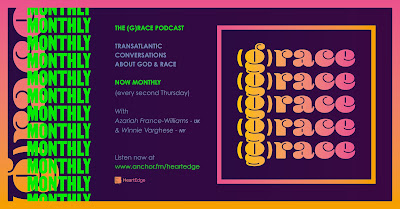
New Grace podcast

"Prophetic and fearless... and deep solidarity..." Azariah and Winnie on Recent Loss and Remembering

Grace Podcast

Winnie Varghese and Azariah France-Williams on recent deaths and loss, remembering bell hooks; "She uses her grandmother's name... and doesn't capitalise her name... she decides to stand away from the institution that grant honour in different ways..."; Desmond Tutu, "his always outspoken support for LGBTQ people... his prophetic and profound commitment to justice, in ways that aren't what your PR consultant would recommend..."; and Harold Lewis, "Prophetic and fearless... and deep solidarity...", "He organised all of the funds... when our church still doesn't have that will, that bite, to provide what's necessary for people to flourish and thrive."

Talking about life, death and remembering "You note the lives of these icons and wonder if we're doing them justice, if there is another generation emerging in the same way..."

Listen to the Grace podcasts here.


--------------------------------------------------------------------------------------------------------------


HeartEdge Mailer - February 2022

HeartEdge is an international, ecumenical movement of churches shaped by pastoral ministry, fostering an appetite for compassionate, cultural and commercial opportunities.

We're about:
  • Expanding the imagination of a church captivated by scarcity.
  • Church being fully-alive, transforming church and society through commerce, culture, compassion and congregational life.
This month in our Mailer:
  • HeartEdge Gathering - Manchester - 27 / 28 September
  • Nomtombi Naomi Tutu on one South Africa and another, Sarah Rogers on Social Media, Pádraig Ó Tuama on story telling.
  • Talking death and loss with Juliet Stephenson, also, community emergency, and using church as a space to grow food.
  • Plus new book extract 'Abba Amma' by Nicola Slee.
Read the Mailer here. Sign up to receive it regularly here.

-------------------------------------------------------------------------------------------------------------

Sixpence None The Richer - Melody Of You.

Tuesday, 15 September 2020

Moving forward unfettered by the mistakes we have made

I brought together some thoughts on forgiveness by Tom Wright and Desmond Tutu for the reflection that I shared at the lunchtime Eucharist for St Martin-in-the-Fields today: 

'In his book, Surprised by Hope, N. T. Wright says, "Forgiveness is a way of life, God's way of life, God's way to life; and if you close your heart to forgiveness, why, then, do you close your heart to forgiveness. . . If you lock up the piano because you don't want to play to somebody else, how can God play to you?

"That is why we pray, 'Forgive us our trespasses, as we forgive those who trespass against us.' That isn't a bargain we make with God. It's a fact of human life. Not to forgive is to shut down a faculty in the innermost person, which happens to be the same faculty that can receive God's forgiveness."'

Wright notes that 'Jesus has already taught his followers to pray for it (6.12), and has specified clearly that if you want forgiveness you've got to be prepared to give it (6.14-15). Now he returns to the theme. Peter's question and Jesus' answer say it all (verses 21-22). If you're still counting how many times you've forgiven someone, you're not really forgiving them at all, but simply postponing revenge. 'Seventy times seven' is a typical bit of Jesus' teasing. What he means, of course, is 'don't even think about counting, just do it'”'

'Forgiveness takes practice, honesty, open-mindedness and a willingness (even if it is a weary willingness) to try. It isn't easy. Perhaps you have already tried to forgive someone and just couldn't do it. Perhaps you have forgiven and the person did not show remorse or change his or her behaviour or own up to his or her offences – and you find yourself unforgiving all over again. It is perfectly normal to want to hurt back when you have been hurt. But hurting back rarely satisfies. We think it will, but it doesn't. If I slap you after you slap me, it does not lessen the sting I feel on my own face, nor does it diminish my sadness over the fact that you have struck me. Retaliation gives, at best, only momentary respite from our pain. The only way to experience healing and peace is to forgive. Until we can forgive, we remain locked in our pain and locked out of the possibility of experiencing healing and freedom, locked out of the possibility of being at peace.'

'To forgive is not just to be altruistic. It is the best form of self-interest. It is also a process that does not exclude hatred and anger. These emotions are all part of being human. You should never hate yourself for hating others who do terrible things: the depth of your love is shown by the extent of your anger.'

'However, when I talk of forgiveness I mean the belief that you can come out the other side a better person. A better person than the one being consumed by anger and hatred. Remaining in that state locks you in a state of victimhood, making you almost dependent on the perpetrator. If you can find it in yourself to forgive then you are no longer chained to the perpetrator. You can move on, and you can even help the perpetrator to become a better person too.'

'The simple truth is, we all make mistakes, and we all need forgiveness. There is no magic wand we can wave to go back in time and change what has happened or undo the harm that has been done, but we can do everything in our power to set right what has been made wrong. We can endeavour to make sure the harm never happens again.'

'There are times when all of us have been thoughtless, selfish or cruel. But no act is unforgivable; no person is beyond redemption. Yet, it is not easy to admit one's wrongdoing and ask for forgiveness. "I am sorry" are perhaps the three hardest words to say. We can come up with all manner of justifications to excuse what we have done. When we are willing to let down our defences and look honestly at our actions, we find there is a great freedom in asking for forgiveness and great strength in admitting the wrong. It is how we free ourselves from our past errors. It is how we are able to move forward into our future, unfettered by the mistakes we have made.'

--------------------------------------------------------------------------------------------------

Sweetmouth - Forgiveness.

Monday, 13 July 2020

The only hope for humanity

Here's the reflection I shared during today's lunchtime Eucharist for St Martin-in-the-Fields:

Desmond Tutu is someone whose life has been shaped by Jesus’ teaching to love your enemies as yourself. For Tutu, Christianity is the religion of the downtrodden and dispossessed in which everyone is equal in the eyes of God and those who follow Jesus are exhorted to love our enemies. He has said that, “It wasn’t easy to love your enemy when they were throwing us in prison or murdering us.” It is the most difficult of all doctrines, he says, but it offers the only hope for humanity.

I mention this because our Gospel reading (Matthew 10.34-11.1) seems to show a very different side to Jesus than that highlighted by Desmond Tutu. Here Jesus doesn’t appear to be saying, “love your enemies,” instead he says that he has not come to bring peace but a sword and that he came to make enemies of the members of families. What is going on here? Are we talking about the same person? Is there a contradiction in what Jesus was teaching? Do we have to make some kind of choice between the two? It all seems very confusing.

The important thing to be aware of in understanding these words of Jesus is that he was talking to his disciples about a mission that was specifically to the people of Israel. Jesus began his instructions to his disciples, as recorded in Matthew 10, by saying: “Do not go to any Gentile territory or any Samaritan towns. Instead, you are to go to the lost sheep of the people of Israel.” Everything that Jesus says in this chapter is in the context of that mission and when we understand that it makes a big difference to the way we understand what Jesus was saying here.

Jesus thought of his own people, the Jews, as being lost. They had moved away from God’s plans and purposes because they had not been bringing the light of God to the Gentiles. Instead, they had turned in on themselves and acted as though God was just a national God for themselves. What Jesus was about to do through his death and resurrection would blow that kind of thinking out of the water. As he said to the disciples in verse 18, they would, in future, be telling the Good News to both Jews and Gentiles. But, for now, before his death and resurrection Jesus sent his disciples only to their own people with the message that the kingdom of God – the day when Jews and Gentiles would come together to worship the one true God – was coming near. Jesus’ mission and ministry in Israel before his death was an opportunity for the people of Israel to come on board and be part of the new thing that God was doing in the world. But Jesus was realistic about the way many would react to this opportunity.

He knew that some would respond positively and embrace his message but that others would be violently opposed. His message would, therefore, bring division among the people of Israel. Some would accept and follow and others would be violently opposed. This is what he meant when he spoke about not bringing peace and the members of the family being divided. He was speaking specifically about the effect that his message, life, death and resurrection would have on the people of Israel.

We know from subsequent events that Jesus was right in his assessment of the situation. Jesus himself was violently opposed and killed by those who did not accept his message despite large numbers of Jews hearing and following him. The early Church was persecuted at the same time that it grew rapidly in numbers with both Jews and Gentiles becoming followers of Christ. Finally, Jerusalem itself was overrun by the Romans and the Temple, the focus of the Jewish faith at that time, was destroyed. That act meant that there could no longer be a solely national focus to the Jewish faith and the early Christians spread out from Israel even more widely as a result.

So Jesus, here, is speaking specifically about what would happen within the people of Israel as a result of his message and mission but he was not talking about the content of that message and mission. His message and mission was to bring the light and forgiveness of God to the whole world, both Jews and Gentiles; a message and mission of peace and reconciliation, not of violence and division. The Gentiles were viewed, at that time, as enemies of God’s people but Jesus was saying that God’s people should love their enemies and that God would bring all peoples into his kingdom. 

The good news of Jesus is peace, reconciliation and love for enemies, just as Desmond Tutu claimed and has practised. It is the reverse of violence and division but its effect in the Judaism of Jesus’ time and immediately after was division. Just as Jesus, the early Church and those like Desmond Tutu gave themselves wholeheartedly and peaceably to this mission despite the opposition and violence that they have encountered, so we must do the same as followers of Christ. That is what it means to take up our cross and follow in Jesus’ footsteps by living all out for the peaceful reconciliation of all peoples. As Desmond Tutu has said, to do so offers the only hope for humanity.

--------------------------------------------------------------------------------------------------------

James Whitbourne - A Prayer Of Desmond Tutu.

Saturday, 10 March 2018

Moving forward unfettered by the mistakes we have made

I brought together some thoughts on forgiveness by Tom Wright and Desmond Tutu for the reflection that I shared at the lunchtime Eucharist at St Martin-in-the-Fields last Tuesday: 

'In his book, Surprised by Hope, N. T. Wright says, "Forgiveness is a way of life, God's way of life, God's way to life; and if you close your heart to forgiveness, why, then, do you close your heart to forgiveness. . . If you lock up the piano because you don't want to play to somebody else, how can God play to you?

"That is why we pray, 'Forgive us our trespasses, as we forgive those who trespass against us.' That isn't a bargain we make with God. It's a fact of human life. Not to forgive is to shut down a faculty in the innermost person, which happens to be the same faculty that can receive God's forgiveness."'

Wright notes that 'Jesus has already taught his followers to pray for it (6.12), and has specified clearly that if you want forgiveness you've got to be prepared to give it (6.14-15). Now he returns to the theme. Peter's question and Jesus' answer say it all (verses 21-22). If you're still counting how many times you've forgiven someone, you're not really forgiving them at all, but simply postponing revenge. 'Seventy times seven' is a typical bit of Jesus' teasing. What he means, of course, is 'don't even think about counting, just do it'”'

'Forgiveness takes practice, honesty, open-mindedness and a willingness (even if it is a weary willingness) to try. It isn't easy. Perhaps you have already tried to forgive someone and just couldn't do it. Perhaps you have forgiven and the person did not show remorse or change his or her behaviour or own up to his or her offences – and you find yourself unforgiving all over again. It is perfectly normal to want to hurt back when you have been hurt. But hurting back rarely satisfies. We think it will, but it doesn't. If I slap you after you slap me, it does not lessen the sting I feel on my own face, nor does it diminish my sadness over the fact that you have struck me. Retaliation gives, at best, only momentary respite from our pain. The only way to experience healing and peace is to forgive. Until we can forgive, we remain locked in our pain and locked out of the possibility of experiencing healing and freedom, locked out of the possibility of being at peace.'

'To forgive is not just to be altruistic. It is the best form of self-interest. It is also a process that does not exclude hatred and anger. These emotions are all part of being human. You should never hate yourself for hating others who do terrible things: the depth of your love is shown by the extent of your anger.'

'However, when I talk of forgiveness I mean the belief that you can come out the other side a better person. A better person than the one being consumed by anger and hatred. Remaining in that state locks you in a state of victimhood, making you almost dependent on the perpetrator. If you can find it in yourself to forgive then you are no longer chained to the perpetrator. You can move on, and you can even help the perpetrator to become a better person too.'

'The simple truth is, we all make mistakes, and we all need forgiveness. There is no magic wand we can wave to go back in time and change what has happened or undo the harm that has been done, but we can do everything in our power to set right what has been made wrong. We can endeavour to make sure the harm never happens again.'

'There are times when all of us have been thoughtless, selfish or cruel. But no act is unforgivable; no person is beyond redemption. Yet, it is not easy to admit one's wrongdoing and ask for forgiveness. "I am sorry" are perhaps the three hardest words to say. We can come up with all manner of justifications to excuse what we have done. When we are willing to let down our defences and look honestly at our actions, we find there is a great freedom in asking for forgiveness and great strength in admitting the wrong. It is how we free ourselves from our past errors. It is how we are able to move forward into our future, unfettered by the mistakes we have made.'

--------------------------------------------------------------------------------------------------

Sweetmouth - Forgiveness.

Friday, 1 January 2016

Beyond tribalism, patriarchy and scapegoating

The sermon that I recently preached at St Martin-in-the-Fields, entitled ‘The Revolutionary Magnificat’, suggested that the subversion of the patriarchal system achieved through the Virgin Birth and the removal of the necessity for procreation through the resurrection opens up space in which to re-imagine marriage, including the possibility of a greater diversity of relational and family structures in society characterised by faithfulness, permanence and fruitfulness.

Having been asked to say more about this suggestion and having read the recent interview with Jeremy Davies in which he said, ”I began to look again at the marriage service. And I thought the theology of marriage is not about a man and a woman,” I thought I would set out here some of the ideas that, in my view, support this suggestion.

The marriage vows, Davies says, are about mutual society, human relationships. “And why shouldn’t two men or two women, who love each other and want to commit their lives to each other for ever, say these things? When the bishops said that clergy who enter into same-sex marriages are not modelling the teaching of the church – yes we are. It is embodied in that vow.”’

The result for the church of our refusal to accept Davies’ perspective, as Jeffrey John has said in an interview with The Times, is that: “In the Church of England we readily bless the second, and even third marriages of couples who never darken our doors, yet we reject hundreds of our own faithful clergy and lay people who long to bring their love and commitment before God and ask his blessing ... Many ... people of goodwill who instinctively expect the Church to uphold justice and truth are scandalised when it so obviously does not."

In a memorable phrase Desmond Tutu spoke of post-apartheid South Africa as being “the rainbow people of God.” That phrase can and should be applied also to the Christian Church in the diversity of those who come together within it to form the Body of Christ.

For the Church to be seen as a rainbow people of God, the full range of its diversity of views and voices need to be heard. Specifically, in the current debate over the definition of marriage, it is essential that the Church, as well as hearing the views and voices of those opposed to same-sex marriage, also hear the views and voices of Christians in favour.

I am thinking of those who see a strong Biblical case for arguing that definitions of marriage are socially determined and not divinely ordained. Those who see Jesus as being the ultimate scapegoat signalling, by his death, the folly and fallacy of all scapegoating of those different from ourselves. Those who see a key aspect of Jesus’ ministry as being to include in the kingdom of God those excluded from the religious structures of his day, with inclusion and equality then being a central facet of Christianity. The voices and views of those who see the institution of marriage being broadened and strengthened by its expansion to include people who value the institution and wish to marry but are currently excluded from doing so.

The Biblical picture of God’s people is of difference and diversity united by our common commitment to Christ. We are not and will not be united by our particular theologies, traditions, or views on particular topics. In this current debate, as in all such debates, we need to hear and respect different perspectives while recognising that our particular views will only divide if they are prioritised. It is only when, acknowledging our differences, we recognise that, despite our differences, we are united by Christ that the Christian Church holds together as the rainbow people of God who, therefore, become the Body of Christ in the world today.

Steve Chalke is among those who have made a significant call for "a new Christian understanding of homosexual relationships" which, in his context, means a revision to Evangelical thinking on the issue. A recent Independent article highlighted Evangelicals who have moved from what has been the traditional position on the issue and Chalke is the most high profile member of this group.

He writes that he felt both compelled and afraid to write his recent article in Christianity: "Compelled because, in my understanding, the principles of justice, reconciliation and inclusion sit at the very heart of Jesus’ message. Afraid because I recognise the Bible is understood by many to teach that the practice of homosexuality, in any circumstance, is ‘a grotesque and sinful subversion’, an ‘objective disorder’ or, perhaps slightly more liberally, ‘less than God’s best’."

Chalke describes the Bible, as I would too, as "the account of an ancient and ongoing conversation where various, sometimes harmonious and sometimes discordant, voices contribute to the gradually growing picture of the character of Yahweh; fully revealed only in Jesus."

For more insight on this, he recommends reading Having Words with God: The Bible as Conversation by Karl Allan Kuhn, endorsed by Walter Brueggemann. Chalke describes Kuhn’s work as introducing "an approach that regards Scripture as a sacred dialogue between God and humanity. Together, he explains, the task of the Church is then to discern and express the character of God, God's will, and what it means to be God's people."

Having Words with God wasn't a book that I had come across previously at the time of Chalke’s article but having read it, it is a book that has significant synergy with my own thinking on the topic of the Bible as conversation as set out in a number of posts on this blog including:


Chalke, in my view, rightly concludes on the issue of Biblical interpretation that:

"The Bible does not always speak with one voice. It is a very diverse collection of books, written in many different times and cultures, containing an array of perspectives, not a few tensions, and even some apparent contradictions. Instead of pretending that this diversity does not exist, our task is to do justice to all these components as well as holding them together with a coherent theological approach ...

The process of understanding the character and will of Yahweh – as revealed through Jesus – is the continuing task for every generation. Therefore, biblical interpretation is not finished, but is the endless, open-ended project of all those who take its text seriously and authoritatively."

Kuhn explains, Chalke says, that Scripture is best understood "as a ‘sacred dialogue’ between God and humanity, as well as among humanity about God, his creation and our role as his image partners; an on-going conversation which God initiates, inspires and participates in among humanity, as his people struggle to discern and express the character of God, God’s will and what it means to be God’s people now and in the future."

As a result, he sees that the principles of justice, reconciliation and inclusion sit at the very heart of Jesus’ message and it is on this basis that he asks: "Rather than condemn and exclude, can we dare to create an environment for homosexual people where issues of self-esteem and wellbeing can be talked about; where the virtues of loyalty, respect, interdependence and faithfulness can be nurtured, and where exclusive and permanent same-sex relationships can be supported?"

Renato Lings' Love Lost in Translation: Homosexuality and the Bible also seems to me to be a substantial contribution to this issue, around which substantial debate could occur. Lings has posted a summary of the main findings of the book on his website but the detail and thoroughness of his Biblical analysis mean that this is a book that must be read and not simply read about:

'For decades, a painful controversy about same-sex relationships has rocked Christian churches, and no solution is in sight. Frequently the Bible is quoted. In response to this crisis, this exciting new book systematically examines the biblical stories and passages that are generally assumed to deal with, or comment on, homoerotic relationships: Noah and Ham, Sodom and Gomorrah, Leviticus 18:22 and 20:13, Deuteronomy 23:17–18, Judges 19, Romans 1:26–27, 1 Corinthians 6:9, 1 Timothy 1:10, and the letter of Jude.

Love Lost in Translation documents how mistranslations of these texts into Greek, Latin and other languages occurred early, and how serious errors are committed by translators today. Biased translations make biased theology. The book proposes a fresh approach to translating the Bible by means of linguistic and literary criteria. The method enables readers to discover the amazing literary sophistication, psychological insights and spiritual depth of the Bible. The final chapter of Love Lost in Translation provides a detailed discussion of biblical texts with life-affirming visions of same-sex love.'

The narratives in the Bible seem to me essentially to accept whatever model of marriage was common in society at the time as normative. So, when polygamy was normal and accepted in society, this was not critiqued by those writing what has since been understood as scripture and similarly when monogamy became the dominant model that was also accepted and not critiqued. On this basis, it seems to me, to be an entirely Biblical position to suggest that the definition of marriage is something which is socially determined and something which can and does change.

The history of approaches to marriage within Church history is similar as all marriages were civil contracts until part-way through the medieval period, only becoming predominantly church ceremonies at the Reformation. Affirmation of the nuclear family is much more recent phenomenon within the Church. The Church has, therefore, viewed a spectrum of relationships – some formal, some informal – as marriage across its history, with celibacy often being the primary stance recommended.

Genesis 2. 24, which is often cited as a divine warrant for the traditional definition of marriage in our culture and within the Church, does not define the nature of marriage at all and thereby leaves completely open the nature of the relationship between the man and the woman beyond the man leaving his parents and having sex with the woman. When this verse is cited as giving the divine warrant to marriage being only between a man and a woman (particularly because of procreation) that view is being read into the text by those who are assuming that that is what God thinks and wants. The text, as text, simply does not say that. In fact, the context for the passage, rather than emphasising procreation, is one of the man and woman as suitable helpers for one another. The reason for the relationship is mutuality of help and support.

We also claim, as Christians, to follow someone who poses some very significant challenges to our understanding of the place of family (Luke 9. 51 - 62). "The obligation to bury one’s father was regarded by many Jews of Jesus’ time as the most holy and binding duty of a son; but Jesus says that that is secondary to the call to follow him and announce God’s kingdom." This call cuts across family life and our traditional understandings of family. Here, even saying goodbye to your family before you leave seems to be criticised by Jesus!

In Matthew 12, when Jesus was told that his mother and brothers were nearby, we read that he said: "Who is my mother? Who are my brothers? … Whoever does what my Father in heaven wants is my brother, my sister, and my mother." Then in Matthew 10 we read of Jesus saying: "Do not think that I have come to bring peace to the world. No, I did not come to bring peace, but a sword. I came to set sons against their fathers, daughters against their mothers, daughters-in-law against their mothers-in-law; your worst enemies will be the members of your own family."

Tom Wright notes in his commentary on this passage that Jesus is quoting from the prophet Micah (Micah 7.6) who predicts the terrible divisions that will always occur when God does a new thing. "Jesus came to bring and establish the new way of being God’s people, and not surprisingly those who were quite happy with the old one, thank you very much, didn’t like it being disturbed." "He didn’t want to bring division within households for the sake of it," Wright says, but "he knew that, if people followed his way, division was bound to follow."

So what is this new way of being God’s people which challenges our more traditional understandings of family life? A recent book by Peter Rollins called The Idolatry of God is very helpful on this question:

"There are so many divisions in society, divisions between political parties, religious traditions and social groups. This is perfectly natural, of course. From birth, we experience a pre-existing matrix of beliefs and practices that differentiate us from others.

We discover early on that we have been given a mantle, that we are part of a tribe, one with a rich history, deep hopes and a variety of fears. The world is full of ‘us’ and ‘them’. Some of these divisions have deep histories that span multiple generations, while others are very new. Some are serious and others border on the ridiculous. But, at their most extreme, these divisions can result in local and global conflicts."

Rollins argues that to leave these divisions behind we need to transcend our given identities: "Whether we are Conservative or Labour, rich or poor, male or female, these various bearers of our identification do not fully contain or constrain us and all too often prevent us from truly experiencing our own humanity."

He suggests that that is what St Paul teaches when he writes to the Galatians saying, "there is no difference between Jews and Gentiles, between slaves and free people, between men and women; you are all one in union with Christ Jesus" (Galatians 3. 28). "Here Paul mentions six distinct tribal identities that were ubiquitous in his time; six identities that can be further subdivided into three, namely the religious (Jew and Gentile), the political (slave and free) and the biological (male and female).

It was not that these different groupings were totally isolated from each other, but the way that each of these groups related to the others was clearly defined and carefully regulated.

These distinctions were justified by the authorities either in terms of a natural law or a divine plan; thus the difference in roles and responsibilities were non-negotiable and were required to maintain social stability."

In Jesus’ ministry though "we find a multitude of references to one who challenged the divisions that were seen as sacred, divisions between Jew and Gentile, male and female, and slave and free. Jesus spoke to tax collectors, engaged with Samaritans and treated women as equals in a world where these were outrageous acts." Jesus, for example, refused to perpetuate the divisions between Jews and Samaritans when his own disciples want to see revenge enacted on a Samaritan village for rejecting them.

More than this, though, in the incarnation we are presented with a picture of God coming down to earth as Jesus and being progressively stripped of all his prior identity as God’s Son. In Philippians 2 we read that he "made himself nothing by taking the very nature of a servant, being made in human likeness. And being found in appearance as a man, he humbled himself by becoming obedient to death – even death on a cross!" (2.6-8).

Rollins writes that, "This is called kenosis and describes the act of self-emptying. This is most vividly expressed in the crucifixion, where we see Christ occupying the place of the complete outsider, embracing the life of one who is excluded from the political system, the religious community, and the cultural network."

To do this is to cut through the divisions which exist in society because of our different tribal identities. This is what Jesus means when he says he brings a sword into the world. He cuts into "the very heart of all tribal allegiances, bringing unity to what was previously divided":

"There is no change biologically (male or female), religiously (Jew or Greek) or politically (slave or free). Yet nothing remains the same, for these identities are now drained of their operative power and no longer hold us in the way that they once did. These identities no longer need to separate us from each other."

Our "concrete identity continues to exist, but it is now held differently and does not dictate the scope and limitations of one’s being. Paul expresses this powerfully when he writes:

What I mean, brothers and sisters, is that the time is short. From now on those who have wives should live as if they do not; those who mourn, as if they did not; those who are happy, as if they were not; those who buy something, as if it were not theirs to keep; those who use the things of the world, as if not engrossed in them. For this world in its present form is passing away. (1 Corinthians 7.29-31)

What we witness here are concrete references to three different categories: (1) relationships, (2) the things that happen to us, and (3) the things we own. For Paul, these continue to exist, but we are to hold them differently from the way we previously did. We are no longer to act as though we are defined by the things we own, the things that happen to us, or the relationships we have. While these continue to be important, we must hold them in a way that ensures they do not have an inescapable grasp upon us.

Paul understands this radical cut as emanating directly from one’s identity with Christ, for Paul understands participation in the life of Christ as involving the loss of power that our various tribal identities once held for us."

At the Eucharist we commemorate the act in which Jesus let go of every identity by which he was known, becoming nothing, in order that we might come into a new life within the family or kingdom of God where all are one and where there is no Jew or Greek, no slave or free, no male or female.

Our traditional understandings of marriage and the tribalism and identities it brings are also subverted by the Virgin Birth. The primary purpose of patriarchy is to assure the man of the legitimacy of his offspring. “Patriarchy's investment in systems that ensure proof of authorial possession results from the necessity of overcoming male anxiety over the ultimate uncertainty of biological paternity. Although the woman always knows she is the mother - through her physical connection with the developing foetus - the man never knows for sure that he is the father, and thus has a high stake in maintaining a system by which he can claim paternal ‘ownership’.” (Amelia Jones, quoted in Re-Enchantment)

But, as we know, in the Nativity story Joseph is not the father of Jesus and does not know whether Mary has slept with another man or not. A different role is asked of Joseph from that of the Patriarch; that of being the guardian and foster-father of Jesus. So, Jesus' birth occurs outside of or at a tangent to patriarchal systems or structures. Jesus, himself, is a man who doesn’t marry and who has no physical offspring - the furtherance of his 'seed' is of no interest to him. His emphasis is on his followers as his family, rather than his blood and adoptive relatives. His death is for the entire family of God - all people everywhere – and he teaches that after the resurrection people will neither marry or be given in marriage.

As a result, the philosopher Thierry De Duve has suggested that the: “great invention, the great coup of Christianity”, resulting from the Virgin Birth, “is to short-circuit” patriarchal ownership and a “production line that fabricates sons” (Re-Enchantment). Similarly, Robert Song has argued that the advent of Christ changes our understandings of sexuality because there is a “fundamental shift in horizons brought about the resurrection.” In the resurrection life there will be no marrying or giving in marriage, Jesus says, and behind his thinking is the idea that where there is no death, there will be no need for birth or marriage. Subverting the patriarchal system through the Virgin Birth and removing the necessity for procreation through the resurrection opens up space in which to re-imagine marriage, including the possibility of a greater diversity of relational and family structures in society characterised by faithfulness, permanence and fruitfulness. Robert Song calls these “faithful covenanted relationships”; committed relationships which are sexually active but non-procreative.

As Peter Rollins noted God's revelation in Jesus continues a subversion of the human story of violence that actually began in the Old Testament. René Girard suggests that the story of Cain and Abel reveals the way in which we consistently act as human beings. We desire something that is possessed by someone else and become disturbed through our longing for what we don’t have. We resolve our disturbance by creating a scapegoat of the person or people who appear to have or prevent us from having what it is we desire. When the scapegoat is killed we can gain what we desire and also release the sense of disturbance that we feel.

This pattern becomes expressed in religions involving human sacrifices as scapegoats to appease their gods. It is out of such religions that Abraham is called to form a people who do not sacrifice other human beings, but instead use animals as their scapegoats and sacrifices. Jesus is later born into this people who have subverted the existing practice of scapegoating and he further subverts this practice because, as he is crucified, God becomes the scapegoat that is killed.

The crucifixion is, therefore, the logical outcome of the incarnation. Sam Wells explores in Nazareth Manifesto that God is not simply 'for' victims. God is 'with' victims, because God is a victim. God is not simply 'for' the excluded. God is 'with' the excluded, because God is excluded. God is not simply 'for' those who are scapegoated. God is 'with' scapegoats, because God is a scapegoat. When God is scapegoated, there is no longer any god to appease and the necessity for scapegoating is superceded, subverted and eradicated.

This is the reality in which Christianity calls us to live. A world beyond scapegoating, beyond victimisation and beyond exclusion. A world in which the mechanisms for justifying and acting out our violent desires have been dismantled and rendered null and void. A world, as Barbara Brown Taylor has said, in which we ‘keep deciding not to hate the haters, … keep risking the fatal wound of love and teaching others to do the same — because that is how we prepare the ground around us to receive the seeds of heaven when they come.’

Within this new reality a greater diversity of relational and family structures in society characterised by faithfulness, permanence and fruitfulness, including same-sex marriages, is, I think, biblically warranted.  

Some of this is also expressed in more meditative and poetic form in my Alternative Nine Lessons and Carols post.

--------------------------------------------------------------------------------------------

U2 - Ordinary Love.

Friday, 27 March 2015

Turning expectations upside down

Here is my sermon from yesterday's Eucharist at St Stephen Walbrook, which focused on the events of Palm Sunday. An audio version of this sermon will shortly be found at the website of the London Internet Church.

At my first training weekend as a curate the first Bishop to address us, the then Bishop of Barking, David Hawkins, performed a handstand to demonstrate the way in which Jesus, through his life and teaching turns our understanding of life upside down. Jesus had a marvellous way of subverting people’s expectations. He did it when he called on the one without sin to cast the first stone. He did it when he, their Master, served the disciples by washing their feet. And he did it on the occasion of his entry into Jerusalem too.

Some people at the time expected him, if he really was Israel’s Messiah or King, to lead an armed rebellion against their Roman oppressors. As his ministry had gone on these people had begun pressing him to declare his hand and make it crystal clear whether he was the one to lead this armed rebellion or not. Jesus chose the moment of his entry into Jerusalem to declare his hand, but not in the way that those people expected. Instead of coming into Jerusalem as a warrior King on a war-horse leading an army he came unarmed and riding on a donkey.

In doing so, he was pointing all those who knew the Hebrew Scriptures well to a passage in Zechariah which says this: “Rejoice, rejoice, people of Zion! Shout for joy, you people of Jerusalem! Look, your king is coming to you! He comes triumphant and victorious, but humble and riding on a donkey – on a colt, the foal of a donkey. The Lord says, “I will remove the war-chariots from Israel and take the horses from Jerusalem; the bows used in battle will be destroyed. Your king will make peace among the nations; he will rule from sea to sea, from the River Euphrates to the ends of the earth.” (Zechariah 9: 9 & 10)

By entering Jerusalem in this way, Jesus made it crystal clear that he was the King - the Messiah - that was expected but also that he would not be the kind of King or Messiah that they was expected. He would not come as the warrior King who will destroy Israel’s enemies or oppressors. Under his rule the only things to be destroyed are weapons themselves – the war-chariots, war-horses and bows that the Zechariah passage spoke about. He came as the Prince of Peace, not as the Warrior King. He came as the King who humbled himself by riding on the lowest, poorest form of transport – a colt, the foal of a donkey – not as a King who exalted himself on the largest, fastest steed. Later on he would wash his disciples’ feet as a way of saying that peace comes through service. And he was preparing to sacrifice all, including his own life, in order to serve his enemies by saving them.

Sometime after Jesus’ death and resurrection the Apostle Paul explained in his letter to the Ephesians how Jesus had made peace among the nations. He said: “Christ himself has brought us peace by making Jews and Gentiles one people. With his own body he broke down the wall that separated them and kept them enemies. He abolished the Jewish Law with its commandments and rules, in order to create out of the two races one new people in union with himself, in this way making peace. By his death on the cross Christ destroyed their enmity; by means of the cross he united both races into one body and brought them back to God.” (Ephesians 2: 14-16)

Instead of destroying the enemies of Israel as some expected, Jesus came to love his enemies and unite them with his own people, making peace. Paul then goes further to say that there are no distinctions either between slaves and free, between men and women, or between those thought of as civilised and those thought of as barbarians, all are one in Christ. The implication is that there are no barriers or divisions that should separate, for all can be one in Christ.

As a result, we are called to follow in the footsteps of Jesus by being peacemakers in our homes, communities and workplaces. Just as Jesus did the reverse of what people expected, by loving those who were thought of as the enemies of his people and sacrificing himself in order to bring those two groups together, so we need to do the same in relation to the divisions we experience in our own time and culture. Church needs to be a place and space in which we reverse people’s expectations by living and demonstrating Jesus’ embrace of all.

Now, we need to acknowledge that the Church hasn’t always had a great track record in doing this. The Crusades, the Inquisition, the Slave Trade, for example, all seem to have been the reverse of what Jesus did. We need to show real sorrow over that history and the effect that it still has in certain parts of the world today. But there have also been great examples from the Church, even in our own lifetimes, of people like Martin Luther King, Oscar Romero, Mother Teresa and Desmond Tutu who have tried to follow much more closely in Jesus’ footsteps.

We can learn from the example of such people so that we too become people who reveal Jesus in our world by following where he led in turning people’s expectations upside down and sacrificing ourselves in order to bring peace between all people regardless of any distinctions.

---------------------------------------------------------------------------------------------------

Candace Bogan - Give Me Jesus.

Friday, 19 September 2014

#Tutu: a man at prayer, at work, at rest


St Margaret with St Columba, Leytonstone will be celebrating Black History month with a photographic exhibition by Sumaya Hisham. #Tutu, a man at work, a man at prayer and at rest, celebrates South Africa's beloved "Arch" Desmond Mpilo Tutu.These images capture moments from his very busy daily life and offer us a glimpse into the world that is Desmond Tutu.

-----------------------------------------------------------------------------

Ladysmith Black Mambazo - Xigubu.

Saturday, 22 March 2014

How we free ourselves from our past errors

The Guardian has an excellent piece today using an extract from Desmond Tutu's latest book which describes from his personal experience how difficult but also how necessary forgiveness actually is:

"I realise how difficult the process of forgiving truly is. Intellectually, I know my father caused pain because he himself was in pain. Spiritually, I know my faith tells me my father deserves to be forgiven as God forgives us all. But it is still difficult. The traumas we have witnessed or experienced live on in our memories. Even years later they can cause us fresh pain each time we recall them ...

When we are willing to let down our defences and look honestly at our actions, we find there is a great freedom in asking for forgiveness and great strength in admitting the wrong. It is how we free ourselves from our past errors. It is how we are able to move forward into our future, unfettered by the mistakes we have made."

-----------------------------------------------------------------------------------

Elton John - Sorry Seems To Be The Hardest Word.

Thursday, 26 April 2012

Spiritual Life column

Here is my latest 'Spiritual Life' column in today's Ilford Recorder:

In a memorable phrase Desmond Tutu spoke of post-apartheid South Africa as being “the rainbow people of God.” That phrase can and should be applied also to the Christian Church in the diversity of those who come together within it to form the Body of Christ.

For the Church to be seen as a rainbow people of God, the full range of its diversity of views and voices need to be heard. Specifically, in the current debate over the definition of marriage, it essential that the Church, as well as hearing the views and voices of those opposed to the Government’s current legislative proposals, also hear the views and voices of Christians in favour.

I am thinking of those who see a strong Biblical case for arguing that definitions of marriage are socially determined and not divinely ordained. Those who see Jesus as being the ultimate scapegoat signalling, by his death, the folly and fallacy of all scapegoating of those different from ourselves. Those who see a key aspect of Jesus’ ministry as being to include in the kingdom of God those excluded from the religious structures of his day, with inclusion and equality then being a central facet of Christianity. The voices and views of those who see the institution of marriage being broadened and strengthened by its expansion to include people who value the institution and wish to marry but are currently excluded from doing so.

The Biblical picture of God’s people is of difference and diversity united by our common commitment to Christ. We are not and will not be united by our particular theologies, traditions, or views on particular topics. In this current debate, as in all such debates, we need to hear and respect different perspectives while recognising that our particular views will only divide if they are prioritised. It is only when, acknowledging our differences, we recognise that, despite our differences, we are united by Christ that the Christian Church holds together as the rainbow people of God who, therefore, become the Body of Christ in the world today.

-------------------------------------------------------------------------------------

Gungor - Let There Be.

Monday, 21 November 2011

We have faith: Act now for climate justice

Members of the worldwide Anglican Communion are being challenged to pray for the success of pending COP 171 negotiations and to sign the ‘We have faith: Act now for climate justice’ petition calling for a renewed commitment to tackling climate change.
Despite 17 years of negotiations to cut warming emissions, current global pledges to cut emissions leave Earth on track for between 2.5 and 4 degrees of warming, widely agreed to be catastrophic,”, said Revd Canon Rachel Mash, Environmental Coordinator of the Anglican Church of Southern Africa and member of the Anglican Communion Environmental Network.

"There is little sign that the world’s nations are truly serious about making the emissions cuts that are so urgently needed. Short-term economic growth is threatening the prospects for global long-term human development.”

When world leaders gather in Durban, South Africa at the end of November, a primary focus of COP17 will be securing a global climate agreement as the Kyoto Protocol's first commitment period (2008–2012) comes to an end.

It is also likely that there will be a focus on finalising at least some of the Cancun Agreements reached at COP16 in 2010, such as co-operation on clean technology, as well as forest protection, adaptation to climate impacts, and finance, in particular the promised transfer of funds from rich countries to poor in order to help them protect forests, adapt to climate impacts, and ‘green’ their economies.

“It is fitting that this gathering takes place on African soil,” said Canon Mash, “because although Africans are responsible for a tiny proportion of global emissions (with the noted exception of South Africa), Southern Africa is warming at about twice the global average rate. Africa will be amongst the world’s most affected nations, threatened by unprecedented droughts, floods, extreme weather, diminishing food security, poverty, forced migration and increased conflict.”

Faith leaders will be gathering at a mass rally in Durban on Sunday 27 November to pray for the success of the Climate Change negotiations. Archbishop Emeritus Desmond Tutu will hand over the ‘We have faith: Act now for climate justice’ petition to the leader of the COP 17 gathering.

The petition requests the following:
·         A commitment to a fair, ambitious and legally binding agreement and to a second commitment period for the Kyoto Protocol to ensure the survival of coming generations.
·         The setting of clear short and long term targets for carbon emission reductions that keep average global temperature increases well below 1.5 degrees centigrade, and to support solutions that contribute to healing the earth.
·         The guarantee of adequate finance for adaptation in Africa. Such finance should come from historically polluting nations in recognition of their ecological debt and be additional to existing development aid, governed inclusively and equitably under the United Nations.
·         A call on our negotiators to treat the Earth with respect, resist disorder and live in peace with each other, including embracing a legally binding climate treaty.

Members of the Anglican Communion from around the world are being asked to sign the petition here - http://www.wehavefaithactnow.org%20/ - and pray that world leaders recommit to protecting future generations from an environmental catastrophe.

-------------------------------------------------------------------------------------------

Extreme - Everything Under The Sun.

Thursday, 16 July 2009

One rule for you, one rule for me

Once again posts on the Anglican Mainstream site are attacking a mission and relief agency over association with people or groups that are opposed to discrimination against the homosexual community. Last year Tear Fund was attacked because Desmond Tutu was a speaker at a Tear Fund event, now CMS are criticised for being supporters of the Greenbelt Festival. In both cases, those posting quickly suggest letters of protest and threats of the withdrawal of support if their demands are not met.

To my mind there are several issues with their approach. First, people and organisations are being characterised by those who post on Anglican Mainstream's site as 'pro-gay' as though this were their defining characteristic. A festival like Greenbelt is deliberately designed to be eclectic rather than mono-cultural in order to address a wide range of issues from a variety of different perspectives, yet for those who have posted on Anglican Mainstream's site all of that diversity is viewed through one lens and one lens only i.e. that of whether or not gay Christians are invited to contribute to the Festival. This approach makes clear the single issue nature of the Anglican Mainstream agenda. Such designations can also be applied fairly indiscriminately by such posters before some form of retraction. So, for example, in its orginal form this post included headlining bands Athlete and Royksopp in their 'pro-gay' designations but reference to them has now been removed from the post. Additionally, this is laced with unnecessary invective so that, for example, Gene Robinson is described as a gay poster boy.

Second, on the basis of this single issue those posting are essentially seeking to disrupt the flow of support to key mission and relief organisations. Lisa Nolland's post regarding Tear Fund and Tutu was entitled 'Farewell to Tear Fund?' and stated that she has redirected her sponsorship of a child from Tear Fund to another organisation. In her post on CMS and Greenbelt she urges her readers to contact the Chair and General Secretary of CMS with their concerns. What she is saying then, is that this one issue, whether a person or organisation is perceived as being 'pro-gay' or supporting those who are 'pro-gay', trumps every other issue and activity including the vital work of mission and relief throughout the world. In her view it is acceptable, on the basis of this single issue, to argue that funds for vital relief work should be directed away from Tear Fund and that CMS should be discouraged from engaging with those in its support base who attend Greenbelt and from seeking to broaden its support base for mission through the Festival.

Third, those posting call for other organisations to set up debates on the issue of homosexuality in a way that they are not prepared to do themselves. So, the call is for Greenbelt to "allow equal air time for traditional sexual views" but where are the examples of Anglican Mainstream adopting this approach of affording equal air time to those they oppose? As is often the case when a single issue comes to dominate an organisation's agenda, that organisation expects a privileged position for their own views at the same time as denying that privileged place to their opponents. Until Anglican Mainstream itself affords equal air time to those calling for what they view as 'non-traditional' sexual views, this call is a case of one rule for you, one rule for me.

-------------------------------------------------------------------------

Röyksopp - Remind Me.