Wikio - Top Blogs - Religion and belief
Showing posts with label review. Show all posts

Sunday, 2 August 2026

The Big Picture - A Return to Soul: Review of Aaron Rosen’s Spiritual Traces

The seventeenth issue of The Big Picture, from The Kirby Laing Centre, broaches the difficult topic of evangelicalism. Without sweeping aside the problems and weaknesses of the movement over its history, it has had an important role in revitalising world Christianity, and our world needs a healthy evangelicalism now more than ever. The contributors look at what has characterised the movement since its earliest days, what might be missing and what might have gone wrong. Several articles explore the role of evangelicalism in politics, others in intellectual pursuits such as education or research, and still others in ethics and mission. The editors hope that this issue offers some avenues for its renewal.

As usual, the content of the magazine is diverse, also featuring a conversation with Theophilus about the book of Acts, a study of an intriguing post-war sculpture from Charles Wheeler, a reflection on Cormac McCarthy’s The Road, and more.

Paid subscribers can read all the articles on release and make comments; free subscribers will receive access to a handful of new articles each week. You can also get the beautifully designed print edition of TBP 17 (and several back issues) on Amazon.

This edition includes: ArtWay: A Return to Soul: Review of Aaron Rosen’s Spiritual Traces - Jonathan Evens. I review Aaron Rosen’s exploration of spirituality in contemporary art, especially in conversation with artists working at the intersection of creativity and faith. The review offers a thoughtful introduction to current conversations in art and religion while suggesting why beauty, contemplation and artistic practice remain important sources of meaning in a fragmented age. The review is available for free on 14 August.

The Big Picture 16 explored third places - the social spaces between home and work that are so influential in community life but increasingly under threat in our fragmented, digitised world - and included my interview with Francis Hoyland: 'ArtWay: Meeting Christ in Sundry Places. I interviewed painter Francis Hoyland about his decades of depicting Christ’s life, and the role that his Catholic faith plays in his art.

-------------------------------------------------------------------------------------------------------------

Steve Scott - Not A Pretty Picture.

Thursday, 16 April 2026

Review - 'Jesus: The Man Who Lives'


Jesus, The Man Who Lives by Malcolm Muggeridge (Creed & Culture Books, 2026)

Melanie McDonagh’s Converts is a fascinating account of Catholic converts in the twentieth century from amongst artists, writers and intellectuals. Although, Malcolm Muggeridge was a later convert and doesn’t feature in McDonagh’s book, he was nevertheless part of that significant movement of the Spirit and was probably the first of those eminent Catholic converts that I read in any depth.

In the 1970s and ‘80s, as a young Evangelical Christian, I read a lot of Muggeridge’s books alongside the likes of Francis Schaeffer and Hans Rookmaaker. My interest was primarily with those who related Christian faith to wider issues albeit, at the time, within a relatively conservative framework. My bookcases still house copies of Jesus Rediscovered, Something Beautiful for God, A Third Testament, Christ and the Media, Chronicles of Wasted Time, and In a Valley of this Restless Mind, but not, surprisingly, Jesus, the Man Who Lives. It may be that, as books were harder to come by at that time and available funds were lower, I thought that by reading Jesus Rediscovered I had already encountered Muggeridge’s key ideas when it came to Jesus.

While that would not have been entirely inaccurate, what I would have missed out on at the time was, in the words of Sally Muggeridge (Malcolm’s niece), a skilfully constructed ‘portrait of Jesus’ ‘from the perspective of an artist’. Muggeridge was, first and foremost, a great writer in his ‘uniquely free journalistic style’ which meant that he ‘engaged in conversation with his reader’. He possessed the gift of composing memorable phrases – ‘God Incarnate was Jesus, and Jesus Resurrected was God’ - while also being adept at the interweaving of engaged commentary with journalistic description and the apposite piling up of similes in ways that overwhelm emotionally and aesthetically. All these skills came into play in this intriguing profile of Christ, his incarnation, death and resurrection.

Peter Hitchens, who provides the Introduction to this Fiftieth Anniversary Edition, situates our reading of the book in relation to the ‘strong, reasoned and spirited counterattack’ that followed the “new atheist” assault on faith and has subsequently ‘revived interest in religion among the young’. As a child of his time, some of Muggeridge’s commentary relates primarily to the issues and affairs of his day, and some (particularly discussion of mental health) uses now obsolete or unhelpful language. However, that is not where the burden of this book lies, and so Hitchens’ point is a fair one flagging the potential of this revised edition to contribute to contemporary debate.

Muggeridge structures the book as a free-flowing meditation on the life of Christ covering his incarnation, three years of ministry, and death and resurrection in three chapters. The respective length of each indicates something of where Muggeridge’s interests primarily lie. Although the crucifixion and resurrection are the ‘climax of the story of Jesus, the point to which everything has been leading’, his account of both and their significance is actually relatively brief.

This means he realises the significance of the incarnation itself which, to use the frame developed by Samuel Wells, is about God simply being with us as opposed to doing with us or doing for us. In The End of Christendom Muggeridge neatly summarises the argument made more expansively in Jesus, the Man Who Lives:

‘Thanks to the great mercy and marvel of the Incarnation, the cosmic scene is resolved into a human drama. God reaches down to relate himself to man, and man reaches up to relate himself to God. Time looks into eternity and eternity into time, making now always and always now. Everything is transformed by this subtle drama of the Incarnation, God’s special parable for fallen man in a fallen world.’

His great hymn to the significance and impact of the Incarnation was written in response to what he called ‘the fathomless inanity of D. H. Lawrence’s The Man Who Died’ and the draining of the New Testament of ‘its transcendental elements’ as found in Ernest Renan’s Vie de Jésus. Ever the journalist and satirist, Muggeridge needed a target to inspire the taking flight of his engaged prose.

Although Muggeridge became closely associated, through initiatives such as the Festival of Light, with a reactionary and conservative Christian agenda, this was not principally how he came to faith or where his faith interests primarily lie. The examples provided by saints and mystics who genuinely followed in Christ’s footsteps, whether contemporary, as with Mother Teresa, or literary, as with Dostoevsky and Tolstoy, were what inflamed his incipient faith. He writes that it is on behalf of the ‘Holy Words’ of the Gospels:

‘that majestic buildings like Chartres Cathedral have been constructed, and that great saints like St. Francis of Assisi have so joyously and wholeheartedly dedicated their lives to the service of God and their fellow men. To the greater glory of these words Bach composed, El Greco painted. St. Augustine laboured at his City of God and Pascal at his Pensées; in them a Bunyan found his inspiration in describing a Pilgrim’s journey through the wilderness of this world, and a Sir Thomas More comfort on his way to the scaffold. In our own time, they enabled a Dietrich Bonhoeffer to go serenely to his death, and a Simone Weil to derive solace and enlightenment from the affliction that was her lot.’

Here, in summary, is the argument later made more expansively by Tom Holland in Dominion: The Making of the Western Mind, that ‘everything truly great in our art, our literature, our music’ comes from ‘the moral, spiritual, and intellectual creativity’ which derives from the way ‘that was charted for us in the birth, ministry, death, and resurrection of Jesus Christ’.

Although his ‘despair at the decline of morality in a new age of relative affluence’ endeared him to those of a more conservative, even literalist or fundamentalist mindset, such supporters cannot have been reading Muggeridge’s actual writings on the Gospels, which were often – as with his musings on the role of Judas or the literalism of the resurrection – light years away from the established views of fundamentalism. Muggeridge’s realisation earlier in his career of ‘just how often the truth is suppressed’, which Hitchens notes as a key moment in his life and thought, led him to challenge such suppression wherever he saw it. As a result, he rarely and wholeheartedly identified with any group or movement. This quality is a part of what continues to make his prose worth reading, both in its enthusiasms and challenges.

Sally Muggeridge, in her Afterword, accurately summarises her uncle’s achievements both as a ‘controversialist’ and as a writer with ‘a unique literary style’ able to ‘write, lecture, and broadcast about faith and ethical issues’ in ways ‘to which many people found they could personally relate and respond’. Jesus, the Man Who Lives is rightly reckoned his masterpiece. One that, as well as ‘providing a fresh insight into the life of Jesus Christ and its transcendent meaning’, also enables us to ‘learn a lot about its author as an ardent convert’.

Muggeridge argued that ‘Every writer, however lowly, must seek above all else to produce words that are alive, in the hope that they, too, may go on existing gracefully and truthfully’. He then stated, ‘How much more so when they relate to the Word which became flesh in the person of Jesus!’ This is Muggeridge’s intent and achievement with Jesus, the Man who Lives, to have crafted a poetic portrait of Jesus that imparts ‘heartfelt truth’ in ways that continue to touch the lives of many, whether public figures or ordinary men and women around the world.

-------------------------------------------------------------------------------------------------------

James MacMillan: Tu es Petrus.

Sunday, 2 November 2025

Home at last


Here's the sermon I shared this evening in our Commemoration of the Departed Service at St Andrew’s Wickford:

‘In 2019, Natalie Bergman was poised to step on to the stage at New York’s Radio City Music Hall with her brother Elliot and their band Wild Belle. It should’ve been a glorious night for the siblings, but before they could play even a single note, they received earth-shattering news: their father and stepmother had been killed by a drunk driver.

Bergman was especially close to her father, considering him her mentor and biggest fan, and his sudden death left her isolated and adrift. “We ended the tour immediately. It also seemed to kind of end my musical ambitions all at once,” she told NPR’s Simon Scott. “I felt as though I lost my identity with his death. I just didn’t really understand who I was.”

After months of grieving, Bergman decided to embrace her sense of isolation even more fully and visited a monastery in the remote California wilderness. During that time of silence, prayer, and reflection spent observing the monastery’s rituals and listening to the monks’ chants, music slowly began easing its way back into her life. Thus were sown the seeds for what would become Bergman’s first solo album, titled simply Mercy’, from which we have just heard the song ‘Home At Last’.

Natalie has explained simply and clearly how it happened: “When I began writing, I had already lost the greatest love I’ve ever had, so I had nothing else to lose. I went for it. I sang from the depths of my sorrow and I witnessed a little light while doing so.”

On the album, she finds different sources of hope and help. ‘Talk To The Lord’ quotes Psalm 23 – ‘Though I walk in shadows, I won't be afraid / I will fear no evil / For You walk with me’ – in order to state that:

‘When you are scared, reach out your hand
Talk to the Lord, talk to the Lord
If you are sad, He'll dry your tears
Talk to the Lord, talk to the Lord’

In ‘I Will Praise You’, she says ‘When I'm broken, I will sing Your name’, while ‘Shine Your Light On Me’ also quotes Psalm 23 in a prayer for light as she cries like a ‘mourning dove’ for her ‘greatest love’. ‘Paint The Rain’ documents difficult days but discovers that:

‘In this pain, you make me sing
When I am blue, you take me in
My little ways, they feel strange
You give me a little bit, and you take it away
You paint the rain’

In these ways, she has been enabled to live again and to find joy particularly in family life. These can all be significant helps for us in our journeys through grief as well. There is one more specific help that Natalie Bergman received from her time at the Chama Valley Monastery:

‘one of the most important answers that I got from the heavenly father is that heaven is a realm that exists and we have no idea what it is. I did a lot of reading there, and one of the scriptures I read was that, “Everything the eye has seen, and the mouth has tasted, and the heart has felt, that is not what heaven is.” Heaven is such a different realm than anything we’re even capable of experiencing, and it’s this great mystery, which is why it’s so hard and challenging to have such a strong faith because no one is promised this. I really needed to know that it existed because I need my father to be there and I need my mother to be there, whether it’s a physical place or a spiritual one. Whatever this place is, I learned that it indeed exists and that was the greatest comfort to me. That was the biggest thing I took from the monastery.’

It is this understanding that she explores in ‘Home At Last’. The song begins:

‘I come to You to answer my prayer
I long to know about Heaven
After the body dies
Where does the soul begin?
Where have all the good people gone?
The people that I love
Have they gone to the Garden
Where the tree of life grows tall
And the weeping is no more?’

In the song she asks specifically of her father, ‘Is he home at last?’, and ends the song with the repeated assurance that ‘Yes’, ‘He is home at last’.

This is the assurance that Jesus gave to his disciples in the teaching he gave them at the Last Supper before his own death on the cross (John 14.1-7). He said then that he was going from them into death to prepare a place for them among the many dwelling places in his Father’s house and that if he was going away from them for that task, he will come again and will take them and us to himself, so that where he is, there we may be also.

This is the promise that Natalie Bergman came to realise was true for her father, as it is also for us and for those we have lost. This is why at the end of every funeral I take I pray these words: ‘Lead us to a place of peace and refreshment; guide us to springs of life-giving water; wipe away the tears from our eyes and bring us to heaven where there is no more death, no more grief or crying or pain in your presence, Father, Son and Holy Spirit.’ Heaven is the place where ‘Where the tree of life grows tall / And the weeping is no more’.

Jesus describes being with God in homely terms that we can all understand. He says it is like being in God’s house with a special room already prepared for us. Our homes are usually where we feel most secure – we feel “at home” there – and our rooms tend to reflect our unique personalities as we fill them with things that we like and which interest us. So, Jesus is talking here about the way in which God knows each of us, knows what we need and is actively preparing for when we go to be with him.

So, God is prepared to welcome us but have we prepared ourselves to meet with God? Often, we are like Thomas in this reading and like Natalie Bergman before the death of her father, we don’t know where we are going or who we will meet when we get there and so we can be afraid of death and of dying.

God has given us a way of getting to know him before we die and that is by coming to know Jesus Christ for ourselves. As Jesus says in his reading, he is the way we can come to know God for ourselves because he is God himself. He is the truth about God because when we look at Jesus, we see what God is actually like, someone who is prepared to sacrifice everything in order to show his love for us. And he is the life of God, the one who can take us by the hand and lead us into everlasting life together with God.

So, as Natalie Bergman discovered and as she sings in ‘Talk To The Lord’:

‘When you are scared, reach out your hand
Talk to the Lord, talk to the Lord
If you are sad, He'll dry your tears
Talk to the Lord, talk to the Lord’


See also my review for Seen and Unseen of Natalie Bergman's recent gig at Union Chapel 

-----------------------------------------------------------------------------------------------------------

Natalie Bergman - Home At Last.

Friday, 18 July 2025

Brian Clarke R.I.P.

Renowned stained-glass artist, Brian Clarke, died on July 1, 2025 at the age of 71. In my Church Times review of “Brian Clarke: A Great Light” at Newport Street Gallery in 2023, I wrote that: 

'I FIRST encountered the work of Brian Clarke at the Swiss Museum of Stained Glass at Romont. I visited the Museum as part of my Sabbatical Art Pilgrimage and discovered that work by Clarke and another stained-glass artist, Yoki — neither of whom was previously known to me — could be seen in the town, as well as at the Museum.

The Cistercian Abbaye de la Fille-Dieu on the edge of Romont commissioned Clarke in 1996 to create windows for its renovated and reordered chapel. Clarke says that stained glass “can transform the way you feel when you enter a building in a way that nothing else can”. I would concur, especially after arriving at l’Abbaye de la Fille Dieu in time for a memorable service of vespers, followed by silent contemplation in the still onset of darkness falling. Clarke’s modern, abstract windows were designed to unify fragments retained from previous phases of the building’s life and offer both nuns and visitors a “warm and vibrant atmosphere”, which is “conducive to meditation and prayer”.'

Church commissions helped establish Clarke as a stained-glass artist in the early stages of his career, and later works, such as those at Abbaye de la Fille-Dieu and Linköping Cathedral, Sweden, confirmed his ability to bring together technical skill, creative vision and sensitivity to place. His engagement with aspects of spirituality and contemplation also appeared in his work for secular spaces.

He said: "I think there is an extremely powerful argument to be made today for art to actually bring beauty and something of the sublime into the banality of mundane experience. So often now, art is limiting of that kind of encounter. I believe people respond to beauty both in nature and in art. When it involves the passage of light, it is uplifting in a way that is incomparable".

Read my review here and my visit report to Abbaye de la Fille-Dieu here.

---------------------------------------------------------------------------------------------------------

The Trees Community - Psalm 45.

Wednesday, 27 December 2023

Seen & Unseen: Finding the human amid the wreckage of migration

My latest article for Seen&Unseen is 'Finding the human amid the wreckage of migration'. In this article I interview Shezad Dawood about his multimedia Leviathan exhibition at Salisbury Cathedral where personal objects recovered from ocean depths tell a story of modern and ancient migrations:

'Dawood has said that the exhibition is “an exciting opportunity to bring some of the key questions I’ve been asking of climate, migration and our shared humanity … at a time when a renewed sense of sharing and purpose is urgently needed.” In the light of such thinking, Beth Hughes, Salisbury Cathedral’s Visual Arts Curator, suggests that,

“Shezad’s exhibition is a powerful reminder of how we are all connected to each other, and to the natural world … [focusing] the mind to help us think about how we might be part of the solution, to make a better world for ourselves, our loved ones and all of humanity.”'

See photographs from my recent visit to Salisbury Cathedral here, an interview with the Dean of Salisbury Cathedral here, and reviews of earlier exhibitions at Salisbury Cathedral here and here. The exhibition I curated on migration themes for Ben Uri Online can be viewed here.

My first article for Seen&Unseen was 'Life is more important than art' which reviews the themes of recent art exhibitions that tackle life’s big questions and the roles creators take.

My second article 'Corinne Bailey Rae’s energised and anguished creative journey' explores inspirations in Detroit, Leeds and Ethiopia for Corinne Bailey Rae’s latest album, Black Rainbows, which is an atlas of capacious faith.

My third article was an interview with musician and priest Rev Simpkins in which we discussed how music is an expression of humanity and his faith.

My fourth article was a guide to the Christmas season’s art, past and present. Traditionally at this time of year “great art comes tumbling through your letterbox” so, in this article, I explore the historic and contemporary art of Christmas.

---------------------------------------------------------------------------------------------------------

Corinne Bailey Rae - Erasure.

Friday, 10 November 2023

Seen&Unseen: Charm in tunes on the eastern edge


My latest article for Seen&Unseen has just been published. This article is an interview with musician and priest Rev Simpkins in which we discuss how music is an expression of humanity and his faith:

"Music is just such a brilliant expression of our humanity and my faith is that all these things have something to do with grace. Christianity is music: the Psalms are the bedrock of Christian faith and worship. All is melded into one. I’m obsessed with the Psalms and the violent mood swings they contain. Their emotional honesty intertwines music and human life with grace. The richness of creation and human experience – for good and ill – mean that I’m not willing to believe that parts of that are somehow untouched by grace and redemption – even our own suffering and sorrow."

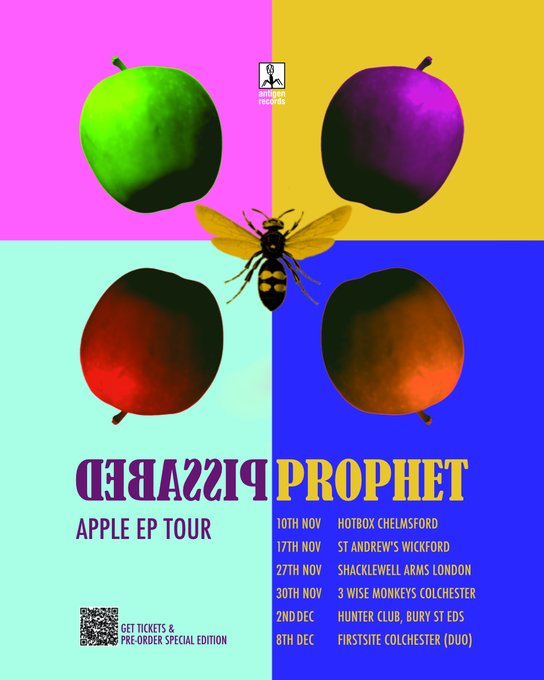
For my review of Pissabed Prophet see here and for more on the Rev Simpkins gig at St Andrew's Wickford on 17 November, see here.

My first article for Seen&Unseen was 'Life is more important than art' which reviews the themes of recent art exhibitions that tackle life’s big questions and the roles creators take.

My second article 'Corinne Bailey Rae’s energised and anguished creative journey' explores inspirations in Detroit, Leeds and Ethiopia for Corinne Bailey Rae’s latest album, Black Rainbows, which is an atlas of capacious faith

------------------------------------------------------------------------------------------------------

Rev Simpkins - Gathering Grounds.

Friday, 15 September 2023

Church Times - Art review: Brian Clarke: A Great Light at the Newport Street Gallery, London

My latest review for Church Times is on 'A Great Light' by Brian Clarke at Newport Street Gallery:

'I FIRST encountered the work of Brian Clarke at the Swiss Museum of Stained Glass at Romont. I visited the Museum as part of my Sabbatical Art Pilgrimage and discovered that work by Clarke and another stained-glass artist, Yoki — neither of whom was previously known to me — could be seen in the town, as well as at the Museum.

The Cistercian Abbaye de la Fille-Dieu on the edge of Romont commissioned Clarke in 1996 to create windows for its renovated and reordered chapel. Clarke says that stained glass “can transform the way you feel when you enter a building in a way that nothing else can”. I would concur, especially after arriving at l’Abbaye de la Fille Dieu in time for a memorable service of vespers, followed by silent contemplation in the still onset of darkness falling. Clarke’s modern, abstract windows were designed to unify fragments retained from previous phases of the building’s life and offer both nuns and visitors a “warm and vibrant atmosphere”, which is “conducive to meditation and prayer”.'

For more on Brian Clarke see here. See photos of Abbaye de la Fille-Dieu here. Read about my Sabbatical Art Pilgrimage visit to Romont here and read about by Sabbatical Art Pilgrimage here.

Other of my pieces for Church Times can be found here. My writing for ArtWay can be found here. My pieces for Artlyst are here and those for Art+Christianity are here.

--------------------------------------------------------------------------------------------------------------

Friday, 14 April 2023

Art review: Rites of Passage at Gagosian, Britannia Street, London

My latest review for Church Times is on Rites of Passage at Gagosian, Britannia Street:

'The underlying idea explored through the exhibition is that of the three stages of liminal space — separation, transition, and return — while also examining tradition, spirituality and space ...

The rites of passage which these artists explore enable them individually to navigate the experience of migration, but, as such rituals transcend cultural boundaries, their individual experience also becomes a collective communal experience, particularly in the context of this exhibition.'

Other of my pieces for Church Times can be found here. My writing for ArtWay can be found here. My pieces for Artlyst are here and those for Art+Christianity are here

------------------------------------------------------------------------------------------------------------

Friday, 3 March 2023

Church Times - Art review: Big Women at Firstsite, Colchester

My latest review for Church Times is of Big Women at Firstsite, Colchester:

'“BIG WOMEN” comes with an emphasis on the word “Big”. This is a big group show of 24 leading British women artists, each of whom is a big character in her own right. The focus is on the experience of women in later life, the show having grown out of one organised by the curator, Sarah Lucas, in 2020, which derived from discussion of the experience of becoming a Señora rather than a Señorita ...

In “times dominated by male aggression, politicking, greed, war and pig-headedness”, Lucas suggests that we need the mix of seriousness and humour, thoughtfulness and light-heartedness, brashness and sensitivity, and spirituality and humanism which characterises this exhibition.'

For more on Big Women, see my Artlyst diary for February - click here. 

Other of my pieces for Church Times can be found here. My writing for ArtWay can be found here. My pieces for Artlyst are here and those for Art+Christianity are here. See also Modern religious art: airbrushed from art history?.

--------------------------------------------------------------------------------------------------------------

Aretha Franklin - Respect.

Friday, 17 February 2023

Art review: Zadie Xa: House Gods, Animal Guides and Five Ways 2 Forgiveness at the Whitechapel Gallery

My latest review for Church Times is of Zadie Xa: House Gods, Animal Guides and Five Ways 2 Forgiveness at Whitechapel Gallery:

'Central to this installation is a vision of reconciliation, harmony, and unity across generations, between humanity and the natural world, and within the material and the spiritual. Though rooted in Korean heritage and religion, this is a vision that transcends its sources, fascinating as they are, to welcome all who come to reflect in this temporary immersive and meditative space.'

Other of my pieces for Church Times can be found here. My writing for ArtWay can be found here. My pieces for Artlyst are here and those for Art+Christianity are here. See also Modern religious art: airbrushed from art history?

-----------------------------------------------------------------------------------------------------------

Al Green - People Get Ready.

Friday, 31 December 2021

Church Times: Young Poland at the William Morris Gallery

My latest review for Church Times is of the Young Poland exhibition at the William Morris Gallery:

'The French artist Maurice Denis, in an address on “New Directions in Christian Art” published by the Revue des Jeunes in February 1919, referred to “the sumptuous glass windows of the Pole Mehoffer in Fribourg” as one example, among others, giving hope of a post-war revival in Christian art.

Józef Mehoffer was a collaborator with Stanisław Wyspiański in Young Poland (Mloda Polska), an Arts and Crafts movement with strong stylistic and philosophical affinities to the work of William Morris, John Ruskin, and their followers in Britain. These affinities were strong within Europe at the beginning of the 20th century. In addition to their exploration through the “Young Poland” exhibition at the William Morris Gallery, these affinities also feature currently at the Hungarian National Museum in “The Beauty of Utopia. Pre-Raphaelite Influences in the Art of Turn-of-the-Century Hungary”, which focuses on the Gödöllo artists’ colony founded by Aladár Körösfoi-Kriesch. Denis noted a further influence in the conversion of the Belgian art critic Bruno Destrée, in part through the influence of the works of the Pre-Raphaelite artist Edward Burne-Jones.'

Other of my pieces for Church Times can be found here.

--------------------------------------------------------------------------------------------------------------

Henryk Gorecki - O Domina Nostra.

Monday, 9 August 2021

Looking Up. Helaine Blumenfeld.


Looking Up. Helaine Blumenfeld is an outdoor exhibition of sculptures at Canary Wharf that can be seen to 30 November 2021. 

Showing sculptures by Helaine Blumenfeld at Canary Wharf gives an unrivalled opportunity to view them in the context of exterior architecture as well as carefully designed outdoor spaces amongst mature trees. Her fusion of natural forms, both human and foliate, spiced with abstraction, are seen through a range of diverse works dating from 1993 to 2019.

Blumenfeld works in a range of media – marble from many locations in Europe and the Middle East, terracotta, wood and bronze, all of which she pushes to the limits of risk, teetering on the edge of impossibility, particularly in her carving. Through time, she has carved deeper into a range of fine marbles, using both material density and translucency to create lyrical and complex forms in works reflecting life, myth and our irrefutable part of the natural world.

See my review of the original indoor and outdoor exhibition for Church Times here and my interview with Helaine for Artlyst here.

--------------------------------------------------------------------------------------------------------------

Linda Perhacs - River Of God. 

Saturday, 7 August 2021

Review - Finding Abundance in Scarcity


Philip Welsh has reviewed 'Finding Abundance in Scarcity: Steps Towards Church Transformation - A HeartEdge Handbook' in the latest edition of Church Times:

'this lively account of the response from St Martin-in-the-Fields over the first months of the pandemic provides plenty of pastoral and theological food for thought to take up as the story moves on.'

This new book from Canterbury Press includes contributions from myself and others at St Martin-in-the-Fields.

The publisher's description is as follows:

'All churches have had to learn to do things differently during closure due to the coronavirus pandemic. None has been more imaginative or inventive than London's St Martin-in-the-Fields. Through its HeartEdge programmes, it has continued many aspects of its ministry, and developed significant new initiatives and is now a virtual college with an impressively varied programme for practitioners.

Here the St Martin's team reflects theologically and shares its newly found pastoral and practical wisdom in many areas:

Finding God in Lockdown
Meeting God and One Another Online
Rediscovering Contemplative Prayer
Facing Grief amidst Separation
Preaching at Such a Time as This
Singing the Lord's Song in a Strange Time
Hearing Scripture Together in Difficult Times
Praying through Crisis
Creating a Community of Practitioners
Finding Faith at Home
Conclusion: A Strategy for Transformation

Contributors are all on the staff at St Martin's and key figures in HeartEdge: Sam Wells, Richard Carter, Sally Hitchiner, Fiona MacMillan, Jonathan Evens and Andrew Earis.'

The book uses a similar format to our earlier Liturgy on the Edge: Pastoral and attractional worship in which I wrote about the creation of Start:Stop at St Stephen Walbrook.

Both books can be bought from the online shop at St Martin-in-the-Fields, as can my own The Secret Chord, an exploration of what makes a moment in a 'performance' timeless and special, co-authored with Peter Banks.

------------------------------------------------------------------------------------------------------

Switchfoot - Meant To Live.

Friday, 18 June 2021

Church Times: ‘Call to Holy Ground’ at St Andrew’s, Leytonstone

My latest review for Church Times is about Call to Holy Ground, an exploration of nature, sanctuary and belief, comprising installations in a church and temple, a sound pilgrimage through the fringes of Epping Forest, and a video work:

'Within the works, there is a subtle and sensitive interweaving of symbols and rituals, not a merging or blurring of faith and practice. This is art as meeting place, and as estuary, becoming a breeding ground for ideas and improvisation. The project has formed a bridge (built on existing relations between the communities) between faiths, generations, and spiritual and ecological practices for those involved, and now creates a pilgrimage for those who come through the elements, with participants and artists, exploring the sacred essence of ground that is both common and holy together with its connection to our inner landscape.'

Other of my pieces for Church Times can be found here.

------------------------------------------------------------------------------------------------------

George Harrison - What Is Life?

Thursday, 1 April 2021

Art review: Stations of the Cross: Monuments to the Future

My latest review for Church Times is of Stations of the Cross: Monuments to the Future, an online exhibition at the Henry Luce III Center for the Arts & Religion:

'In a year when so many have been unable to travel, this exhibition takes viewers on a virtual journey around the world from Russia to the United States. In a year when so many have died, each Station of this exhibition responds to a monument or memorial bearing witness to this traumatic season through the work of artists who find in Christ’s Passion a frame through which to fashion a present response.

Stations of the Cross is a public art project that for six years has sought to use the story of the Passion to prompt reflection in response to challenges of social justice. In previous years, a team of curators in each city that hosted the project designed a bespoke route with 14 stops, creating a contemporary pilgrimage marked by works of art, old and new. Drawing on the traditional Christian practice of walking and praying the 14 Stations, the journey undertaken to see artworks was a key element of an experience designed to engage people of all faiths and none in experiencing, as one of the exhibition’s co-curators Dr Aaron Rosen writes, “the incidental insights and revelations that come from navigating urban spaces in search of sacred experiences”.

None of that was possible in 2021, necessitating a significant reimagining of the project on the part of Rosen and the Revd Dr Catriona Laing to sustain the concept in its sixth year.'

Hear the curators and some of the artists speak about the project and exhibition today in a HeartEdge workshop at 4.00 pm. In this workshop Revd Dr Catriona Laing, Dr Aaron Rosen and guest artists featured in the exhibition will reflect on the relevance of the Stations of the Cross, the way in which they speak into issues of injustice and the virtues of the physical experience of the first four years versus this year’s online experience. Register for a Zoom invite at https://www.eventbrite.co.uk/e/stations-of-the-cross-tickets-147886712137.

Other of my pieces for Church Times can be found here.

-------------------------------------------------------------------------------------------------------

Jungle - Pray.

Friday, 19 February 2021

Review: 'Tears of Gold' by Hannah Rose Thomas

My latest review for Church Times is of Tears of Gold: An Exhibition an online exhibition by Hannah Rose Thomas for UN75 The Future Is Unwritten: Artists of Tomorrow:

'THE exhibition “Tears of Gold” presents three sets of portraits created by Hannah Rose Thomas which depict Yezidi women who escaped IS captivity, Rohingya women who fled violence in Myanmar, and Nigerian women who survived Boko Haram and Fulani violence. Many of the women depicted in Thomas’s paintings personally suffered sexual violence; others represent their wider community and the countless untold stories of horror.

Thomas met these women while they were respectively in a rehabilitation facility, in a refugee camp, and on a trauma-healing programme. While with them, Thomas taught them to paint their self-portraits. It was after doing so that they asked her to paint their portraits. Both sets of portraits feature in this exhibition, with the women’s self-portraits offered as a way in which to share their stories with the rest of the world.'

I interviewed Hannah recently about this exhibition, an interview that was published by Artlyst and which can be read here. Hannah also contributed to 'Art and Social Impact', a HeartEdge workshop which explored the question of art and social change through conversation with artists whose work has a social impact dimension. View 'Art and Social Impact' here.

Other of my pieces for Church Times can be found here.

---------------------------------------------------------------------------------------------------------

Martin Smith - You Have Shown Us.

Friday, 5 February 2021

Review - Genesis Tramaine: Evidence of Grace

My latest review for Church Times is of Genesis Tramaine: Evidence of Grace at Almine Rech in Brussels:

'When was the last time you read a press release from a mainstream art gallery which stated that the artist’s prayers provided a spiritual spark that catalyzed the creation of the paintings and that those paintings are a visual ‘sermon’ articulating faith, amplifying relationship with God, and providing a sanctuary for a world in need of healing?

The most likely answer would be never. However, ‘Lakwena: Homeplace’ at Hastings Contemporary describes Lakwena Maciver’s work as painted prayers and meditations while the BP Young Portrait Artist Award 2020 went to Egbert Modderman, a painter of characters and stories from the Bible. 

Described as a devotional painter whose work is powerfully influenced by Bible verses and other readings she studied in church, Genesis Tramaine is therefore one of several emerging artists who, by operating at the intersection of religion and the cultural zeitgeist, are changing contemporary art-making through artistic practices that shape a new discourse.'

Other of my pieces for Church Times can be found here.

--------------------------------------------------------------------------------------------------------

Naomi Shelton & the Gospel Queens - What Have You Done.

Monday, 11 January 2021

Cranach: Artist and Innovator

Here's a review of Cranach: Artist and Innovator, which was at Compton Verney Art Gallery & Park until 3 January 2021. The review for various reasons is backdated.

As a Reformation propagandist who was also a Renaissance man, the works of Lucas Cranach the Elder and his workshop are shot through with paradox. Cranach was an artist, entrepreneur, innovator, and politician, who worked for Protestant and Catholic clients while spearheading the promotion of the Reformation through the publication and illustration of Martin Luther’s writings.

Although the engravings that accompanied Luther’s texts are uncompromising and crystal-clear in their condemnation of the perceived corruption of the Roman Catholic Church, it has been the complexities and ambiguities of Cranach’s work that have primarily engaged later audiences and many artists. This exhibition brings us Cranach’s portraiture (often for his Court patrons), engravings (primarily Reformation illustrations), and Biblical/mythological scenes (a mix of public and private work, with the private predominating here).

Cranach’s paintings are frequently referenced in contemporary art and popular culture. In particular, his distinctive nudes, with pale, serpentine bodies posed against dark backgrounds, have entranced a wide range of artists. In the final section of this exhibition a lively dialogue with Cranach emerges in works by Pablo Picasso. John Currin, Ishbel Myerscough, Michael Landy, Raqib Shaw and Claire Partington, among others, as these artists take the formal structure of a work by Cranach as a point of departure for a creation of their own.

The works on display here chart a range of responses to Cranach by other artists, and correspond with the increased availability of Cranach’s work in books and postcards from the nineteenth century onwards. As variations on a theme, these works show both rupture and continuity with Cranach’s distinctive aesthetic, as Cranach’s familiar icons are overlaid with personal stories and current perspectives. This, then, is an exhibition which can be experienced in reverse with the recent images providing contemporary commentary on Cranach and his work.

Michael Landy’s towering mechanical depiction of Saint Apollonia, made originally for his Saint’s Alive exhibition at the National Gallery, seeks to reanimate the violent narrative of how this saint was tortured by having her teeth pulled out. Landy was responding to Cranach’s rather more serene depiction in an altarpiece that is now in the National Gallery. Cranach’s depiction of Saint Apollonia comes from 1506, prior to the posting of the 95 theses on the door of a church in Wittenberg. The violence in Cranach’s own work was to come later, particularly in the first of his collaborations with Luther, Passional Christi und Antichristi, pages from which can be viewed here and which contrasted the simple, virtuous life of Christ with the perceived privilege and pompous excesses of the Pope and the Roman Catholic Church.

Wolfe von Lenkiewicz brings Cranach and Albrecht Dürer together in his Adam and Eve. Von Lenkiewicz has combined Compton Verney’s Venus and Cupid with the figure of Adam from Dürer’s Adam and Eve (1507, Prado, Madrid). Posed against a dark background, the human forms dissolve into flowers after the Dutch still-life painter Ambrosius Bosschaert, which have been clipped into new shapes. Von Lenkiewicz is known for his artistic reconfigurations of well-known imageries from art history and visual culture in order to create ambiguous compositions that question art historical discourses. Typical of his work, this image is a ‘tissue of quotations’. Dürer and Cranach were peers and, together with Hans Holbein, Matthias Grünewald and Albrecht Altdorfer, defined 15th century Northern Renaissance art. Their German Catholic devotional images foundered on the rock of the Reformation with Dürer and Cranach (in particular) laying the foundation for Reformation art.

In addition to the personal and art historical connections between the two, von Lenkiewicz is also aware that Cranach’s Venus figure doubled as Eve in, for example, the 1526 Adam and Eve (Courtauld Gallery). Including the additional element of Bosschaert flowers introduces a third, slightly later Protestant artist whose career in the Netherlands began after leaving Spain due to potential persecution, and a new Reformation art form, the still life, which has particular resonance here as nature morte. The transience of flowers and floral arrangements is aligned with the Reformation belief that our mortality results from The Fall.

Raqib Shaw’s paintings here have been inspired by Cranach’s earliest known engraving The Penance of St John Chrysostom and his painting of Lot and his Daughters. Both, at first sight, seem unlikely material for a Reformation painter. The legend of Chrysostom’s penance was later mocked by Luther as a Roman Catholic lie linked to the selling of indulgences (Cranach’s image precedes his collaborations with Luther), while the story of Lot and his daughters is one of incest.

Shaw gives us characters that are re-evaluating their lives in the light of the traumatic events they have either endured or facilitated. His Lot, like William Blake’s Newton, is using a compass to try to make sense of destructive events – environmental and military - that he cannot explain, although they occur in the shadow of the Tower of Babel. For Lot, all his reference points for understanding have been removed leaving him, in the words of Shaw’s title, without a compass, whilst holding one in his hands. Shaw’s Chrysostom, by contrast, is at a point of understanding having written ‘we cannot see the baggage on our own back’; an acknowledgement of all he had sought to evade about himself up to that point.

For Cranach, however, these stories have a clear and linked Reformation understanding which concerns the repression of sexuality necessitated by the Roman Catholic demand for celibacy in those who are priests or religious. For Cranach and Luther, our sexuality finds its proper and full expression within marriage but, when prevented, by circumstances in the case of Lot and by unnecessary restrictions in the case of Chrysostom, the result is disaster.

This understanding of the Reformation view of sex is vital in understanding why it was acceptable for Cranach, as a Reformation propagandist, to paint alluring nudes, whether as Eve or Venus. Pablo Picasso and John Currin in their re-interpretations of Cranach, amplify the eroticism that their male perspective sees as central, according to their differing styles of work. Ishbel Myerscough and Claire Partington, however, critique the male gaze perspective that underlies Cranach’s moral view.

Cranach’s nudes are images of temptation. The version of Cupid Complaining to Venus included here from 1526-7 has Venus posed as Cranach also posed Eve in the Courtauld version of Adam and Eve. The connection between the two images is further emphasised in that Venus is depicted as holding on to an apple tree. Eating the apple in the story of The Fall is the temptation to step outside of what God has ordained. Venus is not tempting the viewer with an apple but with her body in a way that is outside of the order that God has ordained. The envisaged viewer is, of course, male.

It is this viewpoint that Myerscough and Partington rightly critique. Myerscough, by painting naked women as people, with value and beauty in and of themselves, not idealised morality lessons (Cranach) or objects of lust (Picasso and Currin). Partington, by sculpting women of strength, who reject all the trappings of male fantasy, including and especially the patriarchal identification of Eve as temptress.

Cranach paints through a revolution and his works reflect the confidence of rebels on their way to becoming rulers. We can no longer view his works, or the Reformation that he helped to build, from that perspective. The exhibition ends with Partington redressing the balance of power. Referencing biblical stories in which the underdog wins, including Judith beheading Holofernes and David defeating Goliath, Judith is shown posing triumphantly, with her foot on Cranach’s head.

Cranach: Artist and Innovator is actually artistic and curatorial reinterpretation of Cranach and his legacy. Partington’s reaction to Cranach’s images of Lucretia, a mix of confusion and incredulity which provoked her first Cranach reinterpretation, seems similar to the feedback curator Amy Orrock reported from the early days of the exhibition; of people drawn in by the contemporary reinterpretations and only understanding the Cranach’s in their light.

This contemporary inability to access or understand the Reformation mindset is graphically depicted in Andrew McIntosh’s What No-one Else Had, which sets Cranach’s Cupid Complaining to Venus in an eerily empty building alongside an isolated block of flats and a tree in South East London. The incongruity of both is indicative of the way in which much of what was revolutionary in Reformation thinking now appears oppressive. For those of us who are within the legacy that Cranach and Luther established, it may be that we need to learn the lesson of the legend that Luther mocked and Cranach engraved. St John Chrysostom was restored to his right mind when he received forgiveness from the ones he had abused. 

-----------------------------------------------------------------------------------------------------

Good Charlotte - Prayers.

Sunday, 3 January 2021

ArtWay Visual Meditation: some winter pots by Edmund de Waal

My latest visual meditation for ArtWay is a meditation on some winter pots by Edmund de Waal:

"Alone and silent in his studio he made bowls, open dishes and lidded jars needing a return to touching, holding, marking and moving soft clay. The black vessels show the flux of glaze. The white dishes have been fired without glaze so that each mark is present. He has explained that: ‘Some of these pots are broken and patched on their rims with folded lead and gold; others are mended with gold lacquer. Some hold shards of porcelain.’

His inspiration came from two old Chinese bowls from the Song dynasty that he has in his studio. One patched on the rim with iron, the other with a beautiful thin golden thread running from the rim, repaired using the Japanese art of kintsugi. Kintsugi, which means ‘golden joinery’, is the Japanese art of repairing broken pottery by mending the areas of breakage with lacquer dusted or mixed with powdered gold, silver, or platinum. The idea is that by embracing flaws and imperfections, one creates an even stronger, more beautiful piece of art. De Waal notes that, ‘Kintsugi is not an art of erasure – the invisible mend, the erasing of a mistake – but rather a way of marking loss.’"

In December 2020 I published a review in the Church Times of de Waal's library of exile, see https://www.churchtimes.co.uk/articles/2020/18-december/books-arts/visual-arts/visual-arts-edmund-de-waal-library-of-exile.

My visual meditations for ArtWay include work by María Inés Aguirre, Giampaolo Babetto, Marian Bohusz-Szyszko, Alexander de Cadenet, Christopher Clack, Marlene Dumas, Terry Ffyffe, Antoni Gaudi, Nicola Green, Maciej Hoffman, Lakwena MaciverS. Billie Mandle, Giacomo Manzù, Michael Pendry, Maurice Novarina, Regan O'Callaghan, Ana Maria Pacheco, John Piper, Albert Servaes, Henry Shelton and Anna Sikorska.

My Church of the Month reports include: Aylesford Priory, Canterbury Cathedral, Chapel of St. Thérèse of the Child Jesus and the Holy Face, Hem, Chelmsford Cathedral, Churches in Little Walsingham, Coventry Cathedral, Église de Saint-Paul à Grange-Canal, Eton College Chapel, Lumen, Metz Cathedral, Notre Dame du Léman, Notre-Dame de Toute Grâce, Plateau d’Assy,Romont, Sint Martinuskerk Latem, St Aidan of Lindisfarne, St Alban Romford, St. Andrew Bobola Polish RC Church, St. Margaret’s Church, Ditchling, and Ditchling Museum of Art + Craft, St Mary the Virgin, Downe, St Michael and All Angels Berwick, and St Paul Goodmayes, as well as earlier reports of visits to sites associated with Marian Bohusz-Szyszko, Marc Chagall, Jean Cocteau, Antoni Gaudi and Henri Matisse.

Interviews for ArtWay include: Sophie Hacker and Peter Koenig. I also interviewed ArtWay founder Marleen Hengelaar Rookmaaker for Artlyst.

I have reviewed: Art and the Church: A Fractious Embrace, Kempe: The Life, Art and Legacy of Charles Eamer Kempe, and Jazz, Blues, and Spirituals.

Other of my writings for ArtWay can be found here. My pieces for Church Times can be found here. Those for Artlyst are here and those for Art+Christianity are here.

----------------------------------------------------------------------------------------------------------

Maria McKee - Life Is Sweet.

Friday, 18 December 2020

Church Times review - Edmund de Waal: Library of Exile

My latest review for Church Times is of Edmund de Waal's Library of Exile at the British Museum:

THE wisdom of the world is found in words and images and held in containers of space and containers of thought. Edmund de Waal’s Library of Exile gives us architecture, art, and literature combined in one habitable installation, where the inside and outside provide different responses to human learning and creativity ...

Outside this temporary structure, we see destruction recorded; inside, we view, review, and remember; and, when removed, the memories contained in covers will revitalise and renew the rebuilding of a restored thought container.

In the Psalms, in de Waal’s “Psalm”, in this library, in all libraries, we still ourselves and “navigate the space between the silence of things and the silence of people”.'

Other of my pieces for Church Times can be found here.

--------------------------------------------------------------------------------------------------------

My Morning Jacket - Librarian.