Wikio - Top Blogs - Religion and belief
Showing posts with label church decline. Show all posts

Sunday, 16 November 2014

No significant inroads to arresting Church decline

There is an interesting online debate currently underway about the tone of debate between conservative and liberal Christians and the extent to which either is having significant impact. The main articles in this debate can be read here, here and here.

Martin Saunders argues that:

"A 'compelling' voice isn't just wise, radical and intellectually or emotionally stimulating. It's also kind and compassionate. It comes from a place of love, and is characterised by that. Those who argue from a more 'liberal' theological perspective (again, sorry to create 'sides', but it's impossible not to) tend to be good at this. Big ideas, expressed with kindness, have real currency in the modern world.

However, when we turn to the more conservative voices, there's often a very different tone. The big ideas are still there, but the kindness has evaporated, to be replaced with anything from over-confident condescension to discourteous rudeness. John Piper's infamous tweet is one example. David Robertson's article attacking Steve Chalke on this website is, I'm afraid, another. This isn't how you win arguments – it's just how you help both 'sides' become more entrenched in their positions."

David Robertson counters that:

"Biblical Christianity is winning the war because as Jesus says "heaven and earth will pass away, but my words will never pass away" (Matthew 24:35). That is why all over the UK there are churches that are growing and developing as the Word of God is proclaimed in the love, joy, power and assurance of the Spirit. Not 'conservative' churches. But radical, Bible-believing, contemporary, Spirit-filled churches of whatever denomination. The battle belongs to the Lord and so victory is his. My call is not to compromise with Christ's enemies, but to win them for Him."

The reality, however, is, as the latest set of Statistics for Mission from the Church of England illustrate, that overall the Church in the UK is consistently declining in numbers. None of the positive developments in either the conservative or liberal, Protestant, Catholic or Orthodox, traditional, emerging or alternative strands of the Church that I have seen over my lifetime have actually made significant inroads to arresting that decline, and this remains the case despite the above debates and assertions. There is much that is of God and of great value in the UK's churches as a whole but it is foolish to kid ourselves that those initiatives and movements of God are currently making a significant impact in terms of Church growth. For that to occur at present something altogether different from what we are doing now seems to be required.

For an alternative view on the significance of the latest set of Statistics for Mission, see Giles Fraser's latest column for The Guardian.

----------------------------------------------------------------------------------------

Barry McGuire - Eve Of Destruction.

Sunday, 24 August 2014

Greenbelt Festival: Saturday


Yesterday I enjoyed a day at Greenbelt seeing the Festival in its new setting at Boughton House. The new venue comes with different opportunities for layout, programming and artworks.

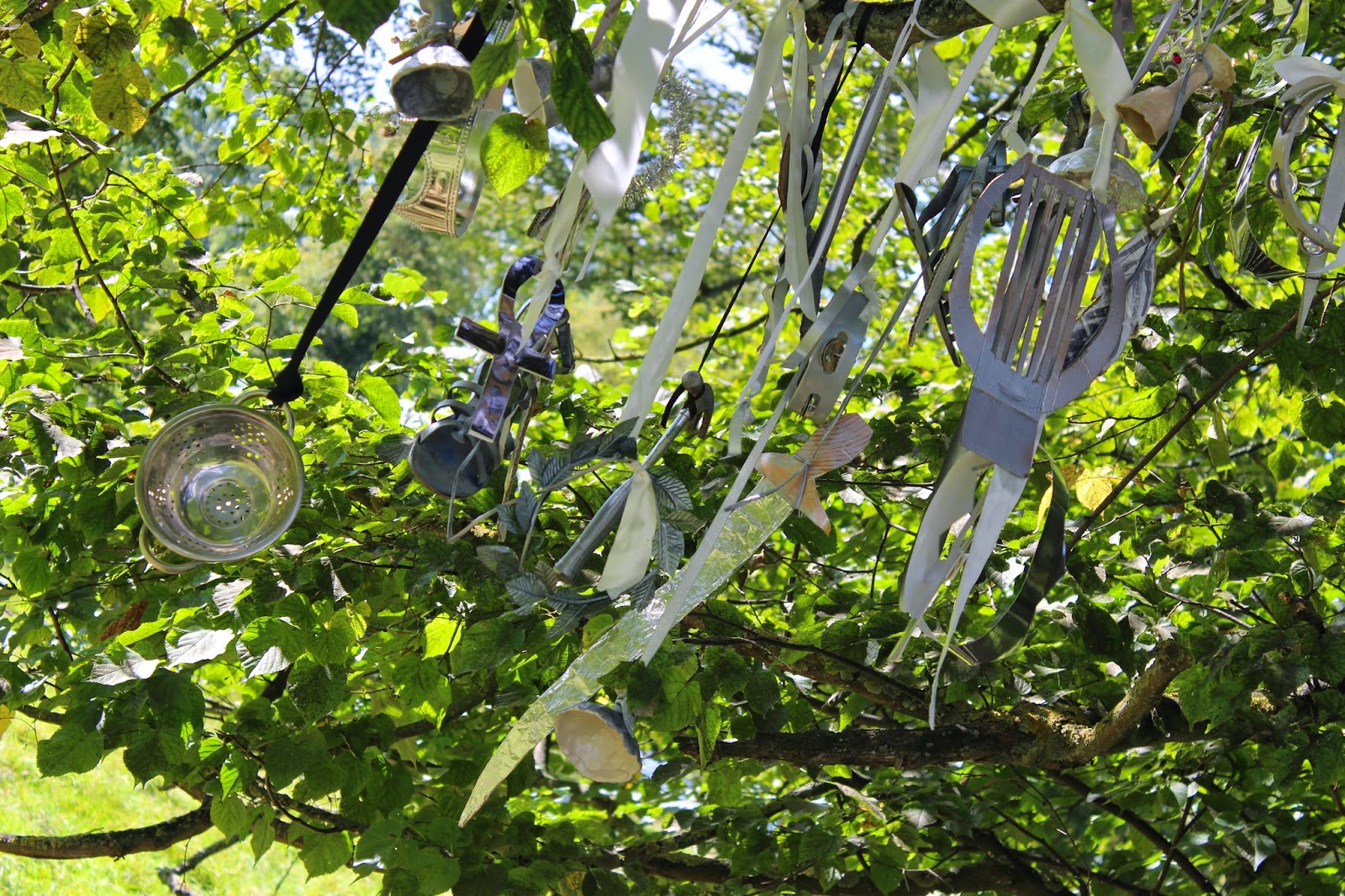
The Allotment Gallery is Greenbelt’s garden shed and is playing host to around 20 artists throughout the weekend, each exhibiting their work in their own two-hour slot. Six artists have also created temporary sculptural, performance and installation works for the grounds of Boughton House. I also briefly heard Beth Rowley, Martyn Joseph, Hope & Social, Levi Hummon, Dizraeli and the Small Gods, and The Travelling Band. 

The highlights for me (in addition to the friends I met up with) were the seminars I attended. I caught the end of Nadia Bolz-Weber's talk, heard Linda Woodhead talk on 'The Crisis of Religion in the UK,' Brian McLaren on 'What will Religion become?' and a panel session on 'Can we reimagine marriage?' (see post here).

Linda Woodhead said that crises are tipping points requiring decisions. A crisis in a fever is the moment at which the fever breaks. 

Society and Christianity have generally been on different tracks in recent years. Historic forms of Christianity are generally in decline and opposition to the growing liberalism of society is part of the reason for this decline. New forms of religion are increasing. The current social context is the second demographic transition, where the birth rate falls below the mortality rate. The first demographic transition was focused around the nuclear family but in the second, population declines, the marriage rate drops and there is a rise in divorce and cohabitation, meaning that the nuclear family unit is no longer the norm. there is a growth of affluence and education combined with the impact of greater equality for women. These are unprecedented historical changes. 

These changes go hand in hand with a growth in liberalism - defined as personal freedom - which is the opposite of authoritarianism and paternalism. Each generation is becoming more liberal. However, religious groups contain a higher proportion of the 'moral majority'. The leadership of churches is generally more conservative than there members meaning that a values gap exists between leaders and members. Overall belief in God is declining but not at the extent that participation in organised religion is declining. There is an active spirituality which is not expressed within the established churches.  Research in Kendal found 126 kinds of alternative spirituality; largely hidden and led by women. 

There seems to be no correlation between church tradition and growth or decline. Mini or maxi does best when it comes to Church. Midi (congregations of 50 - 120) is in trouble. Occasional events such as festivals also do well. The established churches do have adavantages which could be used more effectively; these include occasional offices, chaplaincy, schools, cathedral services, heritage. Of Fresh Expressions, Messy Church seems most effective. Churches need to give people voice, choice and participation. Choice requires branding. Variety is essential because of the diversity within society. religion needs to be presented as a whole-life resource.

Alternative ways of funding religion can be identified. People will pay for alternative spiritualities. A membership model, like that of the National Trust, could be used. In countries where a Church Tax exists, people who don't attend contribute because they want the Church to provide a resource in society. Where a congregational model of funding is used, the Church becomes controlled by conservatism.

Brian MacLaren also spoke about the challenges of our current context, in particular the challenges that all religions face regarding the planet, poverty and peace. He argued that the Faiths will need to collaborate to address these challenges. We need people prepared to do in our own age what the founders of our faiths did in their own age, rather than simply repeating what they said. The key question in a pluralistic world is what benefits do religions bring to non-members. Religions say different things in response to different problems; they are all answering different questions. We need to bring the treasures from our faith and shares these with people of other faiths, as they do the same with us. We need to rub up against those who are different from us in order to experience disruption and to be converted all over again.

-----------------------------------------------------------------------------------

Hope & Social - The Big Wide.