Wikio - Top Blogs - Religion and belief
Showing posts with label guildhall art gallery. Show all posts

Friday, 15 March 2019

Review - John Ruskin: The Power of Seeing

My latest review for Church Times is of “John Ruskin: The Power of Seeing” at Two Temple Place:

'Ruskin was a man of many words, who believed that, through drawing, one had the power to say what could not otherwise be said. He built his reputation on the power of his words as an art critic, author, and lecturer, but his subject was the power of seeing, because, for him, the teaching of art was “the teaching of all things”. He believed that the “greatest thing a human soul ever does in this world is to see something, and tell what it saw in a plain way”. “To see clearly”, he said, “is poetry, prophecy, and religion — all in one.”

Art, then, is an expression of “the love and the will of God” to which we gain access primarily by looking closely at the splendour of nature.'

In a review for ArtWay of Adrian Barlow's book Kempe: The Life, Art and Legacy of Charles Eamer Kempe I noted that:

'The legacy and reputation of many significant Victorians is complex and contradictory because their often great achievements were fashioned on the oppression of Empire and the superiority and arrogance which fuelled aggressive expansion presenting exploitation of others and their natural resources as being the introduction of civilisation.'

In addition to the Kempe review, my exhibition review for Church Times covering 'Edward Burne-Jones: Pre-Raphaelite Visionary,' at Tate Britain and 'Seen & Heard: Victorian Children in the Frame,' at Guildhall Art Gallery also explores the complex legacy left by the Victorians.

---------------------------------------------------------------------------------------------------

Florence and the Machine - Big God.

Friday, 21 December 2018

Review: Edward Burne-Jones and Seen & Heard

My latest exhibition review for Church Times covers Edward Burne-Jones: Pre-Raphaelite Visionary, at Tate Britain and Seen & Heard: Victorian Children in the Frame, at Guildhall Art Gallery.

'Offering us a visual narrative for the huge cultural shift in how society viewed, and treated, children over the course of the “long 19th century”, “Seen and Heard: Victorian Children in the Frame” plunges us into the maelstrom of innovation and exploitation, compassion and sentimentality, which characterised Victorian society.'

'Tate Britain’s exhibition, by bringing together more than 150 works in different media, including painting, stained glass, and tapestry, presents Burne-Jones as the polymath that he would have appeared to be to his contemporary audience; to whom he was a designer and decorative and fine artist with an exceptionally wide range of literary reference.'

The review also considers the legacy of the Victorians, a legacy that I also examined in a review for ArtWay of Adrian Barlow's book Kempe: The Life, Art and Legacy of Charles Eamer Kempe:

'The legacy and reputation of many significant Victorians is complex and contradictory because their often great achievements were fashioned on the oppression of Empire and the superiority and arrogance which fuelled aggressive expansion presenting exploitation of others and their natural resources as being the introduction of civilisation.'

-----------------------------------------------------------------------------------------------------

Rush - The Garden.

Friday, 26 January 2018

Nature Morte: A brush with death

My latest exhibition review for Church Times reflects on Nature Morte, a touring exhibition by MOCA London which is currently at the Guildhall Art Gallery:

'Can an exhibition change our understanding of what it means to be human? “Nature Morte” is an exhibition that essentially makes that claim, as it invites us to pause and look anew at the human condition.

The exhibition explores the chang­­ing significance of the still life (or nature morte in French) by bringing together historic still-life paintings and contemporary art­­works ...

“Nature Morte” can make the claim that still life is life-changing because the genre has never involved the innocent depiction of everyday objects, but has always utilised coded images.

For much of the history of the still-life, it has been Christian codes that viewers have been required to decipher.'

I have also written on the same exhibition for Artlyst in an article exploring whether art can transform society.

--------------------------------------------------------------------------------------------------

Shovels & Rope - Death Or Glory.

Monday, 1 January 2018

Artlyst article: Can art transform society?

My latest article for Artlyst explores whether art can transform society by considering two current exhibitions that seem to suggest that it can. The exhibitions are:
My article suggests that art can enable us to see the world differently, offering insights into personal experiences beyond our own but that this transformative power of art is fully unleashed when we understand the histories, stories and traditions (both recent and past) on which the artworks draw.

My other Artlyst articles are:
----------------------------------------------------------------------------------------------

Tom Morello & The Nightwatchman - Blind Willie McTell.

Friday, 19 August 2016

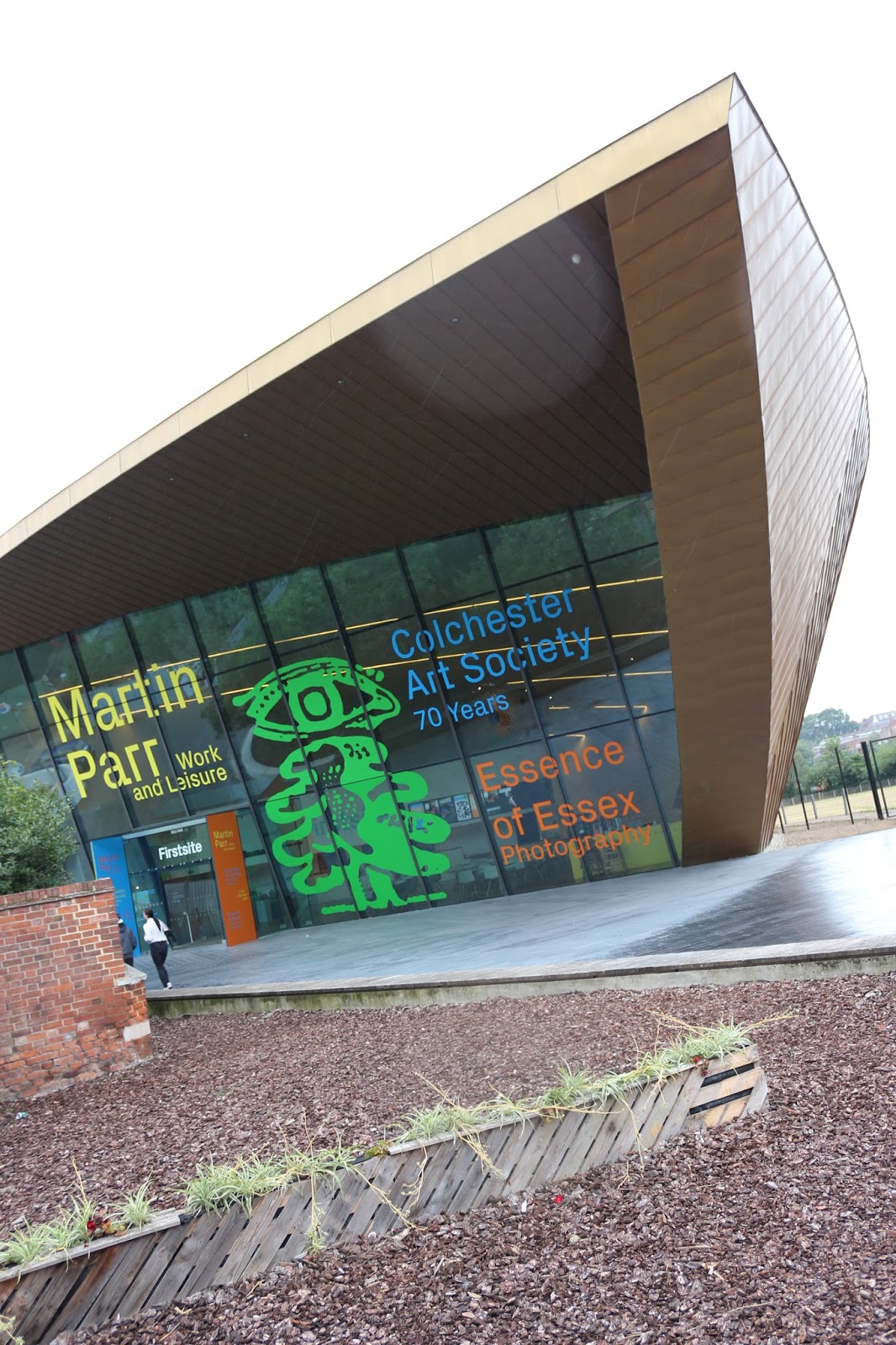
Martin Parr: Work and Leisure


Firstsite is currently presenting the largest Martin Parr exhibition in the UK since 2002 coming direct from The Hepworth Wakefield and tailored especially for Firstsite with additional content including Martin Parr’s own extraordinary personal collection of postcards. Martin Parr: Work and Leisure comprises more than 300 photographs that span the past 40 years, presenting a chronological overview of Parr’s most celebrated works.

From his early Yorkshire-based black and white photographs of rural communities through to his more recent vivid explorations into consumerism, this exhibition includes rarely seen images from his series The Non-Conformists taken at the beginning of his career reflecting his experiences of living in Yorkshire, and The Last Resort, one of the most significant bodies of British photography, documenting leisure time in the seaside town of New Brighton, as well as a universal shift from monochrome to colour photography.

In addition to this Hepworth Wakefield touring exhibition, Parr has also, in 2016, exhibited at the Guildhall Art Gallery and curated an exhibition at the Barbican

Unseen City: Photos by Martin Parr at the Guildhall Art Gallery celebrated Parr's tenure as the City of London’s photographer-in-residence, a position he took up in 2013. He has documented life in the City ever since – from private ceremonies, processions and banquets to high-profile public occasions. Granted unprecedented access to these events, he has been able to capture moments that would usually go 'unseen'; on display in the exhibition were behind-the-scenes shots of unguarded moments featuring Lord Mayors, dignitaries and even the Queen. His photographs provided a unique visual account of contemporary London.

For Strange and Familiar at the Barbican, Parr brought together over 250 compelling photographs and previously unseen bodies of work, in order to present a vibrant portrait of modern Britain. From social documentary and portraiture to street and architectural photography, the exhibition celebrated the work of leading photographers, including Henri Cartier-Bresson, Rineke Dijkstra, Robert Frank and Garry Winogrand, and considered how international photographers from the 1930s onwards captured the social, cultural and political identity of the UK.

Martin Parr has been described as 'arguably Britain’s greatest living photographer.' These exhibitions make that argument.

-----------------------------------------------------------------------------------------

Duke Special - Step To The Magical.   

Saturday, 20 February 2016

Unseen City: Martin Parr - Guildhall Art Gallery


From 4 March, at the Guildhall Art Gallery, the City of London can be viewed through the lens of acclaimed Magnum photographer Martin Parr. Explore the pomp, ceremony and behind-the-scenes activity as in Unseen City Parr brings the City to life, capturing the traditions and people who make up the colourful Square Mile.

Martin Parr has been the City of London's photographer-in-residence since 2013. Over the years, he has documented the life of the City, across three mayoralties. During this time, Parr has been granted unprecedented access to high-profile occasions where guests have included Her Majesty The Queen and dignitaries. The resulting images offer a new perspective on the City of London and create a significant documentary record of its colour and character for years to come.

Through Parr's playful eye for detail and visual dynamism, visitors will gain access to the world of private ceremonies, ancient and modern traditions, processions, banquets, public occasions and informal behind-the-scenes shots. Parr offers a human perspective on ceremony and those moments unseen to the general public, capturing the unguarded moments that would otherwise go unnoticed.

Whether the public are familiar or unfamiliar with the City of London, this exhibition will display the unique character of the traditions, quirks and people who make up the City. This exhibition provides the opportunity to see how the City operates, up close and personal; sparking debate, dispelling myths and sharing surprising insights.

Parr’s work also appears in Strange And Familiar: Britain As Revealed By International Photographers at the Barbican Art Gallery, London EC2, from 16 March, and The Rhubarb Triangle & Other Stories at the Hepworth Wakefield until 12 June.

-------------------------------------------------------------------------------------------------

Cajun Roosters Trio @ City of London Festival 2015.

Thursday, 8 October 2015

Discover & explore: New service series


Discover & explore was a service series at St Stephen Walbrook in June and July 2015 of musical discovery exploring themes of beauty, faith, home, imagination, leisure, love and work with the Choral Scholars of St Martin-in-the-Fields.

Feedback for this series was overwhelmingly positive and included the following:
  • Perfect service of peace in our busy lives.
  • Spiritual food in the middle of the day.
  • Each part elided into the next, giving a warm whole.
  • The music was wonderful. The service was also thoughtful.
  • It was like a little jewel with a number of facets drawing us in and lighting our path.
  • Beautifully and intelligently done.
The series also included a well-attended and very interesting guided tour of the Victorian Collection at the Guildhall Art Gallery. Our thanks to Sonia Solicari, Principal Curator, for giving us such a wonderful tour and facilitating the partnership with St Stephen Walbrook for this service series.

The next services in the Discover & explore series will be:
  • Monday 2nd November, 1.10 - 1.50pm – Bereavement (All Souls).
  • Monday 9th November, 1.10 - 1.50pm – Charity.
  • Monday 16th November, 1.10 - 1.50pm – Hope.
  • Monday 23rd November, 1.10 - 1.50pm – Faith.
The Choral Scholars of St Martin-in-the-Fields have an essential musical role at this great church. Every year twelve scholars are appointed to sing regular services while also gaining concert experience, benefiting from an extensive training in all aspects of sacred and secular choral music. They are led by the Director of Music at St Martin-in-the-Fields, Andrew Earis.

---------------------------------------------------------------------------------------------

St Martin-in-the-Fields - Choral Evensong.

Saturday, 8 August 2015

No Colour Bar: Black British Art in Action 1960-1990

No Colour Bar: Black British Art in Action 1960-1990 at the Guildhall Art Gallery takes an innovative look at Black British cultural identities, heritage and creative voices - and the struggle Black British artists faced to have their voices heard - from the 1960s to the 1990s.

The focus is on the life works of Eric and Jessica Huntley and the Bogle L’Ouverture Press, a publishing house and pioneering bookshop and cultural hub that they founded in 1969. Bogle L'Ouverture's output and work promoted, and was shaped by, decolonisation and the fight against discrimination. Bogle L'Ouverture's bookshop has been physically recreated in the Gallery to provide a multi-sensory, interactive installation alongside works by notable artists of the period, including Eddie Chambers, Errol Lloyd, Denzil Forrester, Sonia Boyce, Keith Piper, and Sokari Douglas-Camp.

Through the exhibition I was interested to come across The Crucifixion by Ismith Khan. Told in two voices, one standard English, the other Creole, The Crucifixion is an ironic fable of a tragi-comic self-deception. In exploring the popular folk archetype of the self-crucified preacher, the novel takes the balladic form of the calypso to greater depths. It encompasses the folk history/archetype of the Preacher/Prophet who calls on his followers to crucify him, and one episode draws on the folk narratives of the 1937 Trinidad uprising, particularly the actual event when a deeply unpopular police sergeant was burnt to death by a crowd. It also develops in a more symbolic way the issues of the dialectic between freedom and order in Trinidadian society.

When Manko arrives in Port of Spain from his country village to begin his divine mission, he discovers that he has the gift to touch the raw nerve of other people's needs, hopes and guilts. But when he becomes enmeshed in the lives of his fellow yard-dwellers without understanding the different crosses they bear, he sets in train events which teach him too late that there are temptations and responsibilities in being a servant of the Lord for which he is ill equipped. Khan portrays the tensions between authority and freedom, law and love in Trinidadian society through Manko's fate and the stories of the other yard dwellers. 

---------------------------------------------------------------------------------------------

Linton Kwesi Johnson - Sonny´s Lettah.

Tuesday, 28 July 2015

Discover & explore: Beauty


“Beauty will save the world.” Fyodor Dostoevsky coined the phrase which was later borrowed by Aleksandr Solzhenitsyn ‘to set the theme of his Nobel Lecture in 1970.’ Roger Scruton has written extensively about how aesthetics—and beauty in particular—enlarges our vision of humanity, helps us find meaning in our lives, and provides knowledge of our world’s intrinsic values. Most recently, Gregory Wolfe has used the phrase for the title of his recent book, Beauty Will Save the World: Recovering the Human in an Ideological Age, the theme of which is the importance of an aesthetic understanding for sustaining a civilized culture.’

Yet the proverb 'Beauty is in the eye of the beholder' suggests that there is a problem with our understandings of beauty i.e. that our understanding of it entirely subjective. Collective ideas of beauty can be formed, yet these can also be iniquitous, as with ’size zero’ in the fashion industry and the way in which that perception of beauty pressurises people into anorexia and bulimia.

The Guide to the Guildhall Art Gallery’s collection suggests that in many respects the Victorian period has defined our contemporary notions of beauty. It notes that: ‘Victorian painters set out to capture and redefine ideals of female beauty. The Pre-Raphaelite Brotherhood, founded in 1848, played a central role in promoting a new canon of beauty … Founder member Dante Gabriel Rossetti coined the term ‘stunner’ to describe enchanting women he met and usually convinced to pose for his paintings. From the 1860s, he embarked on a series of ‘subjectless’ sensual depictions of women … developing a new aesthetic of beauty, exemplified by La Ghirlandata (1873). This new style anticipated the Aesthetic Movement which was characterised by a departure from storytelling and a focus on the ‘Cult of Beauty’, sometimes drawing on religious imagery to convey the power of women’s looks.’

The Bible celebrates human beauty in the Song of Solomon and the beauty of creation in Psalms such as 8 and 19, where the sense that the natural world reflects to glory or beauty of God is celebrated. Ultimately, however, a very different perception of beauty is celebrated in scripture as a result of Christ’s incarnation and crucifixion. This different perception can be found exemplified in the history of Christian Art.

‘The most ancient representations of Jesus in human form can be found in the catacombs of Rome and in the church of Dura Europos, a town on the right bank of the Euphrates. There Jesus is represented as a youthful-looking “good shepherd” … with a round face, … beardless, and with short hair … he wears the upper-class clothes of that time … like a young patrician … The fact that he is made to look handsome is sometimes said to be for apologetic reasons.’

However, under ‘the influence of St. Bernard of Clairvaux and St. Francis of Assisi it was the earthly Jesus in his suffering who captured the attention of the devout … The late Middle Ages were dominated by … [images of] the suffering Christ … the Man of Sorrows, who in his suffering became like us … On the Isenheim altar at Colmar, Matthias Grünewald depicted, in a deeply moving and shocking manner, a hideously tormented man on a cross (finished in ca. 1516), which especially calls to mind … contemporary Latin American counterparts, where in numerous instances the tortured are pictured hanging on a cross.’ (A. Wessels, ‘Images of Jesus’, SCM Press 1990)

As part of my sabbatical art pilgrimage last year I visited churches linked to images of the crucifixion by Albert Servaes, Germaine Richier and Graham Sutherland which viewed Christ’s sacrifice as emblematic of human suffering in conflict and persecution. These were controversial as they challenged sentimental images of Christ and deliberately introduced ugliness into beautiful buildings. Servaes and Richier were both affected by decrees from the holy office which led to the removal of their artworks from the churches for which they had been commissioned. Servaes, with his Stations of the Cross and altarpiece for the Carmelite Chapel in Luithagen and Richier, with her crucifix for the church of Notre-Dame de Toute Grâce at Assy.

Their work, like that of Grünewald and contemporary Latin American artists, demonstrates that the centrality of an instrument of torture – the Cross – to Christianity and the perception of the suffering Christ as despised, rejected and unesteemed challenge the perceptions of beauty that we have inherited from the Victorians. In Christianity, beauty is found in the selfless love of Christ expressed most powerfully in the ugliness of crucifixion.

As a result, Christianity can find common ground with contemporary art which finds beauty in the throw-away, the ready-made, the hidden or disregarded. As just one example, American Beauty screenwriter Alan Ball uncovers heart-breaking beauty in garbage with a scene in which a plastic bag dances as it floats in the wind above a dirty sidewalk. His central character says as he views this scene that this beautiful moment made him aware of an ‘incredibly benevolent force’ behind things that wanted him to know that there is no reason to be afraid, ever.

Charles Williams suggests, in The Descent of the Dove, that the incarnation, because it is not simply about God taking on flesh but also about our humanity being taken into God, is the ultimate affirmative act. This is based on the understanding that nothing is lost and everything can be redeemed. All experience and all images are ultimately to be gathered in to God and, in this sense, the beauty found in the selfless giving of the incarnation and crucifixion really will save the world.

-----------------------------------------------------------------------------------------

The Hastings College Choir - Fairest Lord Jesus.

Sunday, 26 July 2015

Discover & explore: Original & peaceful


Here is a selection of the feedback we have received on the 'Discover & explore' service series at St Stephen Walbrook, which has been organised in partnership with St Martin-in-the-Fields and the Guildhall Art Gallery:
  • Both the songs and the reflection were excellent;
  • Beautiful music; the readings were long and meaty! The whole liturgy was good;
  • Everything about the service;
  • Many things – clear and relevant theme, lively pace & variety & beautiful music. Also friendly welcome; 
  • Very inspiring message and hymns;
  • It was like a little jewel with a number of facets drawing us in and lighting our path;
  • I enjoyed the Taize. The music was beautiful. Everything was so carefully chosen for theme of today;
  • Focus combined with brevity – effective and to the point;
  • Thought provoking. Enjoyed the musical part of the service very much and the reflection;
  • The theme and the length and the timing;
  • Spiritual food in the middle of the day. Lovely choir;
  • Beautiful music, as ever, and wonderful readings. I feel strengthened by it. Thank you;
  • Good music and sermon; 
  • Readings – especially enjoyed the first reading, and the involvement of the excellent readers. Music. Reflection. Opportunity to think/engage with the topic;
  • It’s originality;
  • Each part elided into the next, giving a warm whole;
  • That it had a unifying theme. The choir – especially the Rutter piece. The thoughtprovoking sermon.
  • · All the settings;
  • The Choral Scholars and the music and singing;
  • The music was wonderful. The service was also thoughtful; 
  • All of it - peacefulness;
  • The relevance and resonance of the intercessions.

Thanks to Sonia Solicari we also explored the themes through an excellent guided tour of the Guildhall Art Gallery's Victorian Collection.


All are welcome for the final service in the series which is on Monday (1.10pm - 1.50pm) and is on the theme of Beauty. Click herehereherehere, here and here for reflections from previous services on the themes of faith, home, love, work, imagination and leisure.

--------------------------------------------------------------------------------------------

Friday, 24 July 2015

Discover & explore: Leisure


The recent announcement in the Budget of plans to allow larger stores to open for longer on Sundays by giving local authorities powers to relax national law on Sunday trading has reignited debate about the place of rest in what has become a 24-7 society.

Witold Rybczynski suggests, in his book Waiting for the Weekend, that there is conceptual confusion in our society about what leisure is. ‘Leisure,’ he suggests, is the most misunderstood word in our vocabulary. Kathleen Norris has said that we are ‘free,’ it seems, to have anything but a nurturing leisure. We know this because ‘I have so little time,’ is our frequently heard lament.

Paul Heintzman, in his book on Leisure and Spirituality, has described how: ‘In preindustrial societies, time was viewed cyclically; that is, time was rooted in the rhythms of the natural world. People’s lives revolved around sunrise and sunset, the change of seasons, and the planting and harvesting of crops. They were unlikely to separate work and leisure within their daily life, and the demands of work were often lightened by songs and storytelling … As a result, notions of work and leisure blended together.

The Industrial Revolution (1760–1830), however, changed everything … Work was situated in space at the factory and structured in time as the worker had to be at the work place at a certain time to perform work duties. Facilitated by the development of clocks, work could be assigned to specific times, and work time could be measured precisely. Time began to be viewed mechanically, and this linear notion of time began to influence and change people’s understanding of leisure. Time away from work was free of the often unpleasant demands of the workspace, so it was called “free time.”’

The Guildhall Art Gallery’s Guide to its Collection adds to this picture that ‘Prior to the nineteenth century, the concept of leisure had been reserved for the aristocracy.’ The Victorian period ‘saw an unprecedented upsurge in leisure pursuits among all classes of society. This ‘Leisure Revolution’ was possible due to the increased availability of some disposable income and free time.’ Paintings in the Guildhall Art Gallery depict some of these newly accessible activities such as pubs, music hall, public parks, sports clubs, museums, day trip to the seaside and boating plus country walking expeditions.

Giles Fraser, in a piece responding to the Budget announcement, argues that these developments have resulted in shopping having now become our leisure experience par excellence and, more than that, our religion. In counteracting that development he suggests going back to Biblical understandings of rest. Paul Heintzman agrees and quotes a textbook of leisure education which notes that ‘the church has many thousands of years’ experience in helping people from all social strata find life and find it more abundantly.’

Our reading from Hebrews states that ‘a sabbath rest still remains for the people of God; for those who enter God’s rest also cease from their labours as God did from his.’ While Psalm 23 promises the restoration our soul in green pastures and beside still waters leading to our dwelling in the house of the Lord our whole life long. The principle of Sabbath rest is reflective of the Old Testament idea of a rhythm to life which supports a view of leisure as non-work time or activity that refreshes and restores, while the concept of rest as being reflective of the quality of life offered in Jesus Christ provides support for the view of leisure as a state-of-being. Josef Pieper, a twentieth-century Roman Catholic theologian and philosopher has defined leisure as “a mental and spiritual attitude . . . a condition of the soul . . . a receptive attitude of mind, a contemplative attitude” in his book Leisure: The Basis of Culture.

However, we also need to consider Biblical understandings of rest in relation to society and not just as individuals. Giles Fraser explains that in the Bible ‘the seventh day of the week corresponded to the seventh day of creation, when God rested – and from this derives: 1) rest on the seventh day; 2) rest for the land on the seventh year …; and 3) the forgiveness of all debts – the jubilee – on the seventh times seventh year.’ This last is the big one, he writes, ‘the so-called “year of the Lord’s favour”. It’s what the Jubilee Debt Campaign referred back to when it called for the eradication of developing-world debt. It’s also what Jesus refers to in his very first sermon: “I come to bring good news to the poor, freedom to the captive … and proclaim the year of the Lord’s favour.”

‘The jubilee is not debt-restructuring. It’s out-and-out, full-on debt forgiveness.’ Jesus appropriates this concept to himself and his ministry, saying that it is fulfilled through his life, ministry, death and resurrection. He gives us a vision of a world in which the forgiveness and rest which he makes available extends across the whole of human society. This is the Sabbath rest which is still to come and connects to the Isaiah vision of a future society that we explored in relation to the theme of Home.

In the meantime, Leland Ryken has helpfully written in Redeeming the Time: A Christian Approach to Work and Leisure, that ‘All leisure . . . is a gift from God that, when used wisely, “provides rest, relaxation, enjoyment, and physical and psychic health. It allows people to recover the distinctly human values, to build relationships, to strengthen family ties, and to put themselves in touch with the world and nature. Leisure can lead to wholeness, gratitude, self-expression, self-fulfilment, creativity, personal growth, and a sense of achievement. So leisure should be valued and not despised.’

---------------------------------------------------------------------------------------------

W.H. Davies - Leisure.

Monday, 13 July 2015

Discover & explore: Imagination


A.N. Wilson has written that, in the first half of the twentieth century, there were artistic giants in the Anglican Church. He was thinking people such as T.S. Eliot, C.S. Lewis and Dorothy L. Sayers.

Sayers, best known for her fictional detective Lord Peter Wimsey, was also, like C.S. Lewis, a popular Christian apologist. Her most interesting apologetic work is perhaps The Mind of the Maker (1941) where she explores the creative act itself in the Trinitarian terms of Idea (Father), Energy (Son), and Power (Spirit):

“For every work [or act] of creation is threefold, an earthly trinity to match the heavenly.

First, [not in time, but merely in order of enumeration] there is the Creative Idea, passionless, timeless, beholding the whole work complete at once, the end in the beginning: and this is the image of the Father.

Second, there is the Creative Energy [or Activity] begotten of that idea, working in time from the beginning to the end, with sweat and passion, being incarnate in the bonds of matter: and this is the image of the Word.

Third, there is the Creative Power, the meaning of the work and its response in the lively soul: and this is the image of the indwelling Spirit.

And these three are one, each equally in itself the whole work, whereof none can exist without other: and this is the image of the Trinity.”

If the relationships within the Trinity provide the model for our creativity as human beings, this suggests that our creativity itself comes from God. Sayers remarks in the book that the one thing we know for sure about God at the point that he makes humanity in his own image is that he is creative: “The characteristic common to God and man, is … the desire and ability to make things.”

God is the ultimate creator, who created from nothing. Sayers quotes Nikolai Berdyaev approvingly when he says, "God created the world by imagination" and we get an insight into God’s imaginative work of creation through the passage from Job (38. 4 - 21). As those made in the image of God, we are sub-creators, able to, as Sayers puts it, "rearrange the unalterable and indestructible units of matter in the universe and build them up into new forms."

These ideas, which see human creativity and the creative act itself as being formed and framed by God, lead us to view art and the imagination as a gift from God. Max Lieberman & Michael McFadden note that the:

“idea of the artist as instrument of the divine, or acting with divine inspiration, has been an archetypal theme espoused by great artists attempting to express the processes of their work. Kahlil Gibran, the great 20th century mystic poet and artist touched on two of the metaphors of antiquity, to describe the process of an artist's creation in writing, "Am I a harp that the hand of the almighty may touch me or a flute that this breath may pass through me?" Gibran perhaps unconsciously, refers to the Ancient Greek metaphor of the Aeolian Harp and the Hindu myth of Lord Krishna's flute … The Aeolian Harp represents the artist, whose finely tuned and sensitive soul responds to the divine breeze of the Holy Spirit as it blows through the strings, turning what is invisible and intangible to most, into beautiful enchanting music to move the minds and hearts of those who might be otherwise insensitive to the movement of this divine force … The artist is similarly conceived as a musical instrument in an Ancient Hindu myth … The great artist is conceived as the hollowed-out instrument of God, emptied of egoism and selfish desire, and thus able to transmit the experience of their union with the divine through the enchanting "music" of their artwork.

Some years ago I encountered the same idea in a book called Written In My Soul, a series of interviews with some of the most well-known singer-songwriters from the 1950s onward, where I was struck by the extent to which these great artists – Bob Dylan, Neil Young, Van Morrison and others – felt that their songs were given to them in moments of revelation, that their songs were already written and ‘came through them as though radio receivers – without much conscious effort or direction.’ More recently, the singer-songwriter Bill Fay has released a track called ‘Who is the Sender?’ in which he asserts that his songs are delivered to him by the unknown sender. Songs aren't written, but found. "Music gives," he says, and he is a grateful receiver.

MIA, the artist who work we were exhibiting at St Stephen Walbrook at the beginning of this service series, has identified similar words of Paul Klee as describing her own creative process: “Everything around me dissolves and interesting works emerge as if of their own accord. My hand is entirely the instrument of a distant sphere. It isnʼt my head that is working, but something else, something higher, something somewhere more remote. I must have great friends out there – obscure, but also brilliant - and theyʼre all very good to me.”

Samuel Taylor Coleridge was in a similar moment of inspiration while writing Kubla Khan. He wrote: “In the summer of the year 1797, the Author, then in ill health, had retired to a lonely farm house between Porlock and Linton, on the Exmoor confines of Somerset and Devonshire. In consequence of a slight indisposition, an anodyne had been prescribed, from the effects of which he fell asleep in his chair at the moment that he was reading the following sentence, or words of the same substance, in 'Purchas's Pilgrimes:' 'Here the Khan Kubla commanded a palace to be built, and a stately garden thereunto: and thus ten miles of fertile ground were inclosed with a wall.'

The Author continued for about three hours in a profound sleep, at least of the external senses, during which time he has the most vivid confidence, that he could not have composed less than from two to three hundred lines; if that indeed can be called composition in which all the images rose up before him as things, with a parallel production of the correspondent expressions, without any sensation or consciousness of effort. On awakening he appeared to himself to have a distinct recollection of the whole, and taking his pen, ink, and paper, instantly and eagerly wrote down the lines that are here preserved. At this moment he was unfortunately called out by a person on business from Porlock, and detained by him above an hour, and on his return to his room, found, to his no small surprise and mortification, that though he still retained some vague and dim recollection of the general purport of the vision, yet, with the exception of some eight or ten scattered lines and images, all the rest had passed away like the images on the surface of a stream into which a stone had been cast, but, alas! without the after restoration of the latter.”

The gift of imagination is one given in moments of inspiration which cannot be repeated. Such experiences can be described as experiences of the Holy Spirit inspiring or coming on the artist. Certainly that has been my experience both in creating and preaching. I will often reflect or meditate on an experience, a song, an image, a Bible passage, by putting it in my mind, carrying it around in my mind over several days or weeks, reminding myself of it from time to time and just generally living with it for a period of time and when I do that then I find that, at some unexpected moment, a new thought or idea or image will come to me that makes sense or takes forward the experience or song or image or passage on which I had been reflecting. To my mind that is the Spirit coming and making connections, bringing clarity, making sense.

That was also Coleridge’s understanding of imagination. He was part of the Victorian Romantic movement, which features in the Guildhall Art Gallery’s collection, where visualising the distant past and opening up worlds of imaginative possibility offered “much needed escapism from the harsh realities of everyday life.” For Coleridge, though, imagination is the intuitive, unitive faculty in us that sees the whole behind the parts; the one and the many. Where reason analyses and reduces into parts, imagination puts the parts together into a whole and takes us to the hidden metaphysical unity behind multiplicity. For Coleridge, as for Sayers, this is not simply “much needed escapism from the harsh realities of everyday life” but instead “a repetition in the finite mind of the eternal act of creation in the infinite I Am.”

--------------------------------------------------------------------------------

John Rutter - Look At The World.

Friday, 10 July 2015

Discover & explore: beautifully and intelligently done


Here is the latest feedback on the 'Discover & explore' service series at St Stephen Walbrook, which has been organised in partnership with St Martin-in-the-Fields and the Guildhall Art Gallery:
  • Each part elided into the next, giving a warm whole.
  • That it had a unifying theme. The choir – especially the Rutter piece. The thought-provoking sermon.
  • All the settings.
  • The Choral Scholars and the music and singing
  • The singing.
  • The music was wonderful. The service was also thoughtful.
  • The music. Jonathan’s thought. All of it – peacefulness.
  • The relevance and resonance of the intercessions.
  • Again, the music was delightful. The reflection was helpful.
  • It was beautifully and intelligently done.
All are welcome at Monday's service (1.10pm - 1.50pm) which is on the theme of Imagination. Click here, herehere and here for reflections from previous services on the themes of faith, home, love and work.

-----------------------------------------------------------------------------------------------

Gustav Holst - St Paul's Suite.

Tuesday, 7 July 2015

Discover & explore: Work


Many of Jesus’ parables are set in the world of work. They concern masters, servants and slaves, as those were the primary work roles at the time and, because Israel was an agrarian culture, they often relate to farming. Ours is a very different context and the differences essentially began, as the paintings at the Guildhall Art Gallery show us, in the Victorian period which was dominated by the Industrial Revolution. ‘This marked the transition to new and more efficient manufacturing processes’ which helped make us the strongest economy in the world at that time. Despite the many differences between the working life of Jesus’ day and time, the universal nature of the stories that he told, means that they still have much to say to the work practices of our own day and time.

One person who has specifically explored the implications of Jesus’ parables for the workplace is Will Morris who is both Director for Global Tax Policy at GE and a priest at St Martin-in-the-Fields. In his book ‘Where is God at Work?’ he devotes five chapters to exploring the Parable of the Talents.

He notes firstly that this is story about workers and work. In the story people at work are ‘entrusted with vast sums of money and expected to use them in commercial ways’:

‘People are given assignments, they have responsibilities, and they have to report back to the boss, who then assesses them and rewards them with further work responsibility – or punishes them with demotion (or the sack). The relationships are business relationships. There is one worker who obviously has real commercial smarts, another who is not quite as high-powered but still does pretty well, and then there is the one who has no commercial savvy at all, and who lets his employer’s money sit in the ground doing nothing. So we have the successful risk-taker and the conservative, risk-adverse colleague who’d much rather do nothing than try anything. And there’s a hierarchy. It really is just like a workplace.’

Will Morris makes three key points. The first is that this is not directly a story about God-given abilities (a talent was a measure of money, not a skill or gift). It is ‘rather a story about the entrustment of something of great price to various individuals.’

‘Second, the sums of money – the talents – are something given, entrusted by the master when he leaves and required to be turned back over when he returns.’ It is about ‘something entrusted to us which we are expected to work with – fruitfully – and then return to the person who gave it to us.’

Third, there is the size of the gifts. One talent is sixteen years’ wages, five is eighty years’ worth. ‘That’s a lot to entrust to a slave ... Slaves, those way down the pecking order, were here entrusted with huge wealth. The master didn’t entrust the talents to his fellow owners or to his friends, but to his slaves.’ In that sense, ‘this parable is more about equality, at least of opportunity, than it is about inequality. Slaves, if they can handle it, are as worthy of being trusted as the leaders of society.’

This parable ‘upholds commercial activity – even ... banking’ and, more specifically, ‘Jesus does indicate that – in the right settings – using money to make money is completely acceptable.’ ‘For Christians in the workplace that is welcome and affirming.’ Despite this, ‘the parable doesn’t tell us that money is good, or that we will be doing God’s work if we earn more talents for Him by any means we wish as long as we end up increasing the amount.’

However, ‘done well, done properly, these activities will validly contribute to the building up of the kingdom. As a result we must be open to the possibility that God has placed them there for us to use in this way. If we approach the workplace with the idea, the preconception, that good cannot possibly be achieved there, then the chances are that it won’t be. But if, in part thanks to this parable, we are open to the possibility that God can work through instruments such as money and in the workplace, then who know what might happen? ... God can turn up and do amazing things in the most unlikely places.’

The ‘parable of the talents is not about the unequal handing out of skills and about the punishment of the weak. It is about whether we try to be the best we can be, working with God to build His kingdom, heal His creation, including the workplace – which, like everything else, will be perfected at the end of time. It’s about being ourselves, not trying to be people we’re not. It’s about doing only what we are capable of doing, but doing it very well. It’s about a God who entrusts us with things of enormous worth – the possibilities of being His co-workers – and who will love us for what we have done unless (and only unless we hide the gift, don’t ask Him for help using it, and then turn around and tell Him it was all His own fault anyway). Our God loves us. He really does. And all we have to do is love him back.’

------------------------------------------------------------------------------------------

Bill Fay - The Healing Day.

Friday, 3 July 2015

Discover & explore: Perfect service of peace in our busy lives


Here is the latest feedback on the 'Discover & explore' service series at St Stephen Walbrook, which has been organised in partnership with St Martin-in-the-Fields and the Guildhall Art Gallery:
  • Awesome Palestrina. Exquisite pianissimo at end of anthem. Singing Ubi Caritas properly!
  • Thought provoking. Enjoyed the musical part of the service very much and the reflection.
  • The theme and the length and the timing.
  • Spiritual food in the middle of the day. Lovely choir.
  • Beautiful music, as ever, and wonderful readings. I feel strengthened by it. Thank you.
  • Good music and sermon.
  • Readings – especially enjoyed the first reading, and the involvement of the excellent readers. Music. Reflection. Opportunity to think/engage with the topic.
  • Its originality. 
  • Perfect service of peace in our busy lives.
All are welcome at Monday's service (1.10pm - 1.50pm) which is on the theme of Work. Click here, here and here for reflections from previous services on the themes of faith, home and love.

--------------------------------------------------------------------------------------------------

Thomas Tallis - If Ye Love Me.


Monday, 29 June 2015

Discover & explore: Love


Here is my reflection from today's Discover & explore service at St Stephen Walbrook:

When I preach at weddings I often tell the story of the Love is … cartoons. ‘Love Is...’ began as shy love notes from the artist Kim Casali to her future husband, Roberto. Each of these notes involved a little drawing and a personal sentiment that perfectly captured Kim's thoughts and feelings for the man she loved. She began these drawings when they were dating, and she would leave the cartoons where Roberto would be sure to find them. After they were married, he showed her that he'd kept them all the drawing she had made for him. The cartoons were picked up by the press, were first published in The Los Angeles Times in January 1970, and then their popularity grew globally and they were published daily in 50 countries around the world and translated into 25 languages.

I use this as a way of introducing the original ‘Love is …’ from 1 Corinthians 13: “Love is patient; love is kind; love is not envious or boastful or arrogant or rude. It does not insist on its own way; it is not irritable or resentful; it does not rejoice in wrongdoing, but rejoices in the truth. It bears all things, believes all things, hopes all things, endures all things. Love never ends.”

The ‘Love is …’ cartoons and 1 Corinthians 13 both agree with another well-known ‘love is’ statement; ‘Love is a many-splendoured thing.’ Love cannot be captured or summed up in one cartoon or phrase or even in a series of cartoons or phrases. Love constantly bursts the bounds of our descriptions or definitions and this is why there is no end to songs, poems, novels, films, dances and plays about love. At the Guildhall Art Gallery we can see that the subject of romantic love preoccupied Victorian artists who addressed themes of unrequited love, social incompatibility, family disapproval, and separation at war.

Nearer our own time, C.S. Lewis is well known for looking at some of the different loves described in Greek thought - familial or affectionate love (storge); friendship (philia); romantic love (eros); and spiritual love (agape) - in the light of Christian commentary on ordinate loves. Despite his writings on The Four Loves he was himself surprised by love as his own relationship with Joy Davidman developed. The experience of love confounded his earlier more academic perceptions of it.

It is possible that the definitive Biblical statement on love is that which is found in 1 John 4. 16 where we read that, ‘God is love’. This is also where Ernesto Cardenal takes us. Our experiences of friendship, familial and romantic love all enable us to know God as love. Therefore, he writes, ‘My former loves have taught me what love is. I know how you love me because I too have loved, and I know what passionate and obsessed love is and what it is to be madly in love with someone. And God is mad about me.’

The strength of God’s love for us was revealed among us through his sending of his only Son into the world so that we might live through him. ‘In this is love, not that we loved God but that he loved us and sent his Son to be the atoning sacrifice for our sins.’ Christ searches for us like the Good Shepherd searching for the lost sheep. His journey of salvation shows how much we are loved by him as he gives up all he has in order to seek us out and rescue us.

The extremity of God’s expression of love in giving all in self-sacrifice reveals the limitless nature of love which constantly escapes the limits of our experiences, descriptions or definitions. If God is love then, just as God is infinite and cannot ever be fully grasped by our finite minds, so love also must be inexhaustible. As St Paul stated in 1 Corinthians 13, ‘Love never ends’. Love, like God, is an infinite ocean into which we dive and can always swim deeper and further.

In The Last Battle, the final volume of his Narnia stories, C.S. Lewis sums up the reality of God, heaven and love in the phrase, ‘further up and further in.’ The children in his stories discover heaven as the real Narnia which is bigger and better than the shadow Narnia in which they had lived out their finite lives. When they reach the centre of this real Narnia, they find that their journey begins again as there is always a deeper layer to this real Narnia, meaning that there is no end to their exploration of the reality of Narnia. If God is love and love is God then, as T.S. Eliot wrote in Little Gidding, ‘We shall not cease from exploration / And the end of all our exploring / Will be to arrive where we started / And know the place for the first time.’

----------------------------------------------------------------------------------------------

Healey Willan - Rise Up, My Love, My Fair One.

Thursday, 25 June 2015

Discover & explore: a little jewel with a number of facets drawing us in and lighting our path


Feedback on the new 'Discover & explore' service series at St Stephen Walbrook has been very positive. Among comments made have been following:
  • superb singers;
  • magnificent choir & organ;
  • both the songs and the reflection were excellent;
  • beautiful music; the readings were long and meaty! The whole liturgy was good
  • clear and relevant theme, lively pace & variety & beautiful music. Also friendly welcome
  • very inspiring message and hymns
  • it was like a little jewel with a number of facets drawing us in and lighting our path
  • I enjoyed the Taize chant. The music was beautiful. Everything was so carefully chosen for theme of today
  • focus combined with brevity – effective and to the point

Discover & explore: Music and liturgy with the Choral Scholars of St Martin-in-the-Fields and Revd Jonathan Evens is a service series of musical discovery exploring themes of beauty, faith, home, imagination, leisure, love and work. Includes music by Thomas Tallis, Moses Hogan and James Whitbourn, and readings from the Bible, Brother Lawrence, Ernesto Cardenal, Samuel Taylor Coleridge, W.H. Davies, Magna Carta, among others.

From 1.10 - 1.50pm at St Stephen Walbrook, the remaining services in the series are: 29th June: Love; 6th July: Work; 13th July: Imagination; 20th July: Leisure; 27th July: Beauty.

The series is a partnership with Guildhall Art Gallery using themes from the recent rehang of their collection. Join us for a guided tour of the Guildhall Art Gallery collection, as part of the Discover & explore series, which will take place on 21 July at 1.10pm. Meet in the main entrance of the Guildhall Art Gallery.

-------------------------------------------------------------------------------------------

Van Morrison - On Hyndford Street.

Monday, 22 June 2015

Discover & explore: Home

In 1992 the World Council of Churches published a short but influential book by Raymond Fung called ‘The Isaiah Vision’. In this book Fung set out a simple but profound agenda for social action based on the vision in Isaiah 65 for God’s new heaven and earth. In this vision: infants survive into adulthood with good health; older people live in dignity; there is decent housing for everyone; work is there for all who want it; and different kinds of people live together in harmony.

The main features of this vision are good health and long productive lives, shelter, food, work that benefits the worker, and peace. In the Isaiah vision for the world no one would have power over another in such a way that the less powerful are deprived. It is a vision of a settled, creative and fulfilled community and, as such, one where people are released from struggle to focus better on their spiritual lives and their devotion to God.

Van Morrison conjures up a similar vision of home in his song ‘On Hyndford Street’ which recalls in idyllic form his childhood in Belfast. His song combines a sense of familiar locales, people and activities with a sense of the wider world both through trips outside the City and through the influences of radio and reading. All of this is encompassed by a sense of God’s presence, so that both his dreaming and his living is ‘in God’.

Such visions of Home began to be realised in some measure in the Victorian period, which documented in the re-hang of the Guildhall Art Gallery’s collection. The beginning of the nineteenth century saw the separation of work from the home. The Arts and Crafts Movement and the Aesthetic Movement created beautiful objects which enabled homes to change from utilitarian spaces to comfortable and tastefully decorated refuges for families.

While these Victorian movements often catered primarily for the cultured and wealthy, Fung’s understanding of the Isaiah Vision is that it is a “minimum social vision” which encompasses the whole of society and “around which people of all faiths and none can unite.” Fung says that, “If the Isaiah Agenda is a Christian Agenda it is no less a Jewish, Islamic and a secular Agenda… Christians rejoice over the fact of our non-monopoly.” Therefore he calls the church to partner with “everybody and every organization which has anything to do with the Isaiah Agenda.” The book therefore recommends partnering with other groups in the community who would share this same vision, working with them for the transformation of society and then inviting them to get to know God for themselves.

Fung notes that the church engages in the Isaiah Agenda, not just through activities in the congregation but in “the involvement of its members — from where they are: in their homes, in their village or neighbourhood, in the market place, in schools, community organizations, trade unions, cooperatives … in short through their whole life and all their activities … Once it is recognized that the witness of the congregation takes place outside the four walls of its buildings and is carried out mainly by the laity in their homes, their neighbourhood, and the market place, the role of the clergy and the elders becomes clear. Their role is to enable the laity to do a better job.”

“A central focus of modern mission theology is that all our mission is God’s mission, the missio Dei. God’s love overflows into the creation, sustaining and renewing our world, patiently remaking and restoring the mess we have made of our beautiful planet. God calls us to help with this act of love and not to hinder it by destroying God’s reconciling action. The missio Dei includes human beings in this act of love, calling us to help create a world in which God’s vision and purpose for human beings can be realised right now. For the prophets of the Hebrew Scriptures the sinfulness and destructiveness of human behaviour means that world is exceptionally difficult to bring into being and to keep in being, but it also makes means that the prophetic vocation is to articulate what God’s future would be like.”

This is what Isaiah 65 and Raymond Fung have done. To what extent do we share this vision of new homes in a new heaven and new earth where: infants survive into adulthood with good health; older people live in dignity; there is decent housing for everyone; work is there for all who want it; and different kinds of people live together in harmony? If we do share this vision, to what extent are we prepared to work towards it here and now?

--------------------------------------------------------------------------------------------

Anton Bruckner - Locus Iste.

Monday, 15 June 2015

Discover & explore: Faith


We had a very positive beginning to the 'Discover & explore' service series at St Stephen Walbrook. Among the comments made by those present were these:
  • 'Magnificent choir & organ'
  • 'Both the songs and the reflection were excellent' 
  • 'Beautiful music; the readings were long and meaty! The whole liturgy was good'
  • 'St Martin's Choral Scholars – wonderful tone & expressions'
Here is my reflection on the theme of 'Faith' from today's service:

On 15 June 1215 at Runnymede King John agreed to have Magna Carta, the ‘Great Charter,’ sealed. This event has later become recognised as one of the most important events in English history as it marked the road to individual freedom, parliamentary democracy and to the supremacy of law.

To mark this event, today, at Runnymede, there has been a national Magna Carta Foundation of Liberty ceremony, organised by the National Trust and Surrey County Council, and attended by 4,500 invited guests and VIPs from a cross-section of the community and around the world.

The City of London is the only place to be named in Magna Carta, in a clause guaranteeing "the City of London shall have all its ancient liberties by land as well as by water." It also played a fundamentally important role in the events leading to Magna Carta: Temple, in the west of the City, was where a posse of barons first confronted King John to demand a charter. The City was also later granted the right to appoint a Mayor (later known as the Lord Mayor), part of whose duties was to ensure the provisions of Magna Carta were carried out. As part of the 800th Anniversary celebrations of Magna Carta, the 1297 Magna Carta is currently displayed in the City of London’s Heritage Gallery.

Magna Carta starts as a religious document, concerned with the “health of the soul” of the King, and with the “honour of God,” and with the “exaltation of the Holy Church”. Dr Mike West notes that “Magna Carta established the freedom of the English church from state interference and this has grown to enshrine the rights of each individual to enjoy religious freedom”.

Magna Carta has led to Article 9 of the Human Rights Act, the right to freedom of thought, conscience and religion, which includes:

  • the freedom to change religion or belief;
  • the freedom to exercise religion or belief publicly or privately, alone or with others;
  • the freedom to exercise religion or belief in worship, teaching, practice and observance; and
  • the right to have no religion (e.g. to be atheist or agnostic) or to have non-religious beliefs protected (e.g. philosophical beliefs such as pacifism or veganism).

The process which took us from the Magna Carta establishing the freedom of the English church from state interference to the rights which we all have to enjoy religious and non-religious freedom ran through the period explored by paintings in the recent re-hanging of the Guildhall Art Gallery’s Victorian Collection. The mid-19th century, as is noted in the Gallery’s description of the theme of ‘Faith’, saw a “crisis of faith” brought about by new scientific developments, such as geological discoveries and Darwin’s evolutionary theory, although the majority of society continued to consider personal spirituality as a key component of life.

The debates which began in that period, and which never simply involved the binary oppositions of faith and science that feature in the usual popular commentaries on that period, continue into the present. These lead us firstly to value the freedom we have to hold either religious or non-religious beliefs. This comes with the recognition, identified primarily by Michael Polanyi, that all human knowledge, including that of science, is ultimately faith-based. This is so, because all knowledge relies on personal commitments which motivate our highest achievements and mean that we believe more than we can prove and know more than we can say. As Hebrews 11 expresses it, ‘Faith is the assurance of things hoped for, the conviction of things not seen.’ Secondly, for those who do hold religious beliefs, they lead us to value the place of doubt and debate in faith. The latter is well expressed by the statement at St Martin-in-the-Fields that the church exists to honour God by being an open and inclusive church that enables people to question and discover for themselves the significance of Jesus Christ.

As these understandings of faith and the freedom to believe are not universally applied, Dr Mike West, in exploring the legacy of Magna Carta, writes that, “Today it challenges faith communities to examine the part they might play in the development of a liberal democracy and to be part of the solution rather than part of the problem in international relations.”

-------------------------------------------------------------------------------------------

John Stainer - God So Loved The World.

Thursday, 11 June 2015

Discover & explore


Discover & explore: Music and liturgy with the Choral Scholars of St Martin-in-the-Fields and Revd Jonathan Evens.

A service series of musical discovery exploring themes of beauty, faith, home, imagination, leisure, love and work. Includes music by Thomas Tallis, Moses Hogan and James Whitbourn, and readings from the Bible, Brother Lawrence, Ernesto Cardenal, Samuel Taylor Coleridge, W.H. Davies, Magna Carta, among others.

15th June - 27th July 2015, 1.10-1.50pm St Stephen Walbrook: 15th June: Faith; 22nd June: Home;
29th June: Love; 6th July: Work; 13th July: Imagination; 20th July: Leisure; 27th July: Beauty.

The series is a partnership with Guildhall Art Gallery using themes from the recent rehang of their collection. Join us for a guided tour of the Guildhall Art Gallery collection, as part of the Discover & explore series, which will take place on 21 July at 1.10pm. Meet in the main entrance of the Guildhall Art Gallery.

To coincide with its 15th anniversary, Guildhall Art Gallery has undergone a complete rehang of its permanent collection. Many of the works now on display have not been shown before at the Gallery. The collection of the Victorian paintings demonstrates changing attitudes to fine art in the 19th century. Artists turned their attention to the reality of modern life as their main inspiration, With its focus on everyday subjects, such as home, work, leisure, love, beauty, faith, and imagination, the new Victorian re-hang offers surprising relevance to life in the 21st century and challenges pre-conceptions about Victorian art being ‘dated’.

The Choral Scholars of St Martin-in-the-Fields have an essential musical role at this great church. Every year twelve scholars are appointed to sing regular services while also gaining concert experience, benefiting from an extensive training in all aspects of sacred and secular choral music. They are led by the Director of Music at St Martin-in-the-Fields, Andrew Earis.

-----------------------------------------------------------------------------------------

Moses Hogan - I Am His Child.