Wikio - Top Blogs - Religion and belief
Showing posts with label values. Show all posts

Monday, 3 June 2024

Vision-crafting and team-building


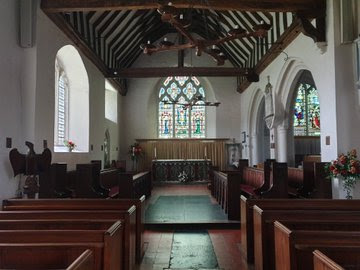
We enjoyed a PCC Away Day on Saturday at St Mary Magdalene Great Burstead, which included a lunchtime tour of the church. Revd Sue led us in Morning Prayer and a Wellbeing exercise and Revd Steve celebrated at the closing Eucharist.
 
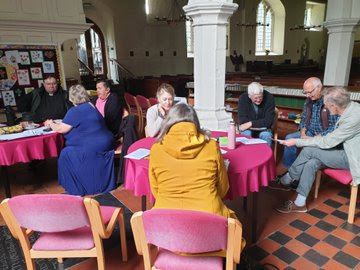
In between, we were led in vision crafting and team building exercises by Sarah Rogers, one of three mission consultants available to parishes in the Basildon Deanery through Mission Opportunities Funding from the Diocese of Chelmsford. Sarah helped us think about our vision and values based on our current mission and ministry activities and helped us identify challenges and opportunities whilst identifying key initiatives and those requiring additional resource. All in all, a very productive and enjoyable day.

Our thanks to everyone who took part and to St Mary's Great Burstead for hosting us.

---------------------------------------------------------------------------------------------------------

The Moody Blues - Minstrel's Song. 

Sunday, 30 April 2023

Travelling Well Together

Here's my sermon from this morning's joint service at St Mary's Runwell:

There's a very old joke about a child in Sunday School. A Sunday-school teacher asks the class of young children, "What is little and gray, eats nuts, and has a big bushy tail?" After a moment one child replies, "I know the answer's probably supposed to be Jesus, but it sure sounds like a squirrel to me."

Talking recently with our youth discussion group about the Bible, we were saying essentially that, that Jesus is both the way in to the Bible and what the Bible is all about. It's all about Jesus, as the Sunday school child had grasped.

That's what we get here in these parables from Jesus (John 10. 1-10). Jesus is both the gate to the sheep fold and the shepherd who brings the sheep in and out. It's all about Jesus, whether it's about beginning the Christian life as we join the flock and enter the fold or living the Christian life, as we go in and out of the sheep fold with Jesus in order to find pasture.

These parables give us picture of a part of the Christian life; that part that is about being together as a flock, receiving sustenance during the day when we are away from the fold and protection during the night when we are in the fold.

It's all about Jesus because he is the one who leads us to sustenance and who protects us with his body from evil. It's all about Jesus because Jesus is the image of the invisible God, the way we can come to see what God is actually like and feed on him by becoming like him, as well as the one who, by laying down his own life, enables us to find forgiveness and freedom from sin.

The point, in these parables, is that we travel well together; that we remain together and that we travel in and out of the sheep fold together.

Bishop Guli, the Bishop of Chelmsford, spent time at the beginning of her ministry in the Diocese travelling around the Diocese listening to people in it. As a result of her listening exercise, we have a document called Travelling Well Together, a document that is being given out today and also on Sunday 21st May, the day of our APCM, as it, as its title indicates, suggests ways or values for travelling well together as churches, parishes, a diocese, and as the pilgrim people of God.

The values are: Awareness of grace – as God always provides the resources required for the mission of the church to continue; Valuing the small, the vulnerable and the marginal - our calling is not to strain after worldly success, influence and power but to be a faithful and gentle presence and trust that God will use our efforts in ways we may never fully understand; Focusing outward - always called to look to the needs of those beyond the Church; Sustaining healthy rhythms - invited to live life in all its fulness; Kindness, mutual respect, gentleness and humility - virtues which are often underestimated and undervalued; Generously collaborative – a willingness to work well with others in a spirit of open honesty and transparency; Faithful, creative, courageous and open to the unexpected and surprising – faithful to the traditions we have received, whilst at the same time being open to the guidance of the Holy Spirit who continues to lead us into all truth. These are values that are all about Jesus, as he provides the template as well as the means for coming together, staying together and travelling well together.

We need to be focused on Jesus and on shared values at this time as we approach the APCM and the point that I have been with you for a year. We can look back on a year of development, a year in which seeds have been sown, some of which have already sprouted.

Our connections to the communities of Wickford and Runwell have grown, our profile in the wider community has developed, new initiatives like Unveiled, Quiet Days and the Parent and Toddler Group have helped in bringing that about. Some new people have joined, our youth discussion group has begun and we are preparing to run enquirers courses and wellbeing groups.

So, there are encouragements, but we are also at a critical time, a time when, rather than staying together and travelling well together, we could begin to pull apart and allow our differences as people and churches to pull us apart. The reality is that there are differences as well as commonalities in the way that we are as churches in our team and if we focus on the differences - one does this, while the other does that, or one has this, while the other has that - then we will pull in different directions and will pull ourselves apart.

The answer to it is to look to Jesus, rather than at ourselves. In Jesus, we see how God is one, although three; how the Father, the Son, and the Holy Spirit are each different persons with different roles, yet are constantly communicating with one another, constantly sharing love, and therefore constantly communicating and sharing love with us too.

The values that are shared in Travelling Well Together are the values of Jesus, which are the values of the Trinity, of God. They are what we need in order to be together as a flock, to travel in and out of the sheep fold together to find sustenance and to be protected.

To be in that place and to travel in that way is to look at Jesus, rather than ourselves, to follow in the footsteps of Jesus, rather than going our own way, and to feed on Jesus, rather than finding our own sustenance. It's all about Jesus, as the Sunday School child had come to realise. If we want to travel well together as a team and a parish, then we need to do the same, and reading and absorbing the values in this document will help us do that together. Amen.

-----------------------------------------------------------------------------------------------------------

Cat Stevens - Peace Train.

Tuesday, 14 June 2022

Fit for a Queen: Symbols and Values of Sovereignty

The National Gallery has recently launched a new virtual exhibition to mark the Queen’s Platinum Jubilee. Through a selection of 28 of the National Gallery’s paintings, the exhibition focuses on the values of queenship which were spoken about through signs and symbols in her coronation service and which are still of value today. Many of the paintings explore religion in relation to leadership and symbolism in new and innovative ways.

Her Majesty Queen Elizabeth II is the longest reigning monarch in British history. She has witnessed many changes of government and has advised no fewer than 14 successive Prime Ministers. This year, she became the first British monarch to celebrate a Platinum Jubilee, commemorating 70 years of service.

To mark this unprecedented milestone, the National Gallery has brought together 28 paintings from their collection that shed light on the notion of queenship, including portraits of female rulers from different times and countries as well as images that relate to some of the attributes most frequently associated with female monarchs past and present.

The virtual gallery can be found here: https://www.nationalgallery.org.uk/visiting/virtual-tours/fit-for-a-queen and the exhibition itself is at: https://jubilee.moyosaspaces.com/.

--------------------------------------------------------------------------------------------------------------

Songs for School - Our Queen.

Tuesday, 27 October 2020

Voting Your Conscience: The Role of Faith and Values

Voting Your Conscience: The Role of Faith and Values - Wednesday 28 October, 19:00 GMT, zoom - https://www.eventbrite.com/e/voting-your-conscience-the-role-of-faith-and-values-tickets-125078018721?mc_cid=426b5f0aa1&mc_eid=22b185552c. 

Where you place your ‘X' when you vote is one of the most significant ways you make your mark on society. As we often hear from politicians and political prognosticators, elections have consequences. The question then is how do you choose where to put that ‘X’ on the ballot? And, as important a question is what part does your faith play in that decision? 

Knowing your vote is all the more important in our increasingly divided world, our panel will discuss how to bring our faith - our conscience - into the voting booth with us. We will ask Christians with experience in politics what factors they take into account in voting. Together, we will discuss how scripture, faith, church, and values play into our voting decisions? We may not agree on who should receive our vote, but for the sake of repairing our deep divides, understanding how faith and conscience influence voting can help. 

With Jan Cope, Provost - Washington National Cathedral; Robert Hendrickson - Rector, St. Phillip’s Tucson; Tricia Hillas, Chaplain to the Speaker of the House of Commons; Kim Jackson of Church of the Common Ground in Atlanta and a candidate for the Georgia Senate; and Russell Rook, a founding partner of the Good Faith Partnership.


------------------------------------------------------------------------------------------------------------

Athlete - Street Map.

Sunday, 14 July 2019

WITHin (with God, in the world)


Within (with God, in the world)
TUESDAY 8TH OCTOBER 2019
Church of the Servant King, Dulverton Drive, Furzton, Milton Keynes, MK4 1NA

A day exploring a breadth of different approaches to spirituality which will:
  • Promote the Oxford Diocesan priority of deepening spirituality via #EveryDayFaith
  • Harness and promote the approach to mission of HeartEdge, an international ecumenical movement for renewal
  • Encourage confidence amongst God’s people, as we live out our faith in the world
A day for: clergy and lay; leadership or personal development; in Milton Keynes and beyond. Hosted by the Watling Valley Partnership and organised with the Diocese of Oxford and HeartEdge. A programme that runs through the day and into the evening with scope to come during the day or evening or throughout.

Values
  • We are called to be a Christ-like church for the sake of God’s world
  • We are called to be disciples and ‘make a difference in the world’
  • We seek to ‘be with’ God, (alone and corporately), our neighbours (near and far), and creation
Presentations, workshops and worship including:
  • Sam Wells (Vicar, St Martin-in-the-Fields); St Martin’s Voices; TesTamenT; Tina Molyneux (Discipleship Enabler, Diocese of Oxford); Sharon Grenham-Thompson (Watling Valley Ecumenical Partnership); Ruth Maxey (Forest Church); Jonathan Evens (HeartEdge); Catherine Duce (HeartEdge), among others.
  • Being With; Great Sacred Music; Art Oasis; Personal Discipleship Plans; Contemplative Toolkit; Listening Groups; Faith in Work; ‘The Christ We Share’; Forest Church, among others.

------------------------------------------------------------------------------------------------

Will Todd - God So Loved The World.

Thursday, 26 January 2017

Circularity/Centrality & HeartEdge - At the Heart. On the Edge.

For the current edition of ArtReview a number of artists were asked to propose values they think will be useful to art in the coming year. Renata Lucas wrote the following:

'Circularity/Centrality

When you asked me to describe a value that would be important to art production in 2017, I spent a few days wondering how to name the interest of working with the surroundings to create certain consequences in the interior of a subject: working with the margins to produce an effect in the centre, or applying a force in the centre to create a change of direction in a given context (in the margins). What interests me is to work with this movement between the centre and periphery.'

Lucas' value has real synergy with the vision we have developed at St Martin-in-the-Fields: At the heart. On the edge. 


'... led by our Parochial Church Council, in conversation with the other parts of St Martin’s, we started to develop a vision that could encompass everything we do and stand for, in all our diverse activities and identities ... 

What we came up with, was agreed at the January PCC meeting, and subsequently endorsed by all the boards across the site, was this six-word, two-sentence vision: At the Heart. On the Edge. I want to explore with you what this vision means and what it says about what and who we are and where we’re going. 

Let’s start with At the Heart. This is saying something most obviously about geography and culture, but more subtly about faith and life. St Martin’s is, without question, at the heart of London. And, for all our identification with the outcast, it’s at the heart of the establishment: it was built by a king, sits half a mile from 10 Downing Street, three-quarters from Parliament, and a mile from Buckingham Palace. Members of the cabinet and the Royal Family visit almost every year, and countless famous people come here at some stage to celebrate, to honour, or to mourn. 

But more importantly ‘At the Heart’ refers implicitly to life, the universe and everything. For Christians, the heart of it all is God’s decision never to be except to be with us in Christ. That triggers creation, as a place for God to be with us, incarnation, the moment Christ becomes flesh amongst us, and heaven, the time and space in which God is with us forever. As a church, St Martin’s exists to celebrate, enjoy, and embody God being with us – the heart of it all. We’re not about a narcissistic notion that we are the heart – we rest on the conviction that God is the heart and we want to be with God. 

But in addition to indicating something central in relation to geography, culture and faith, the word ‘heart’ refers to feeling, humanity, passion, emotion. This means the arts, the creativity and joy that move us beyond ourselves, beyond rational thought, to a plane of hope and longing and desire and glory. It means companionship, from a meal maybe shared in the café or a gift for a friend perhaps bought in the shop. At the heart means not standing on the sidelines, telling the government what to do or waiting for the market to swing back to prosperity, but getting in the thick of the action, where honest mistakes are made but genuine good comes about, where new partners are found and social ideas take shape. But it also means genuine care. Not long after I came to this parish a national figure told me his mum, who lives 500 miles from London, sends an annual donation every year to St Martin-in-the-Fields. When he asked his mum why, she said, ‘St Martin’s cares about what matters.’ That’s what it means to be at the heart. It means practising and being known for compassion, understanding, love. Not walking away from people when life or the church or health or those close to them have let them down. 

And that brings us to the second half of our vision, On the edge. In just the same way this has both obvious and subtle connotations. Most evidently, St Martin’s is located on the edge of Trafalgar Square, looking over the splendour of the Gallery, the honour of Nelson’s column, and the majesty of the embassies, but also the commotion of tourist and trader and traveller and the pageant of protest and performance. But more generally, the word ‘edge’ speaks of the conviction at St Martin’s that God’s heart is on the edge of human society, with those who have been excluded or rejected or ignored. God looked on the Hebrews in slavery, looked on Israel in exile, looked on Christ on the cross, and walks with the oppressed today. St Martin’s isn’t about bringing those on the imagined ‘edge’ into the exalted ‘middle’; it’s about saying we want to be where God is, and God’s on the edge, so we want to be there too. A former archbishop said, ‘If you ever lose your sense of the intensity and urgency of faith, go and hang out with those who still have it – and the chances are they’re among those the world regards as the least, the last and the lost.’ That’s why we’re on the edge: because we want to discover that intensity and urgency for ourselves. 

Being ‘edgy’ is often associated with speaking out on behalf of the downtrodden. We don’t do a lot of that at St Martin’s, for one reason only: we want to walk alongside the downtrodden so that they can find the courage, the voice, and the opportunity to speak for themselves. We’re not about swapping persecution for paternalism. But being on the edge does mean facing the cost of being, at times, on the edge of the church. Some of the issues we care deeply about are not areas of consensus in the church. We aim to practise what we believe is a true gospel where we receive all the gifts God is giving us, especially the ones that the church has for so long despised or patronised. That may sometimes make us unpopular. Being on the edge doesn’t have to mean being relentlessly opinionated or impulsively impatient: we’re in the persuading business, not the railroading business. 

But the ‘edge’ doesn’t just refer to issues of exclusion and disadvantage and injustice. St Martin’s seeks to be on the leading edge, perhaps the cutting edge in a number of ways. We have a truly outstanding music programme, of voluntary and professional singers, free and commercial concerts, liturgical and performance events. It’s getting better all the time. We’re the greenest church in the diocese, and as well as seeking to embrace ecological concerns in everything we do we’re seeking a similar rigour and scrutiny and renewal around questions of disability. Most extensively, we have a commercial enterprise that’s integrated into the life of our church community and rather than simply being a source of funds is at the forefront of what we’re trying to achieve in London’s civil economy. As we’re trying to promote and share these commitments more broadly, we’re developing a sense of how St Martin’s isn’t just about central London, but about an ethos that is national and in some respects beyond; and we’re beginning to develop the appropriately named Heart-Edge Network to make these connections.'

‘At the Heart. On the Edge.’ is a conference to launch HeartEdge, the new network for churches growing practices and patterns of sustainable mission, initiated by St Martin-in-the-Fields. This conference is a day where we’ll be exploring mission by sharing ideas, uncovering solutions and finding support. Starting at 10.30 am (coffee from 10 am) on 8 February 2017 at St Stephen Walbrook, we’ll finish at 3.30pm. We are not charging for the event.

Sam Wells will be hosting the day with contributions from colleagues across England. Our focus will be on:
  • Congregation – approaches to liturgy, worship and day-to-day communal life
  • Commerce – activities generating finance and developing social enterprise
  • Charity – addressing social needs while retaining congregational participation
  • Culture – art, music and ideas to re-imagine the Christian narrative for the present moment
We’re working hard to ensure the day will inspire, resource and equip delegates. To book a place to attend this first conference colleagues can visit here >> https://www.eventbrite.co.uk/e/at-the-heart-on-the-edge-heartedge-conference-2017-tickets-29792821130. You can download the membership pack, which provides background and further information about how to join here.

-----------------------------------------------------------------------------------------------

Bruce Cockburn - Free To Be.

Friday, 1 July 2016

Mission & values: Ends don't justify means

Here is my sermon from yesterday's Eucharist at St Stephen Walbrook, which was the first Eucharistic celebration by Revd Sally Muggeridge for our congregation:

Have you ever wondered why it is considered good practice for organisations to have a values statement as well as a mission statement? The answer is that ends don't justify means, so that the way in which we achieve our goal is as important as the achieving of that goal.

This is what our two readings taken together suggest to us (1 Peter 3. 8-15 & Luke 5. 1 – 11). In the Gospel reading we hear that Jesus' disciples are called to fish for or catch people by sharing the good news of the coming kingdom of God. That is our goal, the end towards which we work; our mission. In the Epistle, believers in the early Church are encouraged to act in ways which are consistent with the life of Christ. They, and we, are called to have unity of spirit, sympathy, love for one another, a tender heart, a humble mind, not to repay evil for evil or abuse for abuse; but to repay with a blessing. These are our values and the means by which we attain our goal. Our call, therefore, is to become people of integrity where there is a developing connection between what we do and the way that we do it. After all, as the song says, ‘It ain’t what you do, it’s the way that you do it. And that’s what gets results.’

We hear this call today in the light of Sally's call to the priesthood and her priesting in a wonderful service on Sunday, that many of us from St Stephen Walbrook were able to attend. We celebrate Sally's response to the call to share good news as a priest and give thanks for the way in which she lives it out in this parish. However, we mustn't allow our joy at Sally's priesting to distract us from the challenge of these passages for us, because the reality is that as Christ's followers we are all called to share the good news and to live out our faith in ways that are an imitation of Christ.

Tomorrow’s commemoration of the Battle of the Somme reminds us that there are times when it is necessary to do this despite the odds against us and questions regarding the validity of decisions made by those in leadership. One soldier in a letter home wrote: ‘… in case the unexpected happens I shall rest content with the knowledge that I have done my duty – and one can’t do anymore.’ In  that arena of war, he, together with the many who died, was articulating his integrity.

My colleague Sam Wells, Vicar at St Martin-in-the-Fields, expressed similar sentiments about maintaining our Christian integrity in a statement he made on Sunday in response to the Brexit vote. He said:

‘We pray that this nation finds a kinder, gentler way of talking about immigration. But even if it does not, St Martin’s will remain a place of hospitality and belonging to those on whom our society has turned its back. We pray that the UK, or what’s left of it, continues to be a model of tolerance, diversity, and respect. But even if it does not, St Martin’s will still be a place that seeks to be a blessing to all in our country. We pray that our democracy discovers a way to vote not in fear and self-interest, but in hope and pursuit of the common good. But even if it does not, St Martin’s will continue to be a community that judges democracy by how safe it is to find yourself in the minority. We pray that the church in this land will come to be regarded by all as a home for the outcast and a refuge for the least and the lost. But even if it does not, St Martin’s will continue to worship a God who in Christ is made known in the hungry and the stranger. We believe it’s possible to build together a community of humility, generosity, gratitude, grace, truth and compassion – for which the only word we know is church. We’re called to be a living example of what the reconciling, liberating and transforming love of God can do. It may be that a witness like ours can begin to heal our country and inspire it to take a different, more inclusive and more hopeful direction. But even if it does not, we’re going to do it anyway.’

Similarly, in the mission statement for this church we say that we are here to proclaim, celebrate and promote the good news of Jesus Christ to everyone in the City - visitors, workers, residents and the business community. In our values statement we say that we aim to be a safe, welcoming space and community which is open to all because we seek to value compassion, diversity, freedom, tolerance and personal/social renewal.

Will you join us in this mission and in living these values by contributing to our ongoing and developing mission and ministry? Like Sally, have you heard the call?

----------------------------------------------------------------------------------------

The Pipes & Drums of the 1st Battalion Argyll, Sutherland Highlanders - Medley: The Battle of the Somme / The Highlanders Entry into Crater / The Dag Shai Hills.

Thursday, 18 June 2015

Start:Stop - Aligning values in the workplace


Start your day by stopping to reflect for 10 minutes. Every Tuesday morning there is a rolling programme of work-based reflections at St Stephen Walbrook (39 Walbrook, London EC4N 8BN). Every 15 minutes between 7.30am and 9.15am, a 10 minute session of reflection begins. These sessions include bible passages, meditations, music, prayers, readings and silence. Drop in on your way into work to start your day by stopping to reflect for 10 minutes.

Bible reading

... a lawyer, asked him a question to test him. “Teacher, which commandment in the law is the greatest?” He said to him, ‘You shall love the Lord your God with all your heart, and with all your soul, and with all your mind.’ This is the greatest and first commandment. And a second is like it: ‘You shall love your neighbour as yourself.’ On these two commandments hang all the law and the prophets.” (Matthew 22. 35 – 40)

Meditation

Research undertaken by Roffey Park in the past, claimed that nearly three-quarters of workers are interested in "learning to live the spiritual side of their values" and 53% are experiencing tensions between "the spiritual side of their values and their work".

Such tension comes when we feel that the values of our faith are not aligned with the values of our organisation. In this situation we feel compromised because we are either not able to be all out for God in our workplace – where we spend a significant majority of our time – or we are not able to give our full commitment to our work and, therefore, are not as fully motivated as we would otherwise be.

It is helpful that, in more recent years, organisations have set out their values and discussed with employees how these are applied in the workplace. That provides the opportunity to consider to what extent our faith values align with the values of our organisation. The closer the fit, the more we will feel able to bring our faith to work by living out our values.

God’s call on our lives is to love him with all that we have; heart, soul and mind. That necessarily means in the whole of our life, including our working lives. Assessing the extent to which our faith values fit with those of our organisation enables us either to give ourselves fully to our work - putting heart and soul and mind into our work because there is a good fit between our faith values and our organisation’s values – or to become aware where the sources of tension in our work and faith are, so we can either seek help in living with those tensions or seek work which provides a better fit and greater motivation.

Prayer

Lord Jesus, who shaped wood as a carpenter, who taught multitudes and who came to serve others, we lift up to you our work and the values which underpin it.

We pray for a good fit between the values of our faith and the values of our organisation. Help us to see where the points of connection of may be and as these are identified, may our motivation to serve you and others through our work increase and grow.

Lord, may we love you with heart, soul and mind as we put our heart, soul and mind into our work.

We pray for any who are experiencing tension between the spiritual side of their values and their work. We ask for confidantes to whom they can talk honestly and openly about those tensions and that ways to lessen those tensions will be found.

Lord, may we love you with heart, soul and mind as we put our heart, soul and mind into our work.

We ask for guidance as we seek to bring our faith to work by living out our values in the way we approach our work and relate to our colleagues and customers. May compassion and service characterise our dealings with others.

Lord, may we love you with heart, soul and mind as we put our heart, soul and mind into our work.

We pray that the way our organisations do business will benefit others, through the products or services we provide, the way these are delivered and their broader impact on society. Enable us to be a positive influence within our organisations by seeking to live out its values to the best of our ability.

Lord, may we love you with heart, soul and mind as we put our heart, soul and mind into our work.

May we love you, Lord God, with all our heart, and soul, and mind this week as we put heart and soul and mind into our work. May your values inform all we do, say and think within our workplace and in the rest of our lives. May that blessing of God, Father, Son and Holy Spirit, rest upon us and remain with us always. Amen.

---------------------------------------------------------------------------------------------

Ēriks Ešenvalds - O Salutaris Hostia.

Friday, 16 January 2015

Business is a religion ... secularism is a religion ...

Tim Lott makes some helpful comments about the nature of belief and faith (acknowledging that each of us, whether religious or not, are in reality 'believers') in his latest piece for The Guardian. Interestingly, he needs to refer to the New Testament and use language drawn from the Christian tradition in order to do so:

'We live in a world of unprecedented change and complexity, and this makes us more desperate than ever to cling to what we think we know. We need to believe that our purposes, those goals in which we invest meaning, are valid. On this definition, business is a religion, career is a religion, family is a religion, nation is a religion, secularism is a religion, and religion is a religion. There is no getting away from it. However, our values cannot be independently verified – other than by the reassuring support of the like-minded ...

The alternative to belief (“lief”, incidentally, comes from the root meaning “to wish”) is faith. Not religious faith, but faith that does not become brittle with its own projections of hatred against “the other”, which includes the apostates in our midst who do not share our view. Faith that we are all human souls struggling to keep our heads above water in floods of confusion. Faith in reason, faith in the idea of truth, however elusive the actuality. And faith, as any reading of the New Testament makes plain, is always hedged by doubt.

Doubt is nothing to fear – the doubt that all our ideas and precious beliefs are straws in the wind. There is meaning in meaninglessness, in the “cloud of unknowing” that we all live inside. There are real facts – there is love, there is our own consciousness, there is this day, this moment, the feeling of human connection.'

--------------------------------------------------------------------------------------------------

George Michael - Faith.

Tuesday, 13 January 2015

Humanising Work: Co-operatives, credit unions and the challenge of mass unemployment

Humanising Work: Co-operatives, credit unions and the challenge of mass unemployment is a new book by Chris Beales (Rainmaker Books, published October 2014. ISBN 978-1-909863-02-6 E-book £2.49 Paperback £5.99 (+ £2 p & p) 83 pages. Available from Amazon and Kobo).

Does the search for meaning in work matter? – and is it even possible to ask such a question against a backdrop of mass youth unemployment, widespread poverty and growing inequality? Drawing on the experience of the Mondragon co-operatives in Spain and other innovative models of employment and enterprise from around the world - and the visions and values derived from his faith - Chris explores how ‘work’ might be humanised and education and employment made not only responsive to what the Economy needs but also purposeful, satisfying and rewarding for people.

Also by Chris Beales: Practising Jesus. Rainmaker Books, ISBN 978-1-909863-00-2 Now available from info@rainmakerbooks.co.uk for £5.00 (+£2 p&p) pb 170 pages.

-------------------------------------------------------------------------------

The Clash - Clampdown.

Wednesday, 24 December 2014

All-Age Talk - Names of Jesus

Here is my talk for the Nativity & Tree Lighting Service at St John's Seven Kings this year, which I also adapted to use as a Christmas assembly for Downshall Primary School:

Earlier in Advent I had a session with children in an RE class at Little Heath School to talk about Christian values as we see them in Jesus. Following that session the children sent me poems they had written which combined different words to make titles for Jesus which summed up something about him and his values. Among my favourites were 'The King of Kindness', 'The Truth of Giving' and 'The Gift of Happiness'.

I wonder what names or titles you could devise for Jesus which say something about who he is and what he came into our world to do. Each of you should have a sheet of paper with three lists of words on it. I’d like you to look at those lists and combine some of the words to make a new name of title for Jesus. Please talk to the people around about this. You could circle, tick, rewrite or just remember the words that you want to combine and use. Then I’ll ask you to tell us some of the names you have come up with.

[Time for discussion and feedback]

Thank you for sharing those new names and titles for Jesus. They were great and give us lots of ways for thinking about who he is, what he did and what he can mean to us today.

In the Bible we find two special names that were given to Jesus at his birth which are particularly important for understanding and knowing him.

The first is ‘Emmanuel’, which means God with us. Jesus was not just any other human baby, he was God born as a human being. He was God come into our world as an act of solidarity sharing what we experience in life, so we know that he understands and will support us through whatever happens.

The second is Jesus which means ‘The Rescuer’. Jesus was God come into our world to die and rise to new life for us making it possible for us to come through sin and suffering into new beginnings and new life.

The greatest gift you can have this Christmas is to come to know Jesus in these ways. Jesus is God’s gift to the world. Jesus is God’s way of showing and telling that he loves us enough to be with us in every situation and circumstance and to bring us through our experience of sin and suffering into a new start and a new way of living. My prayer is that we don’t simply know the story of Jesus’ birth or even know the meaning, the reason, for his birth, but that we actually receive the gift that God has given to us and know Jesus for ourselves as our Rescuer who is God with us.

--------------------------------------------------------------------------------------------

Kate Rusby - Diadem.

Sunday, 13 July 2014

Sophia Hub update

Here is the latest update from the Seven Kings and Newbury Park Sophia Hub:

Sophia Course

Day One completed of the latest Sophia Course. This Sophia Course is aimed at Valentines Ward residents (funding from the Community First fund) and is a reflective and transformative opportunity to look at the community in which we live and generate ideas that can become social enterprises.

The six participants, plus Ros Southern and I, all loved this day together.  We are shaping businesses with a heart.

sophia course 1 flirt small group

We looked at:
  • our best examples of community projects and community spirit; 
  • what our values are;
  • what our neighbourhood is like (mainly, but not exclusively, the bad bits);
  • using statistics to back-up our perceptions;
  • finding the root value of the ideas we have for community projects and businesses; and
  • setting the homework!
Day two is next Saturday.  It is possible we could fit in another person or two, particularly if you live in or near Valentines ward in Ilford.  Get in touch if you are interested or want to be contacted for the next course.

sophia course 1 flirt wool ending

Comment from participant: “What I found inspiring was the sharing and caring and everybody thinking together” - Nima.

Thanks to Flirt Cafe for being a wonderful venue for us in the upstairs room.  It’s nice to be supporting a new enterprise in the area.  The cafe address is 361 Ley Street, Ilford IG1 4AA and telephone number 0208 001 7061.

Enterprise Club

A quick rundown on the speakers programme. July sessions will run from 12 – 2pm with the speaker starting at 12.15 pm (parking restrictions end at 12.00 noon).

15th – Manzoor Ahmed, community chef & promoter of pop ups.  Director of local business, Fusion Foods.

22nd – Nnenna Anyanwu a business growth development consultant and runs her own local business.  She is on the steering committee for Sophia Hubs Seven Kings and wants to talk on the personal characteristics needed to work for yourself.

29th – Ola Asgill, Managing Director of Ketco Ltd, based in Chadwell Heath,  He will be leading a session on business plans and will be here from 12 – 2.  He will present for about 45 minutes and then set some tasks and give time for feedback and support.  Ola is also on our steering committee

In August there will be two evening Tuesday sessions 7 - 9.00pm and then a break for two weeks.

Tuesday 5th August 7 - 9.00pm, St Johns Church – speaker to be arranged.

Tuesday 12th August 7 - 9.00pm, St Johns Church – speaker to be arranged.

No sessions on 19th and 26th.

In September the first session will be led by Sue Howard on the Map of Meaning. This will be a longer session looking at the map and working out how to make our work meaningful and fitting in with the meaning in our life.  We are starting the new term with something deep and reflective.

With thanks to volunteers Jenny Coverdale and Elaine Freedman who have been supporting the enterprise club over the last few months.

---------------------------------------------------------------------------

Lloyd Cole and the Commotions - Brand New Friend.

Saturday, 16 June 2012

What money can't buy


In Michael Sandel's new book What Money Can't Buy he writes,"We live at a time when almost everything can be bought and sold. We have drifted from having a market economy, to being a market society," in which the solution to all manner of social and civic challenges is not a moral debate but the law of the market, on the assumption that cash incentives are always the appropriate mechanism by which good choices are made. Every application of human activity is priced and commodified, and all value judgments are replaced by the simple question: "How much?"

In a G2 interview he addressed the question of why the financial crisis appears to have scarcely put a dent in public faith in market solutions. "One would have thought that this would be an occasion for critical reflection on the role of markets in our lives. I think the persistent hold of markets and market values – even in the face of the financial crisis – suggests that the source of that faith runs very deep; deeper than the conviction that markets deliver the goods. I don't think that's the most powerful allure of markets. One of the appeals of markets, as a public philosophy, is they seem to spare us the need to engage in public arguments about the meaning of goods. So markets seem to enable us to be non-judgmental about values. But I think that's a mistake."

----------------------------------------------------------------------------------------

The Beatles - Can't Buy Me Love.

Thursday, 1 December 2011

The flip-side of consumerism

I thought Suzanne Moore made some telling points about the flipside of consumerism in her Guardian comment piece today reflecting on the August riots:
"... the eruption of mass shoplifting in public surely must tell us something about the closing down of political space.

Young people were perversely doing what we are all told to do. Get stuff. Stuff that is the meaning of life. They queued in the wasteland of retail parks for a bigger TV set. This is zombie shopping that made people feel alive.

I am not defending the mindless looting and burning but we cannot have it both ways: if all these people are criminals, why do they not do it more often and why did it stop? Yes, the police showed up eventually, but what about next time? If this is simply the flip-side of consumerism, as we sink into recession, are we to expect more unrest?

...  However disenfranchised they are, they are unable to escape the cultural bombardment that is consumerism. I can have whatever I want, not because work sets us free, but "because I am worth it". The sadness of those five days was also surely about how worthless someone feels, if worth can be achieved by mere branded goods or something nicked from Poundland.

... Now we have more important things to think about. We are too busy feeling our own pain to care about that of these opportunistic idiots. Not to take the opportunity to look at our own values in the face of riots or recession is ridiculous. We cannot have growth or endless stuff. We cannot permanently exclude the already excluded and expect no reaction.

If our only purchase into society is what we purchase, then looting is simply a shortcut in the grotesque spectacle. For five days in summer, some helped themselves and wrought havoc. The answer to this mass eruption of criminality is seen to be police, CCTV and prison."

Her conclusion bears repeating: "Not to take the opportunity to look at our own values in the face of riots or recession is ridiculous. We cannot have growth or endless stuff. We cannot permanently exclude the already excluded and expect no reaction."

-------------------------------------------------------------------------------------

The Jam - In The Crowd.

Sunday, 23 October 2011

Bible Sunday and Give A Bible


Members of St John's Seven Kings took part today in the 'Give A Bible' Bible Year 2011 initiative in the Diocese of Chelmsford to encourage Church members in the Diocese to bring a Bible to church on Bible Sunday with the intention of subsequently giving it to a neighbour, work colleague or friend. This initiative was inspired by a 90-year-old lady in the Havering area who, when she was given a Bible by her parish church, said: “It's been too long since a Bible was in this home.” It is hoped that this 'Give a Bible' initiative might place a Bible back in many other homes.

At St John's, members chose a range of different translations and versions of the Bible to give away to work colleagues, grandchildren, relatives and friends. These included a Polish translation for one work colleague. Several St John's members also bought a children's storyteller version of the Bible to give to Downshall Primary School for future use in their RE lessons.
All these different versions of the Bible were brought to St John's for Bible Sunday where the following prayer was prayed before the Bibles were given away:
This is a Bible – filled with stories of people who have encountered God. Those people are our people. Their stories are our stories. We share these stories so that others will live in these stories with us. We read these stories because we want to remember who God is, who we are and what we believe, so that we will know how to live today. May God’s abundance uphold us and those to whom we give Bibles. May God’s love instruct us and those to whom we give Bibles. May God’s dream motivate us and those to whom we give Bibles. May the Scriptures be made real in our lives and theirs today and in the days to come. God is with us. Amen.
Our other Bible Year 2011 activities have included an Art Competition for children and young people illustrating Bible stories on the theme of hope and HISstory, a session led by Redbridge Area Dean Paul Harcourt, which outlined the big story of salvation told by the Bible. These events and activities have underlined the significance of the Bible for us and for our culture and have inspired us to share the Bible, and the story it tells, more fully with others.

Here is the sermon I preached for Bible Sunday (which makes use of Bible Society materials):

Storytelling has been around as long as human language. Storytelling is what makes us human. Our ancestors probably gathered around the evening fires and expressed their fears, their beliefs and their heroism through oral narratives. This long tradition of storytelling is still evident in ancient cultures such as the Australian Aborigines. Community storytelling offered the security of explanation; how life and its many forms began and why things happen, as well as entertainment and enchantment. Communities were strengthened and maintained through stories that connected the present, the past and the future.

So, from earliest times human beings have told stories and the stories we tell commonly seek, either explicitly or implicitly, to answer questions such as, “How did we get here?”, “Where are we going?”, and “What is the meaning of our existence?” We call these overarching stories metanarratives or worldviews and we live within the meanings which they provide.

For example, a humanist may tell a story of a universe which comes into being by chance leaving human beings free to create their own meanings for life and society. To give another example, the theologian
Stanley Hauerwas says: “The story of modernity is the story that you should have no story except the story you chose when you had no story. We call that freedom. But as Christians we believe that we are creatures born into a story that we haven’t chosen.”
Christians are “a people who have been formed by a story that provides them with the skills for negotiating the danger of this existence, trusting in God’s promise of redemption.” In other words, the Church is founded on the premise that the creator God decisively calls and forms a people to serve him through the history of Israel and through the work of Jesus Christ to bring about the redemption of the creation.

We must constantly remember that we are a story formed community and that story is what defines our existence as Christians. This is something that we can see occurring in
Nehemiah 8. 1-12, which is one of the rare and exciting public readings of the Scriptures found in the Bible. It shows how inseparable the Bible was from the lifeline of the people. In Nehemiah 8 the people of Israel recognise that the scripture is central to their lifeline and their identity. In fact, it is inseparable from their story. It is their story. The New Testament then shows us that this is true for all of us, Jew or Gentile, who choose to live in relationship with God.
The people in Nehemiah’s day would usually have been very reluctant to have men and women gathering together in an act of worship. Even more so children – even those old enough to understand were likely to have been excluded. But what happened in the square that day was a remarkable and radical worship event. Men, women and children all recognised that, through the Scriptures, God had something transforming to say to them. No one should read the Bible without finding themselves in it. The Bible speaks to all kinds of people, whatever their status, and in all types of situations. If we allow God to speak, he will do – whoever we are! The Bible speaks across gender – to men and women, to everyone old enough to understand – to children too!
What is the story of which we are part? Tom Wright has described the Bible as being like a five act play containing the first four acts in full (i.e. Act 1. Creation, Act 2. Fall, Act 3. Israel, and Act 4. Jesus): "The writing of the New Testament ... would then form the first scene in the fifth act, and would simultaneously give hints (Romans 8, 1 Corinthians 15, parts of the Apocalypse) of how the play is supposed to end ...”
“The church would then live under the 'authority' of the extant story, being required to offer an improvisatory performance of the final act as it leads up to and anticipates the intended conclusion ... the task of Act 5 ... is to reflect on, draw out, and implement the significance of the first four Acts, more specifically, of Act 4 in the light of Acts 1-3 ... Faithful improvisation in the present time requires patient and careful puzzling over what has gone before, including the attempt to understand what the nature of the claims made in, and for, the fourth Act really amount to."

Wright concludes that he is proposing "a notion of "authority" which is ... vested ... in the creator god himself, and this god's story with the world, seen as focused on the story of Israel and thence on the story of Jesus, as told and retold in the Old and New Testaments, and as still requiring completion."
The book of Nehemiah is the story of the people of Israel returning to Jerusalem following exile. After some 70 years of exile in Babylon, many of the people had returned to Jerusalem but all was not well. Nehemiah returned to Jerusalem to lead the people in rebuilding of the walls of the city; dealing with corruption and inequality; boosting morale; carrying out a meticulous census; reforming and re-establishing the priesthood and completing the settlement of land. Scripture was deeply at work driving these reforms. Nehemiah’s social and economic reforms, for example, were guided by the book of Deuteronomy’s restrictions on usury and his anger about indentured slavery was based firmly on the Levitical Laws. God’s Word had so shaped the minds and standards of Nehemiah and Ezra that its deep influence became a basis for social and economic reform.
All this led up to the public reading of God’s Word in our passage today. Despite all that had been achieved, the people knew that something was still missing. It was as though all their efforts for a better society, and the relative stability and prosperity they were starting to experience, revealed a gaping spiritual void which still existed. So when they met in the public square, they asked Ezra to read God’s Word.
Having achieved so much, they could easily have rested on their laurels. But amazingly, they – not Nehemiah – asked for the scriptures to be read. Nehemiah had enforced many reforms, but the people themselves felt the need to hear God’s Word.
It seems clear from our text that more is needed in a nation than real or relative wealth and security. We still need spiritual values guiding all aspects of our lives. This was the challenge for William Wilberforce. Years after Wesley’s great revival in Britain, Wilberforce
was still moved in 1797 to write and distribute his book, A Practical View of Real Christianity, to revive Christian values in all areas of life – in what he described as a ‘reformation of manners’. In the same way, our commitment to God’s Word should lead us to apply ourselves to ways in which we may prayerfully lead people to revive or discover a thirst for the Bible and how it applies to our lives today.
That is how we live in the story today. Let’s end with a story as a practical example. At a trauma workshop in the Democratic Republic of Congo, people displaced by civil war listened to a dramatised reading of Lamentations 5. As they heard the story of the Israelites’
invasion by the Babylonians, they said, ‘This is our story! We had a beautiful land and we lost it. Now we can’t get to our fields. It’s too dangerous.’ A Bible Society trainer who helped lead the programme said these Congolese people ‘felt so similar to the people of Jerusalem’ and realised for the first time that it was acceptable to cry out to God in their pain and grief.
The Bible was never meant to be an alternative telephone directory. It’s far more interested in transformation than in passing on important information. But in order to transform, it really needs to be understood. It is the comprehension that makes all the difference so that we are able to see how we can be part of and live in the big story that the Bible tells.

----------------------------------------------------------------------------------

The Call - What's Happened to You.

Thursday, 25 March 2010

Faith-based models of leadership (7)

Faiths in London's Economy (FiLE - see http://www.mile.org.uk/file.htm) aims to work with faith communities in order to create coordinated faith-community responses to the issues facing London's economy. We are currently planning a seminar series for the autumn on faith-based models of leadership and entitled 'Renegotiating 'value': what faiths offer 21st century business leadership':
  • Title: Renegotiating ‘value’: what faiths offer 21st century business leadership.

  • Purpose: To explore the benefit and challenge of faith traditions in leading sustainable businesses.

  • Audience: junior/middle managers; HR professionals; interfaith practitioners; leadership practitioners and people of faith in (or with an interest in) employment.

  • Sessions: Three half-day sessions:
    1. Profit vs prophet (Values). Purpose: To explore whether making money or making a difference are opposed. Workshops: (i) 'The importance of ethics for sustainable businesses' and (ii) ‘Alternative Economies’;
    2. Bonus vs Pro Bono – the value of inspirational leadership (Leadership). Purpose: To explore the place of inspirational leadership in renegotiating 'value'. Workshops: (i) 'The value of Spiritual Intelligence' and (ii) ‘The value of faith-based models of leadership'; and
    3. Stakeholder vs shareholder value (Finance). Purpose: To explore the question of who it is that businesses are/should be accountable to and the difference this makes to their structure and operation. Workshops: (i) 'Making stakeholder value reality' and (ii) 'Viewing Canary Wharf: company and community perspectives'.

  • Marketplace: Information and publicity displays from participating organisations.

  • Outcomes: Better understanding of colleagues who have a faith; Principles for and models of faith-based leadership for application; Motivation of participants to use ideas/models explored in the series; Improved understanding of a vocabulary for speaking about faith in the world of business; Integration of faith-based models into business leadership.

  • Outputs: Report of presentations/discussions (published online); Blog to continue conversations between and post sessions; Development of a shared document emerging from the series and involving series participants;

  • Timing: Autumn 2010.

To express interest in this seminar series, please email to: jonathan.evens@btinternet.com.

-----------------------------------------------------------------------------------


Lavine Hudson - A Little Sensitivity.

Sunday, 20 April 2008

What are today's social evils?

What are today's social evils?

People feel a deep sense of unease about some of the changes shaping British society, according to the consultation on modern-day social evils carried out by the Joseph Rowntree Foundation. Individualism, greed, a decline of community and a decline of values were among the social evils that worried participants most. In addition, people also identified:

More information, and the opportunity to share views, is available at www.socialevils.org.uk.

---------------------------------------------------------------------

Aztec Camera - Good Morning Britain.