Wikio - Top Blogs - Religion and belief
Showing posts with label modern art. Show all posts

Sunday, 12 February 2017

Artlyst article: The Religious Impulses Of Robert Rauschenberg

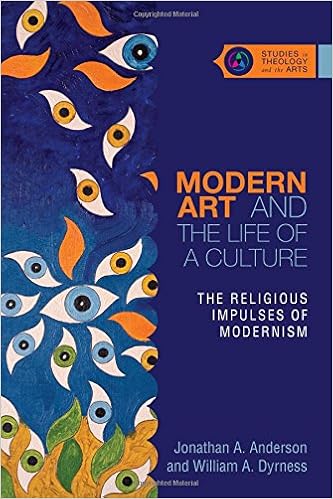
    My latest article for Artlyst is entitled 'The Religious Impulses Of Robert Rauschenberg' and highlights the explores the religious impulses of modernism in relation to Modern Art and the Life of a Culture by Jonathan A. Anderson and William A. Dyrness and the author's reflections on the religious impulses of Robert Rauschenberg:

    'Rauschenberg famously gave up his dream of becoming a minister because of his love for dancing, which his then minister told him was a sin. The retelling of that story from his childhood is, in some cases, the sole reference made by critics to religion in Rauschenberg’s work. Anderson and Dyrness help us see that, as Elizabeth Richards has stated, ‘rejection of organized religion did not dictate a rejection of spirituality and, in fact, his art often incorporated aspects of ritual and ceremony that recall his religious upbringing.’ Anderson and Dyrness do not explore the range of religious reference found in Rauschenberg’s work, and that of modern art more generally, in order to argue that this somehow makes this work ‘Christian art,’ rather they simply make the case that we cannot fully understand Rauschenberg’s work, as with so much great art, until we genuinely account for and interpret the religious references found so fully within it.'

    My other Artlyst articles are:
    ------------------------------------------------------------------------------------------

    John Cage - 4'33".

    Saturday, 22 October 2016

    Modern Art and the Life of a Culture: The Religious Impulses of Modernism


    As Jonathan A. Anderson and William A. Dyrness note in Modern Art and the Life of a Culture: The Religious Impulses of Modernism, I have for some time been arguing that, as Daniel A. Siedell suggested in God in the Gallery, "an alternative history and theory of the development of modern art" is needed, "revealing that Christianity has always been present with modern art, nourishing as well as haunting it, and that modern art cannot be understood without understanding its religious and spiritual components and aspirations." In my Airbrushed from Art History and Sabbatical Art Pilgrimage series of posts I have highlighted some of the artists and movements (together with the books that tell their stories) that should feature in that alternative history when it comes to be written.

    In Modern Art and the Life of a Culture Anderson and Dyrness, part of IVP's Studies in Theology and the Arts, also argue that there were strong religious impulses that positively shaped modern visual art. Instead of affirming a pattern of decline and growing antipathy towards faith, the authors contend that theological engagement and inquiry can be perceived across a wide range of modern art—French, British, German, Dutch, Russian and North American—and through particular works by artists such as Gauguin, Picasso, David Jones, Caspar David Friedrich, van Gogh, Kandinsky, Warhol and many others.

    Gregory Wolfe writes that this book provides a 'nuanced and sympathetic view of the religious aspects that truly did haunt modernism in the visual arts' noting that, after a couple of introductory chapters, 'the book moves into a sequence of historical surveys ranging from Van Gogh to Andy Warhol, with many stops in between.'

    Dryness notes: 'Van Gogh is often recognized as a deeply spiritual artist, but usually he is pictured as having given up his childhood (Reformed) Christian faith. But closer examination shows this not to have been the case. Others, like Gauguin, who are largely regarded as irreligious, turn out to have had deep and formative experiences with (in this case) the Catholic faith. Still others, like Malevich, inherited sensibilities from their religious contexts which made deep inroads into their art. So there is no single story to be told.' 

    Anderson says: 'The research for this book was full of surprises for me. The religious backgrounds of these artists, as well as the ongoing theological content of their work, are sometimes buried deep in the academic literature and primary sources, but once you begin to dig you find extraordinary things. Van Gogh was actually a fascinating theologian, and his paintings were theologically oriented all the way to the end. Mondrian completed his art training in the thick of the best neo-Calvinist thinking of the day. Until researching for this book, I hadn’t realized just how deeply Kandinsky was preoccupied with the book of Revelation. Warhol’s sharp social commentaries were oriented by his lifelong Catholicism. And so on: the surprises abound.'

    --------------------------------------------------------------------------------------

    Van Morrison - In The Garden.

    Thursday, 9 April 2015

    Modern art in City churches


    All Hallows by the Tower is the oldest church in the City of London. However, the church suffered extensive bomb damage during World War II and only the tower and the walls remained. The church was rebuilt after the war and was rededicated in 1957. The vicar at the time was the Rev'd "Tubby" Clayton, founder of the Toc H movement whose lamp of maintenance still shines in the Lady Chapel.

    The effigy of Tubby Clayton is one of the last works by Cecil Thomas, the ‘soldier sculptor’, who also made the Forster Memorial in the south aisle of the church.

    Beneath the great east window is the mural of the Last Supper by Brian Thomas. It depicts, through the variety of dress worn by the figures, the truth that the Last Supper is a continuing act throughout the centuries.

    The modern stained glass in the Baptistry was designed by Keith New, and is dedicated to the memory of the de Selincourt family.

    The Tower Hill Madonna by Jacquie Binns is a Mother and Child Sculpture for All Hallows by the Tower in white patinated bronze. Binns has also created a Phoenix Altar Frontal for All Hallows by the Tower.

    Sculptor John Robinson made a career with sculptures of children at play and rest, lovers, mother and child, and sports men as if captured in motion. First Steps expresses the spiritual dynamic of maternal love, self-giving and protection for the child taking its first uncertain steps on the path of life.

    The Bishop Fisher Icon Triptych is by Michael Coles. Coles has also created stained glass for the church.

    -------------------------------------------------------------------------------------------------

    Herbert Howells - Nunc Dimittis.

    Thursday, 1 May 2014

    Sabbatical Art Pilgrimage: Supervision questions

    Earlier in the weekend I had a very useful initial supervision session for my Sabbatical with Mark Lewis of commission4mission.

    Mark is a jeweller and silversmith who has a longstanding interest in contemporary approaches to landscape drawing and painting. He was a principal lecturer at The Sir John Cass Faculty of Art, Architecture and Design until 2009 and presently teaches part-time at the School of Jewellery, Birmingham Institute of Art and Design and the Goldsmiths’ Centre in London. Drawing has always been central to his practice and recent work has focused on gestural and mark-making approaches to create forms of visual shorthand. Mark promotes these techniques in a variety of educational contexts as methods of capturing the essence of form and structure and as a stimulus to creative thinking.

    Through the discussion we had about my Sabbatical plans we identified the following areas of focus:

    • telling the art historical story of modern Church commissions including factors leading to commissions and issues addressed during the commissioning process and beyond;
    • exploring if and how use is made of the artworks viewed in the context of the specific and wider Church; and
    • observing reactions and responses to the artworks in the context of worship.
    ------------------------------------------------------------------------------------

    The Frames - Rise.

    Tuesday, 31 December 2013

    The Image of Christ in Modern Art

    For some time I have been arguing that, as Daniel A. Siedell suggested in God in the Gallery, "an alternative history and theory of the development of modern art" is needed, "revealing that Christianity has always been present with modern art, nourishing as well as haunting it, and that modern art cannot be understood without understanding its religious and spiritual components and aspirations." In my Airbrushed from Art History series of posts I have highlighted some of the artists and movements (together with the books that tell their stories) that should feature in that alternative history when it comes to be written.

    Richard Harries has recently published The Image of Christ in Modern Art which is a contribution towards the piecing together of this alternative history. The book is based on a series of lectures given through Gresham College and suffers from insufficient editing of the lecture format resulting in much cross-referencing to earlier sections, something which works against the cohesion of its essentially chronological format.

    As Rowan Williams wrote in his review of this book, "The art of our age is by no means as secular as some think." Similarly, Harries puts the argument for a comprehensive alternative history of the kind noted above clearly and succintly:

    "Interest in contemporary art with a spiritual dimension or religious theme is keener today that it has been since Victorian times. Cathedrals hold exhibitions and commission works, and indeed so do some parish churches. Some of the biggest names in the art world often draw on or refer to a religious theme or seem, to the viewer, to have a spiritual dimension to their work.

    It might once have been thought that the advent of modernism before World War I had put an end to art with any explicit religious reference. That has proved not to be the case."

    Possibly for this very reason he is also clear about the limited scope (despite the comprehensive claim of its title) of The Image of Christ in Modern Art. He writes in the book's Introduction:

    "Apart from one very brief reference to Barnett Newman, there is no art from America. There is also no art from outside Europe included, though I am aware of a rich field to be surveyed, for in every culture where the Christian faith has gained a place there have been artists who have wanted to express their faith through art. Christ for All People: Celebrating a World of Christian Art indicates some of this richness and variety, as does Beyond Belief: Modern Art and the Religious Imagination. There is Christian art from Africa, China and South East Asia. There has been some particularly interesting work from India from people such as Jyoti Sahi, reproduced in Faces of Vision, and Solomon Raj. The focus of this book however, though it begins with the German expressionists, is primarily on Great Britain, especially the post-World War II period."


    "The Image of Christ in Modern Art explores the challenges presented by the radical and rapid changes of artistic style in the 20th century to artists who wished to relate to traditional Christian imagery. In the 1930s David Jones said that he and his contemporaries were acutely conscious of ‘the break’, by which he meant the fragmentation and loss of a once widely shared Christian narrative and set of images. In this highly illustrated book, Richard Harries looks at some of the artists associated with the birth of modernism such as Epstein and Rouault as well as those with a highly distinctive understanding of religion such as Chagall and Stanley Spencer. He discusses the revival of confidence associated with the rebuilding of Coventry Cathedral after World War II and the commissioning of work by artists like Henry Moore, Graham Sutherland and John Piper before looking at the very testing last quarter of the 20th century. He shows how here, and even more in our own time, fresh and important visual interpretations of Christ have been created both by well known and less well known artists. In conclusion he suggests that the modern movement in art has turned out to be a friend, not a foe of Christian art. Through a wide and beautiful range of images and insightful text, Harries explores the continuing challenge, present from the beginning of Christian art, as to how that which is visual can in some way indicate the transcendent."
     
    The Image of Christ in Modern Art is, therefore, a valuable addition to books, such as Art, Modernity & Faith, Beyond Belief, Christian Art, God in the Gallery and On the Strange Place of Religion in Contemporary Art, which, to some extent, survey aspects of an alternative history of modern art revealing "that Christianity has always been present with modern art." 

    --------------------------------------------------------------------------------------------- 

    Lone Justice - I Found Love.

    Friday, 11 January 2013

    Christian Art – fallacy or fusion?

    The Lent & Eastertide Schools are a collection of education, training and skills events across the Diocese of Chelmsford during Lent and Eastertide each year. A series of short courses running across the diocese between Ash Wednesday and Pentecost with a wide variety of themes and costing £15 per course.


    This year, as part of the Eastertide School, I will be running 'Christian Art – fallacy or fusion?' which aims to explore approaches to and understanding of the relationship between art and faith. In this course participants will explore approaches to engaging with and looking attentively at art in addition to exploring the history of art and faith plus definitions of Christian Art. As we do so, we will also look at contemporary art exhibitions, public art and church commissions.

    The course will take place on five Tuesday evenings beginning 9th April, then from 23rd April - 14th May at St John's Seven Kings (St Johns Road, Seven Kings, Ilford, Essex IG2 7BB). For brochures and booking forms please contact: Liz Watson. Diocesan Office, 53 New Street, Chelmsford, Essex. CM1 1AT. Tel: 01245 294449, email: lwatson@chelmsford.anglican.org.

    I have been thinking about books to suggest to participants for further reading as, while many books have been written on the arts and faith, a relative paucity exists of books giving reasonably accurate, comprehensive and unbiased summaries or surveys of the modern period. The resources I am likely to commend include:

    Rosemary Crumlin's Beyond Belief: Modern Art and the Religious Imagination, the catalogue from a 1998 exhibition at the National Gallery of Victoria. While not being "a survey of religious and spiritual images of the century," the works included and the accompanying essays do nevertheless span the twentieth century. The earliest, Maurice Denis' The Catholic Mystery and James Ensor's Christ calming the storm "hover at the edges of a century of revolutions, wars and new beginnings" while "at the other end of the century, and of the exhibition, are Francesco Clemente's meditations on his journey up Mount Abu in India and Audrey Flack's huge head of the goddess Daphne, with fruit and branches for hair and, on her forehead, a skull, a reminder and warning of the destruction of war."

    The foreword by Timothy Potts contains a particularly focussed summary of religious and spiritual influences on twentieth century art: "The pervasiveness of broadly religious and spiritual themes in twentieth-century Western art may at first seem to stand in contradiction to the secularization of so many aspects of life and culture during our times. The religious underpinnings of so much Western art before this century - from its subject matter to its sources of patronage and its devotional purposes - are obvious and uncontentious. With the art of our own century, however, the religious dimension is altogether more subtle, often more abstract and inevitably more personal. From images created with a clear message and usage in mind, we move into a world of individual spiritual discovery, personal visual languages and images which seek to explore and evoke rather than to define and prescribe. Some artists employ familiar religious iconography as convenient signifiers of an earlier culture and mind set - artefacts to be used in a quintessentially modern image-making of juxtaposition, anomaly and incongruity. Others eschew icons altogether to explore more mystical spiritual concerns in images of diffuse abstraction. The visual languages, the spiritual purposes and the artistic results are infinitely varied, but all are united by an absorption in the confrontation between art and religious experience. In this exhibition, these pervasive currents of religious experience and thinking can be traced running through the work of many of the twentieth-century's most important artists and schools."

    Art, Modernity and Faith: Restoring the Image

    Rowena Loverance’s Christian Art is both an accessible introduction to Christian Art and a stimulating exploration of the way in which art from the Christian tradition can speak to our condition today. To achieve both within the pages of one book is a considerable achievement. Loverance’s scope is broad, covering Christian Art from its inception to the contemporary in a way that is genuinely global and which takes in the decorative as well as the fine arts. She begins with a brief chronological survey in which she notes the way in which different aspects of Christian Art emerge from the different periods and cultures of Church history. The majority of the book, however, explores Christian Art thematically, noting the way in which the visual arts have engaged with the themes and imagery of Christian scripture and tradition. While necessarily concise through covering a lot of ground, Loverance writes with the sensitivity to art that one should expect of an art historian and with a similar appreciation of theology that comes from one writing, as a Quaker, out of her own faith tradition. Loverance has written an engaging, accessible survey of the diversity of Christian Art in which she clearly identifies the relevance of such art to our contemporary condition and identifies fruitful new avenues in the Christian tradition for possible exploration by contemporary artists. Well illustrated and designed, this is a book to inspire both the creation of new Christian art and appreciation of the wonderful heritage that we already possess.

    Finally, I am also likely to commend the series of lectures given by The Rt Revd Lord Harries at the Museum of London on Christian Faith and Modern Art. The last century saw changes in artistic style that were both rapid and radical. This presented a particular problem to artists who wished to express Christian themes and these illustrated lectures looked at how different artists responded to this challenge whilst retaining their artistic integrity. The lectures in the series are: The Explosion of Modernism; Distinctive Individual Visions; Catholic Elegance and Joy; Post World War II Optimism; Searching for new ways; and Contemporary Christian Art.

    -----------------------------------------------------------------------------------

    James MacMillan - Credo.

    Thursday, 19 April 2012

    Picasso, Duchamp and Craig-Martin

    The blurb for Picasso and Modern British Art at Tate Britain states that Picasso remains the twentieth century’s single most important artistic figure, a towering genius who changed the face of modern art. This, in a sense, is stating the blindingly obvious and that the exhibition demonstrates this through the variety and vitality of the art which Picasso created.
    The particular focus of this exhibition is on the reception which Picasso's work received in this country and some of the key artists influenced by that work. This is where the current status of Picasso's influence becomes less clear. All of the modern British artists in the exhibition, with the exception of David Hockney, are dead. Generally, the reputation and influence of these artists is (often undeservedly) not what it once was (particularly during their lifetimes). Again, Hockney with his recent and popular exhibition at the Royal Academy is to some extent an exception. But where this is leading is to question the extent to which the artists featured in this exhibition, including Picasso, are actually influencing contemporary art.

    While Picasso and Matisse were the towering figures in twentieth century art and the principal influences on much modern art, in terms of influence on contemporary art they would appear to have been superceded by Marcel Duchamp who, by challenging the very notion of what art is with his readymades and by his insistence that art should be driven by ideas, became the father of Conceptual art.

    In 2004 Duchamp's Fountain came top of a poll of 500 art experts to be named as the most influential modern art work of all time. Simon Wilson commented: "The choice of Duchamp's Fountain as the most influential work of modern art ahead of works by Picasso and Matisse comes as a bit of a shock. But it reflects the dynamic nature of art today and the idea that the creative process that goes into a work of art is the most important thing - the work itself can be made of anything and can take any form."

    Michael Craig-Martin is one of those who have followed the logic of Duchamp’s concept of the ready-made by seeing everyday objects as models for works of art. Interestingly, and through a work (An Oak Tree) which can also be seen currently at Tate Britain, Craig-Martin asserts that this form of artistic creation equates to religious faith:

    "An Oak Tree is based on the concept of transubstantiation, the notion central to the Catholic faith in which it is believed that bread and wine are converted into the body and blood of Christ while retaining their appearances of bread and wine. The ability to believe that an object is something other than its physical appearance indicates requires a transformative vision. This type of seeing (and knowing) is at the heart of conceptual thinking processes, by which intellectual and emotional values are conferred on images and objects. An Oak Tree uses religious faith as a metaphor for this belief system which, for Craig-Martin, is central to art. He has explained:

    I considered that in An Oak Tree I had deconstructed the work of art in such a way as to reveal its single basic and essential element, belief that is the confident faith of the artist in his capacity to speak and the willing faith of the viewer in accepting what he has to say. In other words belief underlies our whole experience of art: it accounts for why some people are artists and others are not, why some people dismiss works of art others highly praise, and why something we know to be great does not always move us.

    (Quoted in Michael Craig-Martin: Landscapes, [p.20].)"

    It is interesting to note that, while the stylistic innovations of Picasso could be utilised to depict the central image of Christianity (i.e. the crucifixion, as in the work which Graham Sutherland painted for St Matthew's Northampton), it was through the innovations of Duchamp that the religious nature of artistic creation itself was deconstructed and demonstrated.

    ----------------------------------------------------------------------------------------

    M. Ward - Clean Slate (For Alex & El Goodo).