Wikio - Top Blogs - Religion and belief
Showing posts with label treasure. Show all posts

Wednesday, 29 July 2026

A treasure for which someone will give all that they have and are

Here's the reflection I shared today at St Andrew's Wickford:

I wonder how it feels to be thought of as a treasure for which someone will give all that they have and are. I can respond to that wondering from my own personal experience as I was a child who invited Jesus into my heart but who, as a teenager, felt I was unworthy of his love. At that time if I had known them I would have identified with the confessions written by Lancelot Andrewes in which he admits to being the chief of sinners, an unclean worm, a dead dog, a putrid corpse saying I have sinned, I have done perversely, I have committed wickedness; Lord, I know the plague of my own heart.

Fortunately, a youth leader talked this through with me one evening and showed me Romans 5.8 - God proves his love for us in that while we still were sinners Christ died for us. I came to realise that God loved me; loved me so much that he gave up his own life for me. I was the treasure and he was the one who sold everything in order to purchase me. I was the pearl of great value and he was the merchant who sold all he had to buy me (Matthew 3.44-46, 52). Later, I had an experience of uncontrollable laughter for what seemed like hours on end as I became aware of the weight that had been lifted from me and the love that had filled me.

Most sermons we have heard preached on these parables will have told us that our salvation is the treasure and we are those who have to give up all we have to possess it. Those sermons pitch us back into guilt and uncertainty; have I done enough by giving up enough or have I compromised and forfeited salvation? Those sermons have it all upside down and back to front.

Jesus is the one who, though he was in the form of God, did not regard equality with God as something to be exploited, but emptied himself, taking the form of a slave, being born in human likeness. And being found in human form, humbled himself and became obedient to the point of death — even death on a cross. Jesus is the one who gives up all he has – even to the point of death - to seek and save us; the lost, the hidden. We are the treasure and the pearl for which he seeks because to him we are of great value; treasure, though we may not know it. In the Eucharistic Prayer shortly we will hear that the ever-present and ever-living God is with us, for we are precious, honoured and loved. We know this because Christ gave up all he had in order to be with us, even in death.

I wonder how it feels to be thought of as a treasure for which someone will give all that they have and are. For me, it felt as though a weight had been lifted from me, that love had filled giving a sense of joy – of uncontrollable laughter – welling up within and overflowing. I wonder how it feels for you.

---------------------------------------------------------------------------------------------------------------

Andrew Rumsey - Pilot Light.

Sunday, 21 September 2025

Where your treasure is, there is your heart

Here's the reflection I shared during the Healing Eucharist at St Andrew's Wickford this evening: 

The kingdom of heaven is like treasure hidden in a field, which someone found and hid; then in his joy he goes and sells all that he has and buys that field.

What is your treasure? Where is it to be found? Where your treasure is, there is your heart.

The kingdom of heaven is like a merchant in search of fine pearls; on finding one pearl of great value, he went and sold all that he had and bought it.

What is your treasure? Where is it to be found? Where your treasure is, there is your heart.

Do not store up for yourselves treasures on earth, where moth and rust consume and where thieves break in and steal; but store up for yourselves treasures in heaven, where neither moth nor rust consumes and where thieves do not break in and steal. For where your treasure is, there your heart will be also.

Look at the birds of the air; they neither sow nor reap nor gather into barns, and yet your heavenly Father feeds them. Are you not of more value than they? And can any of you by worrying add a single hour to your span of life? And why do you worry about clothing? Consider the lilies of the field, how they grow; they neither toil nor spin, yet I tell you, even Solomon in all his glory was not clothed like one of these. But if God so clothes the grass of the field, which is alive today and tomorrow is thrown into the oven, will he not much more clothe you—you of little faith?

As we reflect that we are precious to God – more precious even than the birds of the air and the lilies of the field – let us also think for a moment about the story told in the New Testament and who it is who gives up everything to gain something precious. The answer to that wondering is Jesus! Jesus is the one who, though he was in the form of God, did not regard equality with God as something to be exploited, but emptied himself, taking the form of a slave, being born in human likeness. And being found in human form, humbled himself and became obedient to the point of death — even death on a cross. Jesus is the one who gives up all he has – even to the point of death - to seek and save us; the lost, the hidden.

We are the treasure for which he seeks because to him we are of great value; treasure, though we may not know it. We are the pearl of great price for which he sold all that he had in order that he might buy us. As we hear each Sunday in the Eucharistic Prayer, the ever-present and ever-living God is with us, for we are precious, honoured and loved. We know this because Christ gave up all he had in order to be with us, even in death.

Once we become aware that we are God’s treasure for which Jesus gives his life, then Jesus becomes our treasure and our hearts become his.

What is your treasure? Where is it to be found? Where your treasure is, there is your heart.

-------------------------------------------------------------------------------------------------------

Iona - Treasure.

Sunday, 10 August 2025

X marks the spot

Here's the sermon that I shared at St Gabriel's Pitsea this morning:

X marks the spot for hidden treasure. There is a long-standing idea that pirates buried their treasure and left maps enabling them to find it later. However, this is a myth which has been popularized in fiction, particularly in Robert Louis Stevenson's "Treasure Island" which was published in 1883.

The origins of this commonly held belief stem from a story concerning the pirate Captain William Kidd (c1655–1701), who, it is said, tried to escape a spell of imprisonment by writing a letter to the governor of New York and Massachusetts, Lord Bellomont, claiming that he had buried a cache of gold and jewels on Gardiner’s Island, just off the coast of New York.

Although stories of buried pirate treasure are probably fictional, plenty of people have spent time and money searching for such hidden treasures, including Captain Kidd’s hidden horde. This demonstrates the truth of Jesus’ statement, that where your treasure is, there is your heart (Luke 12.32-40).

It is an important question for us to ask of ourselves and to explore today, as we stand to gain an unfailing treasure in heaven, where no thief comes near and no moth destroys. The answer to the question, the solution to the puzzle, the place where X marks the spot on the map, lies not so much with us, however, as with someone else and to discover who that is we need to remind ourselves of another story about hidden treasure.

Jesus once said that: The kingdom of heaven is like treasure hidden in a field, which someone found and hid; then in his joy he goes and sells all that he has and buys that field (Matthew 13.44).

It’s probable that most sermons we have heard preached on this parable told us that our salvation is the treasure and we are those who have to give up all we have to possess it. It may be that we think of Jesus as the hidden treasure. After all, we can no longer see him but we can find him. So, it may be a case of ‘Blessed are those who have not seen and yet have come to believe’, as Jesus said to doubting Thomas.

But let’s stop and think for a moment about the story told in the New Testament and who it is who gives up everything to gain something precious. The answer to that wondering is Jesus! Jesus is the one who, though he was in the form of God, did not regard equality with God as something to be exploited, but emptied himself, taking the form of a slave, being born in human likeness. And being found in human form, humbled himself and became obedient to the point of death — even death on a cross. Jesus is the one who gives up all he has – even to the point of death - to seek and save us; the lost, the hidden.

We are the treasure for which he seeks because to him we are of great value; treasure, though we may not know it. In the Eucharistic Prayer shortly we will hear that the ever-present and ever-living God is with us, for we are precious, honoured and loved. We know this because Christ gave up all he had in order to be with us, even in death.

I learnt that truth and that reality in my teens. I was a child who invited Jesus into my heart but who, as a teenager, felt I was unworthy of his love. I felt like that because I was very aware of my own failings, fallibilities, and sins. Fortunately, a youth leader talked this through with me one evening and showed me Romans 5.8 - God proves his love for us in that while we still were sinners, Christ died for us. I came to realise that God loved me; loved me so much that he gave up his own life for me. I was the treasure and he was the one who sold everything in order to purchase me. I was the treasure and he was the who sold all he had to buy me. Later, I had an experience of uncontrollable laughter in the Spirit for what seemed like hours on end as I became aware of the weight that had been lifted from me and the love that had filled me.

Once we become aware that we are God’s treasure for which Jesus gives his life, then Jesus becomes our treasure and our hearts become his.

The X that marks the spot for us as Christians is Jesus. Jesus came into our world as the Word of God to live a life of self-sacrificial love as a human being. He shows us what true love looks like and he shows us that human beings are capable of true love even when most of the evidence around us seems to point towards the opposite conclusion. But he did not come solely as an example or a description of love. He is love itself, the reality of love, and, therefore, as we come into relationship with him we come into a true relationship with love. This why he came, that we might receive him; that we might receive love. He is then in us and in him. Love in us and we in love.

We are to make Jesus central to our lives and experience. In speaking to would-be disciples Jesus is emphatic about making God central to our lives. Before commitments to home and to family, God comes first. This is the practical implication and application of Jesus’ summary of the Law: “Love the Lord your God with all your heart, with all your soul; and with all your mind.” That is the greatest and most important commandment. Love for others follows on from it, as we are then told to love our neighbour as we love ourselves.

It is as we live in relationship to him, following in the Way that he has established, that we are sanctified, become holy ourselves, become ‘Little Christs’, which is what ‘Christian’ literally means. That is what it means for us to know Jesus as the Way, the Truth and the Life. We are not sanctified by the Truth, meaning that sanctification is not about knowing and accepting truths that we are to believe. Instead, we are sanctified in the Truth, meaning that we are made holy as we inhabit, experience, practice and live out the Truth; with that truth being Jesus.

It was in my ordination training that I first discovered and experienced the reality of these things in a new way for myself and found Jesus as the X that marks the spot in a new way. Through debate and discussion with others on my course I was able to re-examine my faith while also being held by the sense of unity that we quickly developed despite our differences. Those relationships have proved extremely strong and necessary as our ordained ministries have later been lived out. My fears about my personal inadequacy and the pressures there would be for my family were eased through a sense that we were on an unfolding journey of discovering God’s love which protects and sanctifies.

I moved from an understanding of God as being there for us – the one who fixes us and who fixes the world for us – to an understanding that we are in God – that in him we live and move and have our being. May we, each one, become aware that we are the treasure for which Jesus gives his life and allow Jesus to become our treasure and our hearts desire. Amen.

--------------------------------------------------------------------------------------------------------

John Davis - I Hear Your Voice.

Wednesday, 5 May 2021

Chaiya Art Awards: A different kind of treasure


A different kind of treasure: Winners Exhibition, Affordable Art Fair at the Oxo Gallery

An invitation to revive and refresh our senses. The Chaiya Art Awards is the UK’s largest awards exploring spirituality through the visual arts with a top prize of £10,000, an inclusive competition for artists, whatever their faith or views on God.

From over 700 entries, the 50 visual artists featured in this juried and curated exhibition explore the theme “God is…” and encourage us to look beyond, to discern what cannot be seen and grasp what cannot be described. A liminal space where life's pain and pleasure dissolve, where questions and answers fade into shadow, where the indefinable lies, a treasure waiting to be found.

“Today, in a world full of conflict and shocks, art bears witness to the most precious part of what makes us human … At a time of global disorder, art embraces life.” Christine Macel

'God is …’ a mystery explored through canvas and paper, photographs and video, others cloth and stitch; 3D metalwork and pottery; bronze and stone sculpture; glass and pipework; a movement sensitive robot alongside an interactive sign with sonic sensors.

The panel of five judges, all well respected experts in the arts arena, will be announcing the winner of the top prize of £10,000 along with other prizes. But visitors will also have their say, in voting for public prize of £1,000 from the artwork on display during the exhibition.

EVENT: Chaiya Art Awards 2021, Winners Exhibition, Affordable Art Fair

DATES: Fri 14 May – Sun 23 April 2021
OPEN: 11am – 6pm every day (till 4pm on last day)
VENUE: Gallery@OXO, Oxo Tower Wharf, Bargehouse Street, South Bank, London, SE1 9PH

Entrance is free. Artwork for sale, prices from £50 - £20,000

10% of all artwork sold goes to our Charity partner UNSEEN - working to end human trafficking and modern slavery.

THE EXHIBITION WILL ALSO BE ONLINE SIMULTANEOUSLY from 14-May to 31 July 2021, to allow access from all over the world.

For more information, visit: chaiyaartawards.co.uk

Facebook: @ChaiyaArtAwards
Twitter: @ChaiyaArtAwards
Instagram: chaiyaartawards

-------------------------------------------------------------------------------------------------------

Mica Paris - Mamma Said.

Friday, 25 September 2020

The treasure and the pearl for which Jesus seeks

Here's the reflection that I shared during today's lunchtime Eucharist for St Martin-in-the-Fields:

I wonder how it feels to be thought of as a treasure for which someone will give all that they have and are. I can respond to that wondering from my own personal experience as I was a child who invited Jesus into my heart but who, as a teenager, felt I was unworthy of his love. At that time if I had known them I would have identified with the confessions written by Lancelot Andrewes in which he admits to being the chief of sinners, an unclean worm, a dead dog, a putrid corpse saying I have sinned, I have done perversely, I have committed wickedness; Lord, I know the plague of my own heart.

Fortunately, a youth leader talked this through with me one evening and showed me Romans 5.8 - God proves his love for us in that while we still were sinners Christ died for us. I came to realise that God loved me; loved me so much that he gave up his own life for me. I was the treasure and he was the one who sold everything in order to purchase me. I was the pearl of great value and he was the merchant who sold all he had to buy me (Matthew 3.44-46, 52).

Later, I had an experience of uncontrollable laughter for what seemed like hours on end as I became aware of the weight that had been lifted from me and the love that had filled me.

Most sermons we have heard preached on these parables will have told us that our salvation is the treasure and we are those who have to give up all we have to possess it. Those sermons pitch us back into guilty and uncertainty; have I done enough by giving up enough or have I compromised and forfeited salvation? Those sermons have it all upside down and back to front.

Jesus is the one who, though he was in the form of God, did not regard equality with God as something to be exploited, but emptied himself, taking the form of a slave, being born in human likeness. And being found in human form, humbled himself and became obedient to the point of death — even death on a cross. Jesus is the one who gives up all he has – even to the point of death - to seek and save us; the lost, the hidden. We are the treasure and the pearl for which he seeks because to him we are of great value; treasure, though we may not know it. In the Eucharistic Prayer shortly we will hear that the ever-present and ever-living God is with us, for we are precious, honoured and loved. We know this because Christ gave up all he had in order to be with us, even in death.

I wonder how it feels to be thought of as a treasure for which someone will give all that they have and are. For me, it felt as though a weight had been lifted from me, that love had filled giving a sense of joy – of uncontrollable laughter – welling up within and overflowing. I wonder how it feels for you.

----------------------------------------------------------------------------------------------------------

Michael Kiwanuka - I'm Getting Ready.

Monday, 17 October 2016

Discover & explore - Treasure/Gold


Today the Choral Scholars of St Martin-in-the-Fields led our Discover & explore service at St Stephen Walbrook on the theme of Treasure/Gold using the following: O radiant dawn - MacMillan; All I once held dear - Kendrick/Larson; Beati quorum via - Stanford; and Ubi caritas - Durufle.

The next Discover & explore service in the series is on Monday 24 October at 1.10pm. The theme will be Guidance and the service will be led by Revd Sally Muggeridge.

Here is the reflection that I shared today:

The love of money is the root of all evil. We have probably all heard that biblical assertion, although many think the statement is actually that money is the root of all evil. That isn't what is asserted in scripture, however, as a very important distinction is being made when it is said that the love of money is the root of all evil.

Money itself is neutral. It is a means of exchange that can be used for good or evil but which is not inherently evil in and of itself. One key element in the positive use of money is its circulation. It is designed to be exchanged and therefore it moves from one person to another, one account to another. This is one reason why the Bank of England has introduced plastic bank notes, because significant levels of exchange cause significant wear and tear for the notes that are being exchanged.

There is a blockage to this healthy exchange process when greed comes into play and particular people begin accumulating great wealth which is not being exchanged as freely or with as many people. This is one of the reasons why the love of money is the root of all evil, as it interrupts and blocks the healthy free flowing exchange which shares money with the many. Lewis Hyde suggests in his book entitled ‘The Gift’ that "we think of the gift as a constantly flowing river" and allow ourselves "to become a channel for its current." When we try to "dam the river", "thinking what counts is ownership and size," "one of two things will happen: either it will stagnate or it will fill the person up until he bursts."

The antidote to such greed and accumulation is the generosity on which we have focused with our readings in this service. Generosity, the giving away of money, gives additional impetus to the free flow of money and is usually focused on those most deeply in poverty or in need.

The City of London is a place where London’s spirit of enterprise is distilled to the maximum. It was in the City that many forms of charitable activity originated or evolved into business models for others to follow. Making money and giving money are both features of life in the City. What does the Bible say about the way we should use the money we make?

Instead of giving grudgingly, the Bible encourages generosity and cheerfulness in giving. In his second letter to the Corinthians Paul writes, ‘Each of you should give what you have decided in your heart to give, not reluctantly or under compulsion, for God loves a cheerful giver.’ Gratitude is the first fruit of humility and is a response to the forgiveness, freedom, healing and restoration which we find in God. We are precious to him, honoured and loved by him, so give out of thankfulness for this acceptance and love.

That is the prayer for our Stewardship campaign this year; that God will give us a grateful heart. Giving to our church is a tangible, faithful, and accountable way in which we demonstrate our gratitude to God. Of course our lives haven’t in every way turned out how we wanted them to; but God has given us life. Of course the church isn’t perfect; but God has given us Jesus, and forgiveness, and the life everlasting. Of course there are lots of other good causes; but giving to the church is about investing in forever, in striving to live now the companionship God has promised us always.

As a result, this autumn we are encouraging all those who come to St Stephen Walbrook to reflect on the various ways in which we can use their time, talents and treasure in God’s service. Each of us can give from our treasure in ways that benefit others and our Stewardship leaflet explains how to give regularly and consistently to St Stephen Walbrook, so I encourage you to reflect on whether you could give regularly out of gratitude and to help this church.

The Elizabethan poet George Herbert was aware of our natural tendency to think what God has given to us as being ours and to retain as much of it for ourselves as possible. His prayer, therefore, was that he might be given a grateful heart. One that rejoices in all that God has given, recognising it all as a gift, rather than something earnt, and, therefore, generous in the way it is used and given back to God. May our prayer be that of George Herbert:

Thou that hast given so much to me,
Give one thing more, a grateful heart …
Not thankful, when it pleaseth me;
As if thy blessings had spare days:
But such a heart, whose pulse may be
Thy praise.

-----------------------------------------------------------------------------
George Herbert - Redemption.

Thursday, 6 October 2016

Business Harvest Festival: A Grateful Heart

A small selection of the symbols of work placed on the altar of St Stephen Walbrook today

Symbols of work were placed on the altar of St Stephen Walbrook as part of today's Business Harvest Festival by Central London Magistrates, Central London Samaritans, City of London Police, commission4mission, Coq d'Argent restaurant and Bar, Kim Poor artist, London Internet Church, The Don and 'Sign of the Don' Restaurants, Tony Gant Pottery, University of the Third Age, Walbrook Music Trust, Wells Fargo Bank and Xuber Insurance Software.

In my sermon I said:

Come, ye thankful people, come. Harvest is all about thankfulness and gratitude, but was originally about thankfulness for the song of harvest home. In an age when we are not actively involved in the growing of food, for what should we be thankful?

We can be thankful for those that do grow and supply the food that we enjoy so abundantly, although our thankfulness should come with an awareness of the reasons why hunger continues to be experienced within our world, of the negative impacts of our industrial agricultural approaches, and the increasing impacts of climate change.

We can also be thankful for the different harvest of our work and the work of the City more generally, both in incomes provided for those who work here and in the financing of all sorts of initiatives, projects and services around the world. Again, though, our thankfulness may also be tempered by awareness of the temptations to excess and greed which go together with access to significant wealth and the need for regulation as a result.

Our Gospel reading (John 6. 25 - 35), however, gives us another reason for thankfulness today, about which thanks without measure can be offered. That is for Jesus himself, who is our true food and life. He is the bread of life, the one on whom we can feed eternally because, as creator, he gives us life itself and, as Saviour, restores to relationship with God; a relationship which will continue into eternity.

How should we show our thankfulness? Our Old Testament reading (Deuteronomy 26. 1 - 11) unpacks that for us. We show our thankfulness for all that God has given to us by giving a proportion of what we have received back to God. We do so by giving our time, our talents and our treasure; three things which form the basis of the Stewardship campaign which we are launching at St Stephen Walbrook today.

We give our time and talents in volunteering which benefits others rather than ourselves and our Stewardship leaflet lists ways in which we need the input of volunteers here at St Stephens. We give our treasure by giving our money in ways that benefit others and our Stewardship leaflet explains how to give regularly and consistently to St Stephen.


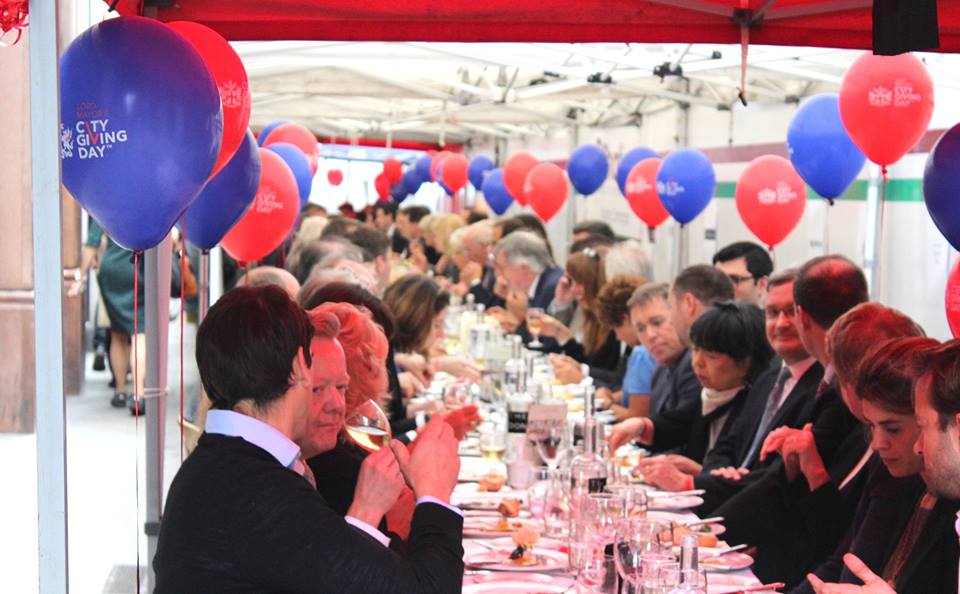
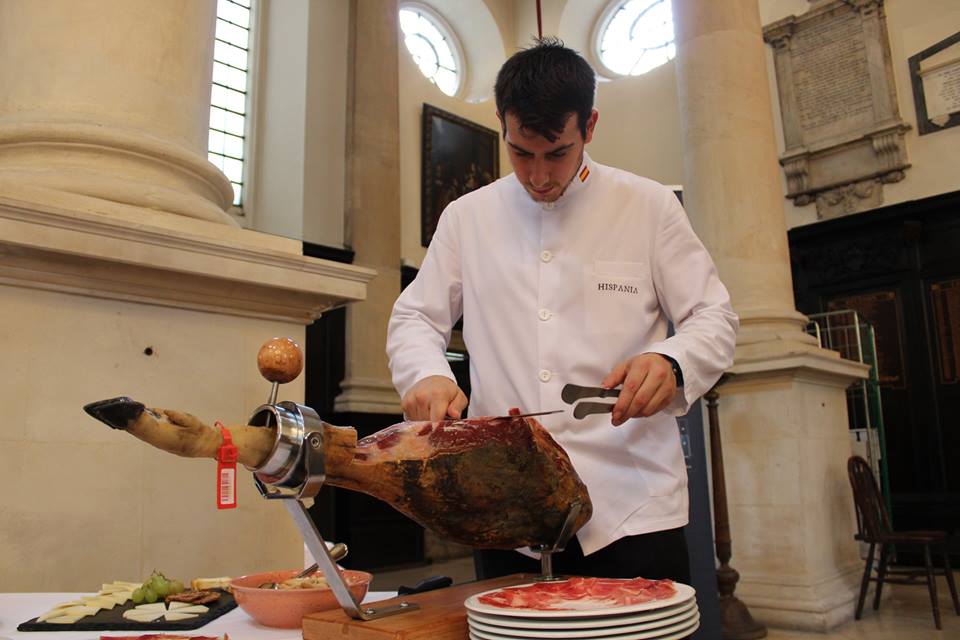
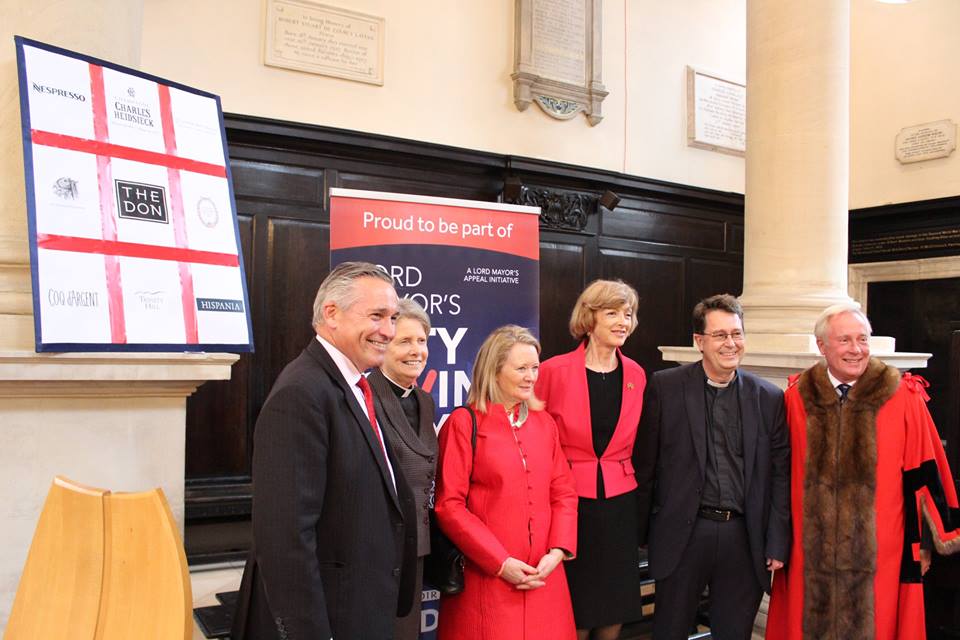
The recent Long Long Lunch on the Lord Mayor’s City Giving Day was an example of the way in which time, talents and treasure can combine to benefit others. The four restaurants involved – The Don, Coq d’Argent, 1 Lombard Street and Hispania – gave their time in organising the lunch, their chefs used their talent in creating the menu and those who paid for the meal contributed from their treasure in order that the Lord Mayor’s Appeal raised significant funds. Our hope and prayer is that those who support St Stephen Walbrook will use their time, talents and treasure as creatively as those involved in the Long, Long Lunch.

By commending tithing, the giving of 10% of what we have received back to God, our Old Testament passage also raises the thorny issue of how much we should give. Tithing is not a Biblical requirement but it is a helpful measure of what a baseline for thinking about generosity in our giving back to God might look like.

Instead of giving grudgingly, the Bible encourages generosity and cheerfulness in giving. In his second letter to the Corinthians Paul writes, ‘Each of you should give what you have decided in your heart to give, not reluctantly or under compulsion, for God loves a cheerful giver.’

The Elizabethan poet George Herbert was aware of our natural tendency to think what God has given to us as being ours and to retain as much of it for ourselves as possible. His prayer, therefore, was that he might be given a grateful heart. One that rejoices in all that god has given, recognising it all as a gift, rather than something earnt, and, therefore, generous in the way it is used and given back to God. May our prayer also be that of George Herbert:

Thou that hast given so much to me,
Give one thing more, a grateful heart …

Not thankful, when it pleaseth me;
As if thy blessings had spare days:
But such a heart, whose pulse may be
Thy praise.

So, come, ye thankful people, come, raise the song of Harvest home.

--------------------------------------------------------------------------------------------
Come, ye thankful people, come.