-----------------------------------------------------------------------------------------
Showing posts with label agape. Show all posts
Saturday, 1 November 2014
Youth programme within the Province of the Anglican Church of the Democratic Republic of Congo and Congo Brazzaville
Labels:
agape,
anglican church of congo,
balikenga,
drc,
jesus,
st john's,
youth work
Sunday, 5 October 2014
Patronal Festival
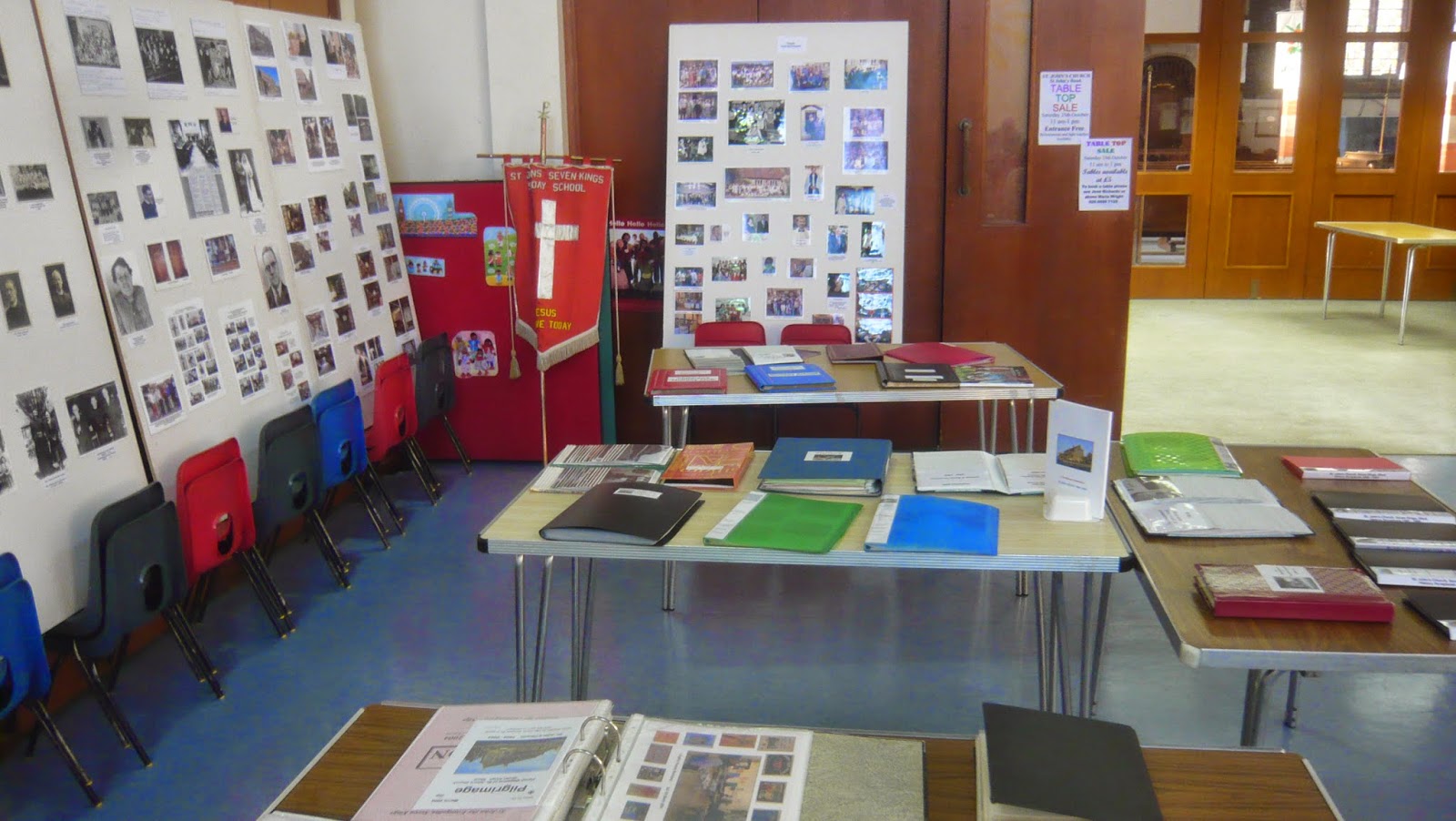
St John's Seven Kings celebrated its 110th Anniversary over its Patronal Festival weekend on Saturday 4th and Sunday 5th October. Our celebrations included Choral Evensong (Saturday 4th October, 6.00pm) followed by refreshments, Patronal Festival Service (Sunday 5th October, 10.00am) followed by a Bring & Share Lunch, plus photographic displays and the celebration of special anniversaries/birthdays for congregation members.
Choir members from several local churches supported the St John's Choir in leading worship for our Choral Evensong. The service included the anthem 'A Clare Benediction' by John Rutter.
Many former members of St John's returned for the weekend including:
- Revs. John & Rosemary Enever, who preached at the Patronal Festival Service. Rosemary is a former curate at St John's who became Vicar of St Andrews Great Ilford and Area Dean of Redbridge; and
- Judy Acheson, our former Church Mission Society Link Worker in the Democratic Republic of the Congo . Judy was celebrating 50 years as a Christian. As a result of her ministry in the Congo , St John's continues to support youth work in that country.
Michael Blackstaff, a former server at St John's , had written a reminiscence in which he said, ' St John’s was, and is, a very special place. I was a bit short on blood relations (though very rich in adoptive ones) and came to regard it and its many good people as part of my family. I shall always feel greatly privileged to have been welcomed into its loving embrace.'
There have been more that 15 different significant anniversaries/birthdays which are being celebrated within our congregation this year and all these people were congratulated as part of the Patronal Festival Service. They included two 60th wedding anniversaries, one 50th wedding anniversary, and two 90th birthdays, among others. We prayed for these folk using the following prayer:
Lord Jesus, we thank you for the special milestones which these people have reached in the course of this year. Such moments provide a reason for stopping and remembering all that we have experienced up to that point in our lives; times of great joy and great challenge. In all, as we look back, we see your presence alongside us supporting and equipping us for life. Enabling us to enjoy and share those times of intense joy and pleasure, to bear and share those times of deep anxiety and pain, and to live fully the times in between – those times of ordinary, everyday life in families, church, community, and at work. Thank you for all that you have done and continue to do in the lives of these people and may they know a special joy and blessing from you in the celebration of these particular milestones. Amen.
We also presented a gift to our former curate, Rev. Santou Beurklian-Carter. Following the service, we enjoyed a delicious and varied Bring & Share lunch and viewed photographic displays from the extensive Church archive.
Former Vicar Rev. Gordon Tarry sent a message saying, 'St Johns will always be a very special place and people for Julia and I, and our family. We hope you have a great week-end, with much joy and laughter.'
The weekend was a great encouragement and inspiration through the many testimonies to God's work in many lives through St John's.
At our 8.00am service I preached the following sermon:
The traditional image for our Patron Saint, St John the Evangelist, is the eagle and that is, of course, why images of eagles can be seen in different parts of our church. This image for John and the writings we traditionally attribute to him wasn’t chosen at random but was selected because it expresses something of what John’s writing do for us.
Richard Burridge, in his important book Four Gospels, One Jesus? tells us that the eagle was used to represent the Evangelist because he gives us the high-flying, far-seeing perspective of the eagle when he writes about Jesus. These writings give us the big picture about Jesus and his significance.
We can see this in our Bible readings. In 1 John 1, we read that Jesus, the Word of life, has existed from the very beginning and in John’s Gospel we read of Jesus speaking of his coming again at the end of time. This is the big picture into which John sets the stories and theology that he gives us about Jesus. When John writes about Jesus, he is not simply saying that these are interesting stories about a great human being. Instead he is saying that this is God himself, the alpha and omega, the beginning and the end, walking, talking and acting in the flesh.
In 1 John 1 there are two key features of God that John wants us to grasp in our to understand the significance of the big picture. The first is that God is someone that we can see and the second that God is someone who enables us to see.
John uses the image of the Word made visible to tell us that God is someone that we can see. The heart of the Christian faith, he is saying, is the incarnation; the reality that God, in Jesus, became a human being and lived in a particular culture and time. John was able to say of this Word; “we have heard it, and we have seen it with our eyes; yes, we have seen it and our hands have touched it.” God is no longer detached from us and unknowable to us, instead he has chosen to come close to us, to move into our neighbourhood, to become one of us.
The incarnation is at the heart of Christianity because it is a sign of the love that God has for us. God loves us so much that he is prepared to become one of us, even though this means huge constraints and ultimately leads to his death. As a result, he understands us and understands human life. Now whatever we go through, God has been there before because he has experienced life in all its wonder and heartache.
However, God is not simply someone who can be seen by us. He is also the one by whom we can see. John gives us the image of God as light to help us grasp this facet of God’s being. Light is not something we can see directly but something that enables us to see ourselves and our world. This is what Jesus does for us through the incarnation; he shows what humanity was originally intended to become. For the very first time in the history of the world a human being lives a fully human life.
As a result when we see ourselves and our world in the light of the life of Jesus, what we see is our failure and inability to be the people that we were created to become. In the light of the way that Jesus lived his life, we see our lack of love, joy, peace, patience, kindness, goodness, faithfulness, humility, and self-control. As this letter says, if we say that we have no sin, we deceive ourselves, and there is no truth in us. But when we live in the light, seeing ourselves as we really are, then we become honest with ourselves and with God. By coming into that honesty we confess our sins and are purified of them.
Both these understandings of Jesus are necessary for us to become fully human. If God was just light that exposed our failures then we would be condemned by God. If God was just alongside us as the Word made flesh then there would be no prospect of change for us. But because God, in Jesus, is both the light revealing our failings and the Word made flesh understanding our failings, we can receive forgiveness and change to become more fully human.
John gives us many paradoxes and parallels in his writings. Jesus is both this and that; both Word and flesh; both flesh and light; both message and image; both human and divine. As a result, his writings can seem difficult and dense; yet it is only because Jesus is both/and that we can know what real humanity looks like and have some real prospect of moving towards that reality in our lives. To repeat, it is only because God, in Jesus, is both the light revealing our failings and the Word made flesh understanding our failings that we can receive forgiveness and change to become more fully human. So this Patronal Festival, let us be thankful for the big picture that John paints for us and thank God for the salvation that comes to us because he is Word and flesh; flesh and light; message and image; human and divine.
-----------------------------------------------------------------------------------------
John Rutter - A Clare Benediction.
Labels:
agape,
anniversaries,
beurklian-carter,
blackstaff,
choral evensong,
cms,
congo,
enever,
patronal festival,
prayer,
rutter,
sermon,
st john's,
tarry
Sunday, 12 January 2014
Baptism, Agape and chain reactions
Jesus’ baptism (Matthew 3. 13 – end) started a
chain reaction. It led directly to his ministry which was to bring good news to
the poor, proclaim liberty to the captives, recovery of sight to the blind, set
free the oppressed, and announce that the time has come when the Lord will save
his people. To do this he recruited disciples; a core group of 12 and a larger
group of 72 or more.
--------------------------------------------------------------------------------------------
Mavis Staples - Sow Good Seeds.
These
were themselves baptised and, after Jesus’ ascension and the coming of the Holy Spirit at Pentecost,
they followed Jesus’
commission to go to all peoples everywhere and make them disciples: baptizing
them in the name of the Father, the Son, and the Holy Spirit. When Peter
preached on the Day of Pentecost he said, “Each one of you must turn away from your sins and be
baptized in the name of Jesus Christ, so that your sins will be forgiven; and
you will receive God's gift, the Holy Spirit.” Many believed his message and were
baptized, and about three thousand people were added to the group that day.
The
chain reaction that was started by the baptism of Jesus still continues and at St John's Seven Kings we have been a part of keeping that chain reaction going. Here
is one story which demonstrates that to have been the case. Thirty years ago
Judy Acheson was a Sunday School teacher here at St John's. While here, she
felt called to serve God in the Democratic Republic of Congo. She went to the
Congo in 1980 with the Church Mission Society (CMS) to be a nursery nurse, but,
as the children she cared for grew, she carried on caring for them, eventually
training and handing over responsibility to local leaders. “When I was first
simply doing Sunday school work, I trained someone to take over … I always felt that
we were there in a country to share the experience we had and enable people to
carry it on."
The
recent history of violence in the DRC is legendary. There is a legacy of 30 years of a both brutal and incompetent
dictatorship, followed by one of the worst civil wars in post colonial Africa.
Almost every participating force has been guilty of massacres and rapes. And
the north-east region, where Judy was originally, was described by Human RightsWatch as "the bloodiest corner of Congo".
Judy
could have left the country during the civil war but chose to stay and develop
pioneering youth work. She says, “it was always my philosophy to empower the young people to
do the work.” Bisoke Balikenga was one of her original youth team members. “You could see his
leadership potential. People would listen to him and do what he asked. When we
had visitors he looked after them.” Seeing his potential, CMS gave him and his wife a
scholarship to study at Daystar University in Nairobi, then he took over the
diocesan youth work Judy had begun, so she could start youth work nationally.
Now that she has retired, he has taken over the national youth work as well.
The
Youth Department Judy set for the Diocese of Bunia, called Jeunesse Chrétienne Agape (which
means Agape Christian Youth), visited young men who joined the tribal militias
during the civil war to persuade them to leave the militias, runs
rehabilitation centres for young women raped and traumatised during the civil
war, and, now the war is over, runs seminars to reconcile those who fought
against each other during the war.
When
the Archbishop of Canterbury visited in 2011, a group of about 50 former
militia members spoke about how the Church, in the form of Agape, never forgot
them. One by one, they gave their testimony. "We were taught to repay bad
for bad," one said, "but the people from the church came to visit me."
One after another they spoke about how, thanks to Agape's seminars and
conferences on peace, they retuned to God and their families, rediscovering the
love of Jesus. Many of them were then at college or university, slowly putting
their trauma behind them.
Throughout
these years Agape was been training young people to think for themselves, to
have, give and express their own opinions, and make their own decisions. God
began to show Judy, Bisoke and others that he is going to bring mighty changes
within the country and has chosen to use children and young people as a means
of doing so. This led them to write a manual for young people, Young people, with God let us rebuild our beautiful country! With Government support this book, and others they have
written, are being used by thousands of teenagers and young adults in schools
and in youth groups with the result that they are learning to make their own
decisions and become aware of their role and their responsibility towards their
own country.
Judy
and Bisoke are examples of people who have put Jesus’ words into practice
and by doing so having a massive impact on their country. Their story is
particularly inspiring because they are clearly ordinary people just like us.
If they can do it, so can we. Their story is doubly inspiring because it is
about a chain reaction happening among young people who have been baptised and
become leaders like Jesus; those who come not to be served but to serve, and to
give their lives for others.
As
an illustration of the continuing need for the work that Bisoke and his
colleagues do, here are some stories from his recent prayer letters:
While
the majority of the DRC is peaceful, fighting continues in the East of the
country. Bisoke has asked for prayer for people in Gety who have become
refugees in Komanda , Nyankunde, Marabo and Bunia because of the insecurity
caused by the war between the rebel and the government soldiers. These people
have lost everything when they had to run from their homes without food,
blankets or clothes in order to save their lives. Now the young people in these
places have started providing assistance with clothes, food, and blankets.
Bisoke
also wrote about the Venerable Move Karabutege, the first Archdeacon of Gety,
and his wife. They stayed in Gety when everyone else ran away but his wife
became ill and they couldn't leave because the road was not secure for them to
travel. Eventually, their son got them out and brought them to Bunia but after
two days the wife of the Archdeacon passed away.
Bisoke
is committed to travelling to all dioceses to build capacity in the church for
transformation. 'We twice visited the diocese of North Kivu to discover what we
could do for the youth there and understand their needs,' Bisoke said. He says
he found that many of the youth leaders badly needed training in peace and
reconciliation as well as encouragement in their work in such a tough area.
In December Bisoke helped lead a four-day seminar for dozens of youth leaders in North Kivu. 'We truly saw the hand of God upon us,' said Bisoke, adding that a dozen leaders rededicated their lives to Jesus. 'Some of these youth leaders had been affected by the war and by insecurities around North Kivu, which had blocked the development of North Kivu Diocese. However we are building upon the faith of our youth with these much-needed seminars.'
A Prayer for the Democratic Republic of Congo: O God, loving parent of all,
comfort your children displaced, wounded or orphaned by conflict in Congo; and
give the people of that country courage to seek enduring peace with justice and
freedom, that their children might grow up without fear; for the sake of your
Son, Jesus Christ. Amen. (Adapted by Canon Ian Tarrant from a prayer in the
1998 Congo Swahili Prayer Book, written after the 1996-97 war).
--------------------------------------------------------------------------------------------
Mavis Staples - Sow Good Seeds.
Labels:
acheson,
agape,
archbishop,
balikenga,
baptism,
bunia,
civil war,
cms,
conflict,
disciples,
drc,
human rights,
jesus,
karabutege,
prayer,
reconciliation,
seminars,
sermon,
st john's,
tarrant
Sunday, 16 September 2012
Transforming Presence: Serving with accountability
Today we had our All-Age Harvest Festival at St John's Seven Kings. Our congregation generously collected a large amount of Harvest goods to donate to the Redbridge Food Bank. After the service we enjoyed a bring & share Harvest lunch. In the service we thought about the third of the Transforming Presence priorities - serving with accountability.
"They spent their time in learning from the apostles, taking part in the fellowship, and sharing in the fellowship meals and the prayers." In a single verse Acts 2.42 describes the life of the very first Christian community. It is a community which is faithful to Christ. It is a community that is growing as the Lord adds more people to its number.
It has a life of clarity, integrity and mutual accountability. The apostles teaching, fellowship with each other, the breaking of bread and the life of prayer constitute and characterise the life they have in Christ.
In Transforming Presence Bishop Stephen asks us to consider how these things are evident in the life of our community? What else would we add to this list? Or, put another way, what aspects of the apostles teaching need to go alongside these other three basic priorities of our life together?
Is there a bottom line? Is there a set of ministries and activities that we should expect to find in every Christian community, whatever its context and circumstance, and about which we should hold ourselves accountable? Is there a rule of life for the local Christian community? Are there a set of ingredients that constitute a faithful, healthy Christian community?
Our churches should be places of prayer; places where people learn about the faith and are active in discipleship; places where there is a ministry of evangelism; places where ministry is shared and developed; places which serve the local community; places that are inclusive and welcome to all; places which are seeking the unity of all God’s church and working with their neighbours locally and globally.
We must move, Bishop Stephen suggests, to a situation where it is no longer possible or acceptable for a church to say, for instance, ‘we don’t do children or young people’ or ‘evangelism isn’t our thing.’ Each community will, in its own way, be developing a common set of ministries so that we might be a church that is faithful to its apostolic calling.
As part of doing so, a Diocesan rule of life could help us answer the following questions:
· What are we doing to teach people to pray?
· What are we doing to teach people the faith and help them in their discipleship?
· What are we doing to share the faith with others and what have the results been in the past year? And does our church have a place of nurture?
· What are we doing to nurture and develop the ministry of the whole people of God including enabling people to come forward for authorised lay and ordained ministry?
· How is your church a blessing to the community we serve? And how are we witnessing to God’s kingdom of justice and peace?
· What are you doing to ensure our church is a place of safety and welcome for all ages and for people of all backgrounds?
· How are we working in partnership with other Christian communities in our locality and at the diocesan, national and global levels?
As we ask and answer such questions we are being accountable to each other and to God for the ministry of this Church. Similarly Stewardship month is a time when we stop and reflect on our actions and activity and review what we are doing. To do this is to be accountable to God and each other.
At Harvest and in Stewardship month we regularly remember that our church is made up of people who, together, trust in and follow Jesus. We depend on Jesus and care for each other and for the community where we live. By being together as the disciples of Jesus we can offer spiritual sacrifices of our time, energy, abilities and possessions to bless God and our neighbours, by:
· offering ourselves as ‘living sacrifices’ in love of God and our neighbour – including our enemies (Romans 12)
· living a life of love – following the sacrificial example of Jesus (Ephesians 5:2)
· sharing our possessions with those in need inside and outside our community (Philippians 4:18, cf. Galatians 6:10)
· praising God together and sharing with people living in poverty (Hebrews 13:15–16)
But we are not on our own. We are also part of the global church – all made of living stones. Jesus the cornerstone joins us together. Our church, through Jesus, is joined to churches locally, nationally and internationally. We offer spiritual sacrifices to God, which benefit the people around us. We can also demonstrate unity through supporting – and praying with – churches across the world. As living stones, together, through Jesus Christ, we are being built into God’s global church, his spiritual home. Together we are church.
We are one of the richest nations in the world; we have been given so much. God calls us to make spiritual sacrifices for his kingdom, and we can start today by committing to offer spiritual sacrifices, through prayer, by giving regularly to this church and the global church, and by taking action to care better for the world in which we live (see today’s Stewardship form). These sacrifices, made in partnership with other churches - like King’s Church who run the Redbridge foodbank and the Anglican Church in the Democratic Republic of Congo whose youth work we support - enable more and more churches to bring spiritual and material transformation to their own communities. Together we are church.
Matt Redman - I Will Offer Up My Life.
Labels:
accountability,
agape,
bishop of chelmsford,
church,
drc,
harvest,
jesus,
kings church,
redbridge foodbank,
service,
stewardship,
tearfund,
transforming presence
Sunday, 6 November 2011
Building on firm foundations
This morning at St John's Seven Kings, our young people did a sponsored car wash during the main morning service to raise funds for the Agape Youth work which we support in the Democratic Republic of Congo. They washed 11 cars in under an hour and raised £120.00.
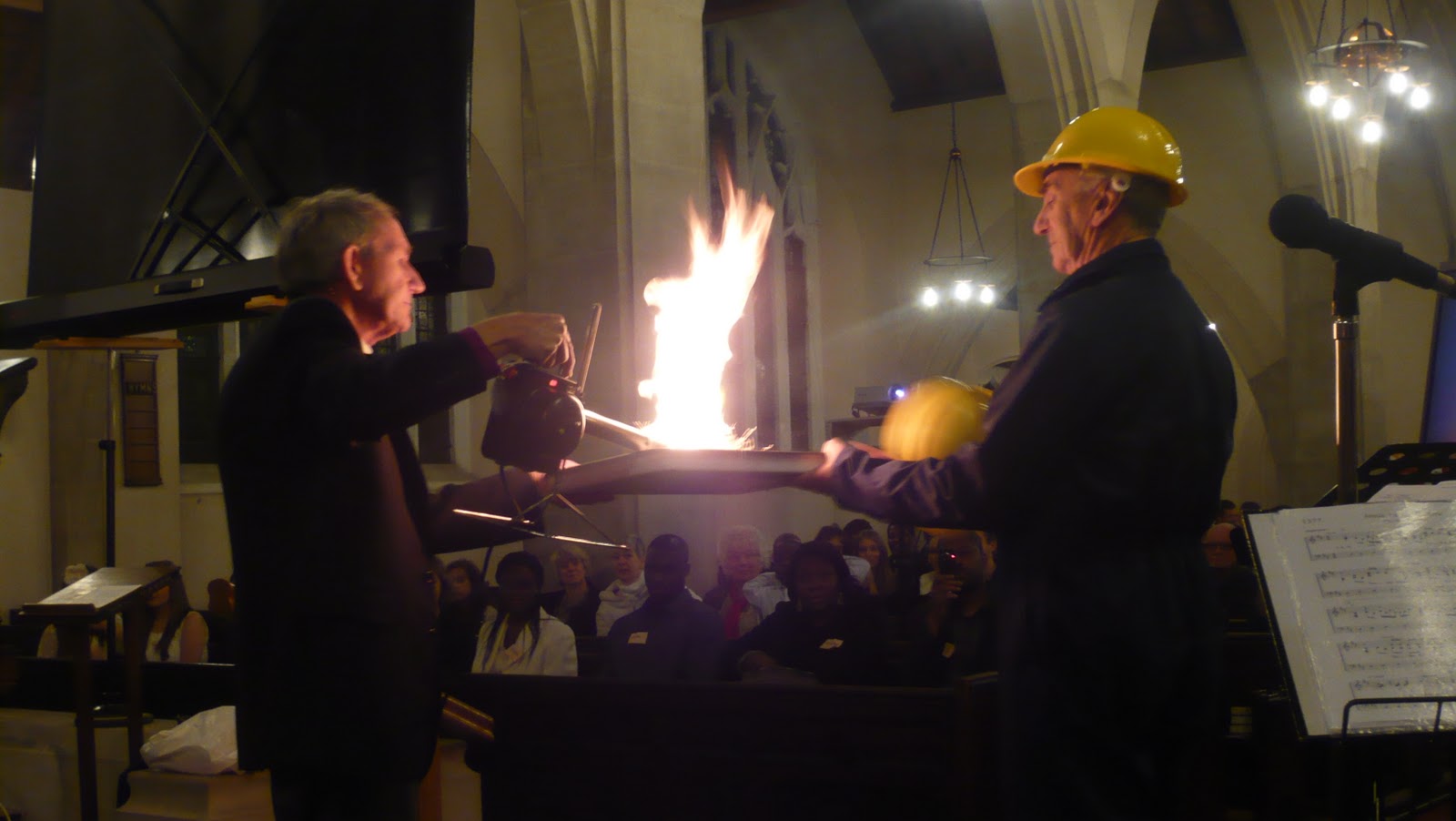
This evening we joined with All Saints Goodmayes for a Confirmation Service at which 14 were confirmed, including three candidates from St John's. The Bishop of Barking spoke about the candidates having made Jesus the foundation for their lives and then discussed the kinds of materials we should use in building on that foundation. He gave a real-time demonstration of the flammability of straw and then asked the grandfather of one of our candidates to demonstrate bricklaying. He concluded that we need to be built together as a community of God's people all standing firm in our faith as we build on the foundation of Christ.
-----------------------------------------------------------------------------------------------
Sixpence None the Richer - The Melody of You.
Labels:
agape,
all saints,
bishop of barking,
car wash,
confirmation,
congo,
foundations,
jesus,
services,
sponsor,
st john's
Sunday, 20 December 2009
Inspirational stories


This weekend at St Johns Seven Kings we have been hosting Bisoke Balikenga, Provincial Youth and Children's Work Co-ordinator for the Anglican Church in the Democratic Republic of Congo. This is Bisoke's second visit to St John's, as he came once before as part of a youth team brought by our CMS Mission Partner, Judy Acheson. His story since that time, as told in a 2007 article from CMS, is an inspirational one of making an impact in the community by helping young people to thrive in spite of the difficulties brought on by years of war in the DRC:
"Back in 1989 youth ministry in the Diocese of Boga was launched in Bunia. CMS mission partner Judy Acheson was serving as Co–ordinator at the time and was instrumental in the starting of the youth ministry, which was called ‘Agape’. It became a model that was replicated in other dioceses in the DRC.
In 1999, Bisoke Balikenga and his wife Furaha received CMS scholarships to study at Daystar University in Nairobi while the youth ministry in Boga Diocese remained in the hands of other capable leaders such as Jijika Kambonesa. By this time Judy was the Provincial Co–ordinator of Agape. So, although Balikenga and Furaha were away for four–and–a–half years, the youth ministry grew rapidly and it touched many young people’s lives.
Fresh from training, the couple brought in new expertise that helped to sustain the work and to create strategies for further growth, and made all the difference. Balikenga’s qualifications are in Business Administration and Management, and Peace and Reconciliation. Furaha majored in Accounting and also took Community Development.
“First of all, my mind has been opened and I have no fear of making any change in this world, especially in our church. I know how to manage the youth and how to meet their expectations and those of adults. I also know how to reconcile people and how to build peace among people,” says Balikenga.
For Furaha, the many needs of women in her community were among the issues at the forefront of her plans following her training. “In Ituri, only five per cent of women have been to primary school, and only one per cent of them have gone to secondary school. My vision is to help the women to learn how to read and write, and to encourage those who want to study, so they’re not seen as just housewives, cooks or mothers. They have to contribute to the development of our society in other ways too,” Furaha says.
Her activities involve encouraging women to gain literacy skills and to start small businesses. She also teaches women how to manage and plan for their homes as well as teach their children God’s word.
The youth ministry has experienced tremendous growth in the various areas of its operation. The evangelism programme reaches out to young people with the Gospel. During holidays there is a programme for the youth that helps to keep them active and to behave responsibly.
There’s also a team, which runs Peace and Reconciliation seminars to help to bring about healing from ethnic clashes and civil strife.
In the Development Section the youth are taught life skills and to start projects and co–operatives in their villages. There’s an agricultural centre, which provides seeds and seedlings. A trainer gives instructions on how to grow them. The centre is also used to give the numerous people raped in the war a new lease on life. They are given seeds to plant, taught God’s word and how to interpret the Bible as well as to read and write.
The youth ministry also runs the “Girl Hope Centre” in Bunia, where 176 women and girls come four times a week to learn various skills including knitting, sewing, reading and writing. It is a trauma–healing centre, which caters for people who suffered greatly in the war: some lost all their property; some were raped; and others received no education.
In the Community Health Section, the youth receive training on HIV/AIDS awareness and prevention. Blood testing is provided so people can know their serostatus. They are taught nutrition and how to take care of their bodies.
Balikenga and Furaha started Hope for Orphan Children in Ituri (HOCI) in 2005 to respond to the problem of parentless children in the Ituri Province, where the town of Bunia is located.
Money was raised to purchase the buildings that now house the ministry. The centre is called “Bunia Children Hope Centre”.
The project aims to help children who are victims of civil war, ethnic killings and HIV/AIDS.
Over 100 children who come to the centre do not have any extended family. They rely on the centre to meet their physical, social and spiritual needs. They do not stay at the centre. Local people have taken them into their homes, providing them with overnight shelter and an evening meal. The centre provides porridge at midday.
Many host families are very poor and unable to feed an extra child. At one point, a local farmers’ association agreed to provide each host family with 10 kg of rice and 5 kg of beans for each orphan once a month, but that service ended in June 2006.
Approximately 200 other children take part in some of the weekend programming, particularly the spiritual–growth and HIV/AIDS training. Funds are limited so most of the HOCI staff do not receive pay. The teachers and counsellors are given a small amount of money to buy soap and sugar each month. They agreed to start work on a voluntary basis on the understanding that the centre would start paying them when funds became available. In the face of such challenges, children and adults alike have learned to look to God for their every need."
Although some of the programmes run by the Agape Youth Department in the Diocese of Boga have changed since that article was written in 2007, as a result of changes to funding, St Johns Seven Kings has continued to fund a post in the Agape Youth Department throughout. Bisoke meanwhile has been appointed as Judy Acheson's successor at Provincial Youth and Children's Work Co-ordinator and has become a CMS Mission Partner through the Timothy Fund, which supports local mission partners who are talented servant leaders only lacking in financial support.
--------------------------------------------------------------------------------------
Steeleye Span - Gaudete.
Wednesday, 31 October 2007
God is the provider
Here is the latest prayer news from Agape Christian Youth:
We greet you all in the name of our Lord Jesus Christ. How are you? We hope you are doing well. Please pass our greetings to all our brothers andsisters in your Church.
Here in Bunia we are doing well but so busy with God's work. Please pray for my work, it seems I am not able to do much the way I like because of not having what we need for the transport and for the seminars. But God is the provider, he will provide.
Our vehicle got accident on the way from Boga. Really some parts of the vehicle have been broken which need money to bring it to the Garage. This is the only one means of the transport for our work. Before Christmas I like to visit four parishes such as Mungwalu, Sota, Gety, Bwakadi (here we like to have another seminar only for ladies, which can include ladies from Gety side, Hema side, and the forest people who have been involved in the tribal conflict), and finally to have a Youth Conference in Bunia town.
Please pray for these programmes. All these programms need transport, need food, etc. Please pray for our plan.
Also in January 2008, I am organising the wedding of our youth who do not have any one to support their weddings. Also some of them are the orphans and others the parents are really poor. They have accepted Jesus as their God. There are 10 couples.
Please pray for these programmes. With thanks, Bisoke.
------------------------------------------------------------------------------------
World Wide Message Tribe - The Real Thing.
Friday, 7 September 2007
Peace and reconciliation seminar
Latest news and prayer requests from Agape Christian Youth in the Democratic Republic of Congo.
"Last week we had a nice seminar on Peace and Reconciliation only for the ladies. We went with all those ladies from three Archdeaconries so far in the forest where there is silence. We were more than 100 people. We invited the ladies from Hema tribe, Gity tribe, Lese tribe, and Bira tribe from Bunia. Really all those tribes had a conflict here in Ituri District.
For the first day in that place called Mafifi, every lady had fear. After praying together with them, really God did the great things to them. Also after the teaching on conflict resolution, each lady started coping with other. Really, that seminar helped many ladies to give testimony about their previous life, and now they asked God to forgive them because of having fear of staying together with those who were fighting them. 70% asked for forgiveness. Praise the Lord.
Now they would like us to organise such kind of seminar again, please pray for us. Also we need to do the same seminar in Boga."
Sunday, 12 August 2007
Forgiveness at Hope Centre
News from Agape Christian Youth about the women's Peace and Reconciliation seminar that they held recently at their Hope Centre. 67 women attended the seminar with half asking for forgiveness. The impact of the seminar was really high. Agape continue to ask for prayer for their peace and reconciliation work and their plans to do another similar seminar in the villages.
Bisoke, who heads up Agape, is also planning to visit youth groups in the rural areas and wants go with a choir of 20 people including some musicians. He says that they do not have funds for fuel for their car, food etc. but knows that God is the provider. He wants to go to Mungwalu, Makiki, Komanda and Mafifi; all of which are in the forest.
Wednesday, 1 August 2007
Peace and reconciliation
The joy of reconciliation - Rev Barozi showing his delight at being back amongst the Ngiti. Chief Akobi from Gety said, "Now I know that the war between Hema and Ngiti is over."Judy Acheson, the St John's CMS Mission Partner, has been doing wonderful work in the Democratic Republic of Congo. Agape Christian Youth, the Youth Department that she established in the Anglican Diocese of Boga, has been undertaking Peace and Reconciliation work in that Diocese since the end of the civil and tribal wars in the Congo. She writes: "I have just written the first year's report [of the Peace and Reconciliation project] and was thrilled with what has happened. Soldiers saw the reconciliation and listened to the messages given so that they in their turn repented of their part in the war; looting, raping and killing. As a result 16 Chaplains from 13th Brigade attended a training workshop. The army has asked the youth department to continue to work with them and other chaplains from other brigades.
Rev. Babote was teaching in Mafifi when a young man threw himself at Babote's feet asking for forgiveness because he had looted all his belongings and abducted his daughter. Babote put into practice his teaching and forgave that man in front of everyone and then invited him to his house. During the Synod in Boga, Rev Barozi, the team leader for this project was talking to the clergy. The Holy Spirit moved in their hearts and many repented of involvement in one way or another in the conflict. They repented and asked that in future Hemas be sent to work with the Ngitis and vice versa. So many testimonies of lives totally changed. Please pray as there is much still to be done."
Subscribe to:
Posts (Atom)