Wikio - Top Blogs - Religion and belief
Showing posts with label emotions. Show all posts

Sunday, 21 June 2026

Give me an undivided heart to revere your name

Here's the reflection that I shared during tonight's Healing Eucharist at St Andrew's Wickford:

Psalm 86 is by someone who identified himself as poor and needy. The Psalm could be for an individual who is suffering, a king who feels especially vulnerable to domestic enemies, or the nation of Israel, which was the victim of foreign empires before, during, and after the exile.’ (https://jamesbradfordpate.blogspot.com/2012/07/psalm-86.html)

The Psalmist speaks of God saying: ‘you, O Lord, are a God merciful and gracious, slow to anger and abounding in steadfast love and faithfulness.’ What we see in God is abundance, an abundance of mercy, graciousness, steadfastness, love and faithfulness. In God, there is an abundance of all we need when we are poor and needy.

As a result, we should come to him to ask for help. As the Psalmist prays: ‘Give ear, O Lord, to my prayer; listen to my cry of supplication. In the day of my trouble I call on you, for you will answer me.’ We can call out, cry out to God because we will be heard. We can express our pain, even anger, knowing that he will give ear, will hear and will respond.

What he wants for us is the healing of our internal divisions. St Paul described these well when he says in Romans 7:15-20: ‘I do not understand my own actions. For I do not do what I want, but I do the very thing I hate. Now if I do what I do not want, I agree that the law is good. But in fact it is no longer I that do it, but sin that dwells within me. For I know that nothing good dwells within me, that is, in my flesh. I can will what is right, but I cannot do it. For I do not do the good I want, but the evil I do not want is what I do. Now if I do what I do not want, it is no longer I that do it, but sin that dwells within me.’

The Psalmist knows this reality and so prays: ‘Teach me your way, O Lord, that I may walk in your truth; give me an undivided heart to revere your name.’ He then says, ‘I give thanks to you, O Lord my God, with my whole heart.’ It is that reality that God wishes us to find - love the Lord your God with all your heart, and with all your soul, and with all your mind – as this is true healing. When we are genuinely able to do that, then we know real integration and harmony and healing within our currently divided body, mind and spirit. Therefore, it is for this that we need to pray.

-------------------------------------------------------------------------------------------------------------

Friday, 28 June 2024

Infusion Physical Theatre and Dance 21: Soothe


Infusion Physical Theatre shared the stage with Dance 21, an accessibility-focused dance group based in Chelmsford, at St Andrew's Wickford this evening. In partnership with the Arts Council England and Next Step Creative, Infusion delivered a series of workshops with Dance 21, giving them a chance to create their own short dance works based on the Threat, Drive, Soothe model. Dance 21 performed as a wonderful curtain raiser to Infusion’s full performance of 'Soothe' tonight.

'Soothe' is an off-balance, fun, emotive dance exploration of the three modes of emotional regulation: threat, drive, soothe. In a multimedia dance show for all ages, award-winning Infusion Physical Theatre brings to life the movement of mental wellbeing in a thoughtful and rambunctious examination of hormones that push, pull and drag us through life. Combining contemporary dance and multimedia, Infusion weaves together non-traditional partnering and original music to follow the cravings of a post-lockdown society eager for recovery. Psychologist Dr Lisa Harrow called it, “An emotive interplay between art and science!”

Founded in 2013 by Cambridge-based artists Daniel and Melanie Cossette, Infusion has performed site-specific work for the National Trust’s Winter Lights, performed in Project Dance (London and Paris), in Edinburgh Festival Fringe (Scotland), Sprung (Queens College, Cambridge), as well as appearing in Wandsworth Arts Fringe, The Library Presents rural touring scheme, local and international theatres. Infusion Physical Theatre combines contemporary dance, non-traditional partnering, mime, puppetry and circus with soulful touches of humour, longing and the human spirit in bodily form.

Also at tonight's performance was Christ John Otto of Belonging House.

Tonight's performance was part of Unveiled, our fortnightly arts and performance evenings at St Andrew's Wickford. Our final Unveiled evening before the summer break will be 'Depeche Mode: Songs of Faith & Devotion', Friday 12 July, 7.00 pm, when I will talk about Christian influences in the music of Basildon band, Depeche Mode.

-----------------------------------------------------------------------------------------------------

Infusion Physical Theatre - Soothe.

Thursday, 27 June 2024

Two great events at St Andrew's Wickford this weekend: 'Soothe' & Betties Tea Party


Two great events at St Andrew's Wickford this weekend:

'Soothe' - Friday 28 June, 7.00 pm

'Soothe' is an off-balance, fun, emotive dance exploration of the three modes of emotional regulation: threat, drive, soothe. In a multimedia dance show for all ages, award-winning Infusion Physical Theatre brings to life the movement of mental wellbeing in a thoughtful and rambunctious examination of hormones that push, pull and drag us through life. Combining contemporary dance and multimedia, Infusion weaves together non-traditional partnering and original music to follow the cravings of a post-lockdown society eager for recovery. 

Also included in the evening is a performance by Dance 21. ‘Dance 21’ is a dance group for children and young people with Down Syndrome and their siblings in the Essex area projecting a positive image of disability.

Tickets - £5.00 (pay on the door or purchase in advance by paying here).

Betties Tea Party - Saturday 29 June, 10.00 am - 1.00 pm

Cakes, stalls, refreshments, raffle
Songs from Eva Romanakova

 -----------------------------------------------------------------------------------------------------

Soothe trailer by Infusion Physical Theatre.

Friday, 29 July 2022

Quiet Day: Praying through the Week


Wednesday 14 September, 10.30 am – 3.30 pm, St Mary’s Runwell (Runwell Road, Runwell,
Essex SS11 7HS)

Explore how to hear from and encounter God in the ordinary, everyday things, people, situations and emotions around you.

Reflect in the magnificent mediaeval building that is St Mary’s Runwell, and relax in its beautiful churchyard. St. Mary’s itself is often described by visitors and by regular worshippers as a powerful sacred space to which they have been drawn. Experience this for yourself, while also exploring its art and heritage.

Led by Revd Jonathan Evens, Team Rector for Wickford and Runwell

Cost: £8.00 per person, including sandwich lunch (pay on the day)

To book: Phone 07803 562329 or email jonathan.evens@btinternet.com

-----------------------------------------------------------------------------------------------------------

John Tavener - Song Of The Angel.

Thursday, 25 January 2018

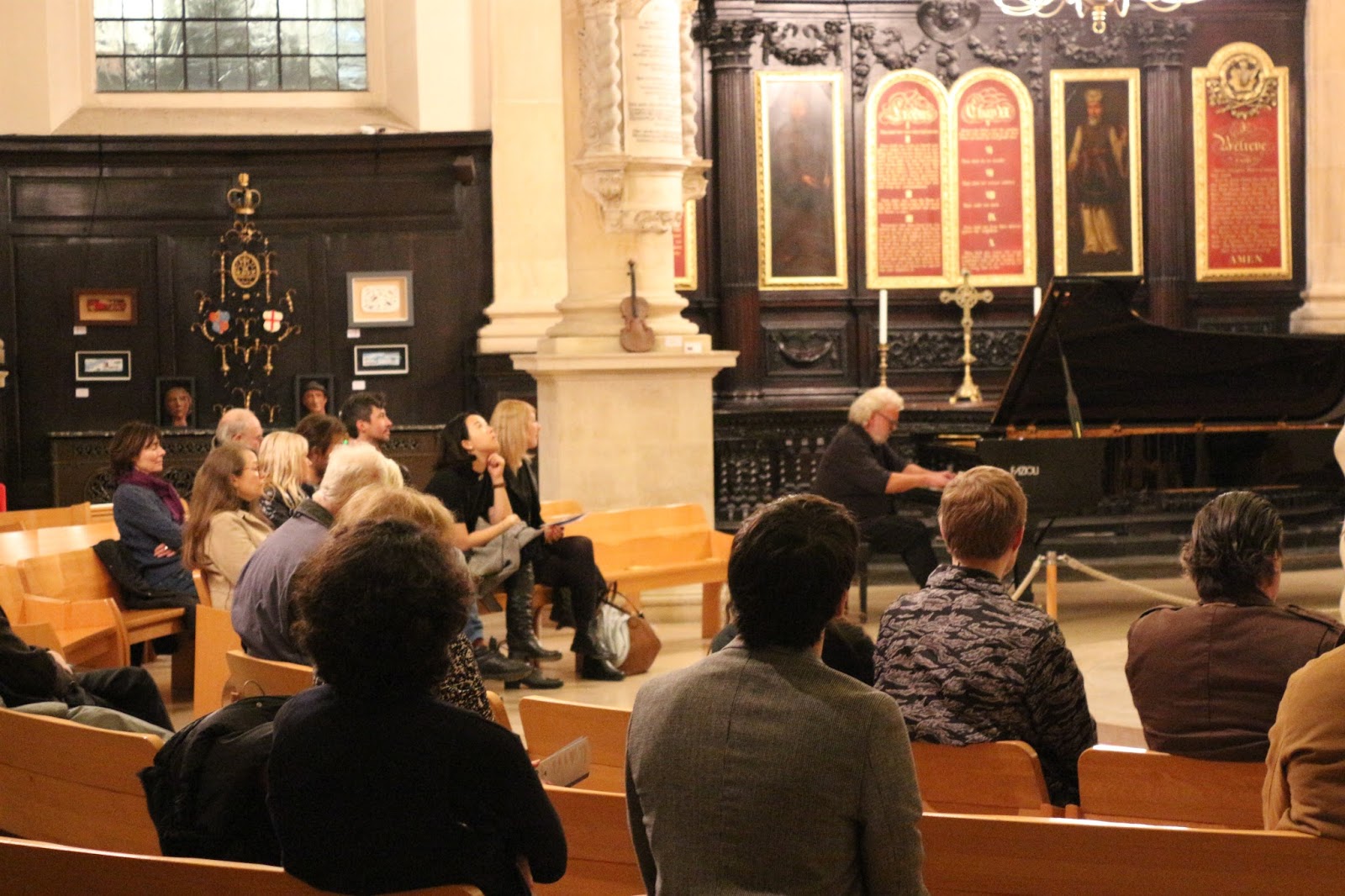
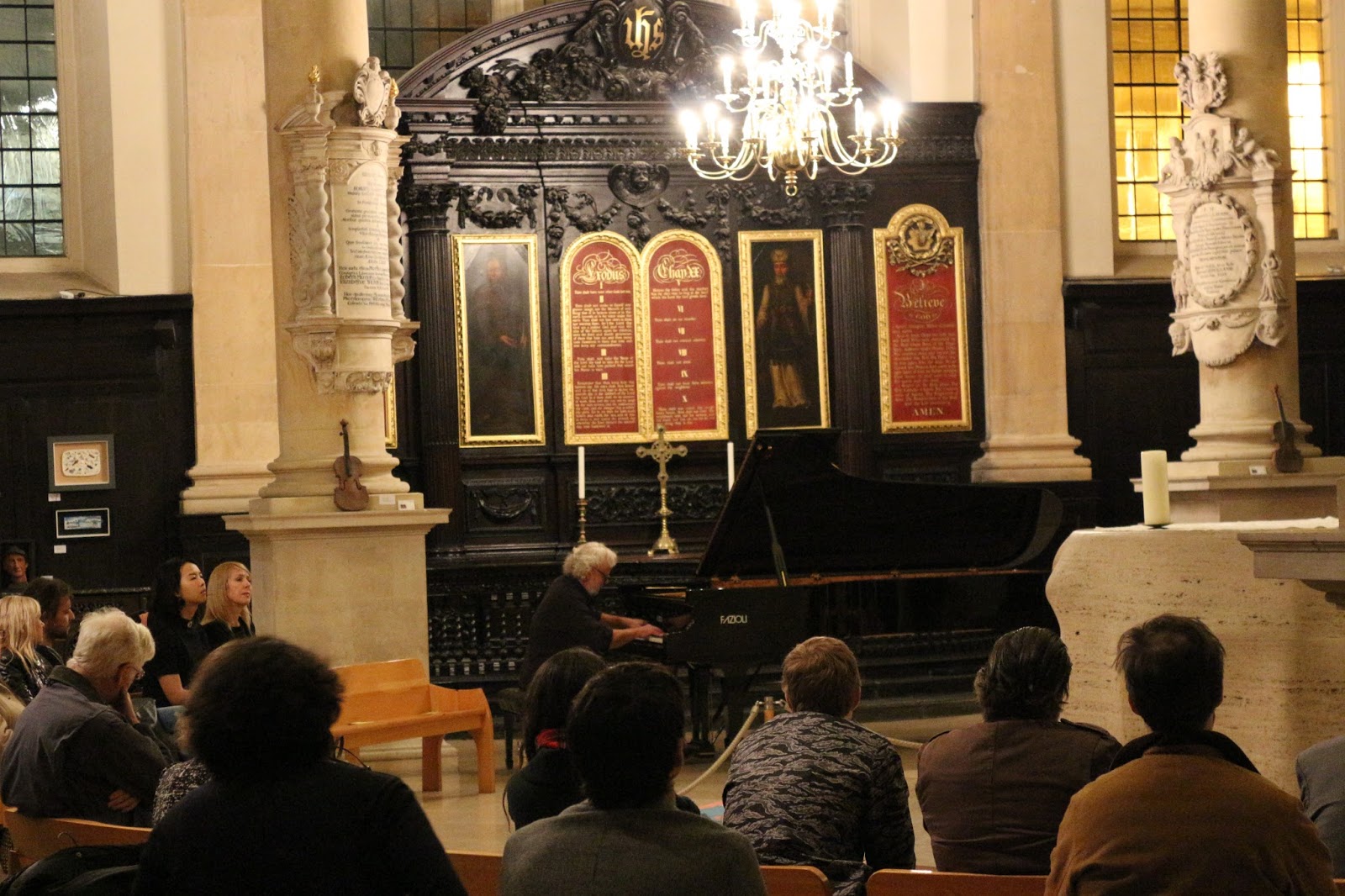
Claudio Crismani concert


St Stephen Walbrook has a beauty and an acoustic that has drawn Claudio Crismani back to give his third concert in the space. Crismani is an impassioned performer who gives his whole being to the music as he plays; feeling, not simply performing, the emotion inherent in each piece. As a result, he has been described as possessing an 'almost metaphysical vision.' Certainly, his audience tonight spoke of his performance as a mystical and tangibly visceral experience.

Crismani gave us selections from Franz Liszt's 'Last Works' and 'Troisième année de pèlerinage' plus Richard Wagner's 'Tannhäuser', before returning to Liszt for selections from 'Etudes d'exécution transcendante'.

--------------------------------------------------------------------------------------------

Claudio Crismani - Rapsodie.

Saturday, 27 February 2016

Paying Attention: Emotions

Here is my second address from our Silent Retreat:

Paying Attention: Emotions

Many of the great figures in the Bible seem to have viewed prayer as being more like a constant conversation with God than they did a scheduled time for making requests. In some ways there seems to be a greater understanding of this in Judaism than in Christianity. I’ve been helped and challenged by some of what Jonathan Sacks, the former Chief Rabbi, has said about this understanding of prayer in a fascinating lecture called Judaism, Justice and Tragedy - Confronting the problem of evil.

He sees Abraham as being the starting point in scripture for this kind of dialogue between God and human beings and said that “there begins a dialogue between Heaven and Earth which has not ceased in 4,000 years”. He calls it the dialogue in which God and Man find one another and says that the mood of these dialogues between the prophets and God has been a never-ending feature in Judaism.

Have a look at the conversation between God and Abraham in Genesis 18. 16-33 and see what goes on there. The first thing to see in verse 17 is that God invites the conversation. He could have hidden his thoughts and plans from Abraham but he chooses not to. Instead he shares with Abraham and invites not just conversation but challenge from Abraham. Because that is what Abraham does in this conversation – he challenges God. What Abraham says to God, recorded for is in verse 25, is stunning - "God forbid that You should do such a thing! To kill the righteous with the wicked so that the righteous should have the same fate as the wicked, God forbid! Shall the Judge of all the earth not do justice?" It sounds blasphemous that a human being, who as Abraham says of himself in verse 27 is “nothing but dust and ashes”, should speak in this way to his creator. It sounds blasphemous until we remember that God chose to initiate this conversation and this challenge.

What is God doing then through this conversation? Let’s go back to what God said about Abraham before beginning this conversation. In verse 19, God says that Abraham has been chosen to “direct his children and his household after him to keep the way of the Lord by doing what is right and just”. Remember that phrase, “what is right and just” because it the phrase that Abraham throws back in God’s face – “Will not the Judge of all the earth do right?” - “Shall the Judge of all the earth not do justice?". Through their conversation, God is teaching Abraham to argue passionately for what is right and what is just. As Abraham learns to do this he becomes more able to righteousness and justice to his children and household.

In the same way, God wants us to be in conversation, in dialogue, in debate, in arguments with him so that we can find him for ourselves and actually embody his characteristics and interests ourselves. He wants us to learn to do right through discussion rather than by rote. If all we do as Christians is to learn a set of rules then we will never be able to apply those rules to real life. Because in order to do right we need to apply the Spirit of the Law, not the letter of the Law. Jesus did this constantly and his application of the Spirit of the Law continually brought him into conflict with the religious leaders of his day who were concerned with the letter of the Law. A good example is the story of the woman caught in adultery in John 8. 1-11.

We can see this acted out for us by the people of Israel at Mount Sinai. Let’s look quickly at Exodus 19. In verse 6 we read of God saying that the Israelites “will be for him a kingdom of priests and a holy nation”. Priests in Israel were the people who went into the holy place, into God’s presence. So God is saying that he wants all the people of Israel to come into his presence and to speak with him face-to-face. But turn over the page to Chapter 20.19 and you’ll find the people of Israel saying to Moses, “Speak to us yourself and we will listen. But do not have God speak to us or we will die”. In other words, they are saying we’ll obey God’s rules but we won’t speak with him face to face. They appoint Moses to be their mediator, to go into God’s presence on their behalf.

Moses learns to mirror God from his conversations and debates with God. So much so, that his face begins to shine with the reflection of God’s glory. But the people never really learn what God is like because they will not speak with him face to face. They keep him at arms length by using Moses as the mediator and by trying to keep rules which they know but don’t understand. Paul says in 2 Corinthians 3.18 that we, like Moses, with unveiled faces, seeing the glory of the Lord as though reflected in a mirror, are to be transformed into the same image from one degree of glory to another. That transformation comes as we dialogue, debate, argue and converse with God.

Other people in the Bible who have these kind of conversations with God include: Jacob; Samuel; Job; Jeremiah; Jonah; Habakkuk; Jesus and Paul. The Psalms though are where most of the conversations between people and God are recorded. Virtually all the Psalms are conversations where it is assumed that the hearer is either God or the people of Israel. Some of the Psalms are actually written as conversations though e.g. Psalm 12. In verses 1-4 the Psalmist cries out to God for help, in verses 5-6 God answers and in verses 7-8 the Psalmist responds by expressing confidence in God. Psalm 77 is the record of a similar conversation with God. In verses 1-6 the Psalmist tells us how he cried out to God, in verses 7-9 he tells what he cried out, in verses 10-12 he tells us how God answered his cry, and in verses 13-20 he tells us of his response to God’s answer.

This approach to prayer is one that a number of Christian poets have picked up and used over the centuries:

•             DialogueGeorge Herbert
•             Love III – George Herbert
•             Bittersweet – George Herbert
•             Thou art indeed just, LordGerard Manley Hopkins

The conversations with God that are recorded for us in the Psalms are one’s that involve a whole range of different emotions. You might like to read through some Psalms and identify what is the emotion being expressed. Once you’ve done that then choose three of these different emotions that connect with you and think, if you were to have a conversation with God which involved that emotion, what you would be talking about with him and what you would be wanting to say to him. 

We are often quite restrained in our relationship with God and in our praying. Therefore, we often praise God and say that we will obey or follow him but we rarely argue, protest, complain or question him, at least not publicly. Would today be a good opportunity to start including some of these more difficult emotions in your prayer life?

----------------------------------------------------------------------------------------

Mark Heard - Strong Hand Of Love.

Saturday, 27 June 2015

ArtWay meditation: María Inés Aguirre

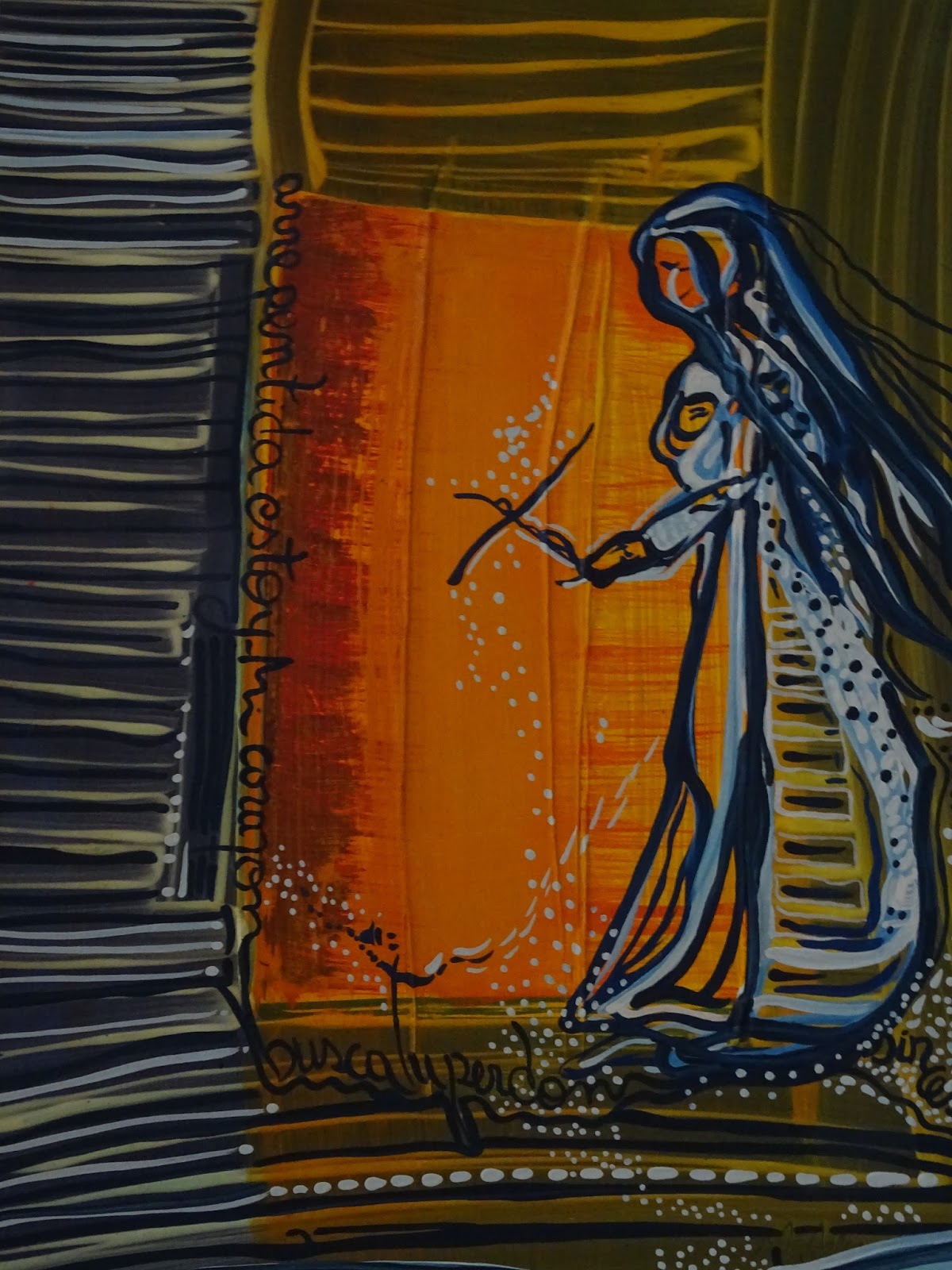
In my latest visual meditation for ArtWay I reflect on works by María Inés Aguirre (MIA) whose work is known for its vibrant colours and spontaneity and is her response to nature, music and her emotional and spiritual life:

"MIA speaks of emotions being inherent in colour and line. By following these lines and colours she is led to the image. Risk and adventure and the resulting spontaneity are key to her art. Her work fuses colour, music, emotion and nature in ‘a sun-burst of colour, of joy and imagination.’ Each painting, MIA says, ‘is a solar flare of colours.’"

My other ArtWay meditations include work by Marian Bohusz-Szyszko, Christopher ClackMarlene Dumas, Antoni Gaudi, Maciej HoffmanMaurice Novarina, John Piper, and Henry Shelton.

-------------------------------------------------------------------------------------------

T. Bone Burnett - Power Of Love.

Monday, 15 June 2015

The Way of the Heart


We enter the way of the heart
as we are led by emotion.
This is the path of passion
which is only begun
through an open vulnerability
of expression; this who I am,
this is how I feel.
Confusion and compassion,
anguish and ecstasy,
insecurity and joy,
pain and pleasure;
it is as we shuttle
forward and back
exploring, through art
or prayer, the twin poles
of our being, that
we encounter one
who walks beside
sharing our emotions
by means of
his own Passion
walked from
crucifixion to
resurrection.
Walk on, walk on,
through rain and storm
with hope in your heart
for you will never
walk alone.

-----------------------------------------------------------------------------------------------------------

M Ward - Epistemology.

Tuesday, 9 June 2015

Via Cordis - The Way of the Heart


Via Cordis – The Way of the Heart: Paintings by María Inés Aguirre (MIA)
Monday 8th – Friday 26th June, 10.00am – 4.00pm. St Stephen Walbrook, 39 Walbrook, London EC4N 8BN.
Exhibition reception - Monday 15th June, 6.30pm. All are welcome.


Each painting, María Inés Aguirre (MIA) says, “is a solar flare of colours” where every colour is an emotion. The critic Pierre Restany identified the distinctive quality of MIA’s art as having its roots in her emotional life which then manifests itself in “the exuberance and spontaneity of her painting.”

MIA has spoken of risk and adventure, and the resulting spontaneity, as being key to her art. Her work fuses colour, music, emotion and nature in “a sun-burst of colour, of joy and imagination.”

As Michael Hutchinson-Uzielli has noted, this means that "Mia's paintings map her emotions and imagination, with colour, texture and sinuous lines depicting the landscape of her thoughts.” Her work is, therefore, cartography of the heart or soul, as she, herself, has suggested in selecting the title ‘Via Cordis: The Way of the Heart’ for this show.

MIA says the following words of Paul Klee, from 1918, describe her own creative process: “Everything around me dissolves and interesting works emerge as if of their own accord. My hand is entirely the instrument of a distant sphere. It isnʼt my head that is working, but something else, something higher, something somewhere more remote. I must have great friends out there – obscure, but also brilliant - and theyʼre all very good to me.”

MIA’s identification with Klee’s description of creativity as involving a sense of giftedness from a higher force helps us in understanding the emotional impact of her work more fully. As a result, we could either see the emotions she maps in her work as being divinely inspired or think that by following and depicting those emotions she taps into the divine.

Her work has connected with traditional religious iconography, although not with traditional outcomes. Her ‘Via Crucis’, ‘Via Lucis’ and now ‘Via Cordis’ exhibitions have engaged with the imagery of the ‘Stations of the Cross’, the ‘Path of Light’ and now the ‘Way of the Heart’. Through these series she has reflected on emotions provoked by the Passion of Christ while seeing that narrative as also representing the different moods of modern man.

These are works to contemplate as, through energy of line and brilliance of colour (that “sun-burst of joy and imagination”), they refresh the soul.

MIA studied Fine Art at the University of Tucumán (Argentina) and the Accademia di Belle Arti in Venice. She has exhibited in Europe, Asia and the Americas and has shows later this year in Hong Kong, France and Argentina. Her work stands out for its colour, energy and spontaneity. Her fascination with the connections between music and colour led her to become the first visual artist in residence at Steinway & Sons, London, where she transformed a Steinway Model D concert grand piano into 'Dancing Soul'. She is represented by ArtMoorHouse - Moor House, 120 London Wall, London, EC2Y 5ET. Tel: +44(0)7502211914. Email: info@artmoorhouse.com. Web: http://www.artmoorhouse.com/.

-----------------------------------------------------------------------------------------------------------

The Milgram Trio - Piano Trio in E minor Op 90 'Dumky'.

Thursday, 2 April 2015

Metaphysical symbol of purity and spiritual transformation

ArtMoorHouse is a creative space in a Norman Foster building at the heart of the City of London which provides the setting for a successful synergy between Art and Business.

Their current show is by Maria Ines Aguirre and is entitled The Element of Freedom. The element in question is water which is described as follows:

'Water is the carrier of nature, the pulse of life. Water changes itself info as many natures as the different places throng which it runs. Water does not resist, it flows, always going to where it wants to, so, in the end, nothing can resist it.

Metaphysical symbol of purity and spiritual transformation, water is the allegory of a new founded freedom; a freedom which is gained independently through the the ability to adapt to changing of the circumstances, whilst always remaining true to ourselves.'

Aguirre's work stands out for its colour, energy and spontaneity. Her fascination with the connections between music and colour led her to become the first visual artist in residence at Steinway & Sons, London, where she transformed a Steinway Model D concert grand piano into 'Dancing Soul'.

Pierre Restany wrote the following about Aguirre's work: 'We have become too intellectual in our ways of perceiving things. The dominance of rational thought over activities based on feeling prevents us from understanding the fullest dimension of any concept... For Mia, emotion is colour and colour is the virtual expression of emotions.'

-------------------------------------------------------------------------------------------

Joni Mitchell - Hejira.

Saturday, 7 March 2015

Quiet Day: Daily Divine


Today I led a Quiet Day at the Retreat House in Pleshey for the Parish of St Andrew's Sandon. Entitled 'Daily Divine,' this Quiet Day explores experiencing God in the events and emotions of the everyday or, as the poet George Herbert put it, ‘Heaven in ordinaire’. During the day thoughts are shared on the idea and reality of having an ongoing conversation with God in which we pray through our emotions and our everyday encounters.

Over the course of the day we used an eclectic range of materials from: David Adam, Brother Lawrence, Ruth Burgess, Alexander Carmichael, Jean Pierre de CaussadeBill Fay, George Herbert, Gerard Manley HopkinsJonathan Sacks, Ray Simpson, Simon Small and Victoria Williams.

-----------------------------------------------------------------------------------------------

Bill Fay - Cosmic Concerto (Life Is People).

Friday, 30 August 2013

John Bellany RIP

Speaking of John Bellany, the artist Paul Huxley has said: "He has what I don't have, a gusto for expressing emotional states. Everything comes out - nightmares, joy, exuberance ... his art [has] a wonderfully, salty, gutsy character."

Bellany's paintings exploded with "emotion and imagination" and are "amongst the most confrontational, humanistic works produced in Britain in recent history." Immediately recognisable for its figurative content and stylistic coherence, his painting confronted "in a wholly original manner themes such as love, addiction, passion, death and more recently, even serenity." Not surprising as Bellany lived through numerous surgeries and near death experiences. His life’s work "unveils insight and wisdom into the human condition."

Thom Cross has said that "There is deep spirituality in his work that is profoundly moving, bringing to mind Highland psalms sung in that moving, plaintive style of the Gael." Bellany said of his religious upbringing:

"The deeper it goes in, the better for your soul - so everybody's trying to plumb the depths. It's taken as the most important thing in their whole existence and that moves into secular life as well. We're not just talking about what happens in the church on Sunday but about a person's behaviour on the other six days of the week. You don't just turn it off like a tap. The depths you feel through religion for everyone in your life - it's not a question of a surface recognition of vive la politesse. So the passions run very high."

-------------------------------------------------------------------------------------------

The Proclaimers - If There's A God.  

Friday, 1 March 2013

Quiet Day: Daily Divine

I'm at the Diocesan House of Retreat in Pleshey tomorrow leading a Quiet Day for a group from St Nicholas Great Wakering with St Mary's Church Foulness and All Saints Barling with St Mary's Little Wakering.

During this Quiet Day, which I have called 'Daily Divine', we will be exploring our experience of God in the events and emotions of the everyday or, as the poet George Herbert put it, ‘Heaven in ordinaire’. During the day thoughts will be shared on the idea and reality of having an ongoing conversation with God in which we pray through our emotions and our everyday encounters.

------------------------------------------------------------------------------------------------

George Herbert - 'The Collar'.

Sunday, 20 January 2013

'Life of Pi' and 'Les Miserables'

What can you say about Life of Pi that hasn't already been said? Just to reiterate that it is a beautifully shot and beautifully paced movie. The special effects are stunning and, unlike many films in which 3D seems to be a gimmicky add-on, I imagine here would add to the sense of magical realism. All this is, of course, essential if the point being made about the kind of stories we value is to carry imaginative force. That Ang Lee manages this is the supreme achievement of this marvellous movie.

Les Miserables, based as it is on a very different style of novel, is therefore a very different proposition as a movie. Victor Hugo's writing has the breadth of Dickens, without the emphasis on grotesque caricature, but what both do on a grand scale is to reveal the plight of those at bottom of the pile in society. While Dickens engages through satire and sentiment, Hugo utilises a depth of emotion which is what has been tapped in making the musical and film of the musical so successful.

Cameron Mackintosh has written of how the show elevated both the audience and the cast "to a state of powerful emotion rarely seen in the theatre." Tom Hooper utilises close-ups of his characters combined with live singing to ratchet up the emotional content of story and song. Hugo's story, with its themes of repentance and redemption, has sufficient depth and seriousness of content and character to sustain this approach. With the comic relief of the Thénardiers, Hooper's approach changes focussing on the comedy of their thieving which then has the effect of dissipating the comic bombast of their singing. With this aside, the emotive flow continues to a climax which both returns us to the story's redemptive beginning and releases the central characters and ourselves, as audience, from its relatively unrelentingly grip.

------------------------------------------------------------------------------

Anne Hathaway - I Dreamed A Dream.

Wednesday, 28 November 2012

How music makes us feel


Last night's imagine on BBC1 explored 'How Music Makes Us Feel.' The BBC's publicity for this documentary said:


"Many people turn to music when words are not enough, at funerals and weddings, at times of heartbreak and euphoria. It seems to hold more emotion and go deeper than words.

Musicians as varied as Emeli Sande, who enthralled the world when she sang at the Olympics, opera diva Jessye Norman, dubstep artist Mala and modern classical composer George Benjamin explain how music makes them feel. Alan Yentob also talks to a vicar, a psychologist, a Hollywood composer, an adman and even the people who choose the music played in shopping malls. He sees babies dance to a rhythm, and old people brought forth out of silence by the power of music."

The vicar interviewed for the programme is the Revd. Lucy Winkett, Rector of St James Piccadilly, who has published an interesting book called Our sound is our wound in which she explores how we listen for the voice of God within the soundscapes of our lives and how we find our own voice? Our lives are lived, she suggests,  against the backdrop of an internal and external soundscape. The sounds, noises and music with which we are surrounded in modern life have spiritual implications. There is also a soundtrack within us that plays constantly through memory, dreams, anxiety or thought.

The sense of music providing a soundscape throughout our lives also featured in the programme framed as it was by film of babies responding to music at its beginning and dementia sufferers helped through music therapy at its close.

Many of the issues raised by the programme are also explored by Peter Banks and I in The Secret Chord. For example, in Chapter 3 'Play vs Plan' we think about music in relation to play theory in child development, while in Chapter 6 'Head vs Heart' we discuss the expressive impact of music including assessing a quote from Stravinsky, also used in the programme, that "music is, by its very nature, essentially powerless to express anything at all."

Clips from the documentary can be viewed here and the whole programme can be seen on i-player by clicking here.

---------------------------------------------------------------------------

Emili Sande - Abide With Me.