Wikio - Top Blogs - Religion and belief
Showing posts with label mothering sunday. Show all posts

Sunday, 15 March 2026

Transformed from expressions of despair into signs of hope

Here's the reflection that I shared this evening at St Andrew's Wickford:

My family recently celebrated my mother’s 89th birthday. My niece, her granddaughter, had made a photograph album showing all the different stage of Mum’s life. We all enjoyed looking through the album with Mum as she remembered the people and times shown in the photographs.

Remembering, both in the sense of bringing back to mind and also of re-enacting is central to who we are as people. As Katherine Hedderly has highlighted, “The community of the church has a special place in this work because it is a community of remembrance and resurrection. “‘Do this’ in remembrance of me.” We remember what Jesus did and we act upon it in the present. We are witnesses to the living memory of Jesus in the world, to God’s living presence with us, as we are re-membered, or reformed, as a community together. Holding in our midst with love those who no longer have their memory, must be a special task for the church, because we know in a very special way what it means to know who we are because someone remembered us; Jesus Christ, the same, yesterday, today and tomorrow.”

Jesus remembered his mother while on the cross. On Mothering Sunday, we remember those who, for good or ill, are foundational to our lives, experiences and memories. We were reminded that the simplest things we see and do can often be the most profound and those that touch us in the deepest places.

Jesus' remembering of his mother occurred while he was undergoing the most extreme agony personally. For some of us, to remember our mothers might involve complex and conflicted memories which bring back to mind some of our more painful moments in life. Jesus ministered in and through and out of his pain; remembering particular people (his mother and John, his disciple), forgiving those who tortured and mocked him, and dying for the salvation of all.

In him we see:
 
Love in the midst of torture
Care in the midst of pain
Life in the midst of death
Wounded reconciler
Wounded healer
Wounded carer

It is from reflection on those experiences and actions of Jesus, that the idea of the wounded healer has come. This is the idea that our own pain and difficulties - our wounds - do not necessarily preclude us from ministry but may provide a resource or source from which our ministry can flow.

Henri Nouwen in his book The Wounded Healer reminds us: "We are not the healers, we are not the reconcilers, we are not the givers of life. We are sinful, broken, vulnerable people who need as much care as anyone we care for." Yet, to remember and reach out to support, sustain and strengthen others whilst remaining wounded ourselves may be, as was the case for Jesus, among the deepest and most profound of our ministries to others. Nouwen also writes that: “a shared pain is no longer paralyzing but mobilizing, when understood as a way to liberation. When we become aware that we do not have to escape our pains, but that we can mobilize them into a common search for life, those very pains are transformed from expressions of despair into signs of hope.”

The forgiveness and love that we receive from Jesus comes out of his experience of the agony and torture of death. It comes out of the wound of crucifixion and this is why it is of significance that his resurrected body continues to bear the marks of those wounds. We do not need to become perfect in order to be accepted and loved by God nor do we need to recover from weakness, hurt and difficulty in order to minister to others. Sometimes it is the willingness and openness to share our own experience of pain and suffering, not in order to burden another, but as an act of empathy with another that is just the support and healing that that other person needs.

-------------------------------------------------------------------------------------------------------------

Sunday, 19 March 2023

Celebrating motherhood in its messy reality

Here's the sermon that I shared at St Andrew's Wickford this morning:

Whether she’s mum, mummy, mam or mother, this Mother’s Day we will have been encouraged to find a card or gift to tell our mother just how much we care and love her.

The cards we found on offer will likely have contained messages such as this:

God made a wonderful mother,
A mother who never grows old;
He made her smile of the sunshine,
And He moulded her heart of pure gold;
In her eyes He placed bright shining stars,
In her cheeks fair roses you see;
God made a wonderful mother,
And He gave that dear mother to me.

It's a lovely thing to be able to bless and encourage mothers with those kinds of sentiments and messages but what do we do when our mother's haven't met that ideal or haven't been there for us in that way? How do mother's feel about that kind of idealised image being held up for admiration and how do those who haven't had the experience of motherhood feel on Mothering Sunday as a result?

This is a complicated day for many and not necessarily a day of simple celebration. In the Church, some will say, put the focus on Mother Church rather than human mothers but, if, for example, you are LGBTIQA+, then Mother Church will still feel less than welcoming of you at present.

The Bible, however, does not give us an idealised view of motherhood or family life. Our readings today are from the early days of Moses who led the People of Israel out of Egypt to the Promised Land (Exodus 2: 1-10) and of Jesus who became the Saviour of all people everywhere (Luke 2: 33-35). These are the great heroes of our faith, yet life for their mothers was far from easy and their family lives were complicated and far from the idealised picture found in that Mother's Day poem.

Moses's mother Jochebed had to give him up to an adoptive mother from the regime that oppressed her people in order to save his life. She became his nurse having to hide her true role as his mother. Mary, the mother of Jesus, endured that most terrible of experiences for mother's, of seeing your child die before you. No wonder Simeon spoke of a sword piercing her heart! As one bringing up a child known to have been conceived before her marriage to her husband, she would, no doubt, have lived with considerable opprobrium from those who didn't understand the way in which she had faithfully obeyed God.

So, the Nativity story sets out the unconventional and non-idealised relationships which God chose to use at the beginning of Jesus’ life; a conception outside of marriage, a relationship on the brink of divorce, a foster-father, a birth in cramped and crowded circumstances, an immediate threat to life followed by refugee status. When these are added to the fact that, during his ministry, Jesus called his followers to leave behind their family obligations in order to follow him, said that families would be divided because some would respond to him and others not, while, on one occasion, when told his family were outside, said: "Who is my mother? Who are my brothers? … Whoever does what my Father in heaven wants is my brother, my sister, and my mother", we see that conventional structures for family life were not really a major priority in Jesus’ thinking or praxis. Jesus’ emphasis in his teaching was on his followers as his family, rather than his blood and adoptive relatives, while his death was for the entire family of God - all people everywhere.

What we might now call Mother Church was, therefore, the key family relationship which was at the fore-front of Jesus’ teaching and practice. Within this, he seems less interested in particular structures for our relationships and more interested in those relationships being ones which nurture those who are in relationship, whilst also being open to support others in need through that same relationship. On this basis, it does not really matter whether we are in a nuclear family, single parent family, same-sex family, extended family etc. What matters is the quality of relationships within that family and our openness to others.

So, in seeking to understand what life might have been like for Jochebed and for Mary, we can perhaps see that the Bible celebrates love expressed in the challenges posed by the messiness of real life, rather than presenting us with an ideal from which we will always fall short. As a result, we need to celebrate motherhood in its messy reality rather than an idealised version of it, “understand that many of us are (and have) mothers in the non-biological sense, honour foster parents, affirm unconventional relationships, celebrate same-sex parents, and - sadly - recognise that not all experiences of mothering are positive. If we can do that, then Mothering Sunday becomes a dynamic means of embracing people where they are, rather than a sentimental celebration of unrealistic expectations.” (https://opentable.lgbt/our-blog/2022/3/27/mothering-sunday-mothers-day-ancient-tradition-or-modern-invention).

I have seen how losing a son pierces a mother’s heart, as that is what happened to my mum when my younger brother died in a plane crash. My love for and appreciation of my mum grew through seeing her response to sharing the same experience as that of Mary. Some of you have, I know, fostered the children of others, some may have been through the experience of letting your children be fostered or adopted, as was the experience of Jochebed. These are experiences from which we should all seek to learn, seeing them, as was the case for Jochebed and Mary, as being bound up in God’s good purposes for humanity; even, as in their stories, as the seedbed for the greatest acts of liberation in human history.

I end with a sonnet for Mothering Sunday by Malcolm Guite which is a thanksgiving for all parents, especially those who bore the fruitful pain of labour, but, more particularly, in this poem he singles out for praise those heroic single parents who, for whatever reason, have found themselves bearing alone the burdens, and sharing with no-one the joys of their parenthood. As with all those whose care we celebrate today, in their lives God’s kingdom is reflected and Christ shares with them the birth-pangs of that Kingdom.

Mothering Sunday

At last, in spite of all, a recognition,
For those who loved and laboured for so long,
Who brought us, through that labour, to fruition
To flourish in the place where we belong.
A thanks to those who stayed and did the raising,
Who buckled down and did the work of two,
Whom governments have mocked instead of praising,
Who hid their heart-break and still struggled through,
The single mothers forced onto the edge
Whose work the world has overlooked, neglected,
Invisible to wealth and privilege,
But in whose lives the kingdom is reflected.
Now into Christ our mother church we bring them,
Who shares with them the birth-pangs of His Kingdom.

-----------------------------------------------------------------------------------------------------------

U2 - Tomorrow.

Sunday, 27 March 2022

A covenant of fruitfulness


Here's my last Sunday sermon for St Martin-in-the-Fields in my current role, for this morning's Mothering Sunday Eucharist: 

'Anna Tymchenko was scared. She had been in labour for hours, but her hometown was being bombed and her apartment was shaking. She and her husband were trapped with no electricity, running water or doctor. The small town of Bucha, 18 miles from Kyiv, had come under relentless bombardment since the start of the war. Twenty-one-year-old Anna, along with her husband and brother, had previously taken refuge in the basement of their block of flats. But when the electricity was cut off and the heating stopped working, the basement was plunged into darkness, and it was bitterly cold. Anna's husband Volodymyr was torn between remaining in Bucha or trying to flee. When they did finally try to escape by car, they had to turn back when they heard that a column of Russian military vehicles was heading their way.

They then decided to stay in the apartment and when Anna went into labour late on 7 March, she called her neighbours for help. Anna's neighbours had to deliver the baby themselves. Only one of them – Irina - had had any medical expertise. "When the baby's head came out, we got scared," Viktoria, one of the neighbours, said. "She was blue and we didn't know what to do. Then Irina gently turned the baby's head and she came out. She didn't cry at first … but then she cried and we all cheered." Volodymyr cried tears of relief for baby Alisa, who was born on 8 March - International Women's Day.'

The natural cycle of birth, with its inherent generativity and creativity, continues, even in the extreme circumstances of war, through the resilience of all involved in this story. Today is a day for celebrating both the vital role of mothers and the wider village needed through which we nurture and bring up children, the fruit of our fertility and creativity as humans.

The experience of childbearing and of childbirth is one that is used through the Bible as a metaphor for the creativity and generativity of God, who is also endlessly creative and fertile even in the most difficult of circumstances. In Isaiah 42:14 God is pictured as a woman in labour crying out, gasping and panting, as new things spring forth in our world. In Deuteronomy 32:18 we read of Israel as the people that God brought to birth, while in Isaiah 49:15 God is compared to a nursing mother and then in Psalm 131:2 to a mother who has weaned her child.

I have been at St Martin’s for seven years and today is the last sermon I will preach here on a Sunday, at least in my current role. In that time St Martin’s has seen God bring many new things to birth in and through us and so, on this day when we celebrate the ongoing generativity of God, Mother Church, human beings, and, especially, mothers themselves, I want to reflect on three things that have come to birth over that seven year period; one in me, one in this church, and one in the wider church.

So, beginning with myself, one of many blessings for me personally in being at St Martin’s over this period of time has been the involvement that I have had with the disability work that happens here through the Disability Advisory Group led by Fiona MacMillan. That includes the annual conference on Disability and Church organised through a partnership between St Martin’s and Inclusive Church and hosted, in more recent years, by HeartEdge. Although I had previous experience of being with disabled people in addressing access issues through my time as civil servant, I nevertheless found I had a huge amount to learn through being at St Martin’s. What has come to birth in me in this time is a greater understanding - not simply of access as joining in not just getting in - but of disability at the heart of God and as a key to understanding the nature of God and the incarnation.

God experiences brokenness on the cross, a brokenness that leaves physical scars on his body, but then, in the words of Donald Eadie, a disabled Methodist minister, his “world cracked open and life broke through.” It wasn’t just Jesus’ world that cracked open in that moment but ours as well, because as we follow him into that experience of brokenness leading to new life we also share in that same experience. Singer-songwriter Leonard Cohen encourages us to forget our ‘perfect offerings’ because there is ‘a crack in everything’ and ‘that's how the light gets in’. Jesus, the Disabled God, reveals the necessity of brokenness in order that life and light can be received and experienced.

Then, in regard to this church, another new thing to have come to birth in this time has been our artists’ and craftspeople’s group. This group is what its prosaic name describes: a group for any artists or craftspeople in the St Martin’s community. There are many such in our community but there wasn’t originally a forum in which the gifts of those people could be engaged and, more than that, the important programme of art commissions from artists outside the community had created a perception that the gifts of those within the community weren’t valued.

The artists’ and craftspeople’s group organizes a range of participatory activities and opportunities to make and create. These are open to participants of all abilities. There have been periodic opportunities for participants to show their work, including a monthly drawing group, art workshops in Advent and Lent, a monthly rota for displaying work, and an annual group exhibition. Significant creative energy has been released within our community as a result. Those with established creative gifts have been affirmed and those beginning to explore their gifts have been encouraged. Many have been blessed by the displays, exhibitions and installations that have resulted. God is the ultimate creator and this new creative energy that has been set free within St Martin’s is an expression of the image of God in our community.

Thirdly, the new thing that has come to birth in the wider church with which I have primarily been involved is HeartEdge. HeartEdge is an international, ecumenical movement galvanising churches to be at the heart of their communities whilst being with those on the edge. Its 1,500+ partners can be found on four different continents, but its growth was seeded here, and its development has been supported from here.

What is new about HeartEdge is not primarily its network of partners, but the new language being coined that is transforming discourse within the Church around mission. HeartEdge is expanding the imagination of a church captivated by scarcity and enabling churches to receive the abundance that God is continually sharing and thereby become fully alive. HeartEdge seeks to transform church and society through the 4 Cs of commerce, culture, compassion and congregational life which, through their interdependence, provide a model of what a renewed society might look like. The 4 Cs, as they inter-connect, create a new model of mission that sustains itself, is open to the gifts of strangers, and exhibits the life of faith.

God is the one who says: “Do not remember the former things, or consider the things of old. I am about to do a new thing; now it springs forth, do you not perceive it? I will make a way in the wilderness and rivers in the desert … I give water in the wilderness, rivers in the desert, to give drink to my chosen people, the people whom I formed for myself so that they might declare my praise” (Isaiah 43.18-21). Then, in Jesus, God becomes the new thing that is brought to birth by Mary, the God-bearer and Mother of our Lord. God becomes both creator and created, the nurturer and the nurtured, the sower and the seed, the chicken and the egg.

It should come as no surprise then, that God longs to create communities that are fruitful and generative. Here at St Martin’s, we have a history of seeding new initiatives that are cultural, compassionate or commercial including St Martin’s School of Art, the Social Care Unit that has now become The Connection at St Martin-in-the-Fields, the Academy of St Martin-in-the-Fields, St Martin-in-the-Fields Limited, Liberty, Shelter, Amnesty International, and The Big Issue.

As a result, it should also come as no surprise that in more recent years, in addition to HeartEdge, we have seen the creation of the Frontline Network, the Nazareth Community, the Companions of Nazareth, and the Being With Courses. God has created here a community that is consistently fruitful, creative and generative even in times of difficulty and challenge, as has also been the case during the pandemic. We called the book about our ministry during the pandemic ‘Finding Abundance in Scarcity’ because that was our experience as we looked together for the opportunities to find God’s abundance in the midst of the pandemic’s scarcity.

Our experience in that regard has been similar to that of Anna and Volodymyr in Bucha; that there is no let up in the flow of abundant creativity from God especially in times of trial and difficulty. It has been a privilege and pleasure for me to be a part of this community for the past seven years to learn more of God’s abundant goodness and to be, with you, a midwife in bringing some of these new initiatives to birth. Just as Anna and Volodymyr needed their neighbours to bring Alisa into the world, so HeartEdge, the Disability Advisory Group, the artists’ and craftspeople’s group, the Frontline Network, the Nazareth Community, the Companions of Nazareth, and the Being With Courses need the village that is this community to continue to nurture what has been brought to birth here.

On the day I was licensed here, Sam Wells said we were ‘looking to establish a covenant of fruitfulness with partners and friends all around the country and beyond.’ He said: ‘We could settle for enhancing our resources, developing our programmes, and deepening our common life. Those are all fine and demanding things, and most churches in the country would be overjoyed to have such an aspiration. But we’re being called beyond that. We’re being called to share our message and to influence the wider church and world. And right now the way we’re seeking to do that is by making mutually-enriching partnerships and working with other institutions to help them better realise their vocations. Why? Because we believe that’s God’s way. God in Christ didn’t shout from afar or keep a light hidden on a hill far away. God in Christ made relationships one by one, some close and constant, some occasional and passing, and came alongside people of all kinds, opening up their hearts, setting their souls on fire, and lifting from them the burden of oppression or pain or guilt. That’s what a covenant of fruitfulness looks like.’

That’s what we have seen and heard and experienced over the past seven years. That’s what God has brought to birth and to which we have been midwives. It’s what we can pray for the people of Ukraine and for Anna, Vlodymyr and their neighbours as they bring up Alisa in the midst of war. It’s also what we can celebrate together this Mothering Sunday as we celebrate the ongoing generativity of Mother God, Mother Church, human beings, and, especially, mothers themselves. It’s what we continue to be called to nurture, grow and develop both here at St Martin’s and also for me, shortly, in the Wickford and Runwell Team Ministry. I go to become one of the partners and friends that you have around the country and beyond, so this Covenant of Fruitfulness will remain a bond between us, a covenant in which we continue to share even as I leave the role I have had among you here. So, let us commit to pray for fruitfulness and new life, creativity and generativity, to characterise all our contacts, friendships and partnerships as we go from this place today. Amen.

----------------------------------------------------------------------------------------------------------

Friday, 25 March 2022

Satisfied by Mother God

Here's the Mothering Sunday piece I've prepared for this week's newsletter at St Martin-in-the-Fields:

One of the loveliest of the Psalms is 131, in which Israel is pictured as a weaned child resting in the arms of God, its mother.

This Psalm is special for three reasons. The first, is its humility and lack of pretension. Instead of being portrayed as a great nation, Israel self-identifies as a dependent child reliant on God for all its sustenance and security. ‘My heart is not lifted up, my eyes are not raised too high; I do not occupy myself with things too great and too marvellous for me.’ The Psalm recognises that the depths of God’s being and the complexities of life are such that, ultimately, we will not have all the answers to life, the universe and everything; so, must rest in trust.

Second, in the literature of a primarily Patriarchal society it is a source of wonder that God is sometimes imaged as female. This is one of those instances – there are others – and provides a basis for understanding God as both beyond gender yet able to be imaged through gender. It also acts as a challenge or encouragement to go beyond the relatively small number of occasions in which the Bible images God in this way by exploring this under-developed way of imaging God further. Mothering Sunday being an appropriate occasion to be reminded of the benefits of doing so.

Third, the Psalm opens up for us a particular avenue to rest, reflection and silence. In this Psalm the baby feeds on God so fully that it is satiated and satisfied and in that experience rests in silence. How often do we feed on the milk of God – her presence, her words, her actions – to the extent that we can, in that moment, take no more and lie still, trusting, satisfied, in the everlasting arms that always hold us whatever the great and marvellous things that surround us.

I wonder whether that is an experience of God you would like to enjoy this Mothering Sunday.

--------------------------------------------------------------------------------------------------------

Sunday, 6 March 2016

What constitutes family life? Remembering Jesus and his Mother

Here is my sermon from today's 10.00am Eucharist at St Martin-in-the-Fields:

In our ongoing series of evenings about dementia at St Martin-in-the-Fields we explore what it means to become a more dementia-friendly church and what the experience of dementia might teach us about God. Our most recent session was entitled ‘Praying with Dementia’ and included an opportunity to explore dementia-inclusive worship together.

The liturgy that we used that evening was led and prepared by Revd Edward Thornley, the Assistant Curate (Chaplain) at St Marylebone Parish Church, and was taken from a service that was originally held at a dementia care home in Norfolk on Mothering Sunday in 2012. The care home where this service originally took place was a residential community for ninety residents, all of whom were elderly people who suffered from advanced stages of dementia in various forms. The service used today’s Gospel reading (John 19. 25b - 27) and was designed to provide a flexible, gentle, meditative space in an often painful and difficult environment.

Family members of residents were contacted prior to the service, to bring objects and examples which they could share during the service, which would be relevant to them and their families. It was a happy service because of the memories brought back to people, although it was equally a hard service for some, as they mourned the fact that those were times past. The service was designed to keep people in the present, and to appreciate how that same person who they loved was still there, and how they could recognize each other, through sharing memories and objects.

When we used this liturgy at ‘Praying with Dementia’ those who shared their memories used photographs, a blanket and a mobile phone to prompt memories of their mothers, before we all then shared memories with each other in pairs. The different items that had prompted memories were gathered together and displayed on a central table as a visual reminder of all that had been shared.

Our starting point had been the simple observation that Jesus remembered his mother while on the cross and our liturgy, in its simplicity and familiarity, aimed to reawaken memory of those who, for good or ill, are foundational to our lives, experiences and memories. We were reminded that the simplest things we see and do can often be the most profound and those that touch us in the deepest places.

This time of sharing was also a reminder to us that remembering, both in the sense of bringing back to mind and also of re-enacting is central to who we are as people. As Katherine Hedderly highlighted later that same evening, “The community of the church has a special place in this work because it is a community of remembrance and resurrection. “‘Do this’ in remembrance of me.” We remember what Jesus did and we act upon it in the present. We are witnesses to the living memory of Jesus in the world, to God’s living presence with us, as we are re-membered, or reformed, as a community together. Holding in our midst with love those who no longer have their memory, must be a special task for the church, because we know in a very special way what it means to know who we are because someone remembered us; Jesus Christ, the same, yesterday, today and tomorrow.”

Jesus' remembering of his mother occurred while he was undergoing the most extreme agony personally. For some of us, to remember our mothers in the way we have just been discussing, might involve complex and conflicted memories which bring back to mind some of our more painful moments in life. Jesus ministered in and through and out of his pain; remembering particular people (his mother and John, his disciple), forgiving those who tortured and mocked him, and dying for the salvation of all.

It is from reflection on those experiences and actions of Jesus, that the idea of the wounded healer has come. This is the idea that our own pain and difficulties - our wounds - do not necessarily preclude us from ministry but may provide a resource or source from which our ministry can flow. To remember and reach out to support, sustain and strengthen others whilst remaining wounded ourselves may be, as was the case for Jesus, among the deepest and most profound of our ministries to others.

In bringing his mother into a mother-son relationship with one of his disciples, Jesus was extending our understanding and concept of what constitutes family life. For John to view Jesus' biological mother as his mother and for Mary to view John as her son, went beyond ties of blood into other forms of relationship. We could talk in terms of adoption (although in our day and time that word has a legal definition that is narrower than what is happening here) or we could talk in terms of extended families (a more helpful phrase, which we have, in part, lost sight of in a time when we still think primarily of nuclear families). However, we choose to categorise what Jesus did here, we need to recognise that he was initiating a family relationship which was not based on ties of blood and that this necessarily opens up space in which a range of family structures and family ties become possible.

The Nativity story also sets out unconventional and non-idealised relationships which God chose to use at the beginning of Jesus’ life; a conception outside of marriage, a relationship on the brink of divorce, a foster-father, a birth in cramped and crowded circumstances, an immediate threat to life followed by refugee status. When these are added to the fact that, during his ministry, Jesus called his followers to leave behind their family obligations in order to follow him, said that families would be divided because some would respond to him and others not, while, on one occasion, when told his family were outside, said: "Who is my mother? Who are my brothers? … Whoever does what my Father in heaven wants is my brother, my sister, and my mother", we see that conventional structures for family life were not really a major priority in Jesus’ thinking or praxis. Jesus’ emphasis in his teaching was on his followers as his family, rather than his blood and adoptive relatives, while his death was for the entire family of God - all people everywhere. What we might now call Mother Church was, therefore, the key family relationship which was at the fore-front of Jesus’ teaching and practice.

Within this he seems less interested in particular structures for our relationships and more interested in those relationships being ones which nurture those who are in relationship, whilst also being open to support others in need through that same relationship. On this basis, it does not matter whether we are in a nuclear family, single parent family, same-sex family, extended family etc. What matters is the quality of relationships within that family and our openness to others. Just as the diverse objects on the table at the Dementia evening were brought together and held together in worship, so our diverse relationships can also be held together within the context of the Church.

I had specific experience as I was growing up of a nuclear family that sought to become an extended family. My parents called the various homes in which we lived 'The Oasis', as they had decided that they wanted their homes to be places of refreshment and renewal to those who thought they were in the wilderness. My father’s different jobs as a social worker, lecturer and landscape gardener meant that we lived in five different homes up to and including my teenage years, but, in each place that we lived, they met young people that they unofficially adopted into our family and supported, as those people lived through the difficulties or issues they were dealing with at the time. My mother keeps in touch with all these people, who were able, in part through the support of my parents, to overcome the issues they faced in the early part of their lives, and go on to find jobs and have families themselves. I was reminded of this only last week, when my mother went to stay with one of these families to offer support after the wife had had an operation for cancer.

In a society which, at the time, was predominantly based on nuclear families their actions were to some extent unusual, but would have been much less unusual in the society of Jesus' day and time, based as it was on a model of extended families. Our own day and time has, as we know, seen a growth of alternative family structures meaning that we can celebrate today all those who act as mothers or parents to others outside of biological ties, including all those who adopt or foster, but also thinking outside those legalised frameworks for care.

We have reflected that in Jesus’s life and teaching there is less of a focus on the structures of our relationships and more of an emphasis on relationships which are characterised by qualities of compassion, kindness, humility, meekness, and patience. These are qualities with which our New Testament reading from Colossians calls us to clothe ourselves (Colossians 3. 12 - 17). They are qualities that we can easily associate with motherhood but which are applicable to all of us as Christians. In Colossians 3 we are called to bear with one another, forgive each other; clothe ourselves with love, which binds everything together in perfect harmony, and let the peace of Christ rule in our hearts, to which we were called in the one body. These are all actions which are consistent with what we understand mothers, at their best, to do for their children. But the call, here, is to practice these qualities not just in our families and among our blood relatives, but with all those we encounter and, especially, here in Church. They are, perhaps, then, maternal qualities for application in Mother Church.

Finally, it is worth reflecting that, on the road to the cross, Jesus described himself as a mother hen wanting to gather the people of Jerusalem under his sheltering and nurturing wing. The scriptural witness is that that is precisely what he did through his death on the cross whereby he draws all people to himself. In Ephesians we are told that he broke down the dividing wall of hostility between us, creating, in himself, one new humanity, making peace and reconciling us to God in one body through the cross. He acted, therefore, like a mother sacrificing herself for her children. So, as we follow in the footsteps of Jesus, our mother, we are called to fashion our lives on her sacrifice and example by clothing ourselves with compassion, kindness, humility, meekness, and patience, bearing with and forgiving one another, letting the peace of Christ rule in our hearts.

--------------------------------------------------------------------------------

The Waterboys - All The Things She Gave Me.

Saturday, 5 March 2016

Reflecting on family life & climate change

Tomorrow, at St Martin-in-the-Fields, we host BBC Radio 4 Sunday Worship. The occasion is Mothering Sunday and the theme is ‘A sword will pierce your own heart also.’ The preacher is Revd Anna Poulson, whose daughter had Aicardi Syndrome and died aged three.

Then, at our 10.00am Eucharist, I will be preaching on the theme of What constitutes family life? Remembering Jesus and his Mother, with reflections drawn from our 'Praying with Dementia' evening and my own experience of extended family life.

At our 5.00pm Issues of our Time service, Revd Dr Sam Wells, Vicar of St Martin-in-the-Fields, explores the Church’s perspective on the themes of our time. Tomorrow's theme is Climate Change: Crisis Management or Full-Scale Repentance? While ecology is always among the leading concerns of our time, two events happened in 2015 to give it an especial focus. The first was the publication in June of the papal encyclical Laudato si'. The second was the United Nations Climate Change Conference held in Paris in December. The two events map the territory of the ecological crisis in contrasting ways. In his sermon Sam intends to dig inside both the Pope’s thinking and that of the Paris delegates, and identify what the ecological debate is really about, and where we can focus our energies in responding faithfully to it.

-----------------------------------------------------------------------------------------------

Sergei Rachmaninoff - Ave Maria.

Sunday, 18 March 2012

Give Thanks

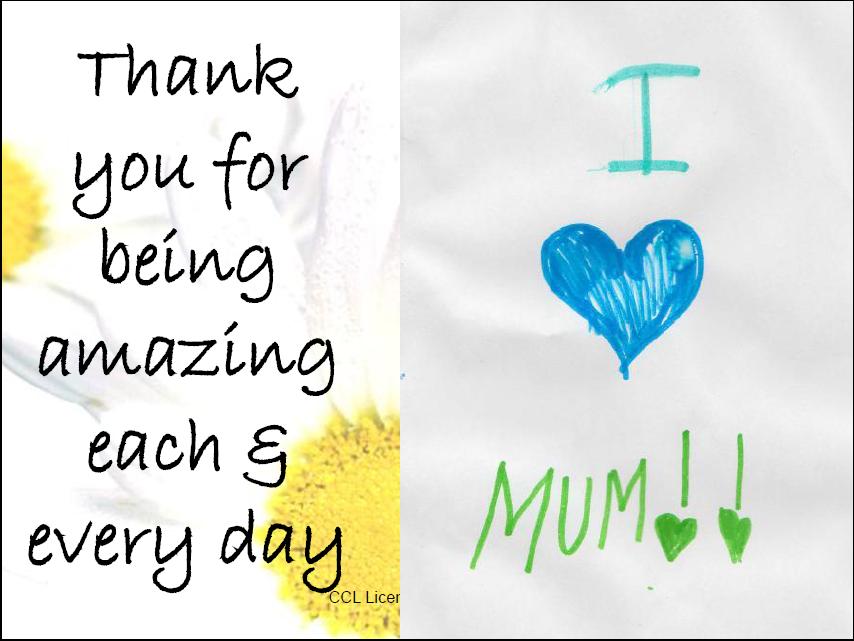
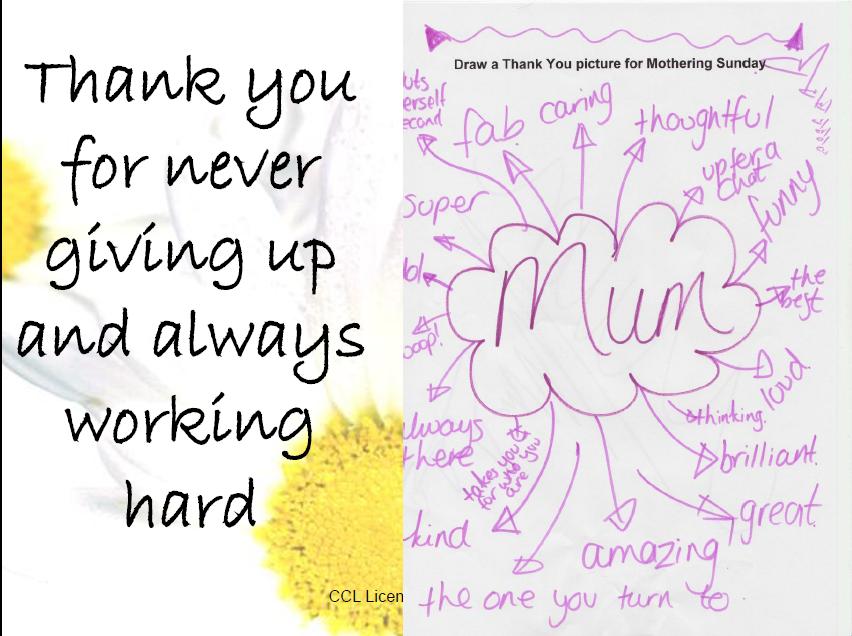
We had an excellent All-Age Mothering Sunday service led by our Youth Group at St John's Seven Kings this morning. Our young people wrote poems and drew pictures to say thanks to their Mums as part of the service theme of 'Giving Thanks':


------------------------------------------------------------------------------------

Brenton Brown - Joyful.

Sunday, 4 March 2012

Good news for children and young people

During March, as well as continuing with our Lent Course Handing on the Torch: Sacred words for a secular world, our other activities at St John's Seven Kings during Lent will focus on children and young people.

On Sunday 18th March our young people will lead our All-Age Mothering Sunday service. Our young people are currently planning the service themselves and are exploring ways of saying thank you as well as looking at the bible stories about Mary and Elizabeth. The service is likely to feature cards, poems and puzzles, as well as the bunches of daffodils which are given out to all the women present.

Then on 26th and 30th March schoolchildren from Newbury Park Primary School and Downshall Primary School will be visiting St John’s to learn more about Easter through a series of Easter Activity Stations.

Last year, at the invitation of the Standing Advisory Council on Religious Education (SACRE) in Redbridge, we ran Easter Activity Stations for both schools and they proved so popular that both are bringing their children to St John’s again this year. For the pupils coming, this will be an opportunity to understand more about the narrative of Easter, reflect on the meaning of Easter for Christians, and take time to think on what some of the Easter concepts mean to them.

Here is an example of one of last year's Easter activity stations:

Reflection - Can you think of somebody who has put themselves out for you like Jesus did for Christians? Who was that person and what did they do that was special?

Activity - Write a Thank you card.

Going for Growth is a Church of England report which challenges churches to try to become good news for children and young people instead of simply trying to teach good news to children and young people. To do, it suggests, the Church will need fresh eyes to see itself:

“Such a church would need the confidence to deal with questions rather than always having to find the answers. It would be prepared to surrender its life and lets its institutions be
transformed. The sadness is that churches rarely have the confidence which enables
them to face the questions theology may ask of them, especially in the devastating
directness such questions may take on in the mouth of a child (or young person).
Churches lack the humility to face the truth about the quality of their life and worship
and to set about addressing the needs which are then identified. A church which
welcomes children (and young people), accepts their gifts and ministries, meets their
needs, advocates justice, seeks new life, challenges evil with love and truth, and
continues to learn the values of the Kingdom by living them, is a Church which is good
news not only for its members but for the world.”

In a small way, through our activities this month and on an ongoing basis, we are seeking to be that kind of a church.

---------------------------------------------------------------------------

Sister Act 2 - Joyful, Joyful.