Wikio - Top Blogs - Religion and belief

Friday, 15 July 2022

The Choir of St Martin-in-the-Fields in concert


The Choir of St Martin-in-the-Fields in concert: Sunday 17 July, 3.30 pm, St Andrew's Wickford

The Choir of St Martin-in-the-Fields strives to be amongst the leading voluntary church choirs in the UK, performing a wide range of sacred choral repertoire on a regular basis to a high standard. Come for 45 minutes of beautiful music by Palestrina, Victoria, Holst and Todd. No tickets required. A retiring collection will be taken.

The Choir of St Martin-in-the-Fields: 

The Choir of St Martin-in-the-Fields is an outstanding liturgical voluntary choir rooted in Sunday worship at St Martin’s. In addition, they sing for the worship services at all the major church festivals, including Advent, Christmas, Holy Week and Easter. The Choir is well known for its broadcasts on BBC Radio and Television, concerts and tours.

Jennifer Sterling: 

Jennifer began her training as a chorister at St Mary’s Cathedral in Edinburgh alongside studies in violin and piano at St Mary’s Music School. She subsequently read music as a first study singer at the University of York before establishing a career as a singer, choral conductor, teacher, and arranger. Alongside her role as Associate Choral Director of St Martin-in-the-Fields, Jennifer is Musical Director of Otley and Ilkley Choral Societies. She performs regularly as a soprano soloist, as a Scottish folk singer, and as a member of the award-winning Edinburgh based vocal ensemble, Octavoce. Jennifer has a wealth of experience working as a musical director and is in demand for engagements across the UK. She has previously worked with organisations including Opera North and the National Youth Choir of Scotland, and conducts choirs from amateur through to professional levels.

Programme:

  • Totus Tuus - Górecki
  • Sicut Cervus - Palestrina
  • Sing Joyfully - Byrd
  • Quam Gloriosum - Victoria
  • Abendlied - Rheinberger
  • Nunc Dimitis - Holst
  • My Soul There is a Country - Parry
  • My Spirit Sang All Day - Finzi
  • Blahoslovy Dushe Moya Hospoda - Stetsenko
  • Upon Your Heart - Daley
  • Hamba Nathi - Trad. South African
  • Baba Yetu - Tin arr. Jones
-----------------------------------------------------------------------------------------------------------

Thursday, 14 July 2022

Artlyst: Grayson Perry Tapestries On Show At Salisbury Cathedral

My latest interview for Artlyst is with The Very Revd Nicholas Papadopulos, Dean of Salisbury, and Beth Hughes, Curator, Arts Council Collection, in relation to The Vanity of Small Differences, an exhibition of six huge tapestries by Grayson Perry which has recently opened to the public at Salisbury Cathedral:

‘Beth Hughes: The exhibition will make clear the artworks that have been referenced as intermediaries. The tapestries are not about telling a bible story, however, rather they are more about art history. Is this about the grandiose nature of the way we treat past artworks or about Perry aligning his artworks with paintings from the past? In the second panel, a club singer is aligned with Grunewald’s Isenheim altarpiece. There are clear references in relation to size and shape. This layering of references shows that art doesn’t come from nowhere.

Nicholas Papadopulos: The point I like to make to visitors is that Perry is using the religious references to address issues of class division and that post-Brexit, Covid, the cost-of-living crisis, and the Ukraine conflict, the issue of how united or divided we are is of more relevance than ever. Vibrant, witty, and well-observed, they are an invitation to see ourselves. That surely is one of the purposes of liturgy and worship, to look at ourselves in the light of the Gospel. Doing so is a core spiritual discipline.’

For more on The Vanity of Small Differences see my July diary for Artlyst - 'Re-imaging Essex'.

My other pieces for Artlyst are:

Interviews -
Articles -
-----------------------------------------------------------------------------------------------------------

The Merchants of Venus - The Arms of Morpheus.

Called to the feast


Called to the feast is an online exhibition created for (Still) Calling from the Edge, the 10th annual conference on disability and church in partnership between St Martin-in-the-Fields and Inclusive Church, through an pre-conference art workshop. This preparatory workshop drew on the image of feasting in Jesus’ parables and teaching combined with the way he included those experiencing exclusion among his disciples and restored others to worship at the Temple. 

The pre-conference workshop resulted in an video exhibition including images and words for an inclusive Last Supper. These are in a variety of media (drawing, painting, photography, poetry, prose etc) and focus on a range of aspects of the Last Supper e.g. the feast, the table, the guests, Jesus etc. Participants were encouraged to interpret this brief in their own way and as made sense to them. The video exhibition was then shown in a workshop during the conference.

Called to the feast was inspired by The Blind Jesus (No-one belongs here more than you) projectThe Blind Jesus (No-one belongs here more than you) is an image in charcoal of the Last Supper which includes the central character of a visually impaired Jesus, surrounded by twelve people of differing ages, backgrounds and abilities. The project aims to seed other images of the Last Supper that are truly for everyone and are displayed by churches alongside the original image. Schools, churches and community groups are being invited as part of this project to create their own Last Supper images. Called to the feast was the first collection of images to be seeded as a result of this project.

------------------------------------------------------------------------------------------------------------

Arvo Pärt - Tabula rasa.

Sunday, 10 July 2022

True love of neighbour means we receive, as well as give

Here's my sermon from today's Communion Servive at St Catherine’s Wickford:

We all know the story of the Good Samaritan (Luke 10. 25 - 37), don’t we? And we all know what the story is about? It’s very clear, isn’t it? It’s a call to kindness, a call to care, a call to help others, unlike those who passed by on the other side. We know all that, don’t we? So, there’s really no point in my reiterating what we already know and therefore I can just leave you to reflect on the calls to kindness that you experience in your daily life. How do you meet those? How do you respond?

There isn’t really anymore to say, so I’ll just leave it at that for today. Or, is that actually the case? Is there perhaps something more to this parable that isn’t generally spoken about? Might there actually be an aspect to this parable that is generally overlooked?

Let’s think for a moment about the hero of the parable – a Samaritan. Samaritans were contemptible people, as far as the Jews of Jesus’ day were concerned, considered as social outcasts, untouchables, racially inferior, practicing a false religion. While Samaritans claimed that they were the true Israel who were descendants of the "lost" tribes taken into Assyrian captivity. The Samaritan’s had their own temple on Mount Gerizim and claimed that it was the original sanctuary. They also claimed that their version of the Pentateuch was the original and that the Jews had a falsified text produced by Ezra during the Babylonian exile.

Samaritans were of mixed Jewish and Gentile ancestry, claimed descent from Jacob and worshipped the God of Israel. So, Samaritans were close to the Jews in their birth and beliefs but they were also different in significant ways, a volatile combination in any era. As a result, Samaritans and Jews engaged in bitter rivalries, which in Jesus’ day could lead to political hostilities that, sometimes, required intervention from the Romans.

Both Jewish and Samaritan religious leaders seem to have taught that it was wrong to have any contact with the opposite group, and neither was to enter each other's territories or even to speak to one another. Jews avoided any association with Samaritans, travelling long distances out of their way to avoid passing through a Samaritan area. Any close physical contact, drinking water from a common bucket, eating a meal with a Samaritan, would make a Jew ceremonially unclean - unable to participate in temple worship for a period of time – this may be part of the reason why the priest and Levite don’t stop to help.

The artist Dinah Roe Kendall painted a version of the parable of the Good Samaritan which set the story in South Africa at the time of apartheid. Doing so, seems to me, to be an accurate parallel with the kinds of emotions and cultural practices that were at play in the relationship between Jews and Samaritans and it shows up clearly the twist in the tail of Jesus’ story.

Jesus, as a Jew, didn’t illustrate his point - that people of every race, colour, class, creed, faith, sexuality, and level of ability are our neighbours – by telling a story in which a Jew was kind to someone else. Instead, he told a story in which a Jew receives help from a person who was perceived to be his enemy. The equivalent in Kendall’s painting is of the black man helping the white man, who represents the people that have oppressed him and his people.

So, Kendall’s version of the story brings out part of the twist in the tail that Jesus gives this story; the sense of receiving help from the person who is your enemy. What her version doesn’t deal with, however, is the idea that the enemy who helps is someone of another faith. The Jews were God’s chosen people and a light to the other nations and faith, so what would have been expected from this story would have been for the Jew in the story to bring the light of faith to the Samaritan. But that is not how Jesus’ story unfolds. Instead, the person who is one of God’s chosen people receives help from the person of another faith.

For Jesus to tell a story in which a Samaritan was the neighbour to a Jew was, for the reasons we have been considering, deeply shocking. We can sense this in the story as recorded for us by Luke, as the lawyer in the story is unable to bring himself to utter the word ‘Samaritan’ in answering Jesus’ question. The story is doubly shocking because the Jews in the story, the Priest and Levite, do not act as neighbours to the man. And trebly shocking, because it was probably their expression of devotion to God that prevented them from being neighbours. Priests were supposed to avoid impurity from a corpse and Pharisees thought that one would contract impurity if even one’s shadow touched the corpse. It was safer, therefore, not to check than to risk impurity.

Perhaps we can get a sense of how shocking this was by asking ourselves who, in our own day, are we least likely to think of as neighbours? Who do we think of as those least like us? Who do we think of as enemies? Who do we think of as contemptible? The point of the story is that Jesus says our neighbour is not our own people but those we think of as enemies or as contemptible because of their birth or beliefs. The least likely people, the people least like us, these are the people that Jesus calls our neighbours.

To find a contemporary equivalent for this aspect of the story, we have, perhaps, to think about relationships in this country between Christians and those of other faiths, and within those relationships, recognise that relationships between Christians and Muslims are often those which are currently most conflicted, with some Christians believing that Islam represents a threat to the Church and Western civilization. Within this context, the parable of the Good Samaritan challenges Christians as to what we can receive from those of other faiths and, particularly, those who we might view as enemies. Jesus says to us, through this parable, that loving our neighbours is not simply about what we can give to others but also about what we receive from others.

Our neighbours, understood in this way, are those to whom we should give – “go and do likewise”, Jesus said to the lawyer - and they are those that we should love as we love ourselves. They are also those from whom we should receive because it was the Samaritan in the story who provided help, not any of the Jewish characters. So, we need to ask ourselves how we can receive, grow, learn from and be blessed by those we think of as enemies or as beneath contempt because of their birth or beliefs.

You see, if our focus is just on what we can give, then we are in a paternalistic relationship with our neighbours or enemies. If our focus is just on what we can give, then what we are saying is that we hold all the aces and we will generously share some of them with you. In other words, we remain in a position of power and influence. Immediately we acknowledge that we can receive from our neighbours or enemies, then the balance of power shifts and we make ourselves vulnerable. In this parable, Jesus says that that is where true love is to be found and it is something that he went on to demonstrate by making himself vulnerable through death on the cross.

We often protect ourselves from the need to engage with, learn from or show love to those who are different from us by using aspects of the Bible to justify our lack of contact or compassion. But Jesus rules this approach out for his followers by giving us the examples of the priest and Levite. George Caird has written that “It is essential to the point of the story that the traveller was left half-dead. The priest and the Levite could not tell without touching him whether he was dead or alive; and it weighed more with them that he might be dead or defiling to the touch of those whose business was with holy things than that he might be alive and in need of care.”

This is religious rule-making justifying a lack of compassion. Caird says that, “Jesus deliberately shocks the lawyer by forcing him to consider the possibility that a semi-pagan foreigner might know more about the love of God than a devout Jew blinded by preoccupation with pettifogging rules.” Who do we, as the Church, stay away from because we are afraid of contamination or defilement? What aspects of scripture do we use to justify our lack of contact?

Jesus told this story in order that we reach out across the divides and barriers that people and groups and communities and nations construct between each other. He told this story so that Christians would be in the forefront of those who look to tear down the barriers and cross the divides. To the extent, that we fail to do this we are more like the priest and Levite in this story that the Samaritan who was a neighbour to the person in need.

In the parable of the Good Samaritan, where the sting is in the tail, the deepest point is that one of God’s chosen people receives help from his enemy who is of another faith. Jesus is taking us deep into the heart of love and saying that we will not truly love our neighbour until we understand and accept that we have much to receive from those that we perceive to be our enemies. In other words, true love of our neighbour means that we receive as well as give.

---------------------------------------------------------------------------------------------------------------

Ladysmith Black Mambazo - Homeless.

Saturday, 9 July 2022

Coming up in the Wickford and Runwell Team Ministry


The Choir of St Martin-in-the-Fields in concert: Sunday 17 July, 3.30 pm, St Andrew's Wickford. The Choir of St Martin-in-the-Fields strives to be amongst the leading voluntary church choirs in the UK, performing a wide range of sacred choral repertoire on a regular basis to a high standard. Come for 45 minutes of beautiful music by Palestrina, Victoria, Holst and Todd. A retiring collection will be taken.

Messy Church is a way of being church for families and others. It is Christ-centred, for all ages, based on creativity, hospitality and celebration. Messy Holy Day, 2-4pm, 23rd July, St Mary’s Vicarage garden Runwell. Kids must bring an adult. Contact Revd Sue: sue.wise@sky.com or Emma: emmacdoe@googlemail.com. Date for your diary - Messy Harvest, 8 October.

-------------------------------------------------------------------------------------------------------------

Artlyst - Re-imagining Essex July 2022 Diary

My July diary for Artlyst has mentions for Michael Landy at Firstsite, Elsa James at Focal Point Gallery, George Morl at Southend High Street, and Grayson Perry at Salisbury Cathedral as I focus on the ways in which the image of Essex is currently being questioned, challenged and re-framed by artists and exhibitions in and from Essex:

‘Othered in a region that has been historically Othered’ is a major new film that comes in three chapters moving from initial experiences of being othered, through the Grenadian island ritual of Jab Jab which provides a transformative moment, into a final chapter that imagines a new future for Essex by taking the othering and turning it ‘into a zone of possibility and new dreaming.’ Unlike her earlier films in which the actual stories of othered Essex residents were re-told, these films feature James herself channelling through her performance – she equates this, in an interview with Ekow Eshun, to Christians receiving the Holy Spirit – the experience of being othered and of re-imagining.

Her performances in these films are based both on historical research into the persecution of women as witches in Essex in the mid-17th century by the infamous Witchfinder General, Matthew Hopkins, and focus groups held in Essex with asylum-seekers and refugees, black students, and the LGBTQIA+ community. From the focus groups have come phrases and concepts which have been incorporated into the lyrics and poetry that feature in the films. In this mix of words, sounds and images, James looks within ‘to find the source / of that redemptive’ and asks ‘What would Essex look like if the norm got turned on its head and the ‘Othered’ became the norm?’

My other pieces for Artlyst are:

Interviews -
Articles -
-----------------------------------------------------------------------------------------------------------
Curtis Mayfield - We The People Who Are Darker Than Blue.

Superbloom


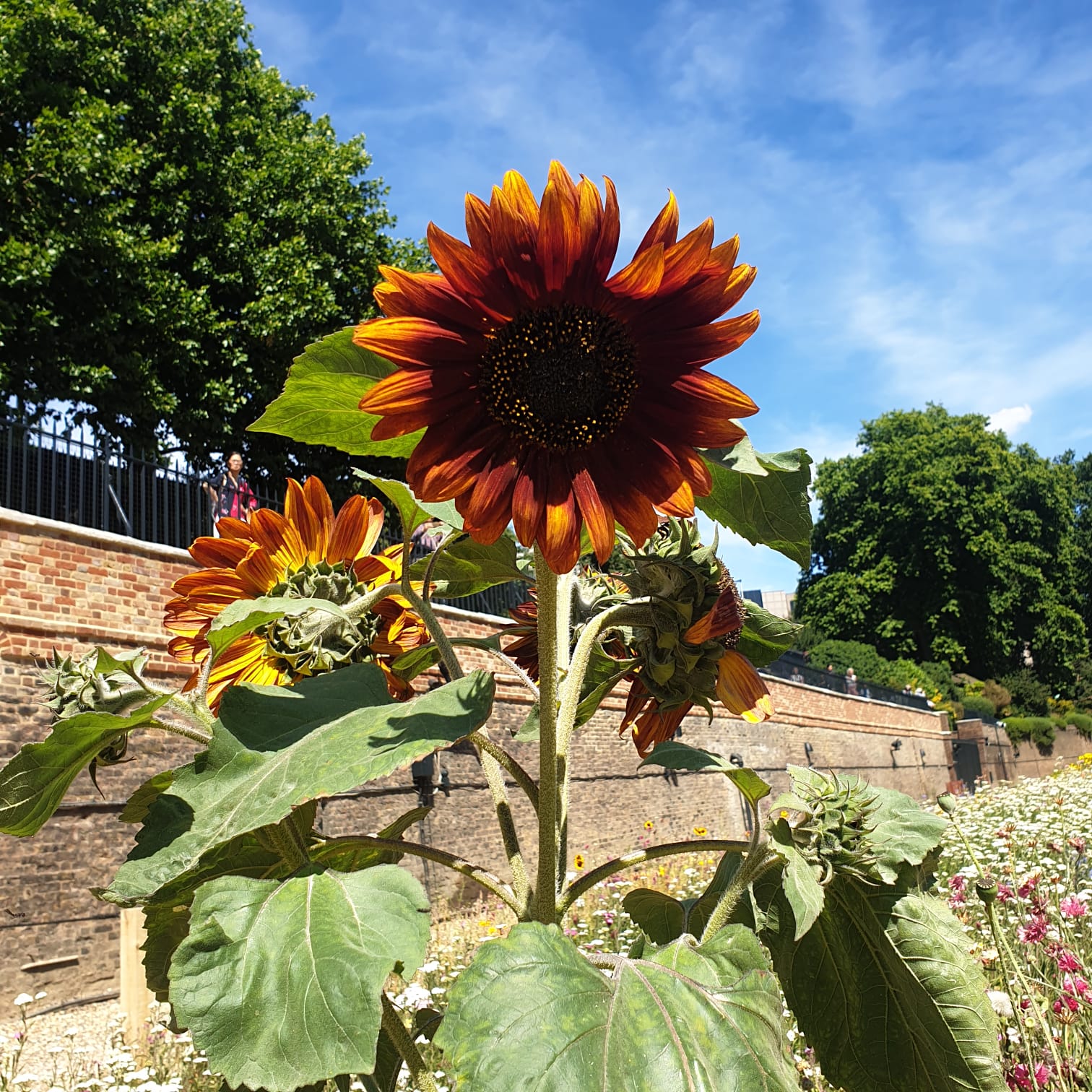
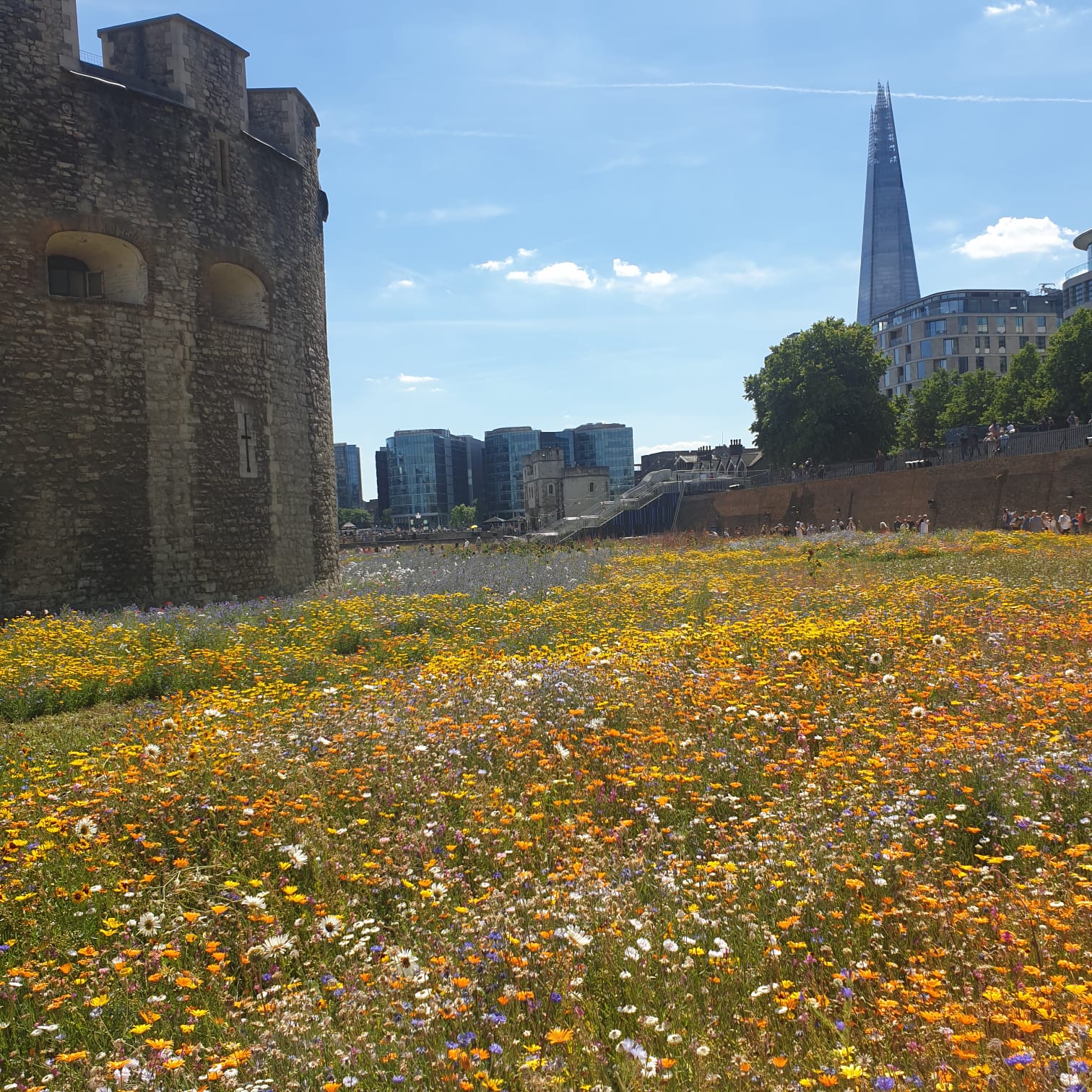
To mark the Platinum Jubilee year of Her Majesty The Queen, over 20 million seeds have been sown in the moat of the Tower of London developing over the course of the summer, to create a beautiful, new naturalistic landscape. Designed to attract pollinators, ‘Superbloom’ brings a wonderful natural beauty to this urban space and introduce a new biodiverse habitat for wildlife. It celebrates the value of nature for our wellbeing.

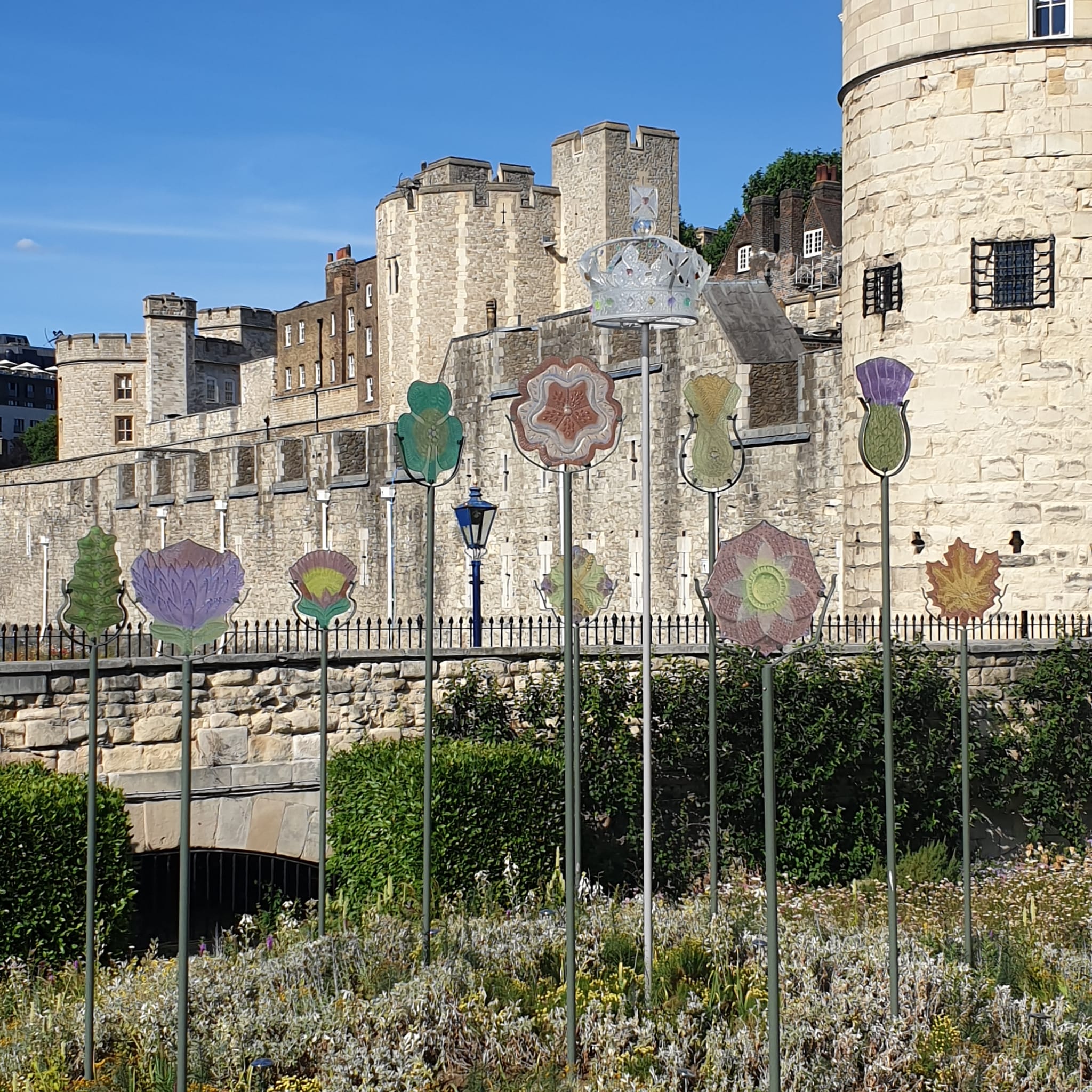
Open from June to September, it is an evolving display, moving from soft green hues in June to delicate whites, blues, pinks and oranges throughout the height of summer. You enter the moat via a fully accessible visitor entrance. Once in the moat, you can choose to climb the stairs and slide down into the moat on the four lane Superbloom slide! You spend around 30 minutes exploring a one way route along winding willow-lined paths set to a specially commissioned soundscape with sculptural elements along the way. 

See the Queen's Garden, a special tribute to Her Majesty The Queen this Platinum Jubilee year. Designed to be viewed from above, this picture garden is inspired by her 1953 coronation gown. In the centre, sits a glass crown, a reminder of the Tower of London’s ancient as home of the Crown Jewels.

-------------------------------------------------------------------------------------------------------------

Guards of Metropolis - Perfect World.