Wikio - Top Blogs - Religion and belief

Saturday, 22 January 2022

CTiW AGM: Beyond Cop26 – What next? EcoChurch & other steps


The Churches Together in Westminster 2022 AGM took place on Monday, 17th January at 6pm via Zoom.

Following the AGM there were talks exploring how to make your church more environmentally-friendly following Cop26, including how to become an EcoChurch and how to get involved in Citizens UK Just Transition campaign.

Speakers were:
For the video of the talks please click here or https://www.youtube.com/playlist?list=PLO43Y1gJDjYSsN_5knpJK45scuDcQkXOT.

-----------------------------------------------------------------------------------------------------------

Linda Perhacs - Winds Of The Sky.

Looking down the wrong end of a telescope

Writer and poet Rupert Loydell has just written a great piece for Ship of Fools looking back to the collaborations and collisions between church culture and the wider culture in the 1970s and 80s, with a cast including Jesus Rock Music, the Greenbelt festival, Mary Whitehouse and musicians such as Larry Norman and Steve Fairnie of Writz. Read Rupert's article here.

Rupert Loydell is a poet, painter, editor and publisher, and senior lecturer in English with creative writing at Falmouth University. He is interested in the relationship of visual art and language, collaborative writing, sequences and series, as well as post-confessional narrative, experimental music and creative non-fiction. He has edited Stride magazine for over 30 years, and was managing editor of Stride Books for 28 years. His poetry books include Wildlife and Ballads of the Alone (both published by Shearsman), and The Fantasy Kid (for children); he has also edited anthologies for Shearsman, Salt and Knives, Forks & Spoons Press.

For more on the period about which he writes, read my dialogues with musician and poet Steve Scott here, here, here, here, and here, plus my other posts on CCM. For more of my writing on music, see my co-authored book with Peter Banks of After the Fire‘The Secret Chord’, which has been described as an impassioned study of the role of music in cultural life written through the prism of Christian belief.

-------------------------------------------------------------------------------------------------------------

Windows on the world (363)


 London, 2021

-----------------------------------------------------------------------------------------------------------------

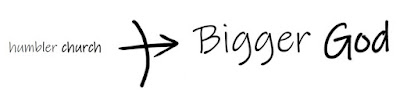
humbler church Bigger God - w/c 23 January 2022


We're looking forward to welcoming you to an exciting new HeartEdge programme for 2022 and hope you will be able to join us, whether at online events or at our in-person events around the world. You can find all our events on our website — and if you're a HeartEdge partner, you can upload your own events through the members' area.

Last year, we launched Living God's Future Now, an online festival of theology and practice. We hosted workshops, webinars, spaces to gather and share ideas, lecture series, and more. This year, we're continuing our programming with a new theme — humbler church, Bigger God. We hope this reflects the lessons we've learnt from the past year: still trying to live God's future now, re-imagining our faith and our calling as a Church in a changing world. Thank you for joining us for the journey — we can't wait to see what the next year brings.

Sunday

Theology Group

Zoom,
Sunday 23 January, 19:00-20:00 GMT
Register here.
The St Martin-in-the-Fields and HeartEdge Theology Group provides a monthly opportunity to reflect theologically on issues of today and questions of forever with Sam Wells. This month, the chair will be Wendy Quill and we will explore how we might bring Mary into theology in a way that celebrates rather than ignores her vital role in the life of Christ.

Monday

Church History course
Zoom
Monday 24 January, 19:45 - 21:00 GMT
Register here.
This course provides an introduction to and an overview of church history. If we are to see a humbler Church and a bigger God, we need to deal with the history of the Church to understand where we are now, and why? With Ruth Gouldbourne, who has been a Baptist minister for more than 30 years. Week 1 Introduction; why church history?

Tuesday

Sermon Preparation workshop with Sally Hitchiner and Sam Wells

Livestream
Tuesday 25 January, 16:30 -17:30 GMT
Live streamed on the HeartEdge Facebook page here.
A live preaching workshop focusing on the forthcoming Sunday's lectionary readings in the light of current events and share thoughts on approaches to the passages.

Wednesday

Community of Practitioners workshop

Zoom
Wednesday 26 January, 16:00-17:00 GMT
Email Jonathan Evens on jonathan.evens@smitf.org to take part.
This is a space for practitioners, lay and ordained, to reflect on theology and practice. Each week, we alternate between 'Wonderings' and discussion of a theology book. This week we will be discussing 'The Hidden Wound' by Wendell Berry.

Thursday

Pioneer Practice
Zoom
Thursday 27 January, 20:00-21:10 GMT
Register here.
In our four-part webinar series, Jonny Baker will be joined each week in conversation with guests to explore on-the-ground practicalities of pioneer ministry. Come along if you’re thinking of starting a new congregation or initiative, want to brainstorm practical solutions to problems in pioneer ministry, or just want to learn more about pioneering.

-----------------------------------------------------------------------------------------------------

Friday, 21 January 2022

May the dark clouds roll away

Here's the Newsletter front cover that I've written for St Martin-in-the-Fields this week:

At the beginning of this New Year, I’ve been writing and talking about the ways faith is expressed in and through pop music in all its many guises. I’ve started writing for Deus ex Musica (https://www.deus-ex-musica.com/blog) and in a HeartEdge series have been in conversation with the composer Delvyn Case to share rock and pop music for Lent, Easter, and Christmas.

For over 50 years, pop musicians in all genres have explored aspects of spirituality and the meaning and significance of Jesus in their music. The result is a rich collection of songs that consider important spiritual questions like faith, doubt, and prayer in unique and often provocative ways.

In my second piece for Deus ex Musica, I share two songs that explore spiritual and redemptive themes by being songs of immense joy and hope. For Van Morrison in ‘Brand New Day’, joy and hope are found in the transition from living under dark clouds while feeling ‘lost and double crossed’ to the sun beginning to shine so that freedom can be seen, and life is lit with love. In ‘New Morning’, Bob Dylan is to be found fully in that moment where life and love bring happiness.

If you are looking for encouragement, inspiration, joy, and hope now that 2021 has transitioned into 2022, you can’t do better than these two songs with their shared hopeful themes and vibe. To pray that in 2022 the dark clouds roll away, the sun begins to shine, and, in its light, we might be happy just to be alive seems to me to be a great New Year prayer and one that many of us – whether in or out of church - might be willing to pray.

(Delvyn Case has set up Rock of Ages, a website where he shares his research into Jesus and Popular songs. I am co-author of ‘The Secret Chord’, which has been described as an impassioned study of the role of music in cultural life written through the prism of Christian belief)

-----------------------------------------------------------------------------------------------------------

Van Morrison - Brand New Day / Bob Dylan - New Morning

Wednesday, 19 January 2022

Art and faith: Decades of engagement - 1930s

This is Part 6 in a series of posts which aim to demonstrate the breadth of engagement there has been between the Arts and religion within the modern period and into our contemporary experience. The idea is to provide a brief introduction to the artists and initiatives that were prominent in each decade to enable further research. Inevitably, these lists will be partial as there is much that I don’t know and the lists reflect my interests and biases. As such, the primary, but not exclusive, focus is on artists that have engaged with the Christian tradition.

The introduction and the remainder of the series can be found at: Introduction, 1880s, 1890s, 1900s, 1910s, 1920s.
  • Theatrical Experimentation and Spiritual Renewal go hand in hand between the Wars following the establishment of the Canterbury Festival. In 1930, E. Martin Browne is appointed by George Bell, Bishop of Chichester, to be director of religious drama for the diocese. The Religious Drama Society is formed. Browne organises a pageant, The Rock, for which T.S. Eliot writes a series of choruses.
  • In 1930, Thomas A. Dorsey, the "Father of Gospel Music", becomes the music director at Pilgrim Baptist Church in Chicago. The church is credited as the birthplace of gospel music in the 1930s. Albertina Walker, Mahalia Jackson, Aretha Franklin, Sallie Martin, James Cleveland, The Staples Singers, and The Edwin Hawkins Singers are among those who sing at the church.
  • The Symphony of Psalms is a choral symphony in three movements composed by Igor Stravinsky in 1930 during his neoclassical period. The work was commissioned by Serge Koussevitzky to celebrate the 50th anniversary of the Boston Symphony Orchestra.
  • Pablo Picasso paints a Crucifixion (1930) and creates a series of crucifixion drawings (1932) inspired by Matthias Grünewald’s Isenheim Altarpiece in Colmar. The drawings are published in the surrealist magazine Minotaure.
  • Along with The Tragic Sense of Life, Miguel de Unamuno's long-form essay La agonía del cristianismo (The Agony of Christianity, 1931) and his novella San Manuel Bueno, mártir (Saint Emmanuel the Good, Martyr, 1930) are all included on the Index Librorum Prohibitorum.
  • In June 1931, F.T. Marinetti publishes the 'Manifesto of Futurist Sacred Art' on the occasion of the International Exhibition of Modern Christian Sacred Art in Padua, which had a Futurist section of twenty-two works by thirteen artists. The publication of this Manifesto led to a censure from Pope Pius XI in a speech given in October 1932 at the inauguration of a new Vatican Art Gallery. The rationalist design by Alberto Sartoris (who had strong links to the Futurists) for Notre-Dame du Bon Conseil in the Swiss Alps at Lourtier also created a scandal in the Swiss press in the same year.
  • In 1931 Otto van Rees creates paintings for the niches and the dome of the Pieta Chapel in the Church of Our Lady of the Rosary, Amsterdam.
  • L’Arche collaborate at the Pavillon des Missions Catholiques for the Colonial Exhibition in 1931.
  • In 1932, Maire-Alain Couturier paints frescoes for the private chapel in Santa Sabina (Rome) of the Master General.
  • Built in 1932, Notre-Dame du Bon Conseil, Lourtier, is located high in the Swiss Alps, and has been called the "forgotten church of Futurism". Designed by Alberto Sartoris, it was the first church built to a rationalist design. It originally incorporated work by the Futurist artist Fillia, and still contains impressive stained glass by Albert Gaeng, an artist from the Saint Luc Group.
  • In 1932, a large group of Protestant agitators break into St Hilary’s church in Cornwall and remove or destroy many of the fittings and furnishings, including works by the Newlyn School of Artists.
  • In 1932, Sándor Nagy completes frescos in the Chapel of the Maglódi Hospital, Budapest.
  • In 1932, Photius Kontoglou begins his fresco painting career by painting, with his pupils Tsarochis and Nikos Engonopoulos, his newly built house in Patisia, Athens.
  • In 1932, Chen Yuandu receives baptism and joined the Catholic Church, taking the name of Luke.
  • In 1932, Thomas A. Dorsey co-founds the Gospel Choral Union of Chicago – eventually renamed the National Convention of Gospel Choirs and Choruses (NCGCC) - a convention where musicians can learn gospel blues. His wife Nettie dies in childbirth at the same time, then 24 hours later, their son. His grief prompts him to write one of his most famous and enduring compositions, ‘Take My Hand, Precious Lord’.
  • Arnold Schoenberg writes his Moses Und Aron (1932). The opera thematically and musically contrasts Moses and Aaron, the Revelation versus the Golden Calf.
  • In 1933, Thomas A. Dorsey directs a 600-person chorus at the second meeting of the NCGCC, which now boasts 3,500 members in 24 states.
  • In 1933, the Inklings, including C.S. Lewis and J.R.R. Tolkien, begin meeting in Oxford. Charles Williams joins them in 1939.
  • Alfred Noyes sets out the intellectual steps by which he was led from agnosticism to the Catholic faith in The Unknown God (1934), a widely read work of Christian apologetics which has been described as "the spiritual biography of a generation."
  • In 1933, Maurice Morel organizes and participates in the First Exhibition of Modern Religious Art at the Lucy Krogh Gallery, an event that would be repeated in this gallery for several years in a row. The exhibition includes works by Pablo Picasso, Andre Derain, Tsuguhara Foujita, and Georges Rouault, who will become Morel's lifelong friend and supporter.
  • From 1934, Joseph Pichard organizes, with the help of the General Office of Religious Art, a major exhibition at the Hôtel de Rohan in Paris, made up of 35 rooms. exhibition and more than 3,000 works.
  • In 1934, Evie Hone joins An Túr Gloine, a stained glass workshop set up by Sarah Purser, and produces her first public stained glass work for Saint Naithi’s Church in Dundrum, County Durham.
  • In 1935, Joseph Pichard, with L. Salavin and G. Mollard, creates the review L'Art sacré, which in 1937 is taken over by the publishing house of Cerf and its direction given to two Dominicans: Pie-Raymond Régamey and Marie-Alain Couturier.
  • T.S. Eliot’s Murder in the Cathedral is performed at the Canterbury Festival in 1935 with E. Martin Browne as director and Robert Speaight as Becket. The play is then taken to London, where it runs for almost a year and establishes Browne as the leading director of the "poetic drama" movement.
  • In 1936, Georges Desvallières’ pre-war dream of painting the Glorious Virgins comes true. Sainte Vierge Reine des anges (Virgin Mary Queen of the Angels), a masterpiece that was originally in the Poor Clares’ Convent in Mazamet, now adorns the Benedictine Monastery of Abu Gosh in Israel.
  • In 1936, through attending meetings of the Thomist Study Circle organised by Jacques Maritain, Dominique de Menil meets Marie-Alain Couturier. Couturier's ideas and contacts give significant shape to the arts patronage of John and Dominique de Menil. 
  • In 1936, Marie-Alain Couturier and Pie-Raymond Régamey become the chief editors of L'Art Sacré. They continue in this role until 1954.
  • The decoration of the church of Notre-Dame-des-Alpes was put out to tender in July 1936 with the panel assessing responses including the philosopher Jacques Maritain, the Catholic art critic Maurice Brillant and the director of the Ecole des Beaux Arts in Geneva, Adrien Bovy. Three artists from the Society of St Luke were selected; François Baud for sculptures, Alexandre Cingria for stained glass and Paul Monnier for the sanctuary mural. Other artists used included Paul Bony, Constant Demaison and Jean Hebert-Stevens. The church has rightly been described as an essential stage in understanding the revival of sacred art in the twentieth century but is overshadowed by the fame and significance of the nearby church at Assy.
  • Modern Religious Art by Chanoine G. Arnaud d'Agnel is published in 1936.
  • Francis Poulenc begins writing choral music in 1936 producing among other works his religious work Litanies à la Vierge Noire, for female or children's voices and organ.
  • RCA Victor sign the Monroe Brothers to a recording contract in 1936. They score an immediate hit single with the gospel song "What Would You Give in Exchange For Your Soul?" and go on to record 60 tracks for Victor's Bluebird label between 1936 and 1938.
  • In 1937, Emil Nolde’s The Life of Christ is prominently displayed in the Nazi organized ‘Degenerate Art’ exhibition.
  • In 1937, the Catholic Art Association is founded by Sister Esther Newport as an organisation of artists, art educators, and others interested in Catholic art and its philosophy.
  • The Pontifical Catholic Pavilion, created in 1937 for the International Exhibition of Arts and Techniques in Modern Life, brings together, alongside many French artists and craftspeople, a large international contribution (27 countries present a “national” chapel) from which Alexandre Cingria and José-Maria Sert emerge as being of particular note.
  • In 1937, sculptor William Edmondson has a solo exhibition at the Museum of Modern Art in New York, the first such show given to an African American by this institution. 
  • In 1938, at the instigation of Mgr. Costantini, the Art Department of Furen [Fu Jen] Catholic University in Beijing, led by Luke Chen Yuandu, organizes and conducts a series of itinerary exhibitions in Budapest, Vienna and the Vatican.
  • In 1938, Daniel Johnson Fleming publishes Each with His Own Brush: Contemporary Christian Art in Asia and Africa, the first attempt to bring together pictures of Christian paintings from outside Europe.
  • In 1938, Horace Pippin paints Christ (Crowned with Thorns), the first of ten paintings exploring biblical subject matter and spiritual themes.
  • Sister Rosetta Tharpe pushes spiritual music into the mainstream and helps pioneer the rise of pop-gospel, beginning in 1938 with the recording ‘Rock Me’ and with her 1939 hit ‘This Train’.
  • The Cyrene Mission becomes famous for its localised art of Christian content which was developed first in the classrooms and then extended to decorate the chapel. Edward “Ned” Paterson, a pioneering art teacher, founds the Cyrene School near Bulawayo in Rhodesia (now Zimbabwe), where he moves to in 1939. The school focuses on practical and agricultural education and is the first African school in Rhodesia to have art classes. Some of Rhodesia’s first professional African artists emerge from Cyrene, including Sam Songo, Lazarus Khumalo, and Kingsley Sambo.
  • In 1939, Edwin Muir has a religious experience in St Andrews and from then onwards thinks of himself as Christian, seeing Christianity being as revolutionary as socialism.
  • In March 1939, E. Martin Browne directs T.S. Eliot's second play, The Family Reunion, in London and in the same year he launches a touring company, the "Pilgrim Players", whose programme was dominated by the plays of Eliot and, to a lesser degree, of James Bridie (O. H. Mavor), the Scottish dramatist.
  • Maurice Denis’ History of religious art is published in 1939.
  • The 1939 publication of Passion, a book of woodcuts, engravings and color etchings makes George Rouault's work more accessible.
  • In 1939, Maire-Alain Couturier is asked to assist in commissioning for Notre-Dame de Toute Grace du Plateau d'Assy.
  • Painted between 1939 and 1940, William H. Johnson's Jesus and the Three Marys marks the beginning of Johnson's five-year period of engagement with biblical subjects.
  • Jacques Maritain’s Religion et Culture (1930), T.S. Eliot’s Ash Wednesday (1930) and Burnt Norton (1936), Charles Williams’ War in Heaven (1930), Many Dimensions (1930), The Place of the Lion (1931), The Greater Trumps (1932), Shadows of Ecstasy (1933), and Descent into Hell (1937), Miquel de Unamuno’s Saint Emmanuel the Good, Martyr (1930), Francois Mauriac’s Ce qui était perdu (1930), Le Nœud de vipères (1932), Le Mystère Frontenac (1933), La Fin de la nuit (1935), Les Anges noirs (1936), and Les Chemins de la mer (1939), C.S. Lewis’ Pilgrim's Regress (1933) and Out of the Silent Planet (1938), Dorothy L. Sayers’ The Nine Tailors (1934) and Gaudy Night (1935), Georges Bernanos’ Diary of a Country Priest (1936) and Mouchette (1937), David Jones’ In Parenthesis (1937), John Gray’s Park (1932), Jerzy Andrzejewski's 'Mode of the Heart' (1938), Graham Greene’s Brighton Rock (1938) and The Confidential Agent (1939), and JRR Tolkien’s The Hobbit (1937) are published.
  • James Bridie’s Tobias and the Angel (1930) and Jonah and the Whale (1932), T.S. Eliot’s Murder in the Cathedral (1935) and Family Reunion (1939), Charles Williams’ Thomas Cranmer of Canterbury (1936), Christopher Fry’s The Boy with a Cart (1938), and Dorothy L Sayers’ The Zeal of Thy House (1937) are performed.
-------------------------------------------------------------------------------------------------------------

Bill Fay - Countless Branches.

Sunday, 16 January 2022

humbler church Bigger God w/c 16 January 2022


We're looking forward to welcoming you to an exciting new HeartEdge programme for 2022 and hope you will be able to join us, whether at online events or at our in-person events around the world. You can find all our events on our website — and if you're a HeartEdge partner, you can upload your own events through the members' area.

Last year, we launched Living God's Future Now, an online festival of theology and practice. We hosted workshops, webinars, spaces to gather and share ideas, lecture series, and more. This year, we're continuing our programming with a new theme — humbler church, Bigger God. We hope this reflects the lessons we've learnt from the past year: still trying to live God's future now, re-imagining our faith and our calling as a Church in a changing world. Thank you for joining us for the journey — we can't wait to see what the next year brings.

Tuesday

Sermon Preparation with Sally Hitchiner and Sam Wells
Join us for our weekly discussion of the lectionary readings for the coming Sunday with Sam Wells and Sally Hitchiner.
Tuesdays 4.30 - 5.30pm BST live-streamed here.

Jesus is Just Alright: Rocking the Church Calendar
Join Jonathan Evens and composer Delvyn Case as they share pop and rock music for Christmas.
Tuesday 18 January, 19:00-20:00 (GMT), Zoom. Register for a Zoom code here.

Wednesday

Community of Practitioners workshop
Wednesday 19 January, 16:00-17.00 (GMT), Zoom. Email jonathan.evens@smitf.org to register.
This is a space for practitioners, lay and ordained, to reflect on theology and practice. Each week, we alternate between 'Wonderings' and discussion of a theology book. This week we will be using 'Wonderings' to reflect on the past week.

Thursday

Pioneer Practice with Jonny Baker and guests
Thursday 20 January, 20:00-21:00 (GMT), Zoom. Register here.
In our four-part webinar series, Jonny Baker will be joined each week in conversation with guests to explore on-the-ground practicalities of pioneer ministry. Come along if you’re thinking of starting a new congregation or initiative, want to brainstorm practical solutions to problems in pioneer ministry, or just want to learn more about pioneering.

--------------------------------------------------------------------------------------------------------

Igor Stravinsky - Symphony of Psalms.