Wikio - Top Blogs - Religion and belief

Wednesday, 31 August 2011

Greenbelt 2011: Dreams of Home


Four days spent with some of my best friends among some great art, wonderful music and stimulating seminars; Greenbelt 2011 was a little taste of heaven.

They say many of the best Greenbelt moments are unplanned - when you stumble upon something extraordinary or inspiring on your way to somewhere else - and that was true for me this year in discovering the multi-talented Canadian band, The Geese, and hearing the exquisite acoustic set by Lisa Gungor.

The Geese performed 'The Voyage of St Brendan' on the first night in their The Filid format; "a dynamic service of original music, liturgy, poetry, and images designed to facilitate contemplative prayer and openness to God." In line with their subtitle of "apophatic performance for aesthetic contemplation," the show dealt with the darkness and mystery of faith in a world of too much certainty. Later in the Festival, the band played a second set with each band member taking turns to lead the group, seamlessly trading instruments and roles between songs. In drawing on a range of folk stylings and in the changing leads, with each band member being a songwriter and multi-instrumentalist, they remind of the ultimate band, The Band. Mavis Staples also recalled The Band during her set, thanking them for involving the Staple Singers in The Last Waltz, after singing 'The Weight'.

Lisa Gungor performed together with her husband Michael, who leads the band Gungor (of which she is also part), but performed songs from her solo albums together with some Gungor material. Gungor had played mainstage earlier in the day, a set I hadn't gone to see. I hadn't planned to go to Lisa's set either but was very glad I did catch it and bought the current Gungor album as a result. The title track 'Beautiful Things' was what really attracted my attention:

"You make beautiful things
You make beautiful things out of the dust
You make beautiful things
You make beautiful things out of us"

Michael Gungor says, “This album is an expression of hope that God will make beautiful things out of the dust in our lives, that God will somehow use us, use our obedience and love, our feeble human effort, and build Himself a kingdom.”

For me, this was essentially the theme which seemed to emerge from the Festival as a whole. Rob Bell's mainstage talk was on the theme of being fully ourselves; owning who we are - creativity and failures - and throwing ourselves into doing the next right thing. His talk seemed primarily anecdote based and often felt like that which might be given by a motivational speaker. Nadia Bolz-Weber's sermon at the excellent Communion Service was, by contrast, grounded in both her text (John 1. 1-5, 9-14) and her personal experience of significant back pain. She attacked the botox culture of idealised bodies and argued that the incarnation leads to the acceptance and valuing of our human flesh.

Michael Mitton quoted John O'Donohue and Sister Stan saying similar things as part of his talk on 'The Homing Instinct':

"Home is where the heart is. It stands for the sure centre where individual life is shaped and from where it journeys forth. What it ultimately intends is that each of its individuals would develop the capacity to be at home in themselves." (O'Donoghue)

"Home is the place where we discover who we are, where we are coming from and where we are going to. It is where we are helped to establish our own identity." (Sister Stan)

Interestingly and surprisingly, Peter Rollins arrived at a similar place albeit without Mitton's confidence that home forms our real identity. By contrast he began on a tack that mirrored Philip Larkin's, "they fuck you up, your Mum and Dad." He argued that we are imprisoned by separation, alienation, and misrecognition. Separation, through the sense of loss that we feel at three months old as we begin to develop a sense of self. Alienation, as we respond to this sense of loss by trying to possess our primary care giver while being aware that we cannot do so. Misrecognition, as we take on the alterego that our parent(s) want to give to inhabit. These three, Rollins argued, form the walls of the prison in which we are trapped; a prison where we endlessly seek idols to fill the existential void that we think is fundamental to our existence. The Church is part of the problem is that by offering God as the solution to our angst, it delivers a purified version of this false life structure and makes God a product among other products.

Christianity in its purest form, he argued, is the alternative to this imprisonment, rather than being the answer to it. Jesus did not experience this sense of separation being without sin and without idolatry. In this, he shows what it is like to be fully human. On the cross he became sin - became the concrete manifestation of our idolatry - revealing the falsity of the three walls to our prison. In the resurrection, he becomes present in the act of our loving others. Love is not an object to be sought but is what enables existence and meaning. As we lay down our desire to be fulfilled and embrace those around us - accepting their brokenness and ours - we find God in community. The role of the Church, therefore, is not to say this is how you can be fulfilled but instead to be the place where we go to experience and accept ourselves as broken, as outsiders, so that we can then find God in the service we do. The truth of who we are is found in what we do.

Generational conflict also formed the theme of Ann Morisey's session on 'Borrowing from the future' in which she described the perfect storm approaching us as a result of the disadvantaging of younger generations and asked, as a baby boomer, how those who have 'had it good' could act imaginatively to lessen the resentment that will be felt by future generations. Luke Bretherton went back to the medieval period to suggest that differing approaches to current government policies derive from medieval debates about limits and freedom. Voluntarism prioritises freedom of choice for the individual and favours marketisation, while Communion emphasises our participation with God working in creation and favours mutualism and cooperatives.

Billy Bragg's Friday night headlining set unsuprisingly also dealt dealt with political issues and conflicts. I arrived at the set appropriately as he was singing 'The Battle of Barking,' covering the fight against the BNP in Barking and Dagenham to which I and others in the Chelmsford Diocese successfully contributed during the last General Election. He spoke movingly about being inspired by the Rock against Racism movement to become a political songwriter and in terms of his belief in people like us to stand up and be counted in the ongoing fight against discrimation.

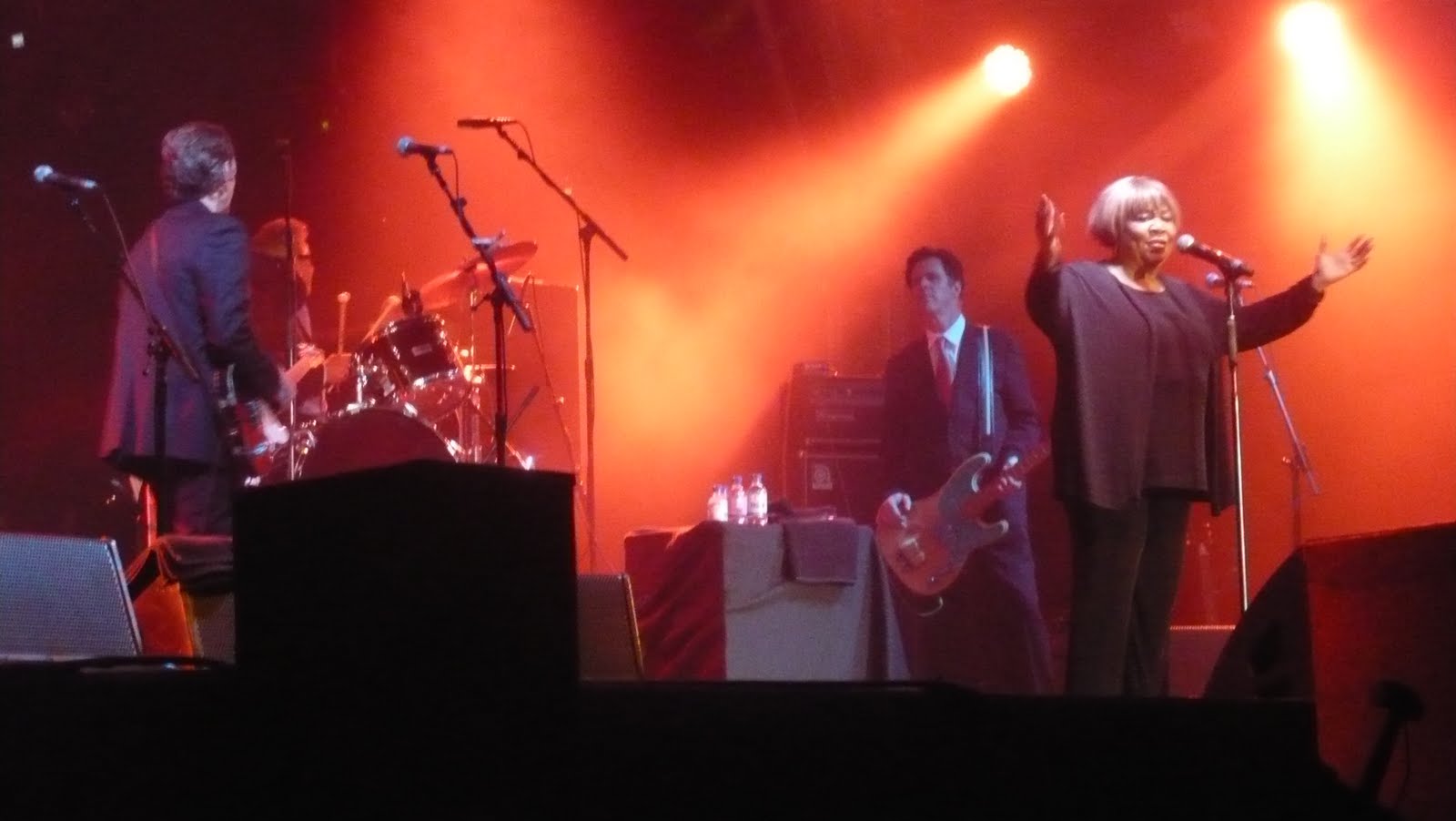
The wonderful closing set by Mavis Staples was an object lesson in overcoming generational barriers. The 72 year old needed a rest and a cup of tea midway through her high energy set but either side of this instrumental break shared a lifetime's faith and commitment to Christ and civil rights through the blend of gospel, soul and social action which characterised the oeuvre of the Staple Singers from their links with Dr Martin Luther King to their Stax classics and beyond. The celebration and challenge of her set and songs was summed up in the closing 'Eyes on the Prize' from her classic album We'll Never Turn Back, which uses the story of Paul and Silas' miraculous release from prison as enouragement to hold on in our search for freedom now:

"Well, the only chains that we can stand
Are the chains of hand in hand
Keep your eyes on the prize, hold on
Got my hand on the freedom plow
Wouldn't take nothing for my journey now
Keep your eyes on the prize, hold on!"

In between all this, I also: took part in the Photo Flash Swap; viewed the Angels of the North, Lumia Domestica, and Methodist Art Collection exhibitions; discovered the poetry of Padraig O'Tuama; listened to Phyllis Tickle on Emerging Church, Jari Moate on his Paradise Now novel, Meryl Doney on curating exhibitions, Mark Pierson on curating services, and Luke Walton and Nick Park on film; saw the Ikon performance 'based on a true story'; and saw stellar sets from Milton Jones, Rob Halligan, Gordon Gano and the Ryans, Duke Special, Beth Rowley, Kate Rusby and The Unthanks. 

The thoughts and reflections of some of my friends who were also there can be found here, here and here.

-----------------------------------------------------------------------------------------

The Geese - Cola Cans.

Tuesday, 30 August 2011

The Acts of the Apostles


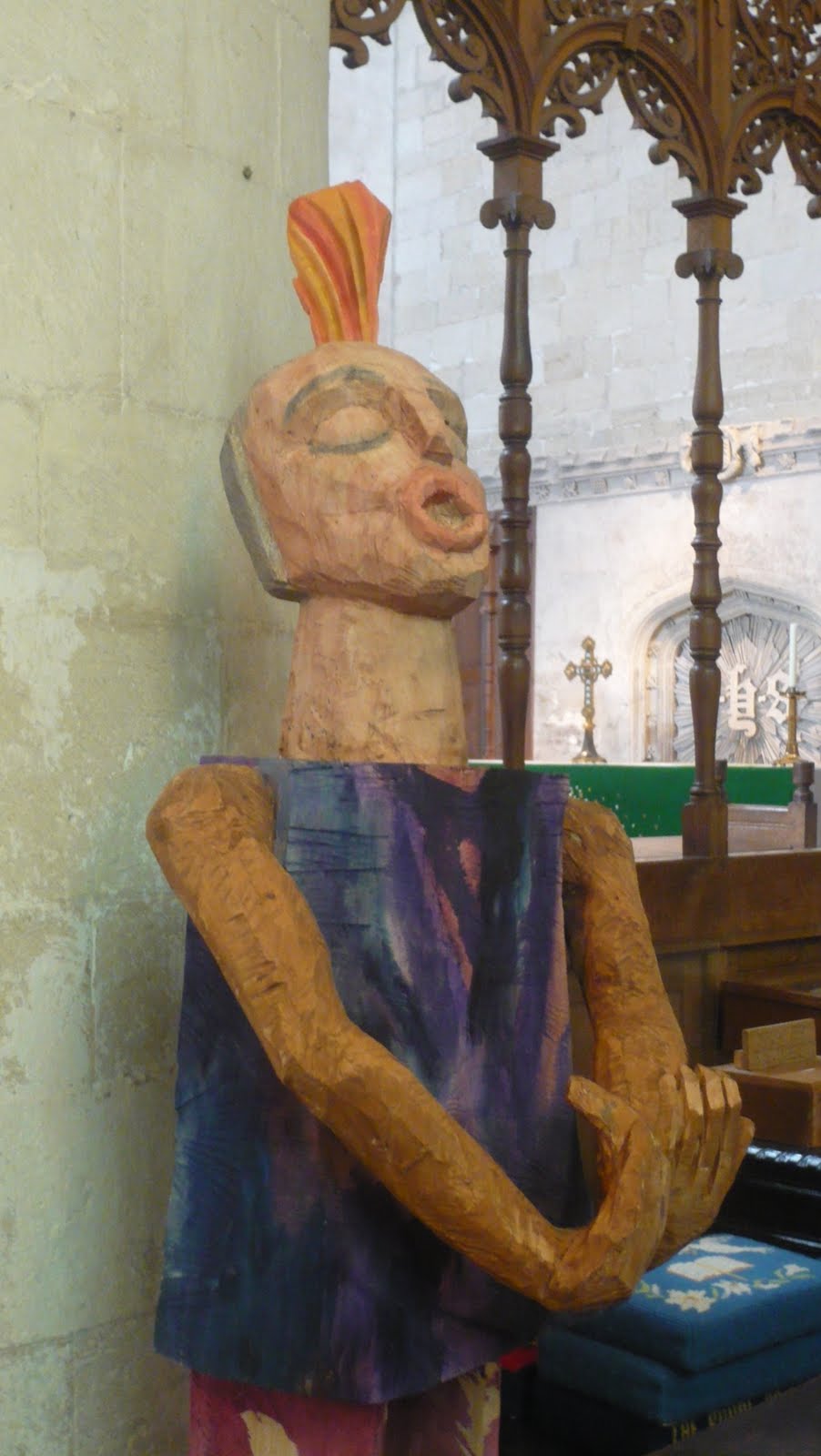
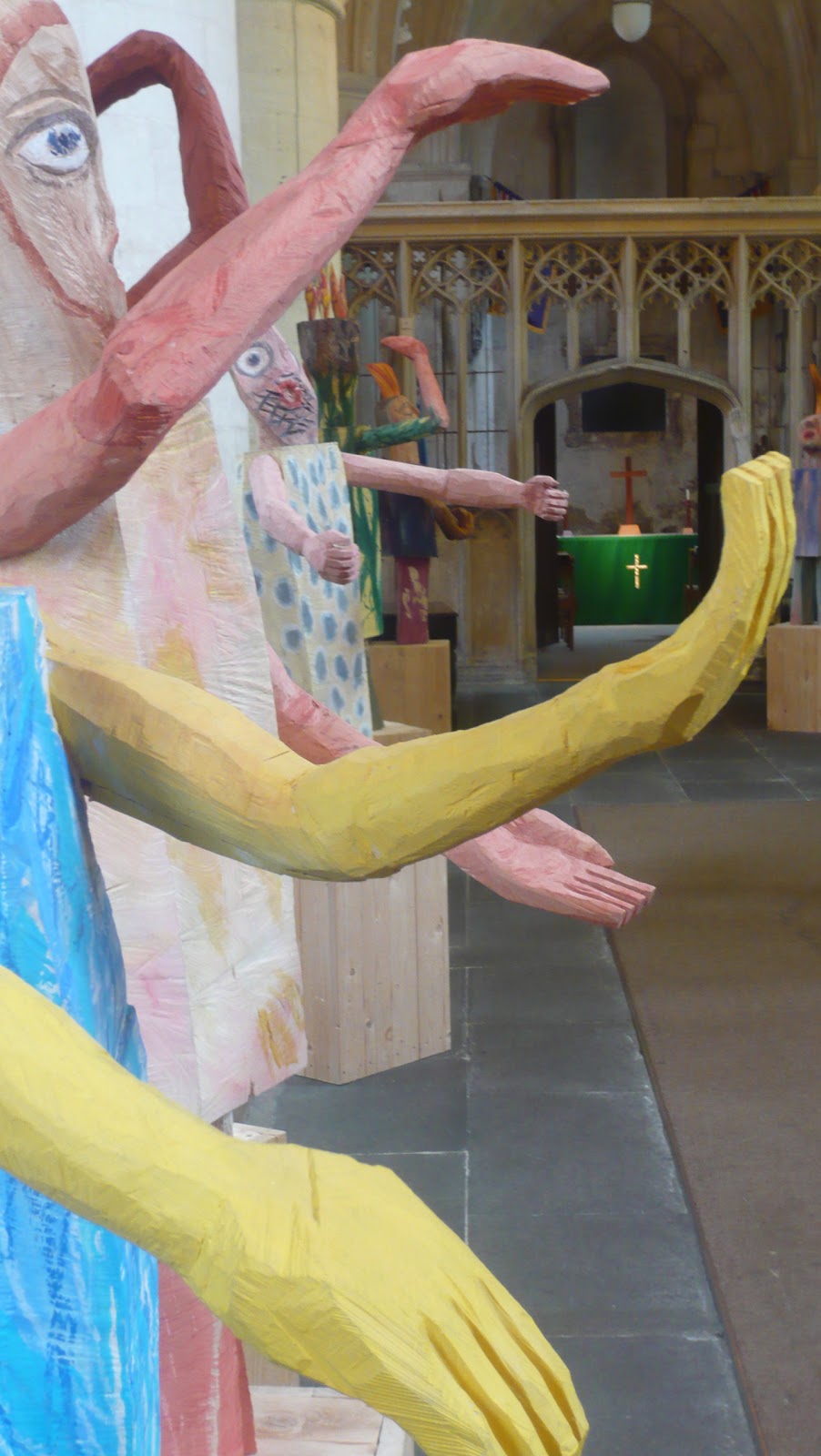
The Acts of the Apostles by Ulrich Lindow is currently at Malmesbury Abbey. Sculptor Ulrich Lindow works in northern Germany near Malmesbury's twin town of Niebüll. His The Acts of the Apostles installation is "a dramatic re-enactment of the events narrated in the New Testament." Lindow has imagined a red glow from the tongues of flame reflected in the colouration of the rough hewn faces of his disciples.

---------------------------------------------------------------------------------------------

Bill Mason Band - Stand Up And Be Counted. 

Windows on the world (159)


Malmesbury, 2011

---------------------------------------------------------------------------------

Gungor - Beautiful Things.

Thursday, 25 August 2011

Radical Compassion


This autumn the Educational Programme series at St Martin-in-the-Fields looks particularly interesting both because of the topic and speakers chosen.

Radical Compassion: The Gospel and Social Justice seeks to examine the radical implications of Christ’s life and transforming compassion in relation to issues of social justice. What is Christ saying to the poor, marginalised, and the struggles of our time? Can we rediscover a theology of liberation for today?

The lectures will take place in St Martin-in-the-Fields Church from 7.00pm – 8.30pm. They are free and no booking is required. There will be a retiring collection to cover some of the costs of the programme.

Monday 19 September: The Revd Professor Nicholas Sagovsky: Compassion and Justice - Professor Nicholas Sagovsky’s experiences in advocacy and justice for refugees and asylum seekers as a member of both the Independent Asylum Commission and the Churches Refugee Network provide the basis for his discussion of the Gospel in relation to issues of social justice.

Monday 3 October: Revd Clare Herbert: Compassion and Protest - As an ‘out’ lesbian priest and active campaigner on behalf of gay and lesbian Christians, Revd Clare Herbert has plenty of experience in fighting for what she believes in.  This lecture will explore the ways she has come to terms with needing to express both protest and compassion.

Monday 17 October: Neil MacGregor: Compassion and Art - In this lecture the Director of the British Museum uses images to help us enter more profoundly into our understanding of the radical compassion of Christ captured in some of our greatest art treasures, whilst asking the question: Can these works of art speak to our present and deepen our own compassion and humanity?

Monday 31 October: Nicola Slee: Compassion and Empowerment - As a poet and theologian who has looked extensively into the relationship between women and spirituality, Nicola’s lecture will address how the radical compassion shown throughout the gospel can lead to female empowerment.
  
Wednesday 16 November: Terry Eagleton: Compassion and Power - Widely regarded as Britain’s most influential literary theorist, Terry Eagleton will consider the contemporary relevance of the Gospel’s critique of power and the use of violence, drawing on themes discussed in his 2010 Richard Price Memorial Lecture ‘The New Atheism and the War on Terror’.

Monday 20 February: Dr Robert Beckford: Compassion and Freedom - Dr Robert Beckford is one of the most prolific black documentary presenters in Britain and will use his knowledge of racial tension to discuss Christ’s radical compassion in relation to freedom.
-------------------------------------------------------------------------------

Marvin Gaye - Save The Children.

Art that tells the story

Art That Tells the Story is a new book by Christopher Brewer which seems interesting for several reasons. First, it includes a range of evocative art. Second, it tells the story of the Bible in terms of Creation, Fall, Redemption, and Consummation iniating a conversation about the Story God is telling. Third, because the book is an example of Gospel through shared experience, a conversation about reinventing evangelism for a postmodern world. 
Here is an article about the book from ImageUpdate:

"Art That Tells the Story, is exactly what its title indicates: page after page of precisely curated visual art, coupled with bible verses that tell the “grand old story” with grace, drama, and spiritual acuity. The pieces Brewer chooses are not simple illustrations of their accompanying verse; instead, they embody the living narrative and continuing discussion of these biblical moments. Each piece builds on what has come before, inviting the reader into a growing conversation about both the art itself and its place in the narrative whole. As Makoto Fujimura says in the book’s foreword, “Art is about asking questions more than giving straight answers.” Brewer separates the art, story, and questions into four sections: Creation, Fall, Redemption, and Consummation. “Creation” compares the physicality of our world and the physicality of art—we see the breath of life lifting Adam off the ground in a bronze sculpture by Clay Enoch and feel the text of Genesis 1:2 nearly melt as it ripples across the pages of a mixed-media ‘book’ by Sandra Bowden. “Fall” is bookended by dramatic oil and acrylic pieces by Wayne Forte, which show the pain of Adam and Eve’s expulsion and Cain’s betrayal through thick red and black lines. In “Redemption,” the book’s longest section, the story moves from the flood to Paul’s letters. Brewer contrasts photorealistic paintings, like Jonathan Quist’s reimaginings of Moses and David, with Julie Quinn’s Access, an abstract acrylic piece in light blues and grays that is linked to Romans 5:1. Finally, in “Consummation,” the eye turns to the apocalyptic future of the biblical story, highlighted by Scott Laumann’s block prints that show the reader bold, primary-colored representations of heaven in an open palm and hell in a closed fist. An afterword by Alfonse Borysewicz brings the themes of the entire book into further focus, as he discusses the transformative process of faith-based art on a biblical and personal level. Borysewicz’s four Emmanuel paintings carry viewers through Christ’s life story but are also reflections of Borysewicz’s own artistic journey of rebuilding. Through each of these themes and explorations, Brewer’s descriptions and page layouts remain sparse. It is in these empty spaces that Art That Tells The Story ultimately encourages our deeper exploration of the true mystery and ephemeral nature of biblical art."

--------------------------------------------------------------------------------------------

Duke Special - Portrait.

Update: exhibitions and articles


Earlier this month I visited St Paul's Harlow to take more photographs in my Windows on the world series. I will be showing a selection of these photographs at St Paul's during the Study Day on the value of public art which is to be held there on 17th September. I will also have work included in the next commission4mission exhibition to be held at St Mary Magdalen Billericay from 9th - 18th September (10.00am - 5.00pm), an exhibition which is being organised for the A127 Art Trail. During this same period I will be showing some new paintings together with some older pieces in the commission4mission exhibition space at All Saints West Ham.

I have recently discovered that several more of my articles for Art and Christianity are now available online. The following reviews can be read by clicking on the links: God in the Gallery; Memória Roubada; Oona Grimes Conversations with Angels; Reunited: Gwen John, Mère Poussepin and the Catholic Church;
"Resurrection" at Saint Mary's Church in Bury Saint Edmunds; and Richard Layzell and Tanya Koswycz.

----------------------------------------------------------------------------------

Idlewild - Love Steals Us From Loneliness.


Olympics Prayer Walk


A series of prayer walks is being organised to pray for and around the Olympic Park in East London.

The prayer walk on Saturday 1st October will be focussed on Stratford and the major gateway into the park through the newly opened Westfield Stratford City Shopping Centre. It is expected that 70% of the hundreds of thousands visiting the park during the Olympics will use this entrance.

Those attending will be briefed by David Richards, Vicar of St John’s Stratford, and by Julia Murphy, Coordinating Chaplain to Westfield Stratford City. Starting at St John’s Stratford on the Broadway the walk will conclude with prayer in Inspiration – the Quiet Space in Westfield Stratford City.

The full programme is as follows:

10.00 am - Arrive by 10.00 am please at St John’s Stratford - David Richards to give briefing.
10.15 am - Pray for St John’s and other Stratford Churches in the ‘churchyard’.
10.30 am - Walk to and pray for Stratford Cultural Quarter. Walk through and pray for Stratford Mall [Local shopping centre]. Pray for Transport and the Olympics from opposite Stratford Station.
11.00 am - Arrive Westfield Stratford City Shopping Centre - Julia Murphy to give briefing. Walk over the bridge and through Westfield Southern Boulevard which will be the main entrance to the Olympic Park to vantage point overlooking the Park. Pray for the Olympic and Paralympic Games.
11.30 am - Adjourn to Inspiration the Westfield Stratford City Quiet Space where we will pray for the ministry there and for Julia Murphy.
12.00 pm - Depart.
Please pass this on to those who would be interested – no need to book - just come to pray - whatever the weather!

-----------------------------------------------------------------------------------------------------

Delirious? - Sanctify.