Wikio - Top Blogs - Religion and belief

Saturday, 8 December 2018

Windows on the world (424)


Kelveden Hatch, 2018

------------------------------------------------------------------------------------

M Ward - Miracle Man.

Sunday, 2 December 2018

Foyer Display: Inga Tolchard


‘The drummers’ (2015, acrylic on canvas, 92cm x 62cm) and ‘The fan girls’ (2015, acrylic on canvas, 80cm x 60cm) by Inga Tolchard

St Martin-in-the-Fields is home to several commissions and permanent installations by contemporary artists. We also have an exciting programme of temporary exhibitions, as well as a group of artists and craftspeople from the St Martin’s community who show artwork and organise art projects on a temporary basis.

One of the initiatives from this group is a changing display of work by the group members or artists linked to the group. Each month a different artist shows examples of their work, so, if you are able, do return to see the changing display.

Inga Tolchard is a London/Kent based artist. This pair of paintings is set in Bermuda and show a local parade in Hamilton. The paintings, showing local Bermudians, are based on reference photographs taken in Hamilton.

-----------------------------------------------------------------------------------------------

David Axelrod - Songs Of Innocence.

Saturday, 1 December 2018

3 Psalms, Art Songs & Spirituals, Spiritual Jazz

Andy Mackay says of his new recording 3 Psalms: 

"I have long been fascinated by this collection of ancient poetry and song which has permeated our cultural life. I have tried to reflect this by using the original Hebrew and Latin - the language in which they were written - as well as 17th Century English of the Book of Common Prayer. People of faith will find themselves in familiar territory of prise and mystery and worship while atheists and agnostics can join the extraordinary debate in which the Psalmists sometimes turn from a feeling that God is totally absent or unknowable to arguing with Him because He isn’t doing what they want!"

Free jazz pioneer and civil rights activist Archie Shepp is presenting a new project revisiting his ‘60s output where he explored both his connections to Africa and the civil rights movement that swept America. Kevin le Gendre noted that the spirit of protest "pervades the black church, a haven for African-Americans and touchstone for Civil Rights activists": 

‘Absolutely, you can’t really separate them from the periods that inspired them... slavery, oppression, injustice, he says before putting the current incumbent of the White House in the dock. ‘We’ve always needed spirituals. Donald Trump only represents problems that have existed in our society for centuries. It would be impossible for Trump to have found so much support and so many ears willing to listen without the fact that he was working in fertile soil. Racism and prejudice was already there and he was very much on time for those people who have so long courted fascist ideas. He’s not alone in the world. If we look at Austria and Europe (Sweden of late) in general (at what’s happening there, it’s frightening).'"

Goin' Home is a studio album by Shepp and pianist Horace Parlan. A jazz and gospel album, Goin' Home features Shepp and Parlan's interpretations of African-American folk melodies and spirituals. Its title is an allusion to Shepp's return to his African cultural roots. Shepp had never recorded spirituals before and was overcome with emotion during the album's recording because of the historical and cultural context of the songs.

The rise of Kamasi Washington and his 3-volume album “The Epic” marked an interesting point in recent jazz history as increasing numbers of jazz musicians started exploring spiritual jazz, where the divine meets spontaneity, expressiveness, and eclecticism. Stingray DJAZZ has highlighted five spiritual UK jazz acts:
  • Maisha: Drawing influences from the music of Alice Coltrane, Pharoah Sanders, as well as West African and Afro-Beat rhythms, the act released their debut EP “Welcome To A New Welcome” in 2016. Led by the drummer Jake Long, Maisha also features one of the biggest raising jazz stars - saxophonist Nubya Garcia.
  • Shabaka Hutchings: The virtuoso saxophonist, composer, and musical leader, Hutchings has been exploring the spirituality aspect in jazz via most of his musical projects: Sons of Kemet, The Comet is Coming, as well as Shabaka And The Ancestors. His sound has been inspired by many elements found across African continent.
  • Matthew Halsall: Trumpeter Matthew Halsall is probably the most spiritually sounding trumpeter on the jazz map right now. His music has this mesmerizing atmosphere that blends less conventional instruments such as a harp, or flute, together with distinct percussive sounds, slow tempos, and modality. The type of jazz played by him has its roots in different qualities of life: calmness, mindfulness, and above all - spiritualness.
  • Dwight Trible: Dwight Trible has shaped a unique and spiritually saturated sound. Having performed with artists, such as Pharoah Sanders and Kamasi Washington, Trible is perhaps the only true spiritual jazz singer out there at the moment, which gives him a cult status among many jazz fans as well as like-minded musicians.
  • Nat Birchall: One of the lesser known spiritual jazz musicians on the list, Nat Birchall, released his first spiritual jazz record in 1999. Ever since, the saxophonist has been an active member of the UK jazz community. His latest release “Cosmic Language” (Jazzman Records, 2018) combines the already established spiritual jazz elements with classical Indian music, meditation, as well as his favorite instrument - harmonium. Yet, it is the small pump up organ that really defines the sound of Brichall’s music at this moment, giving it Zen-like atmosphere and filling it with the particular energy, which can only be found among classic spiritual jazz musicians, such as Alice Coltrane or Pharoah Sanders.
-------------------------------------------------------------------------------------------------

Archie Shepp & Horace Parlan ‎– Goin' Home.

Windows on the world (423)


Pollenca, 2018

---------------------------------------------------------------------------------

Sam Phillips - Teilhard.

Friday, 30 November 2018

The micro and the macro

The micro and the macro can be contrasted through exhibitions of photography at the Large Glass and Flowers Galleries.

Guido Guidi: Per Strada is a selection of 27 prints by the Italian photographer, to coincide with the publication 'Per Strada’. These photographs were made by Guidi from 1980 to 1994, along the Via Emilia – an ancient Italian road connecting Milan with the Adriatic Sea, which passes close to his home in Cesena.

Guidi's métier is close observation of ordinary things - the peripheral, the overlooked and ordinary - and this is what constitutes beauty and life both on and around the via Emilia, as he explained in a recent interview:

"It is a way of bowing down before things. And that is the religious aspect, a respect for things, for the blade of grass and wanting to give back by means of a precise photograph, where the execution of the detail is perfect, absolute, with no grain. The photograph must be absolute, transparent and cannot be corrected and reviewed later. As Didi-Huberman says, for the ancient painters of the 1400s, the act of imitagere or copying nature was in itself an act of devotion. Not necessarily mastery or technical virtuosity but an act of devotion towards things, the “things which are nothing” as Pasolini says.”

For Guidi, as Charlotte Higgins has remarked, ‘his work is not about the decisive moment but the “provisional moment” – the idea that this moment is one of a procession of many.[i]’ Very often, his images ‘show some kind of aperture – a doorway, a window, the arches of a portico, even the edge of the lens itself.’ A photograph is a frame, he says, ‘and if you put a frame in the picture, you are suggesting that this is not the whole world, that there is something outside.’ As with his close observation of the peripheral and provisional, this device too has a religious aspect, as these photos
direct our attention to what is beyond.

By contrast, the images in Civilization are primarily of cityscapes and crowd scenes taken from height and capturing pattern and movement on the macro level. Visually epic, this exhibition includes: Edward Burtynsky’s images conveying both the sublime aesthetic qualities of the industrialised landscape and the unsettling reality of depleting resources on the planet, through a series of geometric compositions photographed from the air; Nadav Kander exploring the vestiges of the Cold War through the radioactive ruins of secret cities on the border between Kazakhstan and Russia; Robert Polidori creating meticulously detailed, large-scale colour photographs that capture the vestiges that evoke the essence of each setting and its particular meaning, as framed by economic, historical, geographic, political and social forces; Simon Roberts’ conflating the traditional genre of landscape with social documentary by positioning the camera at a deliberate distance and elevation from the most obvious scenic viewpoint, focusing instead on the sidelines or peripheral spaces; and Michael Wolf focusing on life in mega cities documenting the architecture and the vernacular culture of metropolises.

Our fast-changing world is seen from above revealing the complexity of our collective human enterprises which are perpetually evolving, morphing, building and demolishing, rethinking, reframing and reshaping of the world and the people within it. Never before in human history have so many people been so interconnected, and so dependent on one another.

As with the Guidi exhibition, Civilisation is presented to celebrate the launch of a new publication - Civilization, The Way We Live Now by William A. Ewing and Holly Roussell, published by Thames & Hudson.

These contrasting exhibitions show the differing values of close-up, which reveals ‘heaven in ordinarie’ and hints at the beyond, and also of the wide angle city or landscape, revealing the patterns forming the material and spiritual cultures that make up ‘civilization’.

----------------------------------------------------------------------------------------------
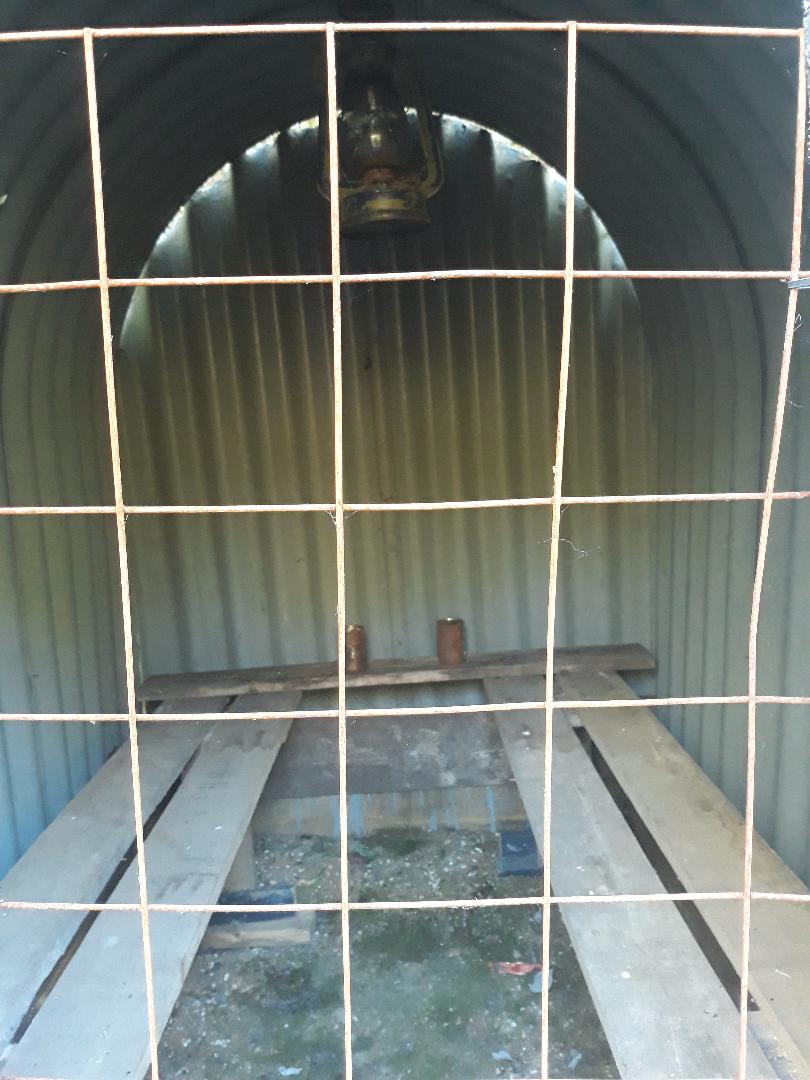
Small Faces - Afterglow Of Your Love.

Thursday, 29 November 2018

HeartEdge Mailer | November 2018

HeartEdge Mailer | November 2018

This month:

HeartEdge events in Hamilton, London and Edinburgh in 2019, plus:

Ann Morisy on mission, Jane Williams on Advent, Vanessa Herrick on vulnerability, Rosie Ward on meetings, Mike Pears on transgressing and Barbara Glasson on balance.

Plus making the café financially viable, a 'Street Wisdom' business, making community spaces work, 'start-up' grants and... Gin!

Also spotting & responding to domestic violence, the 'Edge Fund', How to Collaborate, Musicians Church & painting the divine.

Plus Sam Wells on being with other faiths and Sami Award on space for healing in Palestine.

The church is getting smaller. The church is getting narrower. HeartEdge asks, ‘How do you feel about that? What are you doing about it?’ – and provides ways to turn convictions into actions.

Churches that join HeartEdge collaborate and support each other. We work to become vibrant, welcoming and dynamic signs of hope and contributors to civil society. Together we share expertise on key areas of renewal:
  • Culture – hosting and participating in music, art, and performance 
  • Commerce – generating funds through business ventures, balancing profit with social impact
  • Congregation – staying broad and going deep
  • Compassion – meeting Christ in the stranger and being renewed by those on whom the world has turned its back
HeartEdge is a growing interdenominational movement of churches, offering models for renewal of the church. Join HeartEdge here.

---------------------------------------------------------------------------------------------------

Sarah Jarosz - Ring Them Bells.

Tuesday, 27 November 2018

Artlyst interview: Peter Howson

A central member of the group of young artists to emerge from the Glasgow School of Art during the 1980s dubbed the New Glasgow Boys, Peter Howson has become one of his generation’s leading figurative painters. In his current exhibition with Flowers Gallery, Howson uses his apocalyptic vision of violence and inhumanity to explore his fears of contemporary radical right-wing politics.

Howson is unusual among mainstream artists in his unashamed use of traditional religious iconography and application of a Trinitarian framework to his artistic practice.

I have interviewed him for Artlyst and have also reviewed Acta Est Fabula, his current exhibition. The interview can be found here and the review here.

Howson says: 'I want my paintings to reveal to the onlooker the folly of believing in some kind of scientific utopia that we are all heading towards. We embraced death in the past, but cannot do it now. We knew the darkness in our hearts in times past, and we feared judgement.'

------------------------------------------------------------------------------------------------

Good Charlotte - We Believe.