Wikio - Top Blogs - Religion and belief

Sunday, 4 December 2022

Advent and Christmas resources

'Come, Lord Jesus, Come' is an Advent devotional (booklet & slideshow) by Victoria Emily Jones based on an Advent meditation written by myself. Each line of the meditation focuses on one aspect of Christ’s coming. To promote deeper reflection on all these aspects, Victoria has selected twenty-four art images to lead the way in stoking our imaginations and to provide entry points into prayer. She has taken special care to present art from around the world and, where possible, by modern or contemporary artists so that we will be stretched beyond the familiar imagery of the season.

Victoria writes: 'Art is a great way to open yourself up to the mysteries of God, to sit in the pocket of them as you gaze and ponder. “Blessed are your eyes because they see,” Jesus said. Theologians in their own right, artists are committed to helping us see what was and what is and what could be. Here I’ve taken special care to select images by artists from around the world, not just the West, and ones that go beyond the familiar fare. You’ll see, for example, the Holy Spirit depositing the divine seed into Mary’s womb; Mary with a baby bump, and then with midwives; an outback birth with kangaroos, emus, and lizards in attendance; Jesus as a Filipino slum dweller; and Quaker history married to Isaiah’s vision of the Peaceable Kingdom.'

Through 'Come, Lord Jesus, Come' you are invited to consider what it meant for Jesus to be born of woman—coming as seed and fetus and birthed son; the poverty Jesus shared with children around the world; culturally specific bodies of Christ, like a dancing body and a yogic body; how we are called to bear God into the world today; and more.

Victoria writes: 'Advent takes us back and brings us forward. In preparing us to celebrate Christ’s first coming, it places us alongside the ancient prophets, who awaited with aching intensity the fulfilled promise of a messiah, and Joseph and Mary, whose pregnancy made the expectation all the more palpable; it also strengthens our longing for Christ’s second coming, when he will return to fully and finally establish his kingdom on earth ... May God bless you this Advent season as you ponder the amazing truth of the Incarnation.' 

The alternative Nine Lessons (see below) is a poetic meditation drawing on the thinking of René Girard in interpreting the Bible readings traditionally used in services of Nine Lessons and Carols:

Nine Lessons

Genesis 3: 8–19

Hard labour in birth and work, sweat on our brow,
dirt on our hands. Thorns and thistles to prick and sting,
like death from a serpent's tongue,
till we return to the ground,
ashes to dust and dust to ashes.

Genesis 22: 15–18

A sense of sacrifice required;
the death of children appeasing the divine.
An alternative is found - ram caught in thicket,
wool held by thorns. Animals become
the scapegoats for our sins.

Isaiah 9: 2; 6–7

Light in darkness promised
through the hard labour of the birth of a child.
A child bearing peace and goodwill,
bringing justice and righteousness
without end and without measure.

Isaiah 11: 1–3a; 4a; 6–9

A little child leading us to reconciliation.
From nature red in tooth and claw -
survival of the fittest - to peaceful co-existence.
Carnivores to herbivores, the drawing of the sting
from the serpent's tongue.

Luke 1: 26–35; 38

Highly favoured as the Spirit overshadows.
A virgin birth - subverting patriarchy -
of a son who will not marry or have blood offspring.
The saying of 'yes' to God opening
the way of the family of God to one and all.

Luke 2: 1; 3–7

No room for the Lord of life, Prince of peace.
Space shared with animals kept for sustenance;
the sacrifices of existence and forgiveness.
Born into poverty; the struggle for survival
that this child will one day redeem.

Luke 2: 8–16

Angelic announcement of peace and goodwill
come in the form of the child found
by night workers, swaddled and lying in a manger.
His mother ponders these things -
annunciation, nativity, incarnation - in her heart.

Matthew 2: 1–12

Star following Magi look for the Prince of Peace
in the heart of power and opulence
only to find him in obscurity and humility.
Gifts given prefigure his divinity and sacrifice, the servant King
who, in birth and death, gives his life for others.

John 1: 1–14

Creative word now created, enfleshed, incarnated.
Divine life flowing in and through this child.
Light in darkness, revealing our passion
for power, position and personal gain.
In poverty, a counterpoint is born - compassion.

Giles Fraser, in the wake of the death of Girard and the Paris attacks, recently summarised Girard's thinking:

'The anthropologist René Girard died earlier this month, at home in California. A Frenchman, he did not live to see the latest violence in his home country. But, in a sense, he had been working on it his entire professional life. For no modern thinker has done more to understand the self-repeating patterns through which violence flows. And there can be no more disturbing conclusion than his, especially now: that violence is a form of copying, that violence is contagious, and that, as he put it: “Violence is like a raging fire that feeds on the very objects intended to smother its flames.”'

'Girard’s answer to mimetic violence is that we must break the cycle by refusing to mirror our enemies. Indeed, his rejection of an eye for an eye and a tooth for a tooth is not hand-wringing pacifism – it is bloody-minded, hard-nosed defiance; a refusal to be defined by the violent other, a refusal to answer back in kind.'

'Girard goes on to argue that the most vociferous critic of religion turns out to be a Jewish prophet called Jesus of Nazareth. Girard understands the ministry of Jesus to be that of deliberately standing in the place of the innocent victim thus to reveal the profound wickedness of the whole scapegoat mechanism. And as he is strung up to die, the violence of religion is exposed in all its gruesome destructiveness. Forget Dawkins or Harris – according to Girard the greatest critic of religion was Jesus himself.'

--------------------------------------------------------------------------------------------

Low - If You Were Born Today.

Next Step Creative: The Encounter


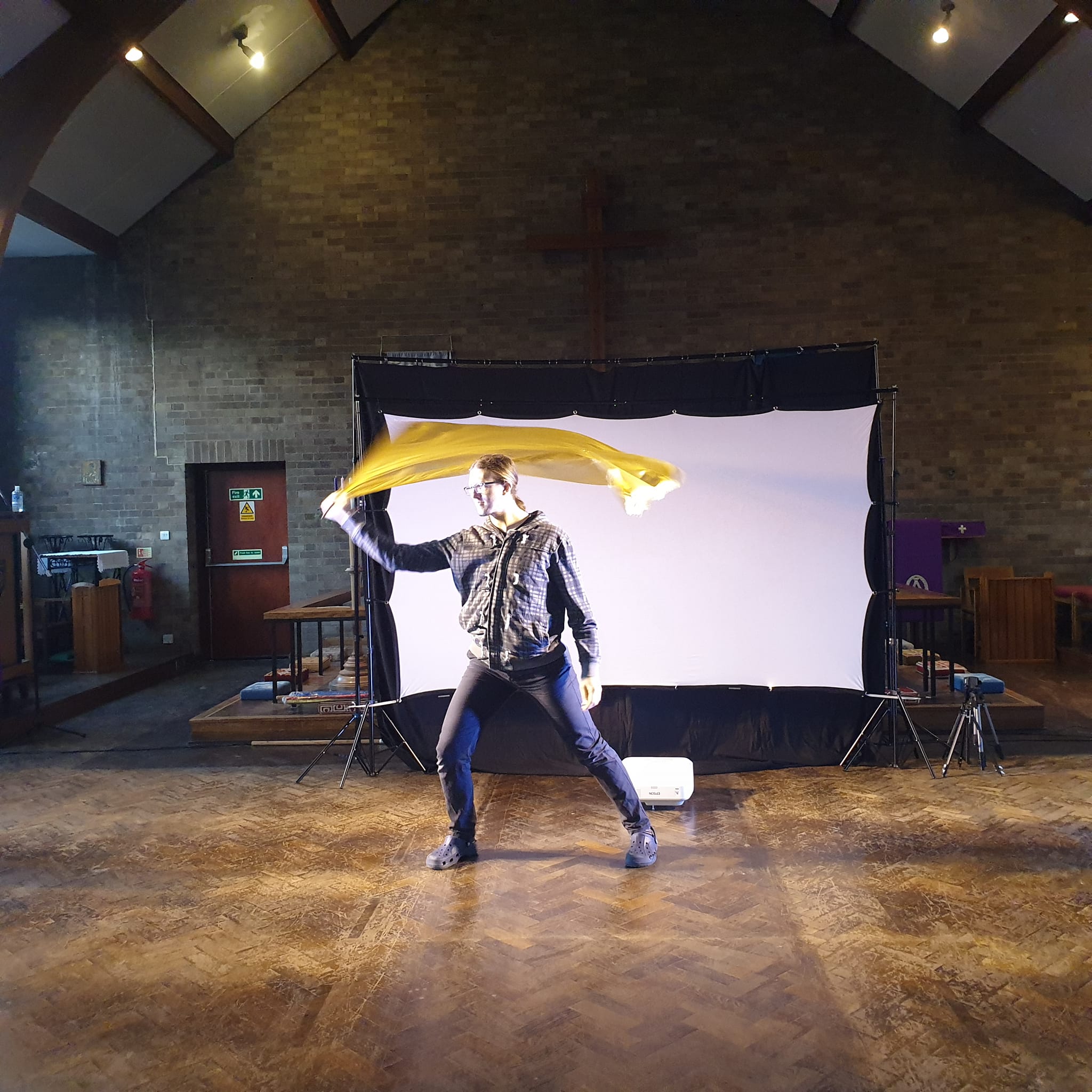
On Friday our first term of Unveiled events at St Andrew's Wickford ended with a wonderful evening in which Next Step Creative's Steven Turner performed The Encounter, a show that explores the story of Christmas in a fresh way using dance and mime. Through the show we experienced a variety of Christmas stories in contemporary and engaging ways for the whole family. The performance was a creative mix of multi media and physical theatre appealing to a variety of ages. This was a great community event with a range of dynamic and engaging pieces, including Mime, Contemporary, Ribbons, Ballet, and Banners combined with bespoke video graphics. 

Steven Turner has trained in a variety of dance styles, including contemporary, street, mime and moving with props. He attended a Laban boys course, as well as attending summer schools with companies including Springs Dance Company, Movement in Worship and Chantry Dance Company. In recent years Steven has founded his own organisation, Next Step Creative, to promote collaboration between dance and other creative arts. Regularly choreographing and teaching for Dance 21 (a dance company for children and young adults with Down’s syndrome). He has performed at Project Dance Paris and travelled to Rotterdam to teach in connection with his role as ICDF Refresh Coordinator. He has performed across the UK and Europe including Switzerland, Netherlands, Denmark, Germany, and France.

Next Step Creative is a relational organisation with a vision to create a platform to support creative people. Working within the UK and internationally using multi media, live performances, workshops and teaching; making their artists work more accessible through a collaborative online shop.

2023's Unveiled events will begin with:
  • From Rettendon Turnpike to Halls Corner: A Journey in Time, A talk by Geoff Whiter of Wickford Community Archive, Friday 13 January, 7.00 pm.
  • The Blind Jesus (No-one belongs here more than you): Exhibition viewing evening, Friday 27 January 2023, 7.00 – 9.00 pm. See this exhibition of Last Supper images created by: Alan Stewart; (Still) Calling from the Edge conference; WAVE (We are All Valued Equally); & Schools in Hampstead and Barnet. Hear from artist Alan Stewart, project lead Celia Webster (co-founder of WAVE), and Revd John Beauchamp, Disability Ministry Enabler for the Diocese of London. The Blind Jesus (No-one belongs here more than you) has been commissioned as part of a project in which it seeds other images of the Last Supper that are truly for everyone. Schools, churches and community groups are invited, as part of this project, to create their own Last Supper images.
---------------------------------------------------------------------------------------------------------------

Steve Taylor - Innocence Lost.

Living God's Future Now: Kingdom Conversations


Living God's Future Now: Kingdom Conversations by Samuel Wells (Canterbury Press, £17.99; 978-1-78622-415-6).

"Arguably the most imaginative and energetic church response to the pandemic has been that of HeartEdge, the interdenominational church renewal movement founded at St Martin in the Fields by Samuel Wells but now extending beyond the UK to Europe, North America and Australia.

From serving thousands of meals on London's streets to becoming, in all but name, an online conference centre and theological college offering hundreds of events, one outstanding feature of its programme has been Samuel Wells' monthly conversations about the future of the Church with leading figures from Britain and America, attended by large online audiences.

This volume offers a distillation of those conversations which, instead of being preoccupied with decline, focus on what Christian presence and practice might look like in the world that is being reshaped by what the pandemic has revealed, and the theology that is needed to sustain such a vision."

HeartEdge is an international and ecumenical movement for renewal of the broad church. It aims to catalyze kingdom communities that use the 4 Cs of compassion, culture, commerce and congregation to connect with the ways in which God is already at work in the wider world and get involved.

The story of how HeartEdge grew through the pandemic (including the monthly Living God's Future Now conversations with Sam Wells and guests) is told in a chapter of  Finding Abundance in Scarcity: Steps towards church transformation. At the Launch of Finding Abundance I said the following about that time:

"Our activity during the pandemic has helped us grow to having over 1,300 partners across the UK and in other countries including The Netherlands, the US, Southern Africa, and Australia. We’ve become more ecumenically diverse and we begun developing a network of hub churches to be a more local embodiment of HeartEdge, with hubs currently in Amsterdam, Edinburgh, Leeds, Liverpool, Manchester, Norwich, and Southend.

Through the pandemic we lost our ability to connect with people in their buildings and local communities but we gained an online programme of workshops and seminars that explore the 4 Cs in the context of current challenges. Our events introducing HeartEdge and the 4 Cs and our consultancy days with individual churches and parishes exploring mission had to stop or change but, in their place, came more frequent gatherings to reflect on experience and theology and provide support in the pandemic. We have also shared resources like Inspired to Follow: Art and the Bible Story which uses art from the National Gallery to explore bible stories and, once launched, will do the same the new Being With course. Fundamentally, we are a network which connects churches for the sharing of ideas, resources and approaches. That hasn’t changed because of the pandemic but connections with HeartEdge have become broader and deeper in that time.

Here’s what some of those who have taken part have said:

‘You made it feel really safe space to be real and authentic with whatever we were facing … I didn’t feel any embarrassment. Or shame in kind of turning up, feeling in a complete and utter mess. I don’t feel any pressure to be shiny, or to try and portray a shiny story. Which is different from many church gatherings.’

‘What I really needed was a reflection on our role as a church, especially now. I desperately needed it and that’s what the group was giving me.’

‘Being part of this network is fantastic - to be linked to others wrestling with the same issues of our day is liberating and humbling and it helps me as I don't feel as alone.’

So, our experience in lockdown has been that the connections and networks which a movement like HeartEdge can provide have never been more needed. We have also found that connecting virtually though our ongoing programming and our support or practitioner groups offers the inspiration, ideas, networks and sounding boards that people need in such challenging times."

The theology of HeartEdge has been set out by Sam Wells in A Future That's Bigger Than The Past: Towards the renewal of the Church.

-------------------------------------------------------------------------------------------------------

Don McLean - Genesis (In The Beginning).

Saturday, 3 December 2022

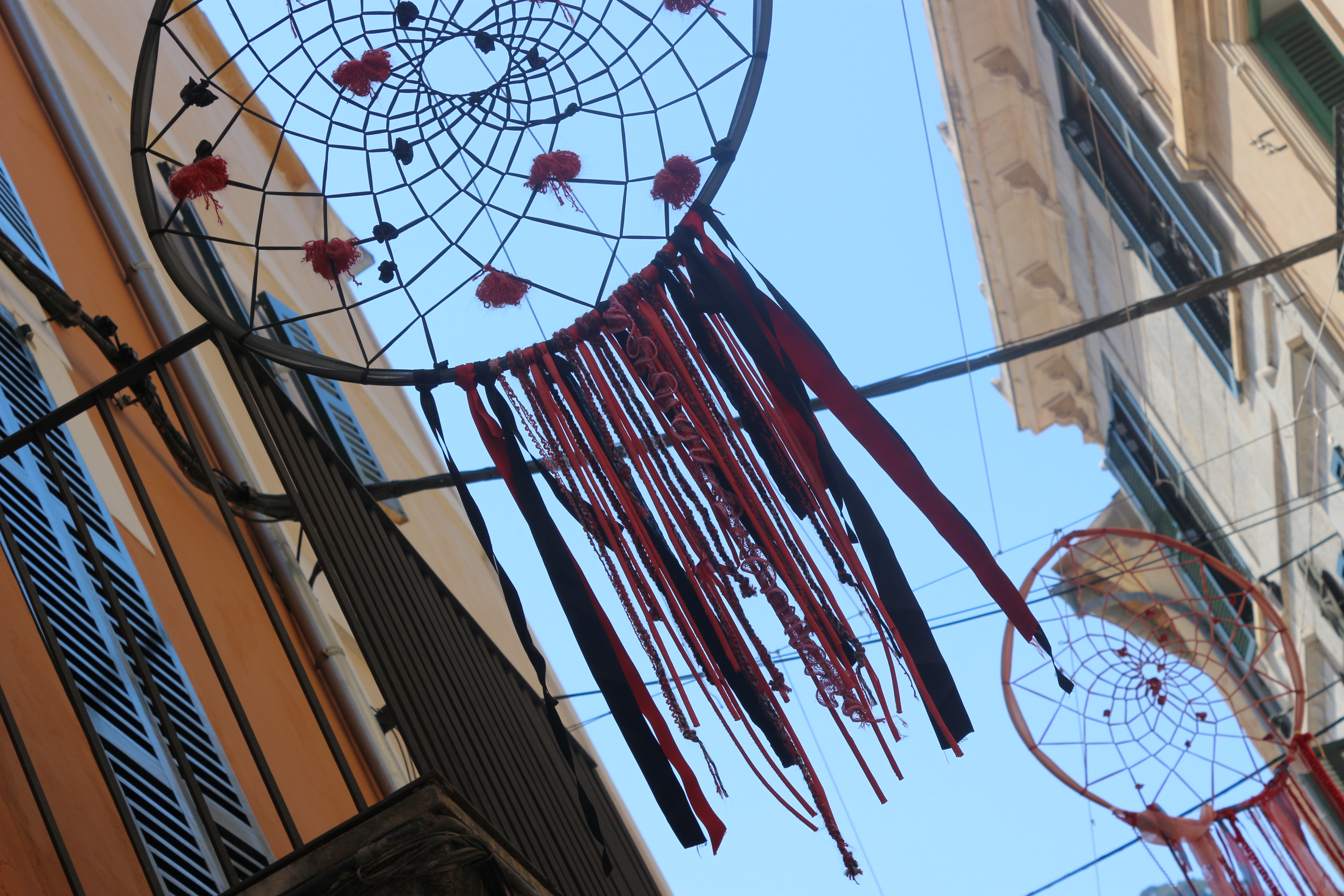
Windows on the world (403)


 Soller, 2022

---------------------------------------------------------------------------------------------------------------

Thea Gilmore - Book Of Christmas.

Thursday, 1 December 2022

Artlyst: Lucian Freud And His Circle Surveyed In Two London Exhibitions

My latest exhibition review for Artlyst is of: Lucian Freud: New Perspectives; Friends and Relations: Lucian Freud, Francis Bacon, Frank Auerbach, Michael Andrews; and Bruce Bernard: Portraits of Friends.

'The exhibitions explore aspects of the camaraderie and interrelationships of these four painters whilst also highlighting the intimate relationships between artist and sitter, including artist and lover, partner, and offspring.

While figuration, existentialism, and portraiture remain significant strands within their work, the critical debate between them, within their works, seems to have been about distortion versus clarity and fine versus broad brushstrokes. Freud moves from his crisp, clear early style, which shows a debt to Neo-Romanticism, to a much more expressive use of broad brushstrokes, presumably somewhat influenced by Bacon’s distortions, Auerbach’s layers and Andrews’ mix of loose and tight passages of paint.

Bacon distorts his portraits to reveal the underlying existential angst found within, while Auerbach’s layers serve to suggest the subject’s presence more than their features. Both operate primarily in the liminal hinterland between figuration and abstraction. Andrews and Freud, while using abstract passages, remain more fundamentally figurative artists. Andrews’ use of looser and more tightly painted passages within the same painting is a way of indicating focus and creating atmosphere. Freud, who spoke of “wanting the paint to work as flesh does,” increasingly comes to paint flesh and how flesh forms and fails us as human beings.'

My other pieces for Artlyst are:

Interviews -
Monthly diary articles -
Articles/Reviews -
---------------------------------------------------------------------------------------------------------

Michael McDermott - Hit Me Back.

Sunday, 27 November 2022

Our ultimate destination, being united with Christ

Here is the reflection that I shared during tonight's Patronal Evensong at St Catherine's Wickford:

Tradition has it that Catherine of Alexandria was a girl of a noble family who, because of her Christian faith, refused marriage with the emperor as she was already a 'bride of Christ'. She is said to have disputed with fifty philosophers whose job it was to convince her of her error, and she proved superior in argument to them all. She was then tortured by being splayed on a wheel and finally beheaded. The firework known as the Catherine Wheel took its name from her wheel of martyrdom. She is one of the Fourteen Holy Helpers, a very special group of saints known for their very powerful intercession.

Adam of St. Victor wrote a magnificent poem - Vox Sonora nostri chori – in her honour. The poem also tells her story:

Let the voices of our choir resound in praise of our Creator, who disposes all things; by whom they fight who are unskilled in war, by whose power maidens triumph over men.

Through him, the people of Alexandria stand amazed to see in blessed Catharine qualities that seem above her sex, when she vanquishes learned men by her science and the sword by her courage.

To the glory of her race she adds the precious ornaments of incomparable virtue; and noble by birth, she becomes more noble still by grace and holy living.

Tender is the flower of her beauty, yet she spares it neither labour nor study; and in early youth she masters earthly science and that which is of God.

A chosen vessel full of virtue, she considers transitory goods as mire, contemning her father’s wealth and her ample patrimony.

Filling her vessel with oil, as a wise and prudent virgin, she goes to meet the Spouse; that, ready at the hour of his coming, she may enter without delay to the feast.

Longing to die for Christ, she is led before the emperor; and in his presence, by her eloquence, puts fifty philosophers to silence.

For love of God she endures the horrors of the prison, the cruel wheel, hunger and want, and all her other sufferings; she remains unchanged through all.

The tortured overcomes her torturer, a woman’s constancy triumphs over the emperor; yea, the emperor himself is tormented, seeing both executioner and torments unavailing.

At length she is beheaded, and by death ending death, enters into the joys of life, while Angels with all care bury her body in a far-off land.

An oil flowing from her body, by a visible grace heals the sick; good indeed is the unction she gives us, if she heals our vices by her prayers.

May she rejoice to see the joy she causes us; may she who gives us present joys give likewise those to come; and may she now rejoice with us, and we with her in glory. Amen.

Dr Eliana Corbari notes that “objects reflect the stories of her life: the crown shows her noble lineage, the wheel is an instrument of her torture, the book signifies her learning, and the sword is the instrument of her martyrdom. The crown, the book, the sword and, above all, the wheel are the attributes by which she would have been easily recognizable by medieval people, who had heard and read the stories of her life.”

Like them, let us all imitate St. Catherine, who with the enlightenment of the Holy Spirit, took the time and care to learn the Holy Scriptures and the truth of our faith, taking them to her heart. In doing so, she declared this truth openly and publicly, defending them in the face of horrible torture and martyrdom.

When she was a young woman, her father approached her about marriage. Her reply to him was simple, “Sure, I will get married—when you find a man who is smarter, more beautiful, and more virtuous than I am.” What appears at first to be arrogance ends up being something more profound when we realize that is precisely what she did—she found Christ.

From the Medieval period onwards, she is depicted as going through a mystical marriage wedding ceremony with Christ, in the presence of the Virgin Mary, consecrating herself and her virginity to him. Essentially, this is a reminder to us of our ultimate destination; that of being united with Christ. The saints are not there to emphasise their difference from us but for us to see our similarity with them and be inspired to become more Christ-like in our living as a result. May Saint Catherine inspire us in this way as we give thanks for her life and witness today.

-----------------------------------------------------------------------------------------------------------

The ways Christ made his home with us when the Spirit came at Pentecost

Here's the sermon I preached at St Catherine’s this morning:

‘It's coming home, it’s coming home, it's coming...
Football's coming home.’

The England football song 'Three Lions', which was written by David Baddiel, Frank Skinner and Ian Broudie and was first released in 1996 for that year's European Championships, perfectly captures the sense of hope and longing mixed with realism that comes with supporting a men’s national side which has won the major trophy once and come close on other occasions without quite repeating that pinnacle moment. Those of us who sing it when England qualify for the World Cup or European Championship, sing with a sense that this could be the moment of triumph revisited, but probably won't be.

Advent seems to contain that same mix of hope and unfulfilled longing. The word ‘Advent’ is derived from the Latin word adventus, meaning ‘coming’. Advent has traditionally been observed as a time of preparation for both the celebration of the first coming of Jesus at Christmas and as a time of prayer for the return of Jesus at the Second Coming. It is this second aspect to Advent which results in passages like today’s Gospel (Matthew 24.36-44) taken from Jesus’ end times sermon featuring heavily in the readings during this season. Advent asks us to reflect on the nature of Jesus’ first and second comings and on how we are to live in the time in between. But Christ’s second coming seems a long time delayed and we wonder, as with the England team winning another trophy, whether that day will ever come.

Our Gospel reading seems to suggest that even the realisation of our hopes for Christ's return can involve a similar sense of hope fulfilled and hopes dashed. It has often been understood as describing what will happen to believers and non-believers when Christ returns and has been used as an evangelistic appeal with the aim of scaring us into salvation. As a teenager, for example, I listened repeatedly to a haunting song by Larry Norman based on today’s Gospel reading. It is called ‘I wish we’d all been ready’ and the second verse includes these lines:

‘A man and wife asleep in bed
She hears a noise and turns her head he's gone
I wish we’d all been ready
Two men walking up a hill
One disappears and ones left standing still
I wish we’d all been ready
There's no time to change your mind
The son has come and you've been left behind’

These images, based directly on our Gospel reading, of people being suddenly separated are taken from a block of teaching given by Jesus during his final week in Jerusalem that have become known as his eschatological sermon. In my view, Jesus’ eschatological sermon was not actually about the end of the world but rather about the destruction of the Temple in Jerusalem which occurred in AD70. The destruction of the Temple by the Romans was a time of sudden exile and separation, persecution and loss, as graphically described in today's Gospel reading and as it affected the majority of Jesus’ disciples. There was a sudden attack that resulted in some who were in Jerusalem at the time dying and others separating and fleeing the city; just the kind of events which are described in today’s Gospel reading.

The message of Advent is that we are not alone in such times. Advent prepares us to celebrate Christ's first coming into our world. The incarnation involves God, in the baby Jesus, coming into our world and moving into our neighbourhood to be God with us as he makes his home with us. So, the message of Advent is that Christ comes to us and makes his home with us.

But, as we reflected earlier, our experience of hope and of opportunities to genuinely come home is mixed. Like England fans singing 'Three Lions' there is a mix of optimism and realism. The disciples experienced separation and loss when Christ died and when he ascended but he then came again when his Spirit filled them on the day of Pentecost and made his home within them.

So, rather than looking for another future coming, we need instead to be looking at the ways Christ made his home with us when the Spirit came at Pentecost. Together with the poet Gerard Manley Hopkins, we can say that Christ now plays in a thousand places and faces, so that we can greet him when we meet him and bless when we understand. This is light in our darkness. It is the calm in the storm that the disciples experienced on the Sea of Galilee and it is what took the disciples through the separation, loss and exile that they experienced following the destruction of the temple in Jerusalem in AD70. Because Christ was with them, because he had made his home in them, they could take the good news of his love and presence with them to the far corners of the Roman Empire. As an old children's song perhaps rather simplistically puts it, with Jesus in the boat we can smile in the storm as we go sailing home.

So, home starts here and now because Christ has come to make his home with us through his Spirit. The 17th century German mystic, Angelus Silesius, warns us:

Though Christ a thousand times
In Bethlehem be born
If he’s not born in thee,
Thou art still forlorn.

If Christ is not born in us as we listen and sing this Advent, our time together will be pleasant but not life changing. But, if Christ is born in us, then the whole story will be transformed. It will become our story. He will make his home with us and we will be able to say:

Christ born in a stable
is born in me.
Christ accepted by shepherds
accepts me.
Christ receiving the wise men
receives me.
Christ revealed to the nations
be revealed in me.
Christ dwelling in Nazareth
You dwell in me.

--------------------------------------------------------------------------------------------------------

Ricky Ross - Holy Night/Pale Rider.