Wikio - Top Blogs - Religion and belief

Monday, 19 January 2015

Sophia Hub update

Ros Southern writes:

'Tomorrow (Tuesday) at the enterprise club (arrive 12.30 for 12.45 prompt start) we have a range of people on hand to help you with setting up or putting updates on facebook page/profile, twitter, blog, website etc. And we also have someone coming along to explore with us about setting up a Sophia Hubs portal which would be our own little place on the internet (in my language) where we can share much more easily all our online stuff and updates. Bit more info here.

On Saturday is the 2nd Timebank Big Community Skills Swap at the Flirt Cafe from 10.00am - 12.30pm. Most things are booked but click on the link to find out more and perhaps come along for a cuppa and see what is happening ....

Thanks to Claudia Castillo for coming to enterprise club last week and sharing the support available which I will be promoting next week.'

-------------------------------------------------------------------------------------

The Style Council - Promised Land.

Two sculptures: Jean Lamb and Thomas Bayliss Huxley-Jones


Here are two sculptures, one from the area where I have been ministering and the other from where my ministry will primarily be in future. Jean Lamb's sculpture (top) is at St Mary Woolnoth, while the sculpture by Thomas Bayliss Huxley-Jones is in the churchyard of St Peter Aldborough Hatch and is part of a local art trail.

--------------------------------------------------------------------------------------------

Aaron Neville - I Know I've Been Changed.

Text for 2015 - St John's Seven Kings

Most of the Bible was originally written to those living in an agrarian society, people familiar with working the land, managing livestock, and raising crops. Many of Jesus’ parables involve the farming life. Not surprisingly, then, the Bible contains many references to sowing and reaping.

At the beginning of a New Year we can look forward to the seedtime in the Spring, when the earth is warm enough and moist enough from the early rains to best guarantee the "sprouting" of the seed once it is planted in the ground, and also to the Harvest, when we reap what has been sown. The Bible encourages us, when it comes to our giving, that the more seed that is planted, the more fruit will be harvested. In other words, those who sow generously will reap more than those who don’t. But Jesus also speaks of multiplication; of seed sown that brings forth “a hundred, sixty or thirty times what was sown.” A single grain produces many grains, the smallest seed grows into the largest tree, and the seeds which fell in good soil bore one hundred grains each. We are to sow generously and trust to God to bring about the multiplication.

Jesus said in Matthew 17. 20, “if you have faith as a mustard seed, you will say to this mountain, ‘Move from here to there,’ and it will move; and nothing will be impossible for you.” When we face a lack of harvest, and that is what the mountain here represents, our first reaction is often to look at the lack. We think about the lack, rehearse the lack, talk about the lack, sometimes at great length. Jesus says, in effect, ‘don’t start with the lack, instead start with the seed. Imagine a farmer needs a thousand bushels of corn. He does not start with what he doesn’t have. He starts by sowing seed in the field, because the corn he wants will grow from the seed he plants.

When we face a lack of harvest in some area of life, instead of first trying to deal with the lack, consider first planting the seed. If, for example, we were lacking friendship would it help to lament the fact of being alone? It would be much better to try planting a seed of a smile or a helping hand.

What is the seed that we plant? Jesus said that many of his parables involving sowing and reaping were told to show us what the Kingdom of God is like. The most famous of his parables involving sowing and reaping is the Parable of the Sower in which Jesus identifies the seed as being the word of God. This is usually interpreted as meaning either the Bible or the Gospel but, if we take account of our Bible reading tonight where Jesus identifies himself as the seed, we can see that this also makes sense of the Parable of the Sower too as John 1 tells us that Jesus is the Word of God. On this basis God the Father is the farmer who sows Jesus, his Son, into the world as the seed which is buried before bringing into being the Kingdom of God. So what is sown is life; the life of Jesus.

Jesus lived a life of generosity by living life for others and, ultimately, by dying for others. Jesus offered himself, his life, to come alive in hundreds and then in thousands and then in millions of others. But first he had to die and if we, his followers, are going to pass on his life then we too will have to learn the pattern of life through death. The Jesus way is what we are called to emulate. That is what we are to plant, the life of Jesus in the world, because it is what God the Father originally planted in order to bring the Kingdom of God into being. Sowing seeds of God in the world is not primarily about teachings or words, instead it is primarily about living life the Jesus way - the truth of being truly human as Jesus was truly human and thus at the same time truly God's.

So, the seed that we plant is our self; our life lived the Jesus way. Jesus lived a life of self-sacrifice, of service, and of love. That is what we should seek to sow, as generously as possible, through our lives. This is what Jesus says in verses which have been chosen as the Text for 2015 for St John's Seven Kings taken from John 12. 24 – 25: “Listen carefully: Unless a grain of wheat is buried in the ground, dead to the world, it is never any more than a grain of wheat. But if it is buried, it sprouts and reproduces itself many times over. In the same way, anyone who holds on to life just as it is destroys that life. But if you let it go, reckless in your love, you’ll have it forever, real and eternal.”

--------------------------------------------------------------------------------------------

Bill Fay - Be Not So Fearful.

Sunday, 18 January 2015

The question of who defines Islam

Alistair Macdonald-Radcliff makes some perceptive points in the wake of the Charlie Hebdo killings in his comment piece for the Church Times:

'The real conflict is not between Islam and the West, but between Muslims themselves: it is an intra-Muslim fight for domination of the Islamic world, and for who defines Islam. The West is being sucked into this as a means of changing the balance. If Western nations can be provoked into more interventions in the Middle East, this can be used to urge all Muslims to make common cause with extremists against the infidel invaders.

If, on the other hand, the West holds aloof, it appears to be compromised morally by permitting humanitarian catastrophes; and new Islamist powerbases can arise in the vacuum of failed states, such as Libya and Syria. Either way, the Islamist's can play the West's role to their advantage.'

He continues that, 'Only Muslims themselves can resolve the question who defines Islam, and what being an authentic Muslim entails.' Therefore, 'those with religious authority in mainstream Islam must be enabled' to 'unite to invalidate the extremist interpretation' and 'be seen to do it definitively, for the wider good of all.'

Giles Fraser makes a similar point in his latest Comment is free piece for The Guardian. There he critiques the fateful decisions in France, based on their recent heritage of secularism, to pick 'a fight with Islam by banning the headscarf from schools in 2004 and the niqab from all public life back in 2010 – bans which closely echo the hostility of earlier generations to the veiling of nuns':

'But there is a huge difference between targeting grand bishops in Rome and a beleaguered, economically fragile Muslim community that has received a great many knocks at the hands of the French state and its colonial past. Rabelaisian derision aimed at the House of Saud or Abu Bakr al-Baghdadi is one thing. But aimed at the disaffected banlieues it is bullying and goading. You have to be suspicious that French secularism is not the neutral thing it purports to be when racists such as Le Pen start defending it so enthusiastically. And yet there is nothing the leaders of al-Qaida want more than the French state to be seen to declare war on its religious citizens once again. They know that many young, disaffected Arab immigrants on the sink estates outside Paris are itching for a fight. The French government must not give it to them. And that means re-thinking their precious laïcité.'

----------------------------------------------------------------------------------------

The Neville Brothers - With God On Our Side.

Windows on the world (326)


Dead Sea, 2014

--------------------------------------------------------------------------------------------

Glen Hansard - You Will Become.

Don't quench the Spirit

The poet Malcolm Guite describes the font as ‘A wide womb floating on the breath of God’ because through baptism God is ‘calling us to the life for which we long, yearning to bring us to our birth again.’ Just as at creation when God’s Spirit or breath moved on the waters, when we are baptised the breath of God is again on the waters. Malcolm Guite writes:

Come, dip a scallop shell into the font
For birth and blessings as a child of God.
The living water rises from that fount
Whence all things come, that you may bathe and wade
And find the flow, and learn at last to follow
The course of Love upstream towards your home.
The day is done and all the fields lie fallow
One thing is needful, one voice calls your name.

Take the true compass now, be compassed round
By clouds of witness, chords of love unbound.
Turn to the Son, begin your pilgrimage,
Take time with Him to find your true direction.
He travels with you through this darkened age
And wakes you every day to resurrection.

In that poem Malcolm Guite identifies the living water of which Jesus spoke when he said: ‘Those who drink of the water that I will give them will never be thirsty. The water that I will give will become in them a spring of water gushing up to eternal life’ (John 4. 14) with the love of God seen in Jesus. The water of life of which Jesus spoke is his love filling us and welling up with us in order to overflow to others. Jesus said, ‘Give, and it will be given to you. A good measure, pressed down, shaken together, running over, will be put into your lap; for the measure you give will be the measure you get back’ (Luke 6. 38).

This is how God’s love comes into our lives. We drink in a never ending flow of love from God. It is like a tap which is never turned off and always running. As there is no end to God’s love it can fill us and overflow from us to others. As we give love to others, so we can be filled all over again with God’s love. Giving and receiving in God’s economy are intended to be simultaneous events; as we give out, so we receive more. This is why Paul writes in Ephesians that we should go on being filled with the Spirit (Ephesians 5. 18) by drinking in huge draughts of the Spirit of God.

Sometimes, though, we cut ourselves off from the flow of God’s love. We can do this in at least two ways. Firstly, by our attitudes if we become selfish rather than generous; this is why the Bible gives us so many lists of contrasting behaviour. The fruit of the Spirit is love, joy, peace, forbearance, kindness, goodness, faithfulness, gentleness and self-control, so the reverse is hate, complaint, violence, frustration, meanness, evil, inconstancy, harshness and uncontrolled. Any or all of these will cut off the flow of God’s Spirit in our lives and church. Secondly, we can also cut off the flow of the Spirit by separating ourselves from some of the channels through which God’s love can regularly reach us – such as social action, church fellowship, Bible reading and prayer.

All this means we need to ask ourselves, what if our job as a follower of Jesus is not to try harder or run faster or get up earlier or rev up your emotions? What if God really is at work in every moment; in every place? What our job is to learn simply not do those things that close us off from the Spirit? Instead of needing to do something else, what if it’s actually about how we keep ourselves aware and submitted so that rivers of living water are flowing through our being? Paul puts it like this and, in some way, the spiritual life is that simple. Just don’t quench the Spirit. The Spirit is already at work. He is bigger than you. He is stronger than you. He is more patient than your failures. He is committed to helping you 24/7, so just don’t get in His way. Don’t quench the Spirit. Don’t grieve the Spirit. We are always either opening ourselves up — walking in the Spirit — or quenching the Spirit. (John Ortberg – ‘A river runs through it’)

If we open ourselves up to God, we can have the raw material of Jesus himself – which is love – flowing out of us. His human body and mind and spirit, alive with the Spirit of God, in us and flowing from us (Stephen Verney, ‘Water into Wine’, Fount, 1985). It might sound a bizarre image; to have a river of life flowing out of you, but it is a big deal to God. The image of a river is used about 150 times in scripture, most often as a picture of spiritual life. And there is good reason. Israel is a desert country where rivers mean one thing: life. To desert people, the river is life.

We often sing the opening words of Psalm 42, “As the deer pants for the water, so my soul pants for you, O God.” Next time you sing it, remember that Israel is desert country. The waters are dried up. This deer is going to die if it doesn’t find water — and that’s you and me. That’s every human being.

To be cut off from the Spirit of God means a life of perpetual unsatisfied desires, spiritual dryness, emotional death. Jesus is saying that receiving from God in this way and giving to others in this way is vital to our life and survival because where the river flows, life will flourish but where a river dries up, life does as well. The river is gift, the river is grace, the river is life, the river is love. It is what we need and all we need, so are you getting and giving all you can? Are you open to God or quenching the flow of his Spirit?

Remember, ‘One thing is needful, one voice calls your name.

Take the true compass now, be compassed round
By clouds of witness, chords of love unbound.
Turn to the Son, begin your pilgrimage,
Take time with Him to find your true direction.
He travels with you through this darkened age
And wakes you every day to resurrection.’

--------------------------------------------------------------------------------------

The Byrds - The Christian Life.

Churches can survive and thrive in changing and challenging times


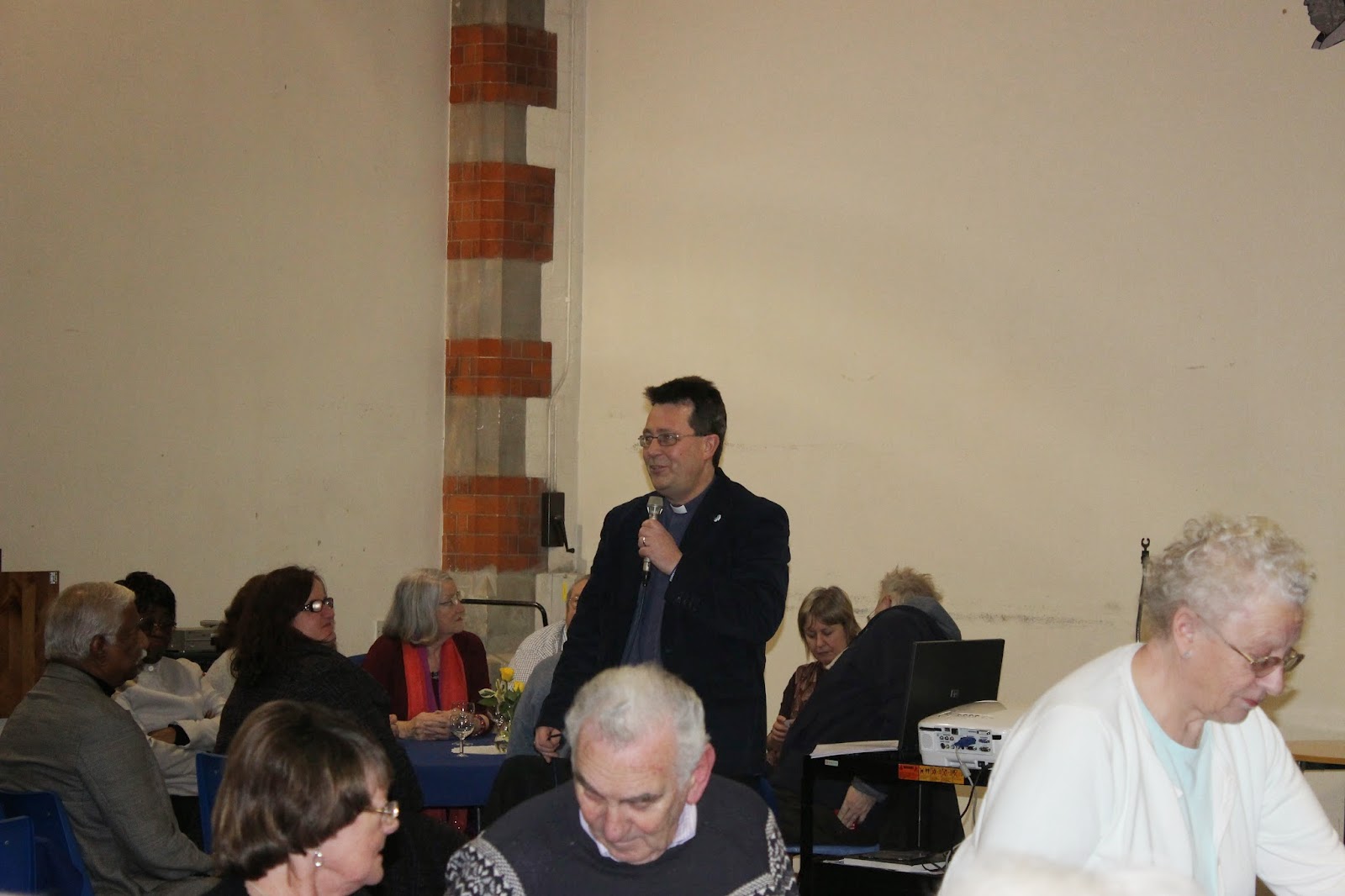
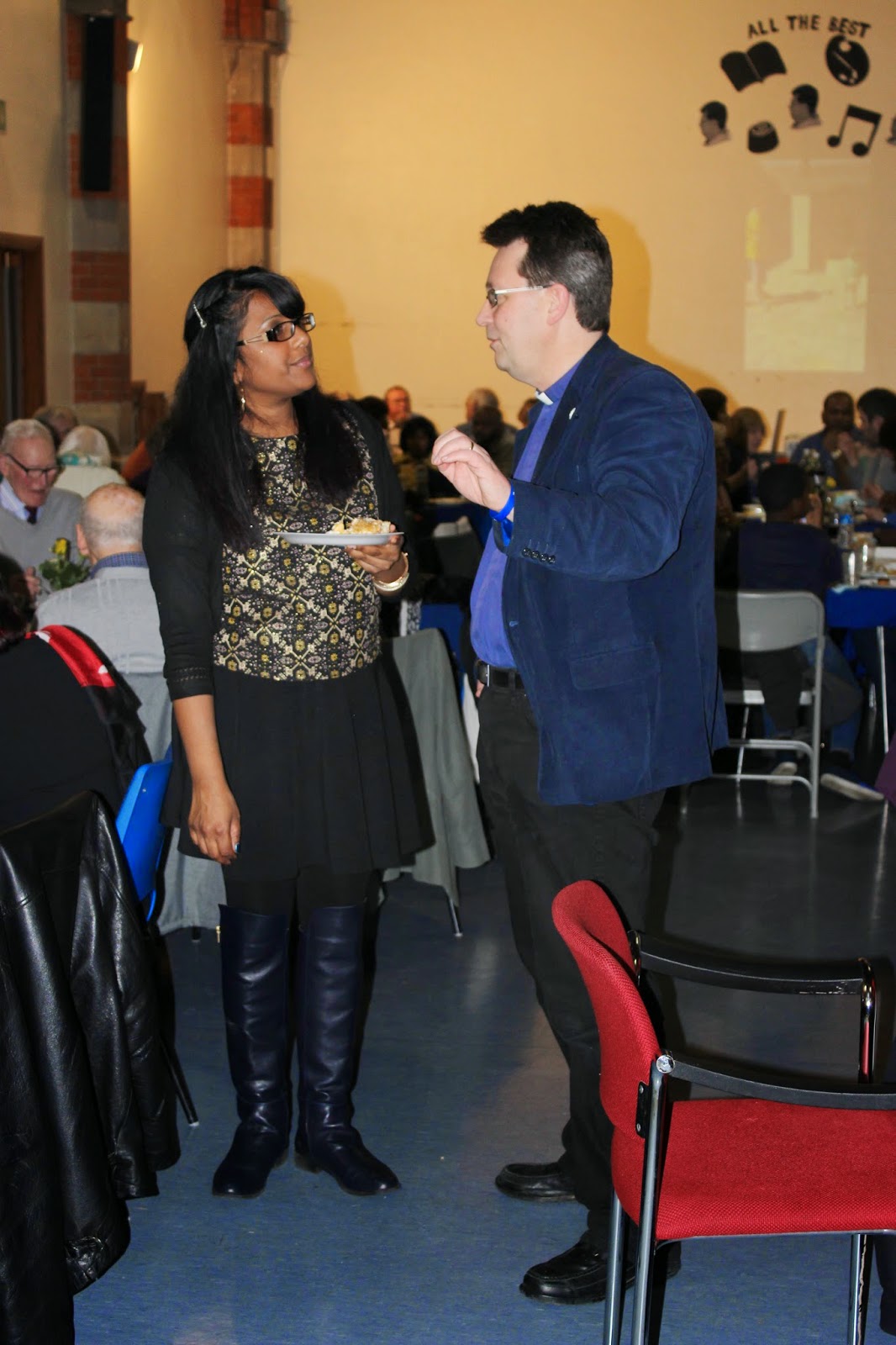
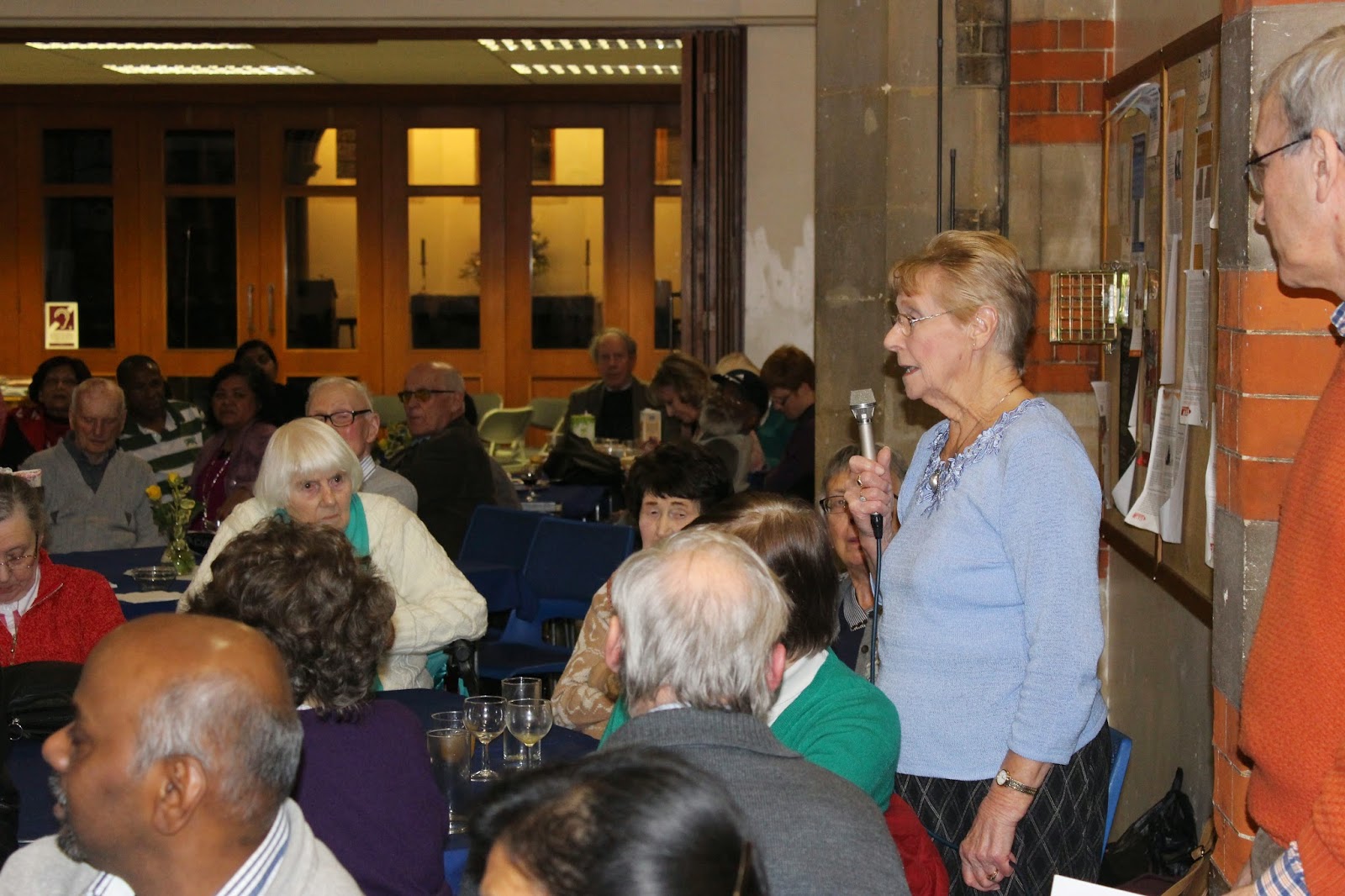
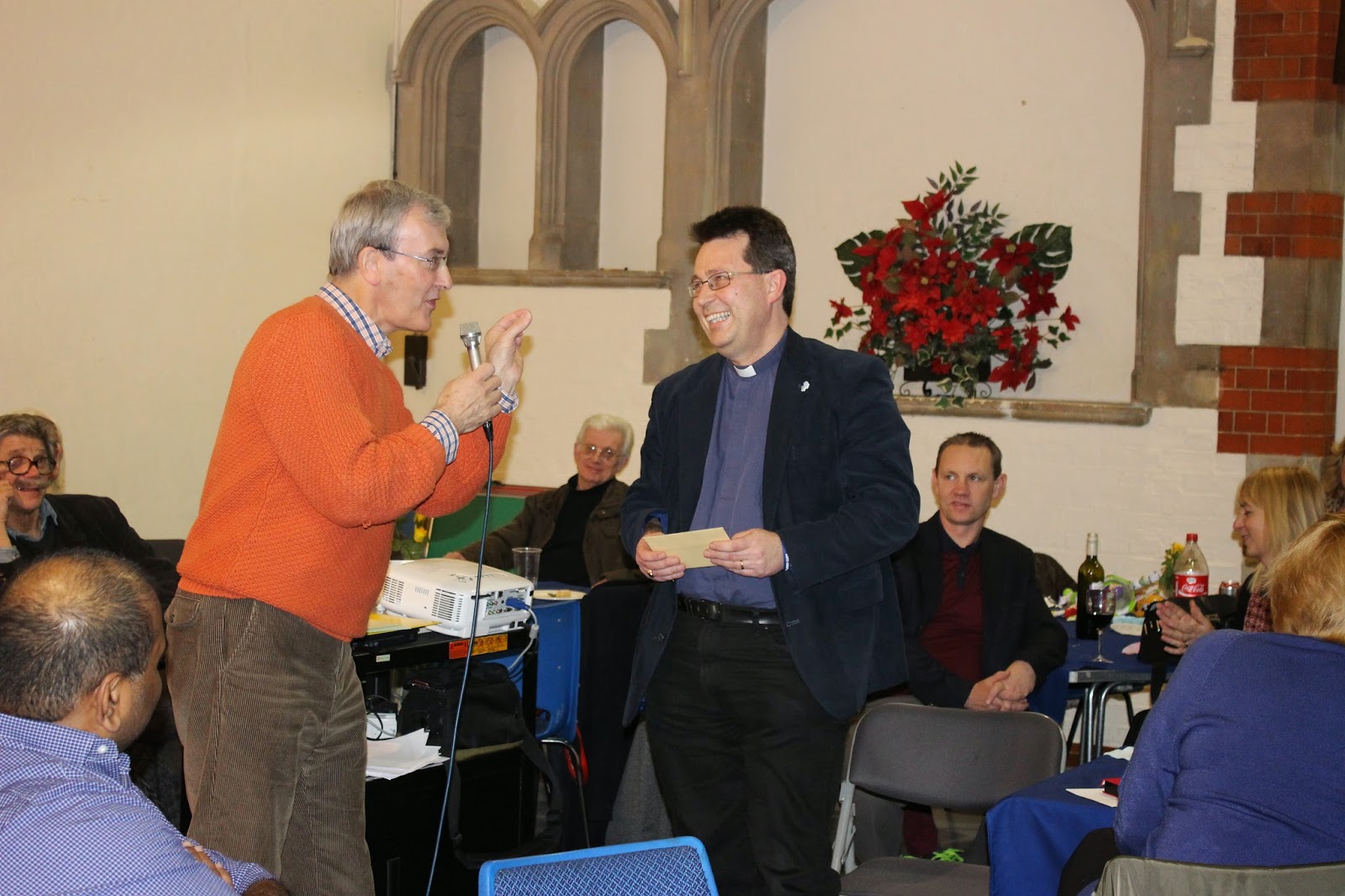
The Evens Evening at St John's Seven Kings, which was my farewell event in the parish, was a very special evening for us as a family. I gave a presentation of the recent East London Three Faiths Forum Tour of the Holy Land, there was a delicious bring and share supper, and there were words of thanks and presentations to Christine and I.

Here is the speech I gave at the end of the evening:

St John’s is a diverse and busy church in a diverse and changing area. This makes it an interesting and dynamic place to be. When that is combined with committed, caring and creative people in the congregation and community, the parish provides opportunities for ministry which is engaged and engaging, innovative and traditional, memorable and mundane.

Over the past eight years together we have: celebrated anniversaries (Contact Centre, Mothers’ Union, 110 years of the Church); been inspired by the examples of those no longer with us such as Dorothy Hart, Doreen Gullett, John Toll and Barbara Trump among others; maintained our work with children and young people; drawn new people into ministry in services and leadership; welcomed new people into the congregation as a result of our community engagement, the occasional offices of baptisms, funerals and weddings, and through people moving into the area; contributed to successful community campaigns for much needed local facilities; organised art exhibitions, bazaars, community information events, concerts, light opera performances, literary panels, a Praise Party, a wide range of social & fundraising events, table-top sales and a talent show; supported the setting up the Sophia Hub social enterprise support service; worked closely and well with our friends in the Seven Kings Fellowship of Churches and the local cluster of Anglican churches; and expanded the range of community groups using the Parish Centre.

As a result of this shared missional activity, St John’s is well known in the borough as a well used and well loved community hub; a church that is open, welcoming, engaged and engaging. We have achieved this together in a challenging context for the borough’s churches which results from the changing demographics in the area. The multi-faith nature of this parish means that Christianity is becoming numerically a minority faith in the area bringing significant challenges for maintaining church buildings and congregations as a result. While understandably, but unhelpfully, this can result in a defensive attitude developing among Christians, overall at St John’s we have been open to engagement and dialogue with our neighbours of other faiths through our support of Faith Forum and Three Faiths Forum events and the work of the Sophia Hub and Scriptural Reasoning group. In addition, although there has been resistance, we have faced up to the changes needed to address the financial issues which arise from the challenge provided by changing demographics and have worked our way together to a place of renewed financial viability. We are, therefore, an example of how churches can survive and thrive in changing and challenging times and locations.

None of this has been achieved without debate and stress, conflict and challenge both for you and for me. All of this – continuity, change and challenge – has contributed to the ministry we have done and the foundation for the future which has been laid.

St John’s will be a hugely interesting and attractive parish in which someone new can minister. It has been a privilege for me to be your minister for the past eight years, to get to know and grow in friendship with you all, to face the challenges and take on the opportunities of this area, and most of all to do ministry together; to share in activities which benefit the local community, bring diverse groups together, develop understanding and community cohesion, bring people to Christian faith and to a deepening of their faith.

Thank you for the opportunity to have been part of all this together with you. Thank you for all that each one of you contributes to the ongoing mission and ministry of St John’s. Thank you because of the impact that that ministry has individually and overall. Thank you for all that I have learnt and for all the ways that I have developed and grown through being here. Thank you to all those who have shared ministry and leadership with me here and thank you to all those who given me particular support, help and encouragement in the time that I have been here. I pray for God’s continued rich and deep blessing on you as individuals, congregation, church, parish and community.   

-----------------------------------------------------------------------------------

Bernadette Farrell - Christ Be Our Light.