Wikio - Top Blogs - Religion and belief

Monday, 4 October 2010

Windows on the world (122)


London, 2010

----------------------------------------------------------------------------------

Tom Jones - Strange Things.

Sunday, 3 October 2010

Science, faith and flamingo

Brandon Flowers (of The Killers) recently spoke about the influence of his faith on his writing. Flowers regularly uses religious references in his lyrics and the new album Flamingo is suffused with religious imagery. In speaking about his latest single 'Crossfire' he said: "[My religion] always comes out, it's inevitable. There's a lot of imagery in the songs... I don't think about it, it's not a real conscious decisive thing that I'm trying to get into the songs; it just creeps its way in. Being a religious person living in Las Vegas, I definitely have been caught in that crossfire."

What Flowers is saying seems to be encapsulated in some lines from the title track of the latest album by The Script:

"Having heavy conversations
About the furthest constellations of our souls
We're just trying to find some meaning
In the things that we believe in"

'Science & Faith' has a chorus with which many people of faith can no doubt identify:

"You won't find faith or hope down a telescope
You won't find heart and soul in the stars
You can break everything down to the chemicals
But you can't explain a love like ours"

These are not songs about faith however, instead what Flowers and The Script do in songs like 'Crossfire' and 'Science and Faith' is to spiritualise the standard rock fare of boy girl relationships. They are therefore reversing the original basis of much rock 'n' roll and soul which saw gospel songs, styles, mannerisms and lyrics being secularised in order to sing about boy/girl relationships rather than love of God.

When this is combined with aging rock stars such as Tom Jones and Robert Plant re-energising and re-invigorating their careers and creativity by tapping into the songs of the American South, with its significant vein of gospel being particularly prominent, plus authentic gospel stars such as Mavis Staples releasing new material and the emo and goth bands with Christian members and themes, then there is much in mainstream music currently to demonstrate the continuing influence of Christian imagery and themes. 

---------------------------------------------------------------------------------

Brandon Flowers - Magdalena.

TASK Newsletter (21)

Welcome to the latest TASK e-news, your regular newsletter from Take Action from Seven Kings sent fortnightly via email. This time we focus on policing, an exciting new play scheme coming our way, the imminent advent of a new trader group in Goodmayes and a live event in our new library.

Our October supporters meeting, open to all our supporters reading this, happens on Monday October 11 from 7-8pm at St.John’s Church, at the junction of St.John’s Road and Aldborough Road South. We will joined on the night by a special guest, Susan Heywood, who is trying to bring Redbridge residents’ and community groups together to share information, and where possible, collaborate as part of one giant co-ordinated effort. Hear what she has to say and catch up on all the local news.

Our autumn walkabout happens the same week, on Friday October 15 from 9am, meeting outside Seven Kings Railway station. It is a brilliant opportunity to join council streetscene staff, ward councillors and the police to take often immediate action on those everyday miseries of graffiti, dumping and anti-social behaviour which can so blight our lives. The route is always flexible and we welcome your suggestions on tackling eyesores and challenges near where you are.

Our local library is now well-established and continues to generate brilliant user figures. On Wednesday October 13 it hosts its first live evening event as part of the Word of Mouth arts festival, when author Orna Ross gives a lively talk on Literary Dublin called Meet the Dubliners. It runs from 7-9pm and tickets are free, although you are asked to reserve a place at the library itself or by phoning 020 8708 2737.

The quality of policing has been one of the constant themes of our TASK campaigning over the last two and a half years, with headline efforts on our part to get police to tackle public boozing and recognise the local fear of crime. On the basis that we do not just criticise but are always willing to take responsibility by getting involved ourselves, we are hoping to contribute to the local Seven Kings police panel - the body which decides local policing priorities - by nominating two TASK supporters as possible panel members for 2010/11. The Annual General Meeting of the panel is scheduled for October 18, at Canon Palmer School, starting at 7pm. It is is open to the public and we urge all interested supporters to attend to raise their policing-related issues.

Our Seven Kings council-sponsored business partnership is already in operation and we hear from councillors in neighbouring Goodmayes of their efforts to organise retailers and companies working there. The first meeting of the Goodmayes Business Partnership is scheduled for October 27, starting at 10am in Royal Sweets, at 58 Goodmayes Road, with a speaker from Business Link on seeking funding in these hard times. We wish them well.

Finally, for now, an update on a long-running story about the disused allotment site between Benton Road and Vicarage Lane, which some locals have been trying hard to develop as a much needed play site. The good news is that the Council’s Area 7 committee recently agreed to fund £2388 towards the cost of producing plans and submitting a full planning application for what is known as the Vicarage Lane Play Park, enjoying cross-party political support. This brings the dream a step closer in an area that has been massively developed as apartment housing over the last decade, but - shockingly - without any specific provision for play, and a long haul to existing open space like Valentines Park.

That’s all folks! Please pass us on to a friend or family member who might want to be part of our growing network, and get involved.

We are back in a fortnight when the first outline of the borough’s cuts will become clearer after the Cabinet meeting this Tuesday.

-------------------------------------------------------------------------------
 
Low - (That's How You Sing) Amazing Grace.

Patronal Festival 2010


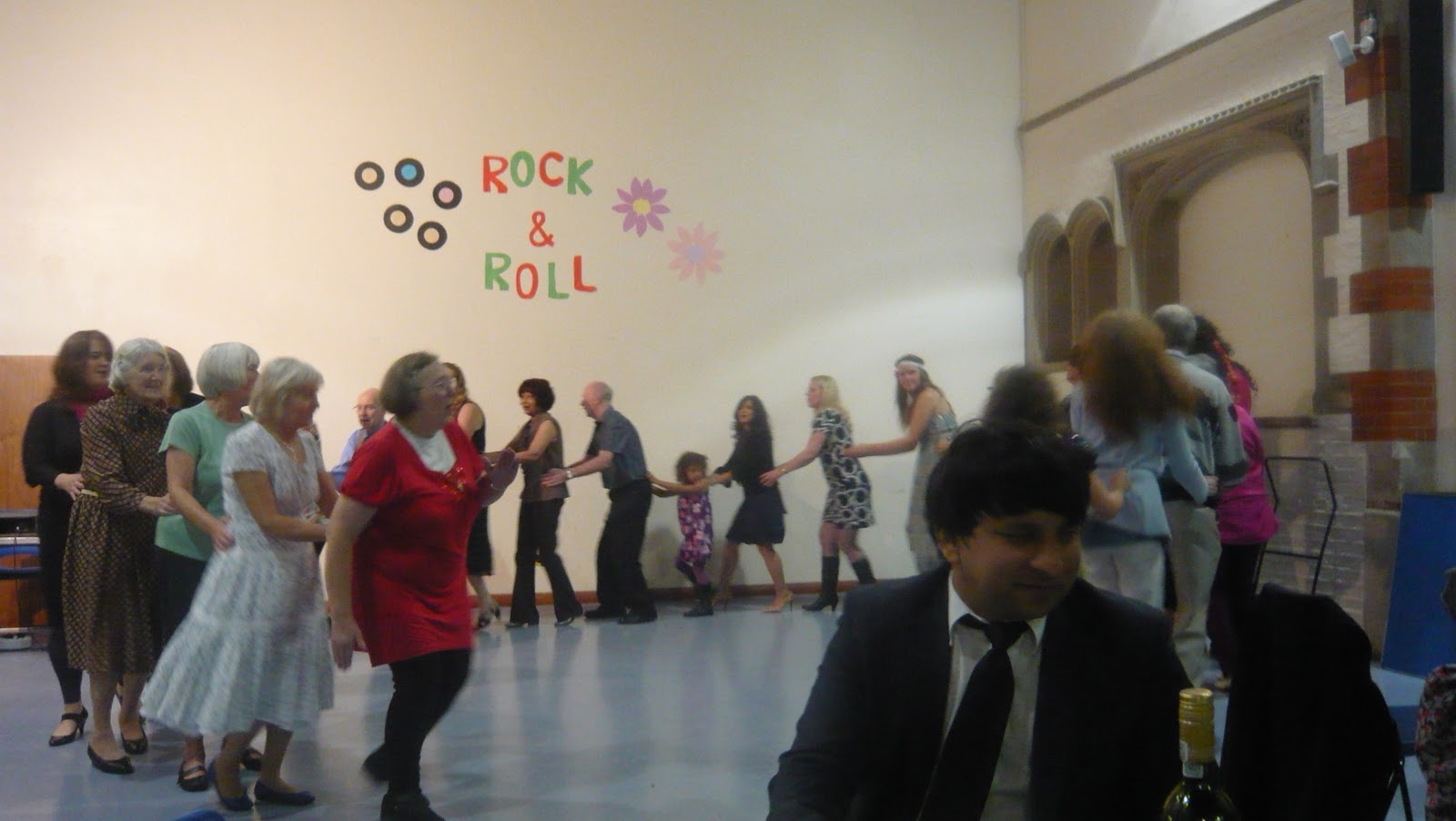
We are once again having an enjoyable and stimulating Patronal Festival at St John's Seven Kings. Our Celebration of Christian Poetry on Friday and our Sixties Night yesterday evening were greatly appreciated as the photos above show. This morning we heard from Revd. Alan Perry, Head Teacher at St Edward's Church of England School, who spoke compellingly about the theology of John's Gospel ending with a story about God's patience in accepting the level of commitment we are able to give while also challenging us to give more of ourselves to him.

What follows is my Patronal Festival sermon for our early morning Eucharist and this evening's Sung Evensong:    

The film Made in Dagenham was released this weekend and it includes a famous scene which happened in the real life story of the 187 women machinists from Fords in Dagenham who campaigned for equal pay and whose story is told in the film which stars Miranda Richardson and Bob Hoskins. On one occasion they endured jeers when, on a picket line in 1968, a photographer snapped one of their banners declaring "We Want Sexual Equality" partly unfurled, so that it read "We Want Sex".

That was a classic example of miscommunication, of an incident in which a message was conveyed which was the reverse of that intended. When we come to the writings of John the Evangelist in the Bible there can be a similar issue of miscommunication.

The helpful little introduction to the first letter of John in the Good News translation of the Bible says that its writer was warning those who read this letter against following false teaching which “was based on the belief that evil results from contact with the physical world, and so Jesus, the Son of God, could not really have been a human being.” Such “teachers claimed that to be saved was to be set free from concern with life in this world” yet when we read this letter and the Gospel of John it is easy to come away with precisely the same idea that he was actually warning against when we read statements like:

• “God is light, and there is no darkness at all in him”;
• “Whoever follows me will have the light of life and will never walk in darkness”;
• “My kingdom does not belong to this world”;
• “I chose you from this world, and you do not belong to it; that is why the world hates you”;
• “every child of God is able to defeat the world”;
• “Who can defeat the world? Only the person who believes that Jesus is the Son of God”.

It is easy to hear such words and to think that the writer is saying that world, and contact with the world, is bad so in order to overcome the world we must be separate from it and have nothing to do with it. That way of thinking has been a feature of Church life and is encapsulated in the song:

“This world is not my home I'm just a passing through
My treasures are laid up somewhere beyond the blue
The angels beckon me from heaven's open door
And I can't feel at home in this world anymore.”

I can remember listening to Jim Reeves singing that when I was young on a LP that my parents owned. When Christians have thought like that about the world then they have seen no point in caring for or transforming the world because they think they are going to be leaving it behind altogether very shortly. It’s from seeing the effects of that way of thinking that we get the phrase, ‘he or she is so heavenly minded that they’re of no earthly use.’

Thinking like that is precisely what St John the Evangelist was trying to oppose, however. The confusion comes with the oppositions that we find continually in his writings between: ‘up and down’; ‘heaven and world’; and ‘light and dark’. What he means by these, however, is not what we automatically expect.

Stephen Verney, the former Bishop of Repton, writes that, when John is using these words, he is “describing two orders.”The order or way of life that is described as ‘down’, ‘world’ and ‘dark’ has its “ruling principle” as “the dictator ME, my ego-centric ego”, and “the pattern of society is people competing with, manipulating and trying to control each other.” By contrast, the order or way of life that is ‘up’, ‘heaven’ and ‘light’ has “the Spirit of Love” as its ruling principle and its “pattern of society is one of compassion – people giving to each other what they really are, and accepting what others are, recognizing their differences, and sharing their vulnerabilities.”

What John is writing about are two different ways of living life here on earth and not a separation between heaven and earth. When we know John’s writings well, we realise that this must be the case because he is so focussed on Jesus as both God and human being. In him, the heavenly and human are not separate but joined together and made one. That is what the incarnation of Jesus is all about:

“We believe in one Lord, Jesus Christ,
the only Son of God,
eternally begotten of the Father,
God from God, Light from Light,
true God from true God,
begotten, not made,
of one Being with the Father;
through him all things were made.
For us and for our salvation he came down from heaven,
was incarnate from the Holy Spirit and the Virgin Mary
and was made man.”

This is not just an academic or theoretical belief for us to state each time we say the creed, however. Instead it is vital to our future as human beings. Stephen Verney writes that our survival depends on it because “we can see in our world order the horrific consequences of our ego-centricity”:

“We have projected it into our institutions, where it has swollen up into a positive force of evil. Human beings have set up torture camps where they torture each other for pleasure. We are all imprisoned together, in a system of competing nation states, on the edge of a catastrophe which could destroy all life on our planet.”

“The most urgent question, confronting each of us personally and humankind as a whole,” he writes, “is how these two orders can be reconciled.”

John’s writings contain the answer and the answer is Jesus who holds both together in himself. When we are in him, we too can become places where the earthly and the heavenly meet.

Sylvia Maddox has written that the Celtic tradition contains the idea that places which give us an opening into the magnificence and wonder of God’s presence are called “Thin Places.” There is a Celtic saying that heaven and earth are only three feet apart, but in the thin places that distance is even smaller. A thin place is where the veil that separates heaven and earth is lifted and one is able to receive a glimpse of the glory of God. A contemporary poet Sharlande Sledge gives this description.

“Thin places,” the Celts call this space,
Both seen and unseen,
Where the door between the world
And the next is cracked open for a moment
And the light is not all on the other side.
God shaped space. Holy.”

As we are in Christ and become more like Christ we can become ‘thin people’, not in the sense of being size-zero models, but by being those in whom the earthly and the heavenly are combined.

--------------------------------------------------------------------------------------

The Script - Science and Faith.

Tuesday, 28 September 2010

Epidemic of mistreatment in the asylum system

Yesterday, the Guardian reported allegations from lawyers that there is an "epidemic of mistreatment" in the asylum system.

Shamik Dutta, of the law firm Fisher Meredith, was one of the lawyers reported and said he had dealt with 15 or 20 cases in the past three years. "The callous and unlawful mistreatment of detainees is continuing, and is not just harming extremely vulnerable and damaged individuals but also costing the economy millions of pounds … it is clear there is an epidemic of mistreatment leading to civil claims going through the courts."

David Wood, strategic director for the criminality and detention group at the UK Border Agency, said the agency sought to exercise its power to detain people "reasonably and lawfully, [while] maintaining effective immigration control and protecting the public from harm". Yet officials accepted that the figure for special payments made in compensation over the past three years runs to millions of pounds.

From the limited contact I have had with UK Border Agency to date I fully support the case being made by these lawyers against the way in which the Agency and its staff carry out their responsibilities.
 
-------------------------------------------------------------------------------------
 
Solomon Burke - None Of Us Are Free.

Windows on the world (121)


London, 2010

---------------------------------------------------------------------------------

Low - Silver Rider.

Monday, 27 September 2010

A unitive vision

This poem is a collage of phrases taken from artists and writers (so that the poem's form mirrors its content) exploring the artist's task in terms of the linking of fragments to form a unitive vision:

A collection of bits, series of fragments,
fragmented bits, chance scraps really,
records of things, vestiges of sorts and kinds of disciplinae,
different views, experiences, beliefs and prayers,
mental associations, liaisons, meanderings to and fro,
ambivalences, asides,
sprawl of the pattern, if pattern there is.

This is the way in which the mind does work:
consisting of connections, eliminations, selections:
such processes being reflected in, and by, the world.
The bits don’t fit together very well –
sometimes they even seem to be contradictory -
stories, poems, teachings, records, events and miracles
rub up against each other; contradictions I'm able to live with.
The only way is, instead of running from contradictions,
to run into them, wrap my arms around them and give them a big kiss.

So, like a disciplined scholar, I piece fragments together,
past conjecture, establishing true sequences of pain.
Trying hard to make this whole thing blend
these fragments I have shored against my ruins.
Though torn in two we can be one;
beyond the cacophony there can be higher connections
the attempt at language capable of embracing
seeming opposites from a higher point of view.

In contact with a network of propositions,
images, processes, natural pathology and what-have-you
that is like some vast ecology or aesthetics of cosmic interaction:
not only within the mind, but in connection with the world outside
of which the mind is conscious:
some circuitry going between, and around,
these inside and outside worlds
through the gathering, the linking, the seeing,
the shaping of different experiences into sequences.

This is the sort of occurrence that artists seem to describe –
the way that out of activities of randomness
there are formed structures as of a mind and by a mind: that such is life.
We build up constantly changing models of the world
from seemingly random thoughts and images.
Artists seem able, with practice, to build this information
into structures with meaning; they make things fit together.

Held together, they form a colourful and intriguing picture
that draws us into its own landscape
achieving a unity through the yoking of motifs
taken from different realms of given reality;
perhaps making a kind of coat of many colours,
such as belonged to 'that dreamer' in the Hebrew myth.
A central direction and a rich diversity
glimpsing something of the divine being and his life in the world;
a collage of God.

All things are held together by correspondence,
image with image, movement with movement.
Without that there could be no relation and therefore no truth.
It is our business - yours and mine - to take up the power of relation,
to develop a language or style
being elusive, allusive, not didactic
by which apparent contradictions might be held.
So ring the bells that still can ring, forget your perfect offering.
There is a crack in everything, that's how the light gets in!

---------------------------------------------------------------------------------
 
Leonard Cohen - Anthem.